
Selecting the ideal LI-NING shuttlecock requires matching your technical ability, playing frequency, and match intensity with the right feather material, head composition, and speed rating. Rather than relying on marketing claims, this guide helps you decode product specifications and identify the exact features you need for casual rallies, regular club sessions, or competitive tournaments.
Making the wrong choice can lead to unnecessary expenses or a frustrating playing experience. For instance, beginners using fragile, high-end tournament shuttlecocks will quickly destroy them through off-center hits, while advanced players using heavy, synthetic options will struggle with control and precision. By aligning your purchase with your actual playing conditions and skill level, you ensure a better balance of durability, flight consistency, and value for money.
Decoding LI-NING Shuttlecock Labels and Specifications
Understanding the technical specifications on shuttlecock packaging is the first step toward making an informed purchase. Manufacturers categorize their products based on the materials used for the skirt and the head, as well as the aerodynamic speed of the shuttlecock. Deciphering these labels allows you to predict how a shuttlecock will behave on the court before you even open the tube.
Products mentioned in this guide

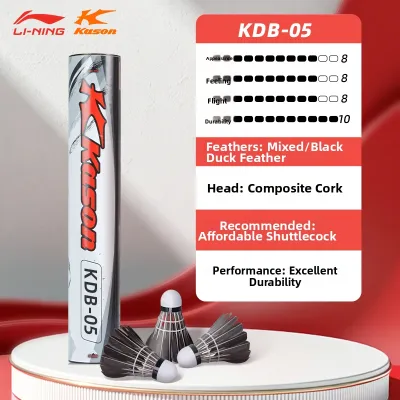
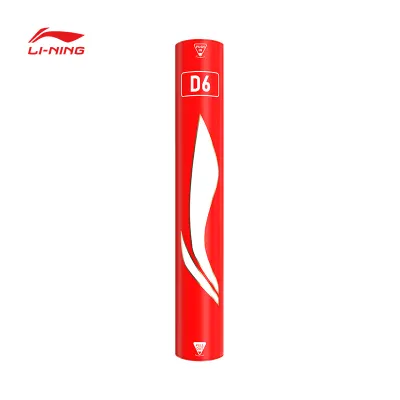
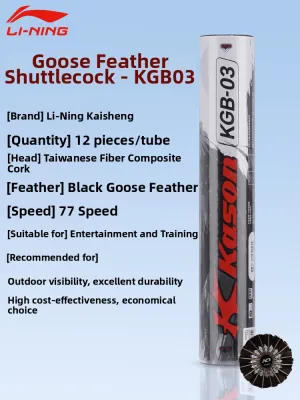
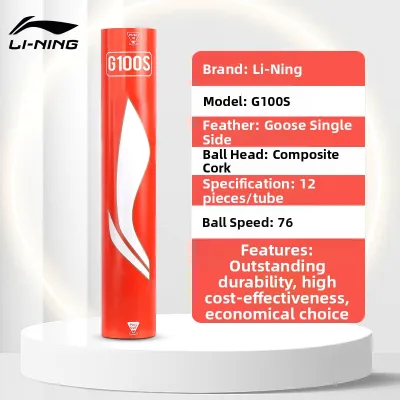
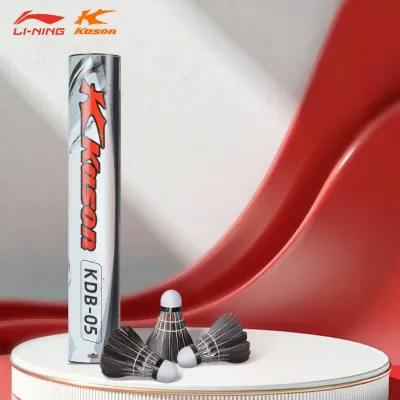
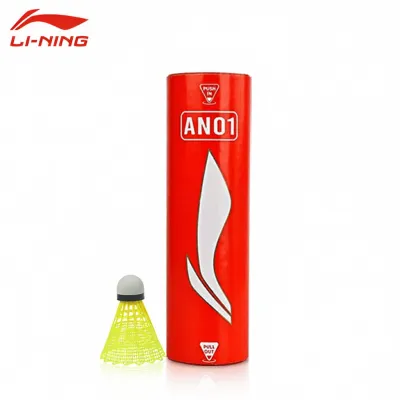
Prices are valid at publication and may change. Please refer to the product page for the latest price.
The choice of feather material is the primary factor determining a shuttlecock’s flight stability, durability, and price point. Natural feather shuttlecocks are generally made from either goose or duck feathers. Goose feathers are highly prized for their thick, strong shafts (rachis) and dense, uniform vanes. This structural integrity allows goose feather shuttlecocks to maintain their aerodynamic shape during high-speed smashes and resist splintering, resulting in a highly consistent flight path. Duck feathers, while more economical, have thinner shafts and are more brittle. They tend to wear out faster and are more susceptible to snapping when struck off-center, making them better suited for practice sessions rather than high-stakes matches.
Equally important is the composition of the shuttlecock head, which directly impacts striking feedback, weight distribution, and durability. Premium shuttlecocks feature natural cork heads harvested from the bark of cork oak trees. Natural cork offers excellent elasticity, rebound, and shock absorption, providing players with crisp tactile feedback and precise control over delicate net shots. To manage production costs, many mid-tier and entry-level shuttlecocks utilize composite cork. This can consist of a sandwich design—such as a layer of natural cork laminated over a synthetic foam or compressed cork particle base—or a fully synthetic composition. While composite cork is highly durable and offers a consistent weight, it tends to feel slightly stiffer upon impact and may transmit more vibration up the racket shaft.
Speed ratings, typically indicated by numbers like 76, 77, or 78 on the tube packaging, represent the weight and flight distance of the shuttlecock under specific environmental conditions. These ratings are closely tied to ambient temperature, humidity, and altitude. In warm, humid climates like Singapore, the air is less dense, which reduces aerodynamic drag and causes shuttlecocks to fly faster and further. Consequently, players in these regions generally select slower speed ratings, such as speed 76 or 77, to maintain optimal control and prevent the shuttlecock from consistently sailing past the baseline. In contrast, cooler or drier environments increase air resistance, requiring faster speed ratings like 78 or 79 to achieve a standard flight trajectory.
Matching Shuttlecock Tiers to Your Skill Level and Playing Frequency
To get the most value out of your purchase, it is essential to match the shuttlecock’s construction tier with your current skill level and how often you play. Choosing a model that aligns with your technical demands prevents premature wear and ensures your equipment supports, rather than hinders, your development on the court.

For casual and beginner players, durability and cost-effectiveness should be the primary considerations. Beginners are still developing their hand-eye coordination and timing, which frequently results in mishits where the racket frame strikes the feather skirt instead of the cork head. These off-center impacts can instantly ruin a delicate natural feather shuttlecock. Therefore, synthetic nylon shuttlecocks or entry-level duck feather models are highly recommended for this group. Synthetic options are engineered to withstand significant abuse without losing their shape, making them ideal for recreational outdoor play or initial training drills. If you prefer the feel of real feathers, entry-level duck feather models offer a realistic flight path at a lower price point, allowing you to practice your strokes without worrying about the cost of frequent replacements.
Intermediate and regular club players require a careful balance between consistent flight paths and a reasonable product lifespan. If you play once or twice a week in organized club sessions, you need a shuttlecock that can handle sustained rallies and powerful smashes without immediately losing its flight characteristics. Mid-tier duck feather or standard goose feather shuttlecocks are designed specifically for this level of play. These models feature more uniform feather cuts, stronger glue joints, and double-stitched threads to hold the skirt securely in place. They typically utilize composite cork heads, which provide reliable tactile feedback and consistent weight distribution while keeping the cost per tube manageable for regular group play.
Advanced and competitive players demand absolute precision, predictable aerodynamic trajectories, and strict manufacturing tolerances. At this level, even a minor deviation in flight path or speed can disrupt a player’s timing and affect the outcome of a match. Advanced players should focus exclusively on premium, tournament-grade goose feather shuttlecocks equipped with high-quality natural cork heads. These top-tier models undergo rigorous quality control to ensure that every single shuttlecock in the tube exhibits identical weight, balance, and spin characteristics. While these premium options represent a higher financial investment and are more delicate than synthetic alternatives, they deliver the clean impact feel, rapid recovery after a smash, and precise spinning net play required for competitive tournament environments.
Pre-Purchase Checks for Authenticity and Proper Storage
Because premium badminton equipment is highly sought after, counterfeit products are common on unauthorized online marketplaces and unverified retail channels. Purchasing counterfeit shuttlecocks not only wastes money but also results in poor flight performance and rapid structural failure. Taking the time to verify authenticity and inspect the physical condition of the product before buying is crucial.
To ensure you are purchasing genuine LI-NING shuttlecocks, always look for official anti-counterfeiting measures. Genuine tubes feature a security label with a scratch-off area that reveals a unique verification code. You can enter this code directly on the official LI-NING verification portal to confirm the product’s authenticity. Additionally, make it a rule to purchase your equipment from authorized sports retailers, official brand stores, or reputable local distributors who can guarantee the integrity of their supply chain.
Beyond authenticity, you must inspect the physical condition of the shuttlecocks and their packaging. Before purchasing, check that the tube’s end caps are tightly sealed and undamaged, as any breach can expose the contents to dry air. If possible, examine the shuttlecocks themselves: the feathers should be clean, uniform in color, and curved consistently in one direction without any visible gaps, splits, or overlapping errors. Inspect the glue lines around the threads and the base of the feathers; the adhesive should be applied evenly and smoothly, without dry, brittle patches or excessive globs that could alter the shuttlecock’s weight distribution.
Understanding how storage conditions affect shuttlecock quality is vital for preserving your investment. Natural feathers contain moisture and natural oils that keep them flexible and resilient. If a retailer stores shuttlecocks in a hot, dry warehouse or under direct sunlight, this moisture evaporates, leaving the feathers brittle and prone to snapping on the very first hit. Furthermore, improper storage can dry out the natural or composite cork head, causing it to lose its elasticity and crumble over time. Always ask retailers about their storage practices, and avoid buying stock that appears to have been sitting in dusty, unconditioned environments for extended periods.
Frequently Asked Questions (FAQ)
How can I extend the lifespan of my natural feather shuttlecocks?
To maximize the durability of natural feather shuttlecocks, you can humidify or steam them before use. Gently exposing the feather skirt to water vapor—such as from a specialized shuttlecock steamer or a cup of hot water—for a few seconds allows the feathers to absorb moisture. This process makes the feathers significantly more flexible and less prone to snapping during intense rallies. Be careful not to expose the cork head directly to excessive moisture, as this can cause the cork to swell and alter the shuttlecock’s weight. Additionally, always store your shuttlecock tubes horizontally in a cool, shaded place away from direct sunlight, and rotate the shuttlecocks during practice sessions to distribute wear evenly.
Does the shuttlecock speed rating change depending on the season?
Yes, seasonal changes in temperature and humidity directly affect air density, which alters how fast a shuttlecock travels. In hotter weather or high-humidity environments, the air is less dense, causing the shuttlecock to fly faster and further; in these conditions, players typically switch to a slower speed rating (such as 76) to maintain control. Conversely, in colder or drier environments, the denser air slows the shuttlecock down, requiring a faster speed rating (such as 78) to achieve a standard flight distance. Before purchasing shuttlecocks in bulk, it is highly recommended to consult your local club standards or tournament regulations, as most venues standardize their speed selection based on regional climate patterns and indoor hall conditions.

Community discussion
Share your experience or ask a question. Comments are reviewed before publication.