
Selecting the right Oppo ankle guard depends on matching the brace’s structural support to the severity of your injury, the physical demands of your sport, and the constraints of your footwear. An incorrect choice can either restrict necessary movement during high-agility activities or fail to provide sufficient stabilization for a healing joint. By evaluating your current physical symptoms, understanding how different brace profiles interact with your shoes, and verifying the fit during a trial wear, you can find a support level that aids recovery without compromising your performance.
Assess Your Ankle Status to Determine Support Needs
To choose the correct ankle support, you must first evaluate the physical condition of your joint. Ankle issues generally fall into three categories: mild swelling, active post-injury recovery, and chronic instability. Mild swelling or minor soreness often occurs after long runs or intense training sessions. This level of discomfort typically requires light compression to promote blood flow, manage minor fluid retention, and provide reassuring warmth to the joint.
If you are recovering from a diagnosed sprain or ligament strain, your joint requires mechanical stabilization to prevent unnatural lateral movement while the tissue heals. During this active recovery phase, the ankle is highly vulnerable to re-injury, meaning a simple compression sleeve is rarely sufficient. You will need a guard that offers moderate to high structural support, utilizing adjustable straps or side stabilizers to limit inversion and eversion.
Products mentioned in this guide
![Oppo Ankle Support (S M L XL) [NTFGH x JCH LIFE HUB]](https://img.lazcdn.com/g/p/5466eec4a278755506fa17c170ad2f85.jpg_400x400q80.jpg_.webp)
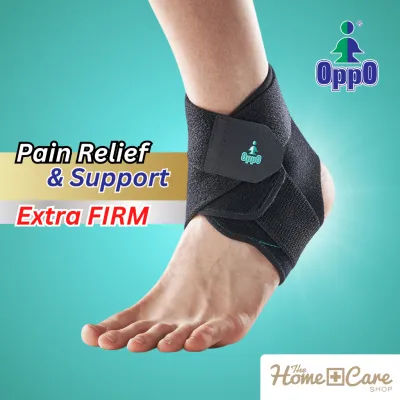
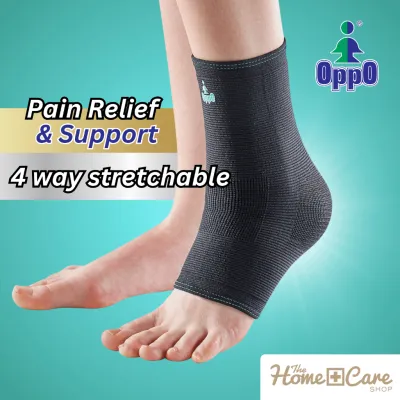
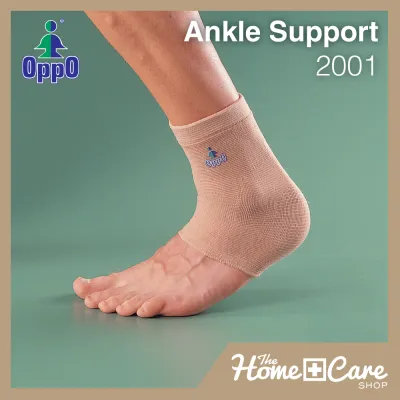
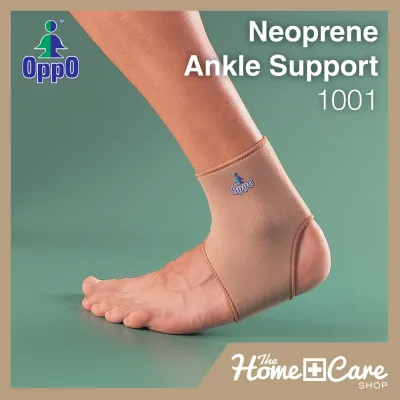
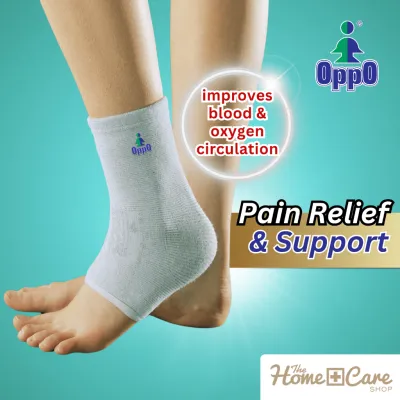
Prices are valid at publication and may change. Please refer to the product page for the latest price.
Chronic instability, characterized by a frequent feeling that your ankle is “giving way” during daily movements or sports, demands a highly supportive brace that mimics the stabilizing function of your ligaments. It is important to remember that while an Oppo ankle guard is an excellent tool for managing symptoms and providing external mechanical support, it does not replace a formal medical diagnosis. Always consult a healthcare professional to understand the underlying cause of your joint instability.
Match Your Sport and Footwear to the Right Guard Profile
The physical demands of your sport and the design of your athletic footwear play a critical role in determining the ideal profile of your ankle guard. For high-agility sports that require rapid acceleration and tight footwear, such as running or football, a low-profile, highly flexible design is essential. These activities demand a full range of forward and backward motion. A bulky brace will not fit comfortably inside a streamlined running shoe or a football boot, and it can alter your natural gait, potentially leading to secondary knee or hip strain.

Conversely, court sports like basketball, netball, and badminton involve frequent lateral movements, sudden stops, and jumping. These actions place immense sideways stress on the ankle joint, making a higher-profile brace with cross-straps or rigid side stays necessary. While these designs are naturally bulkier and require more room inside your shoe, they provide the mechanical resistance needed to prevent severe rolling. When selecting a guard for court sports, you may need to loosen your shoe laces significantly or opt for a slightly wider shoe to accommodate the extra material.
Balancing joint restriction with athletic performance is always a trade-off. Maximum stabilization inevitably reduces your ankle’s natural range of motion, which can slightly decrease your agility. However, if you are returning to a high-impact sport after an injury, prioritizing joint protection over absolute freedom of movement is the safer path. As your joint strength improves through targeted rehabilitation, you can gradually transition to a more flexible, lower-profile guard.
Compare Common Ankle Guard Designs and Features
Oppo offers a variety of ankle guard designs, each engineered for specific levels of support and physical activities. Understanding these structural categories allows you to map your personal needs to the correct product type. The most basic category consists of elastic sleeves and simple compression wraps. These are typically made from breathable, stretchable fabrics or neoprene blends. They slip over the foot easily and are ideal for mild support, joint warmth, and basic swelling management. Because they lack rigid elements or complex strapping systems, they fit easily into almost any shoe and are perfect for low-impact daily wear or light exercise.
For moderate stabilization, look for lace-up designs or models featuring figure-eight tension straps. These guards allow you to customize the level of compression and support by tightening the laces or wrapping the elastic straps in a pattern that mimics athletic taping. The figure-eight configuration is highly effective at restricting lateral movement while still allowing comfortable forward and backward flexing. These models are highly favored by athletes undergoing active recovery, as they can adjust the tightness of the brace as swelling subsides or as the intensity of their workout changes.
When maximum joint protection is required, hinged braces or models with rigid plastic or metal side stays are the standard choice. These guards provide a solid external skeleton that physically blocks the ankle from rolling inward or outward. They are designed for post-injury protection, severe instability, or high-risk sports where joint movement must be strictly controlled. Because these rigid elements can vary significantly in stiffness, it is crucial to check the manufacturer’s product labels and specifications to ensure the brace matches your specific recovery stage or sport requirements.
Verify Fit, Comfort, and Safety During Trial Wear
Once you have identified the appropriate style of ankle guard, verifying the correct fit is essential to ensure safety and effectiveness. Never rely solely on your standard shoe size when purchasing a brace. Instead, use a flexible measuring tape to measure the circumference of your ankle just above the joint bone, and compare this measurement directly to the brand’s official sizing chart. A brace that is too loose will fail to provide the necessary mechanical support, while one that is too tight can restrict blood flow and cause tissue irritation.
When trying on the guard, perform a series of observable checks to ensure proper alignment and comfort. The heel opening, if present, should align perfectly with your heel, and any side stabilizers must sit flush against the sides of your ankle joint without digging into the bone. Walk around your living space for a few minutes and perform light movements to check for any pinching, rubbing, or pressure points. The material should feel snug and supportive but should not cause pain or restrict your toes’ natural movement.
Pay close attention to your body’s signals during this trial wear. If you experience numbness, a tingling “pins and needles” sensation, coldness in your toes, or visible skin color changes, the brace is either too tight or improperly positioned. Immediately loosen the straps or remove the guard entirely. Adjusting the tension can often resolve these issues, but if the discomfort persists even after adjustment, discontinue use and verify if you require a different size or a more flexible model.
Recognize Red Flags That Require Professional Medical Advice
While an over-the-counter ankle guard is a valuable tool for recovery and protection, it is not a substitute for professional medical care. Certain severe injury signs indicate that self-management with a brace is insufficient and potentially harmful. If you are unable to bear weight on your foot immediately after an injury, if you observe any visible deformity in the joint, or if you experience acute, severe pain that does not subside with rest, you must seek immediate medical attention. These symptoms often point to a bone fracture or a complete ligament tear that requires clinical intervention.
Using an ankle guard in scenarios where a severe injury has occurred can delay proper healing and lead to long-term joint weakness or chronic pain. Over-the-counter braces are also contraindicated if you have severe circulatory disorders, open wounds in the ankle area, or skin conditions that could be aggravated by tight, synthetic materials.
To ensure a safe and complete recovery, always consult a physiotherapist or a doctor. They can provide a personalized rehabilitation plan that combines targeted strengthening exercises with the appropriate use of an ankle guard. Relying solely on a brace without rebuilding the surrounding muscles can lead to joint dependency, making your ankle more vulnerable to future injuries once the guard is removed.
Frequently Asked Questions (FAQ)
Can I wear an ankle guard all day for prevention?
Wearing an ankle guard continuously throughout the day for preventive purposes is generally not recommended unless specifically advised by a healthcare professional. Prolonged, uninterrupted wear can cause your ankle muscles and tendons to become dependent on the external support, gradually weakening them over time. Additionally, continuous wear in warm climates can trap moisture against your skin, leading to irritation or chafing. Limit brace usage to active periods, training sessions, or specific high-risk tasks, allowing your joint to move naturally during rest periods to maintain muscle strength.
How do I clean and maintain my elastic ankle brace?
To preserve the elasticity and structural integrity of your ankle guard, hand-wash it in cold or lukewarm water using a mild detergent. Avoid using bleach, fabric softeners, or harsh chemical cleaners, as these can degrade the elastic fibers and weaken the adhesive on hook-and-loop straps. After washing, gently squeeze out excess water without wringing or twisting the brace, and lay it flat to air-dry in a shaded, well-ventilated area. Never place the guard in a mechanical dryer or expose it to direct sunlight, as high heat will warp plastic components and ruin the stretch materials.
Should I wear the brace on both ankles if only one is injured?
Ankle braces are designed to provide targeted mechanical support to a specific injured or unstable joint, so you typically only need to wear one on the affected side. Wearing a brace on a healthy, stable ankle can unnecessarily restrict its natural movement and alter your overall biomechanics. However, if you find yourself compensating for the injured side by putting excessive weight or stress on your healthy leg, you might experience minor discomfort there. If this occurs, consult a physiotherapist to address your gait alignment rather than simply applying a second brace.

Community discussion
Share your experience or ask a question. Comments are reviewed before publication.