
Selecting the right resistance level for your first exercise band involves matching the band’s tension to your current physical strength and the specific movements you plan to perform. Because different muscle groups require vastly different levels of force to challenge them, the most effective approach for beginners is starting with a multi-band set. This allows you to safely learn proper form on lighter tension before progressing to heavier resistance as your muscles adapt.
Decoding Exercise Band Resistance Specs and Labels
When shopping for an exercise band, you will often see resistance levels rated in weight ranges, such as 2 to 5 kilograms or 5 to 15 kilograms. These numbers do not represent the weight of the band itself; instead, they indicate the amount of force required to stretch the band to its maximum safe limit, which is typically around two to three times its resting length. At the beginning of a movement, the actual tension is much lower, gradually increasing as you stretch the band further.
It is important to note that color-coding is not standardized across different manufacturers. While one brand might use yellow for extra-light resistance and red for medium, another brand might use an entirely different color scheme. To avoid purchasing a band that is too stiff or too loose, always verify the printed weight equivalent or tension rating on the product packaging or specification sheet rather than relying solely on the color.
Products mentioned in this guide
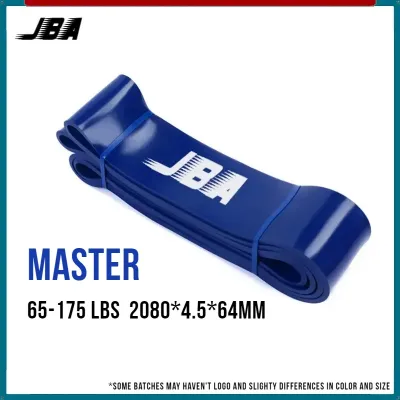
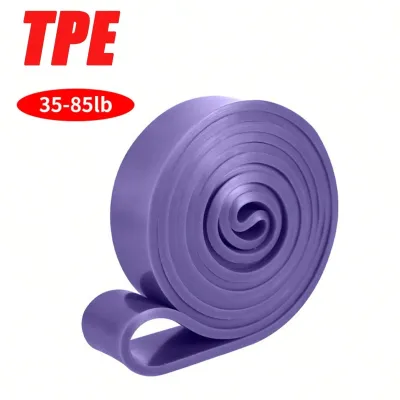

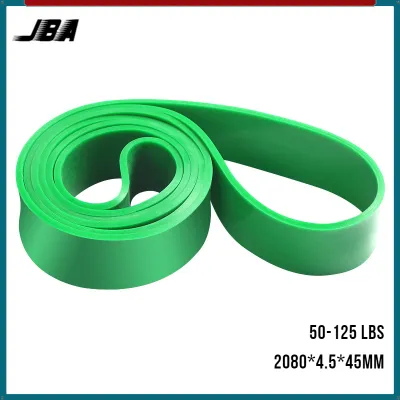
![[Ships From SG] Resistance Band Power Stretch Band Sports Fitness Recovery Warm-Up Muscle Strength Pull Up Gym Yoga](https://img.lazcdn.com/g/p/41f91314a296be8807bf5f66c3355de4.jpg_400x400q80.jpg_.webp)
![[RECEIVE IN 3 DAYS] Looped Resistance Exercise Yoga Bands](https://img.lazcdn.com/g/p/478c71011ff76f1dc2636e7c42012a8d.jpg_400x400q80.jpg_.webp)
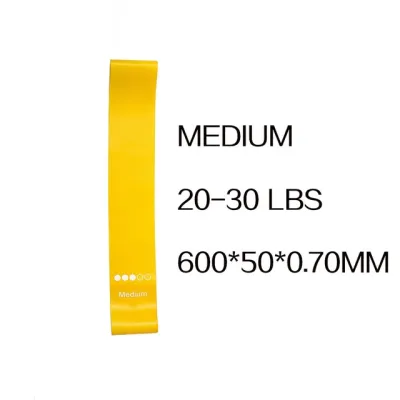
Prices are valid at publication and may change. Please refer to the product page for the latest price.
If you encounter bands without clear weight labels, you can estimate their relative resistance by observing their physical dimensions. For flat loop bands, wider and thicker bands naturally offer higher resistance because there is more material to stretch. For tube bands with handles, a larger outer diameter and thicker tube walls indicate a higher tension level. Checking these physical attributes helps you visually compare bands within the same product line.
Matching Band Resistance to Your Strength and Exercises
Your body consists of muscle groups of varying sizes and strength capacities, meaning a single resistance level cannot serve every exercise. Large muscle groups, such as your glutes, hamstrings, and back muscles, are capable of producing significant force and generally require medium to heavy bands to trigger adaptation. Conversely, smaller muscle groups, like those in your shoulders, triceps, and rotator cuffs, require much lighter bands to prevent injury and maintain proper alignment.

To find the correct tension for any movement, aim for what trainers call the challenge threshold. The ideal band should provide enough resistance to make the last two or three repetitions of a set of 10 to 12 reps feel highly challenging, yet still allow you to complete the entire range of motion with controlled, steady form. If your posture collapses, or if you must jerk your body to complete the movement, the resistance is too high.
For beginners, the safest strategy is to start with a lighter band than you think you need. Mastering the movement pattern and establishing a mind-muscle connection is far more critical in the initial weeks than lifting heavy loads. Once you can perform the exercise smoothly without joint discomfort or compensation, you can confidently transition to a higher tension level.
Why a Multi-Resistance Set is the Best Starting Point
Purchasing a single exercise band often leads to frustration because it will inevitably be too heavy for some exercises and too light for others. A multi-resistance set, which typically includes three to five bands of varying thicknesses, provides the versatility needed for a complete full-body workout. You can seamlessly transition from a light band for shoulder presses to a heavy band for squats without interrupting your training flow.
A multi-band set also supports the principle of progressive overload, which is essential for building strength and muscle tone over time. As your muscles adapt to a specific workload, they require a slightly greater stimulus to continue improving. Having a complete set allows you to step up to the next resistance level gradually, ensuring continuous progress without needing to purchase new equipment every few weeks.
Additionally, multi-band sets offer the unique advantage of stacking. If you find yourself between two resistance levels, or if the heaviest band in your set eventually becomes too easy, you can combine two or more bands on the same anchor point or handles. Stacking allows you to create custom tension levels, significantly extending the usable lifespan of your investment.
How to Test and Adjust Your Band Tension During Workouts
To verify if a specific band is suitable for your current fitness level, perform a simple rep-test. Select a target range, such as 8 to 12 repetitions, and perform the exercise with slow, controlled movements—taking about two seconds to stretch the band and two seconds to return to the starting position. If you can easily complete 15 repetitions without feeling any muscle fatigue, the band is too light; if you cannot reach 8 repetitions with proper form, it is too heavy.
If you do not have another band handy, you can easily adjust the tension of your current band by making physical alterations to how you hold or anchor it. To increase the resistance of a flat band, you can shorten the active length by widening your stance when standing on the band, or by wrapping the excess material around your hands. This reduces the amount of slack, making the band tighter from the very start of the movement.
To decrease the tension, you can increase the active length of the band or adjust your position relative to the anchor point. For example, stepping closer to the wall or door where the band is anchored reduces the initial stretch, lowering the overall resistance. These quick adjustments allow you to fine-tune your workout intensity on the fly, ensuring you stay within a safe and effective training zone.
Frequently Asked Questions (FAQ)
Do thicker exercise bands always provide more resistance?
Generally, yes. Within the same brand and material type, a thicker or wider band contains more rubber or latex, which requires more physical force to stretch. However, material composition also plays a significant role; a thin band made from high-density natural latex may offer more resistance than a thicker band made from low-grade synthetic materials. Always check the manufacturer’s specified weight equivalent rather than relying purely on visual thickness.
What should I do if my exercise band feels too heavy?
If a band feels too heavy, you can immediately reduce the tension by increasing the active length of the band or moving closer to your anchor point to reduce the initial stretch. If these physical adjustments still do not allow you to complete the exercise with a full range of motion and proper form, stop the movement and switch to a lighter band in your set to protect your joints from strain.

Community discussion
Share your experience or ask a question. Comments are reviewed before publication.