
Choosing the right resistance level for a rubber exercise band depends on your current strength, the specific muscle groups you are targeting, and your training goals. A band that is too light will not stimulate muscle growth or endurance, while one that is too heavy will compromise your form and increase the risk of joint strain. To find the ideal match, you must evaluate your baseline fitness, understand how different exercises require varying tension levels, and learn to read the physical feedback your body provides during a workout.
Assess Your Current Fitness Level and Baseline Strength
Beginners should start with light to medium-light bands. If you cannot perform basic bodyweight movements like squats, push-ups, or lunges with proper form, your primary focus should be on establishing movement patterns rather than adding heavy resistance. A light band provides just enough tension to help cue your muscles without overloading your joints.
Intermediate users who can comfortably perform multiple sets of bodyweight exercises with controlled form can transition to medium or medium-heavy bands. At this stage, your neuromuscular coordination is developed enough to handle external resistance without sacrificing alignment.
Products mentioned in this guide
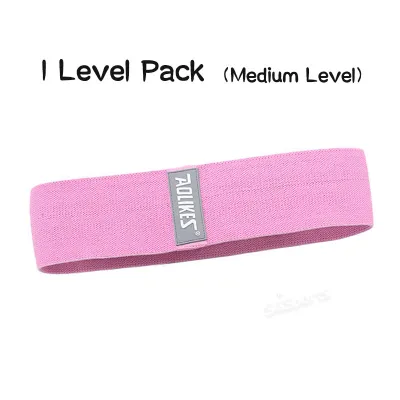
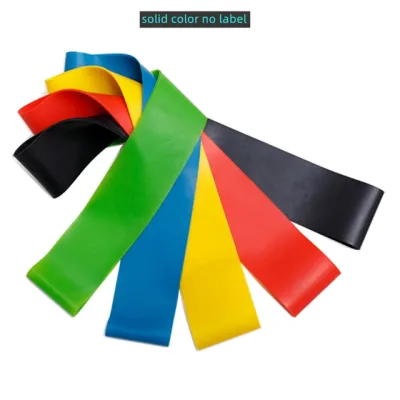

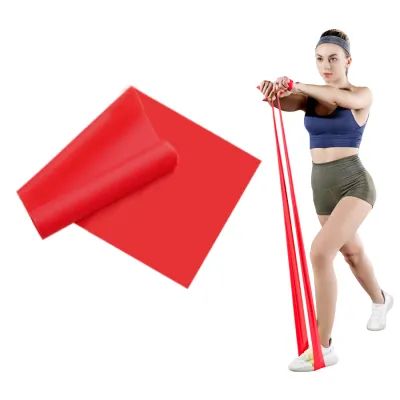
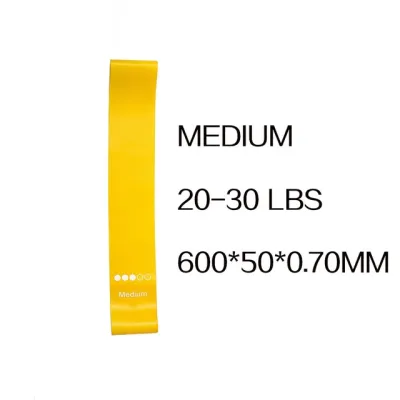
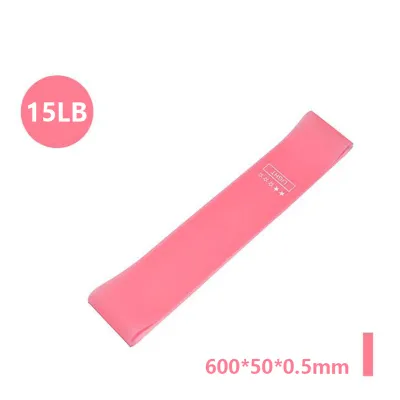
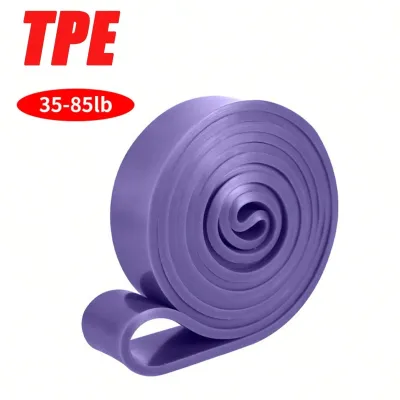

Prices are valid at publication and may change. Please refer to the product page for the latest price.
Advanced trainees who regularly lift weights or perform high-intensity calisthenics will require heavy to extra-heavy bands to stimulate further adaptation. However, even advanced individuals must recognize that strength is highly variable across different muscle groups.
Your upper body muscles, such as the shoulders, biceps, and triceps, are significantly smaller and weaker than your lower body muscles like the glutes, hamstrings, and quadriceps. A band that provides an excellent challenge for a bicep curl will be far too light to stimulate your glutes during a squat. Conversely, a band designed for lower body training will likely be impossible to pull safely during an overhead press.
Before selecting a band, test your bodyweight movement proficiency. If you struggle to maintain balance or depth during a standard bodyweight squat, adding a heavy loop band around your thighs will only worsen your form. Use your ability to perform 15 to 20 clean, unresisted repetitions of an exercise as the baseline indicator that you are ready to introduce light band resistance.
Align Band Tension With Your Specific Training Goals
To build muscular endurance or improve joint mobility, lighter tension is highly effective. These goals require high-repetition sets, typically ranging from 15 to 25 repetitions per set. A light rubber exercise band allows you to complete these high-volume sets with a full range of motion, promoting blood flow and joint lubrication without causing premature muscular failure.

For strength building and muscle hypertrophy, you need heavier tension that limits your performance to lower repetition ranges, usually between 6 and 12 repetitions. The resistance must be high enough that the final few repetitions of each set feel highly challenging, yet still achievable with perfect technique. This level of mechanical tension is what triggers muscle fiber micro-tears and subsequent growth.
Physical therapy and rehabilitation require a highly cautious approach to resistance selection. When recovering from an injury, the goal is to gently re-educate the nervous system and strengthen stabilizing muscles without overloading healing tissues. Extremely light, flat therapy bands are ideal here, as they allow for precise, incremental adjustments in tension.
Athletic conditioning, on the other hand, often demands explosive movements, agility drills, and high-velocity resistance. For these dynamic applications, medium-tension bands are preferred because they provide enough resistance to challenge the athlete without slowing down their movement speed to the point where explosive power is lost.
Navigate Color Codes and Verify Actual Tension Specifications
Most manufacturers follow a general color progression to represent resistance levels, typically starting with yellow or green for light resistance, moving to red or blue for medium, and ending with black, silver, or gold for heavy and extra-heavy resistance. This visual cue helps users quickly identify bands during a fast-paced workout session.
However, color codes lack universal standardization across the fitness industry. A red band from one brand might offer 5 to 15 kilograms of resistance, while a red band from another brand might offer 15 to 30 kilograms. Relying solely on color can lead to accidental overexertion or ineffective workouts, making it essential to check the printed weight ranges on the packaging or product specifications.
The physical design of the band also dictates its tension profile. Loop bands are continuous circular bands, often used around the legs or ankles, which provide immediate, high-tension resistance over short distances. They are highly efficient for lateral walks and glute activation exercises.
Tube bands feature handles at each end and are designed to mimic traditional cable machines or dumbbells. They offer a more gradual increase in tension as they stretch, making them highly suitable for upper body pulling and pushing movements where a comfortable grip is necessary.
Flat therapy bands are wide, non-loop sheets of rubber that are highly versatile for rehabilitation. They do not have handles or loops, allowing you to wrap them around your hands or feet to customize the length and tension dynamically during gentle stretching or mobility routines.
Diagnose Incorrect Resistance: Signs to Switch Bands
Recognizing when your band is too light is straightforward. If you can easily breeze through your target repetition range without feeling any muscular burn or fatigue, the resistance is insufficient. Your muscles require a stimulus to adapt; if the band does not challenge your stability or strength by the end of the set, it is time to move to a higher tension level.
Conversely, using a band that is too heavy presents immediate warning signs. If you find yourself arching your back, shrugging your shoulders, or using momentum to complete a movement, the resistance is excessive. This compromised form shifts the load away from the target muscles and onto your joints and connective tissues, significantly increasing the risk of injury.
Another clear indicator of excessive resistance is a restricted range of motion. If you can only perform half of the movement—such as pulling a tube band only halfway to your chest during a row—the band is too heavy. You will gain far more benefit from a lighter band that allows you to move through the entire anatomical range of motion.
Establish clear stop conditions during your workouts. If you experience sharp joint pain, sudden loss of balance, or an inability to control the eccentric (returning) phase of the movement, stop the exercise immediately. Downgrade to a lighter band to ensure your safety and maintain the integrity of the exercise.
Build a Versatile Setup for Progressive Overload
To achieve a balanced, full-body workout, you must use different resistance levels for different exercises within the same training session. Your shoulders cannot handle the same tension as your legs. Attempting to use a single band for an entire workout will inevitably leave some muscle groups underworked and others dangerously overloaded.
Investing in a multi-band set is the most practical and cost-effective way to ensure long-term progression. A comprehensive set typically includes three to five bands of varying resistance levels. This variety allows you to seamlessly transition from heavy lower body movements to lighter upper body exercises, while providing the necessary steps for progressive overload as you grow stronger.
You can also micro-adjust the tension of a single rubber exercise band without switching to a new one. To increase resistance on a tube or flat band, simply shorten your grip or step on the band with a wider stance, which reduces the amount of slack and increases the starting tension.
To decrease resistance, widen your grip or narrow your stance to allow more slack in the band. For loop bands, you can double them up or fold them to instantly double the resistance, or position them higher up on your limbs (such as moving a loop band from your ankles to just above your knees) to reduce the leverage and make the movement slightly easier.
Frequently Asked Questions (FAQ)
Can I combine multiple rubber exercise bands to increase resistance?
Yes, you can safely combine multiple rubber exercise bands to increase the total resistance load. This technique, often called stacking, is highly effective when you transition between standard resistance levels and need an intermediate challenge. Ensure that the bands are of the same type—such as stacking two loop bands together—and that they are securely anchored to prevent slipping or uneven tension distribution during the exercise. Always inspect both bands for wear or tears before stacking, as the combined tension increases the stress on the rubber material.
How do I know when it is time to upgrade to a heavier resistance band?
You are ready to upgrade to a heavier resistance band when you can complete all your planned sets and repetitions with perfect form while experiencing minimal muscular fatigue. If your target is three sets of fifteen repetitions, and you finish the final set feeling as though you could easily perform five more repetitions without losing your posture or control, your muscles have adapted to the current stimulus. Ensure your technique remains flawless before moving up, as increasing resistance on a foundation of poor form will quickly lead to joint strain or injury.

Community discussion
Share your experience or ask a question. Comments are reviewed before publication.