
Starting a jump rope routine as an adult is one of the most efficient ways to build cardiovascular fitness, coordination, and agility. However, picking up a high-speed wire rope designed for competitive athletes often leads to immediate frustration, frequent tripping, and painful whip marks. The ideal skipping rope for an adult beginner is one that provides clear physical feedback, allows for easy length adjustments, and remains comfortable to hold even during sweaty workouts. By focusing on ropes that help you feel where the loop is in the air, you can build a consistent rhythm and master the basic bounce step with minimal frustration.
What Makes a Skipping Rope Ideal for Adult Beginners?
When you watch experienced jumpers perform rapid double-unders or complex footwork, they are often using ultra-thin, lightweight speed ropes. For a beginner, however, these ropes are highly counterproductive. Learning to jump rope requires developing a strong sense of timing and spatial awareness. You need to know exactly when the rope is about to clear your feet without constantly looking down.
This is where tactile feedback becomes essential. Tactile feedback is the physical sensation transmitted through the handles as the rope cuts through the air and strikes the ground. A slightly heavier rope moves at a slower, more manageable pace, giving your brain and muscles those crucial split seconds to coordinate your jump. When the rope has a bit of weight, you can feel its momentum throughout the entire rotation, which helps you establish a steady, predictable rhythm.
Products mentioned in this guide
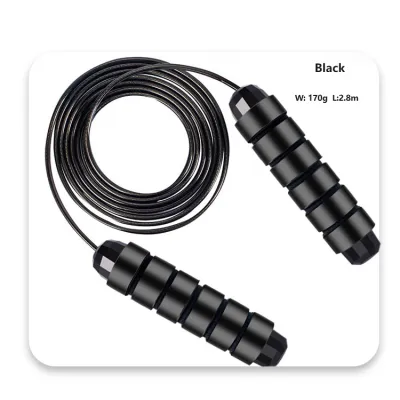
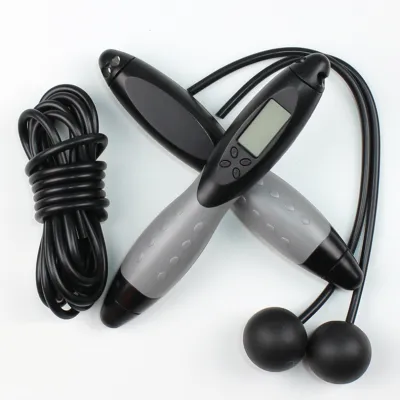
![[Ready Stock] Neon Colour Skipping Rope](https://img.lazcdn.com/g/p/c13444921594b2198d689e2bddcafe33.png_400x400q80.png_.webp)
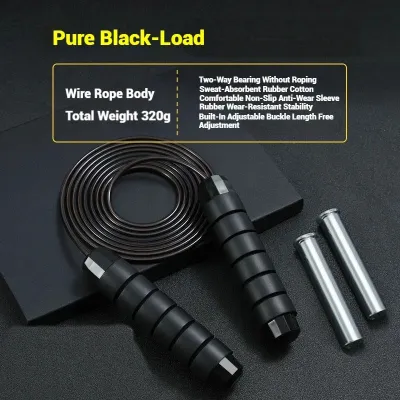
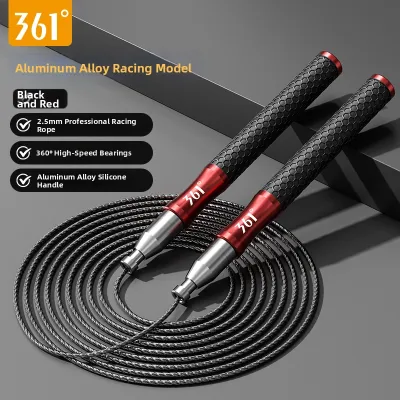
![[Ready Stock] 3 Piece Sports Set - Skipping Rope Chapteh and 5 Stone](https://img.lazcdn.com/g/p/a58dc0b1f48a38ab7719d54bf14610bd.jpg_400x400q80.jpg_.webp)
Prices are valid at publication and may change. Please refer to the product page for the latest price.
Thicker or slightly weighted ropes also reduce the frequency of tripping. Lightweight cables tend to lose their shape or flutter if your hand positioning is slightly off, leading to tangled feet and interrupted momentum. A rope with a bit of substance maintains its arc even when your form isn’t perfect, making your practice sessions much more forgiving.
Additionally, easy adjustability is a non-negotiable feature for beginners. As you progress, your optimal rope length will change. Beginners typically need a slightly longer rope to allow for a wider margin of error, while intermediate jumpers prefer a shorter rope for faster, more efficient rotations. Choosing a rope with a simple, tool-free locking mechanism ensures you can make quick adjustments as your posture and technique improve, or if you share the equipment with another family member.
Rope Materials and Weight: Finding the Right Feedback
The material of the cord determines how the rope behaves in the air, how much feedback it provides, and where it can be used safely. For adult beginners, the three most common options are solid PVC, beaded cords, and thin steel cables. Understanding how these materials perform will help you select the right tool for your learning curve.

Solid PVC or vinyl ropes are the standard choice for general fitness. These ropes typically feature a cord diameter of around four to five millimeters, which provides a balanced weight. They are heavy enough to offer decent tactile feedback but light enough to allow for sustained cardiovascular workouts without causing premature shoulder fatigue. PVC ropes are highly durable, relatively inexpensive, and can withstand moderate outdoor use. However, they can become stiff in cold environments, though this is rarely an issue in warmer climates.
Beaded ropes consist of a nylon inner cord threaded with lightweight plastic segments or “beads.” This design is highly recommended for absolute beginners who struggle with timing. The beads add weight to the cord, which slows down the rotation and creates a distinct “clicking” sound every time the rope hits the ground. This auditory cue, combined with the strong physical feedback, makes it much easier to synchronize your jumps. Furthermore, beaded ropes naturally resist tangling and maintain their loop shape exceptionally well, even at slow speeds.
In contrast, bare steel cables or ultra-light speed ropes are generally unsuitable for beginners. These cables are designed for maximum speed and minimal resistance, offering almost no tactile feedback. If you mis-time a jump with a steel cable, the impact on your shins or toes can be incredibly painful, which often discourages beginners from continuing. Save the speed ropes for when you have mastered the basic bounce and are looking to transition into advanced speed training.
Handle Design and Grip for Humid Climates
The handles are your only point of contact with the skipping rope, making their design critical for comfort, control, and safety. In warm and humid environments, such as Singapore, sweat can quickly turn a smooth handle into a slippery liability, leading to hand fatigue and dropped ropes.
When evaluating handle materials, look for options that offer reliable slip resistance. Foam grips are soft and comfortable initially, but they tend to absorb sweat, which can lead to hygiene issues and a heavy, damp feel over time. Bare plastic handles are easy to clean but can become incredibly slick when wet. Textured silicone or rubberized grips offer an excellent middle ground, providing a secure hold that does not absorb moisture and can be easily wiped down after a workout. Some fitness enthusiasts also prefer wrapping their handles with grip tape, similar to what is used on tennis rackets, for customized sweat absorption and traction.
The internal mechanism of the handle also affects the smoothness of the rotation. You will generally find ropes equipped with either basic plastic bushings or metal ball bearings. While high-speed competitive bearings are unnecessary for beginners, a simple ball-bearing system is highly beneficial. It ensures that the rope rotates smoothly without twisting or tangling at the handle connection, allowing you to focus entirely on your footwork rather than fighting a kinked cord.
Finally, consider the thickness and length of the handles. Handles that are too thin can cause your hands to cramp, as you have to squeeze harder to maintain control. Look for contoured or slightly thickened handles that fit naturally in your palm. Longer handles can also offer a bit of extra reach, which is helpful for beginners who tend to hold their hands too far away from their hips during the learning phase.
How to Measure and Adjust Your Rope Length
Using a skipping rope that is not properly sized to your height is one of the most common causes of tripping, poor posture, and joint strain. Fortunately, adjusting a rope to your body is a straightforward process that you can do at home before your first workout.
To find your starting length, use the classic “step-on-the-middle” measurement method. Stand flat-footed on the exact center of the rope with one foot. Pull the handles straight up along the sides of your body. For an absolute beginner, the tips of the handles (where the cord meets the handle) should reach your armpits or the top of your shoulders. This extra length provides a generous clearance arc over your head and under your feet, compensating for slightly wide arm movements. As your form improves and you learn to keep your elbows tucked close to your ribs, you can shorten the rope so the handles align with your mid-chest.
Most modern skipping ropes feature adjustable locking mechanisms inside or just outside the handles. These typically consist of adjustable plastic clips, thumb screws, or compression collars. To adjust the length, slide the locking mechanism to the desired position, test the length, and secure it. If your rope has a permanent excess of cord inside the handle that causes it to rattle or jam, you may need to cut the excess material using wire cutters or heavy-duty scissors. Always leave a few centimeters of extra cord inside the handle initially, just in case you need to lengthen the rope later.
Pay close attention to how the rope behaves during your workouts to determine if the length is correct. If the rope is too long, it will slap the ground excessively far in front of you, causing it to bounce up and catch your feet, or it will rotate too slowly, forcing you to jump higher than necessary. If the rope is too short, you will find yourself constantly hitting your head or toes, or you will instinctively hunch your shoulders and bend your knees excessively to clear the loop.
Condition-Based Shortlist: Matching Rope Types to Your Fitness Goals
To help you make a practical decision, you can match the type of skipping rope to your primary fitness objectives and the environment where you plan to train.
If your primary goal is general cardio, endurance, and weight loss, a standard PVC rope is highly effective. Look for a PVC cord with a thickness of four to five millimeters and comfortable, non-slip handles. This setup allows you to maintain a steady, moderate pace for longer durations, helping you build stamina without overloading your shoulders or wrists.
If you want to focus on coordination, rhythm, and learning basic footwork drills, a beaded rope is the superior choice. The heavy plastic beads provide the distinct auditory and physical feedback needed to master the timing of your jumps. It is also highly forgiving of minor hand placement errors, making your learning process much smoother and less frustrating.
If you plan to exercise outdoors on rough surfaces, such as concrete void decks, outdoor fitness corners, or asphalt paths, durability is your main priority. Rough ground will quickly shred thin plastic coatings. Opt for a heavy-duty beaded rope or a thick PVC rope equipped with a protective outdoor sleeve. The plastic beads on a beaded rope act as individual shields; even if some beads wear down over time, they can be easily replaced without needing to buy an entirely new rope.
Before making a purchase, use this quick verification checklist to ensure the rope meets your beginner needs:
- Adjustability: Does the rope feature a tool-free or simple locking mechanism, rather than requiring permanent knots?
- Cord Material: Is the cord made of solid PVC or beaded nylon, rather than bare steel wire?
- Handle Grip: Are the handles textured, rubberized, or wrapped to prevent slipping when wet?
- Rotation Mechanism: Does the rope utilize a smooth bushing or ball-bearing system to prevent twisting?
- Cord Thickness: Is the cord at least four millimeters thick to ensure adequate tactile feedback?
- Affordability: Is the rope priced reasonably (typically under S$20 to S$30 for a high-quality beginner model) so you can test your interest without a major financial commitment?
Frequently Asked Questions (FAQ)
How often should a beginner practice jump rope?
As a beginner, it is best to start with short, frequent sessions rather than long, exhausting workouts. Aim for three to four sessions per week, keeping each session to about ten to fifteen minutes. Within those fifteen minutes, focus on short intervals, such as jumping for thirty seconds followed by thirty seconds of rest. This approach allows your cardiovascular system to adapt while preventing excessive fatigue, which is when form breaks down and injuries occur.
Always listen to your body and prioritize rest days. Jumping rope is a high-impact activity that puts significant stress on your calves, ankles, and feet. To avoid common overuse injuries like shin splints or tendonitis, ensure you wear supportive athletic shoes with good forefoot cushioning, and never skip a proper warm-up and cool-down routine.
Can I use a jump rope on concrete or asphalt?
While it is physically possible to jump on concrete or asphalt, doing so is highly discouraged for both your body and your equipment. Hard, unforgiving surfaces do not absorb any impact energy, meaning that the shock of every landing is transmitted directly up through your ankles, shins, knees, and lower back. This significantly increases your risk of developing joint pain and shin splints.
Additionally, rough outdoor surfaces act like sandpaper on skipping ropes. A PVC or vinyl cord will quickly wear down, fray, and eventually snap when dragged repeatedly across rough concrete. To protect your joints and extend the lifespan of your rope, try to jump on more forgiving surfaces. Excellent options include rubber gym mats, interlocking foam tiles, wooden gym floors, or smooth outdoor running tracks. If you must jump on concrete, investing in a portable rubber jump rope mat is a highly effective way to create a safe, cushioned workout space anywhere.

Community discussion
Share your experience or ask a question. Comments are reviewed before publication.