
Selecting the ideal thick rubber resistance band requires balancing your current physical capabilities with your specific training objectives. While these versatile tools are excellent for adding progressive overload, assisting with bodyweight movements, or enhancing mobility, choosing an incorrect thickness can lead to poor form or joint strain. Because physical dimensions do not universally correspond to a specific tension level across different manufacturers, you must evaluate how a band’s resistance curve aligns with your movement patterns before integrating it into your routine.
A systematic approach to selection ensures you invest in equipment that matches your actual training needs. By assessing your baseline strength, defining your primary workout goals, and learning how to verify tension levels, you can build a highly effective home or gym setup. This guide provides a practical framework to help you identify the right band thickness and safely adjust its resistance during your workouts.
Assess Your Current Strength Baseline Before Choosing a Thickness
Before purchasing a thick rubber band, you must evaluate your current lifting capacity and joint stability. Your baseline strength in key compound movements, such as the squat, deadlift, or overhead press, serves as a reliable starting point. If you regularly train with free weights, you can use your working weight ranges to estimate the level of band tension that will challenge your muscles without compromising your movement mechanics.
Products mentioned in this guide
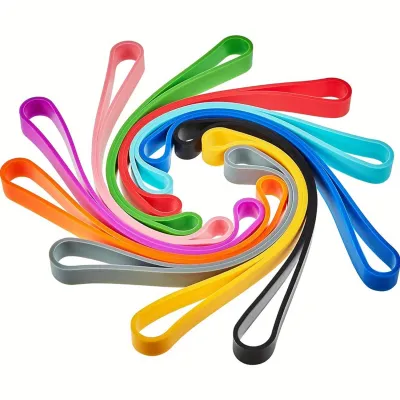
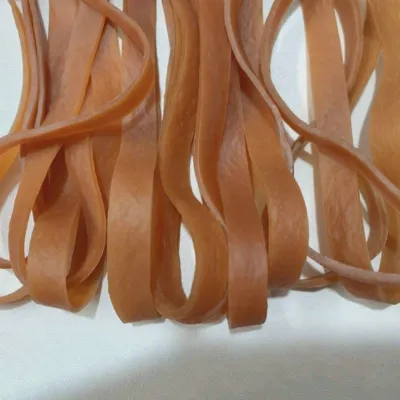

Prices are valid at publication and may change. Please refer to the product page for the latest price.
Joint health and injury history are equally critical factors when determining the appropriate band thickness. Thicker bands generate high levels of tension that peak rapidly as the band stretches, which can place sudden stress on stabilizing joints like the shoulders, elbows, and knees. If you are recovering from an injury or have joint laxity, starting with a lower-tension band allows you to build stability safely before progressing to thicker, more rigid options.
You must also clarify whether the band will serve as the primary source of resistance or as an assistive tool. For exercises like pull-ups or dips, a thicker band provides more upward assistance, making the movement easier for beginners. Conversely, if you are using the band to add resistance to a barbell squat or deadlift, an overly thick band can create an unsafe load at the peak of the movement, meaning you should opt for a moderate thickness that you can control throughout the entire range of motion.
Match Rubber Band Thickness to Your Specific Training Goals
Different training objectives require distinct band profiles to achieve the desired stimulus. For rehabilitation, joint mobilization, and dynamic warm-ups, thin to light-medium bands are the most appropriate choice. These bands offer low, highly controllable tension that allows for full joint articulation without overloading delicate stabilizing muscles, making them ideal for rotator cuff preparation or hip distraction stretches.

If your primary goal is muscle hypertrophy, general strength conditioning, or high-repetition fitness training, medium-thickness bands offer the most versatility. This thickness provides sufficient tension to stimulate muscle growth across compound movements like rows, chest presses, and bicep curls. The moderate resistance profile allows you to maintain a smooth, controlled tempo, which is essential for maximizing time under tension and promoting muscular endurance.
For powerlifting assistance, heavy stretching, and intense lower-body training, extra-thick rubber bands are necessary. These robust bands are designed to offset heavy barbell loads, facilitate deep hamstring or hip flexor stretches, or provide substantial assistance during advanced bodyweight exercises. Because of their high resistance, these bands require significant core stability and grip strength to manage safely, making them best suited for experienced lifters who have established a solid movement foundation.
How to Verify Resistance Levels When Thickness Labels Are Unclear
Because there is no universal industry standard for color-coding or physical dimensions, you cannot rely solely on a band’s color or physical width to determine its tension. A red band from one manufacturer might offer light resistance, while a red band from another could be designed for heavy powerlifting. To avoid purchasing the wrong equipment, always check the product packaging or the manufacturer’s official website for verified tension ranges, which are typically expressed in weight equivalents.
Performing a manual stretch test is a practical way to gauge a band’s tension curve before using it under a heavy load. Secure one end of the band under a stable anchor or your feet, and pull it to the approximate length it will reach during your target exercise. This allows you to feel how the resistance builds and compare the sensation to known dumbbell or barbell weights, helping you determine if the tension is manageable for your current fitness level.
When shopping on an online marketplace or at a local sporting goods store, look for detailed manufacturer charts that correlate band width, thickness, and length with specific resistance ranges. If a product listing lacks this technical information, it is best to look for alternative options that provide clear specifications. Verifying these details beforehand prevents training setbacks and ensures that the band you receive matches your physical capabilities and safety requirements.
Adjusting Tension During Workouts Without Changing Bands
One of the greatest advantages of thick rubber resistance bands is their adaptability, allowing you to modify tension without switching to a different band. To increase the effective resistance of a single band, you can fold it in half or loop it around your anchor point multiple times. This shortens the active length of the rubber, causing it to stretch more rapidly and deliver higher tension earlier in the movement path.
Alternatively, you can combine multiple thinner bands to create a highly customized, incremental resistance level. This stacking method is often superior to using a single, extremely thick band, as it allows you to make micro-adjustments as your strength improves or as you fatigue during a workout. Stacking also provides a smoother tension curve, making it easier to maintain proper form throughout the entire range of motion.
Simple adjustments to your body positioning, grip width, or stance can also significantly alter the load on your target muscles. For example, widening your stance during a banded squat increases the pre-stretch tension of the band, making the exercise more challenging. Conversely, narrowing your grip or stepping closer to the anchor point reduces the stretch distance, allowing you to complete your sets safely when your muscles begin to fatigue.
Frequently Asked Questions (FAQ)
Can I use a thick rubber band for upper body isolation exercises?
Using an exceptionally thick rubber band for upper body isolation movements, such as lateral raises or tricep extensions, carries a high risk of overloading smaller joints. Wrists, elbows, and shoulders are highly susceptible to strain when subjected to the sudden, aggressive tension curves typical of thick bands. To perform these exercises safely, you should choke the band to reduce its active length or adjust your anchor point to minimize the stretch distance, ensuring the resistance remains manageable throughout the movement.
How do I know when it is time to replace my thick resistance band?
To ensure your safety during workouts, you must regularly inspect your thick resistance band for signs of wear and structural degradation. Look closely for micro-tears, small cracks along the edges, white stress marks, or a noticeable loss of elasticity and snap-back speed. If you observe any of these issues, replace the band immediately to prevent it from snapping under tension. To prolong the lifespan of the rubber, store your bands in a cool, dry place away from direct sunlight and extreme heat.

Community discussion
Share your experience or ask a question. Comments are reviewed before publication.