
Selecting the right weighted jump rope requires balancing two critical factors: the location of the weight and the physical length of the cable. To find your ideal setup, you must match the rope’s weight distribution to your fitness goals—whether you want to build upper-body endurance or improve cardiovascular speed—and adjust the cable length to match your height and jumping experience. Getting these specifications right prevents tripping, protects your joints, and ensures your workouts remain effective over time.
Decoding Weight Distribution: Rope vs. Handle Weight
When shopping for a weighted jump rope, you will encounter two primary designs: rope-weighted and handle-weighted. Understanding where the resistance is positioned is crucial because it completely changes how the rope moves and which muscles are engaged during your workout.
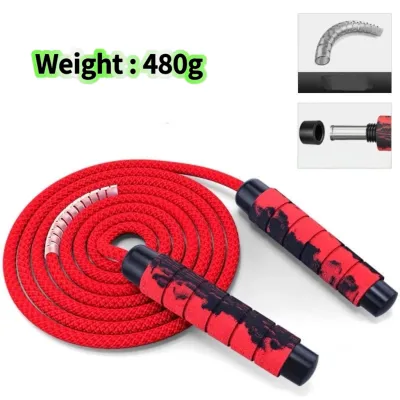
Rope-weighted designs place the actual weight inside the cable itself. As you swing a heavy cable, centrifugal force requires significant upper-body engagement to keep the loop moving. This design targets your shoulders, upper back, forearms, and core, making it excellent for building muscular endurance and strength. Because the weight is distributed throughout the moving arc, the rope provides clear tactile feedback, helping you time your jumps more easily.
Products mentioned in this guide


![[SG Stock]Smart Digital Jump Rope – Cordless Skipping Rope with Counter and Weighted Ball Options for Fitness & Home Gym](https://img.lazcdn.com/g/p/14897ea317ad1ab9f2492e3d675f13fe.png_400x400q80.png_.webp)
Prices are valid at publication and may change. Please refer to the product page for the latest price.
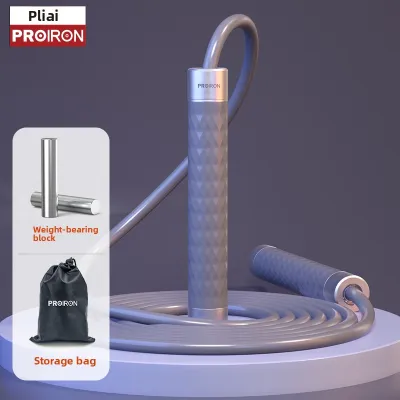
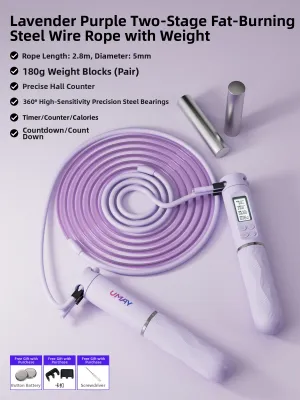
In contrast, handle-weighted designs place removable weights or fixed metal cylinders inside the handles, while keeping the cable relatively light. This setup shifts the workload to your wrists and forearms, accelerating grip fatigue while keeping the rope spinning quickly. Handle-weighted ropes are often used to build wrist speed and control, though they do not offer the same shoulder-burning resistance as a heavy cable.
Before buying, always check the manufacturer’s specifications carefully. Some brands advertise a heavy jump rope when the handles contain most of the weight and the cable is thin. To get the true benefits of a weighted workout, look for product descriptions that explicitly state the weight of the cable itself rather than the combined total of the handles and the rope.
Sizing Your Rope: Matching Length to Your Height
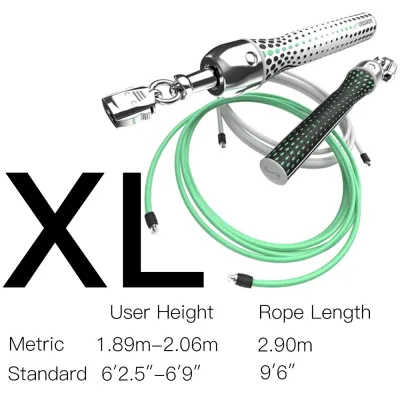
An improperly sized jump rope can ruin your form, cause frequent tripping, and increase the risk of joint strain. While standard height-to-length charts provide a helpful starting baseline, your individual arm span, posture, and jumping style will ultimately dictate the ideal length for your cable.

To find your baseline length, stand on the center of the cable with one foot and pull the handles straight up along the sides of your body. For most jumpers, the tips of the handles should reach your armpits. If you are a beginner, keeping the rope slightly longer—reaching the collarbone—gives you a wider margin of error and a slower rotation speed, which helps you master timing and rhythm.
As your coordination improves, you will likely want to shorten the cable. Advanced jumpers prefer shorter ropes that clear the head by only a few inches, as this minimizes excess movement, increases rotation speed, and reduces shoulder fatigue. A shorter rope forces you to keep your elbows tucked close to your ribs, which is the foundation of efficient jumping form.
When evaluating different models, pay close attention to the adjustment mechanism. Look for ropes with secure, heavy-duty locking screws or adjustable crimps that can be tightened with a tool. Avoid flimsy plastic clips that might slip under the high centrifugal force of a heavy cable, as a loose locking mechanism can cause the rope to fly out of the handle mid-swing.
Aligning Specs with Your Fitness Level and Goals
Your current fitness level and specific training objectives should guide the weight increments you choose. If you are new to jump rope training, starting with a massive cable can lead to rapid fatigue and poor form. Instead, beginners should look for a light weighted rope, typically around 1/4 pound to 1/2 pound (approximately 110 to 225 grams). This range provides enough weight to feel the rope’s position without overwhelming your shoulders, making it ideal for mastering timing, speed, and cardiovascular conditioning.
For intermediate and advanced fitness enthusiasts aiming to build upper-body strength and muscular endurance, heavier cables ranging from 1 pound to 2 pounds (about 450 to 900 grams) are highly effective. These heavier ropes slow down the rotation speed, forcing your upper body to work continuously to maintain momentum. This slower pace can actually help you focus on form, provided your shoulders and grip can handle the resistance.
Your physical workout environment also plays a role in your sizing decision. In Singapore, where many fitness enthusiasts train indoors in apartments with lower ceilings, a slightly shorter rope is often necessary to avoid hitting light fixtures or ceiling fans. If you plan to train in tight indoor spaces, choosing an easily adjustable rope allows you to shorten the cable slightly to accommodate low clearance, whereas outdoor training in open parks allows for a standard, full-length setup.
To ensure long-term progress, consider purchasing a system with interchangeable cables. Starting with a lighter cable and gradually moving to heavier weights allows you to apply the principle of progressive overload safely. This prevents your workouts from plateauing and protects your rotator cuff muscles from the sudden strain of a heavy rope.
Essential Build and Material Checks
The materials and construction of your weighted jump rope directly impact its durability and how smooth it feels during use. Heavy cables are typically made of thick PVC or steel wire coated in protective polyurethane. If you plan to jump on rough outdoor surfaces like concrete or asphalt, check the manufacturer’s care labels to ensure the coating is rated for outdoor use, as abrasive ground can quickly shred unprotected cables.
The handles require equal scrutiny. Look for textured grips, such as knurled aluminum, rubberized sleeves, or moisture-wicking tape, which prevent the handles from slipping out of sweaty hands during intense sessions. Additionally, high-quality ball bearings inside the handles are essential for weighted ropes. Smooth, fluid bearings prevent the cable from twisting or tangling, ensuring a consistent rotation arc and reducing strain on your wrists.
Finally, because finding the perfect weight and length can involve some trial and error, review the retailer’s return and exchange policies before purchasing. Some brands offer satisfaction guarantees or allow you to swap cable sizes if you discover the weight is too taxing or the length is incorrect after your first few test swings. Checking these terms beforehand protects your investment and ensures you end up with the ideal fitness tool.
Frequently Asked Questions (FAQ)
Can I use a weighted jump rope on concrete or rough surfaces?
Using a weighted jump rope directly on concrete, asphalt, or other abrasive outdoor surfaces will rapidly wear down the protective outer coating of the cable. The friction from rough ground can crack PVC or strip the polyurethane coating off steel cables, exposing the inner core and ruining the rope. To extend the lifespan of your equipment, check the product specifications for heavy-duty, abrasion-resistant outdoor cables, or perform your workouts on smoother surfaces like rubber gym flooring, wooden decks, or outdoor sports courts. Alternatively, placing a dedicated jump rope mat on the concrete provides an excellent protective barrier that cushions your joints and saves your cable from premature wear.
How do I know if my weighted jump rope is too heavy for me?
You will know a weighted jump rope is too heavy if your form breaks down almost immediately or if you experience sharp pain in your shoulders, wrists, or lower back. While muscle fatigue is normal, premature grip failure that prevents you from completing more than a few consecutive jumps is a clear sign the weight is excessive. Your posture should remain upright with your shoulders relaxed and elbows tucked; if you find yourself hunching forward or flailing your arms wide to keep the rope moving, the weight is compromising your technique. If these signs occur, downgrade to a lighter cable or shorten your session times to allow your muscles to adapt gradually without risking injury.

Community discussion
Share your experience or ask a question. Comments are reviewed before publication.