
Choosing the right Yonex bag size depends on balancing your active racket count with the volume of extra gear you carry to the court. While a bag’s nominal capacity is measured in rackets, this rating assumes you are packing only frames without protective covers or additional gear. To find your ideal fit, you must account for shoes, apparel, shuttlecock tubes, and your daily commute method, ensuring your equipment remains protected without becoming an unnecessary burden during travel.
Assess Your Racket Count and Protection Needs
The primary function of any racket bag is to safeguard your main sporting tools. Start by counting the exact number of rackets you actively bring to each session. Most recreational players carry two to three rackets to ensure they have a backup if a string snaps mid-game, while competitive players or tournament participants often carry four or more identical setups to maintain consistency across matches.
Simply counting your rackets is not enough; you must also consider how they are stored inside the bag. Placing multiple rackets in a single, unpadded compartment can cause the frames to clash during transit, leading to paint chips, structural scratches, or even structural damage under pressure. If you prefer to keep your rackets pristine, look for bags that offer dedicated dividers or individual slots that isolate each frame.
Products mentioned in this guide
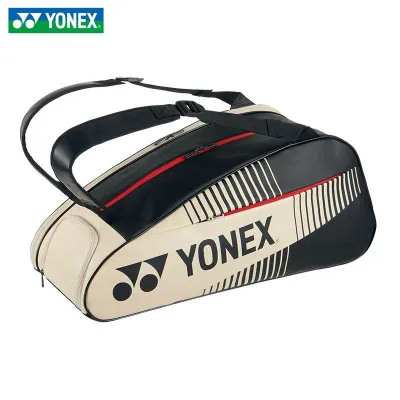
![[SG Local] YONEX Expert Racquet Bag 6 PCS – Backpack Style (Model BA02326) - No CH](https://img.lazcdn.com/g/ff/kf/S7395c5e72d6c4387a79715b3516d1c8bb.jpg_400x400q80.jpg_.webp)
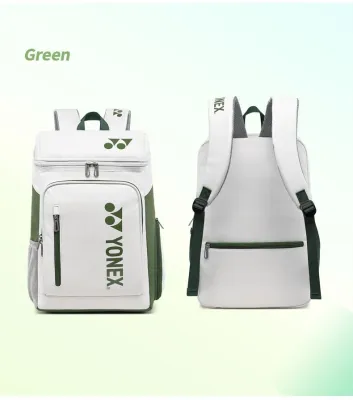
![[😀SG Ready Stock]YONEX YY 1408 series professional badminton bag independent shoe compartment](https://img.lazcdn.com/g/p/bc37ab997b30faf8deb8c0917f220fb4.jpg_400x400q80.jpg_.webp)
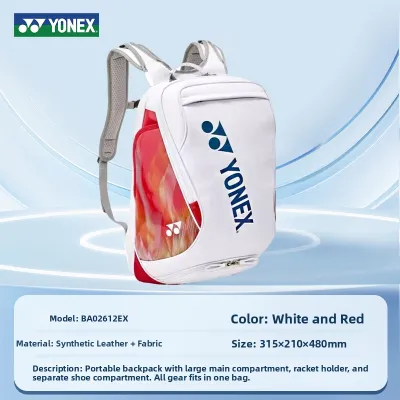
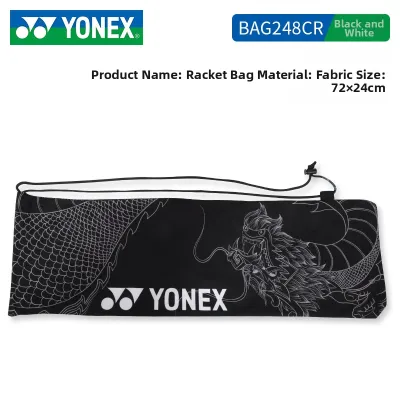
Prices are valid at publication and may change. Please refer to the product page for the latest price.
Furthermore, high-tension strings and graphite frames are sensitive to extreme temperature shifts. When exposed to intense heat, racket frames can warp and string tension can drop rapidly, affecting your control on the court. Mid-to-large Yonex bags often feature specialized compartments with thermal linings designed to shield your gear from external climate fluctuations. If you regularly leave your bag in a warm car trunk or travel through hot outdoor environments, verifying the presence of this thermal protection is a critical step in your selection process.
Calculate Your Extra Gear and Daily Load
Rackets represent only a fraction of the total volume you need to pack for a session. A complete badminton kit includes court shoes, shuttlecock tubes, replacement grip tape, wristbands, and towels. These items quickly consume space, meaning a bag rated for three rackets will struggle to hold much else once two rackets and a pair of shoes are packed inside.

Personal items also demand dedicated space. You will likely need room for a large water bottle, a complete change of clothes for post-game wear, and a small hygiene kit or toiletries. If you head straight to the court from work or school, you might also need to accommodate a laptop, notebooks, or lunch boxes, which requires a highly organized interior layout.
To keep your clean apparel and personal items fresh, look for a bag with a dedicated, ventilated shoe compartment. This feature isolates dirty, damp court shoes from the rest of your gear, preventing odors and court dust from transferring to your clean clothes. Checking the manufacturer’s specifications for an independent shoe pocket—ideally with external access—is highly recommended for anyone playing regularly.
Align the Bag Size With Your Commute and Routine
Your choice of bag size should seamlessly integrate with how you travel to the sports hall. Casual players who visit the court once a week might prioritize a compact, lightweight option that is easy to store at home. Conversely, frequent players or tournament players who spend long hours at sports complexes require larger bags that can sustain them through a full day of matches.
Your commute method heavily influences the practical limits of your bag’s physical footprint. If you travel via public transit like buses or trains, or if you cycle to the court, a massive tournament bag can be highly cumbersome. In these scenarios, a streamlined backpack or a square bag with ergonomic shoulder straps allows you to navigate crowded spaces comfortably. If you drive to your sessions, a larger rectangular bag that fits easily into a car boot might be more convenient, as carrying weight over long distances is less of a concern.
Additionally, consider the storage facilities at your local sports hall or gym. Large tournament bags may not fit into standard locker dimensions, forcing you to keep your bag court-side where it can block walkways or get dirty. Evaluating the physical dimensions of the bag against the storage options available at your regular venues will save you from unexpected logistical headaches.
Map Your Needs to Standard Yonex Bag Capacities
Understanding how Yonex categorizes its bag sizes helps you match your physical gear load to the correct product tier.
3-Racket Bags: These slim, streamlined bags are designed for minimalists. They typically feature a single main compartment that comfortably holds one to two rackets alongside a small towel and a water bottle. If you do not need to carry a change of shoes or extra apparel, this compact size offers a lightweight, highly portable solution.
6-Racket Bags: Often considered the standard choice for the dedicated club player, these bags feature two main compartments. This layout allows you to dedicate one side entirely to two or three rackets, leaving the other side free for shoes, a change of clothes, and a tube of shuttlecocks. It offers the best balance of storage capacity and portability for regular players.
9-Racket Bags: Built with three large compartments, these bags are tailored for competitive players and tournament travelers. They provide ample space to carry four or more rackets in a protected, often thermal-lined section, while leaving two full compartments for extensive gear, multiple shuttlecock tubes, warm-up wear, and food.
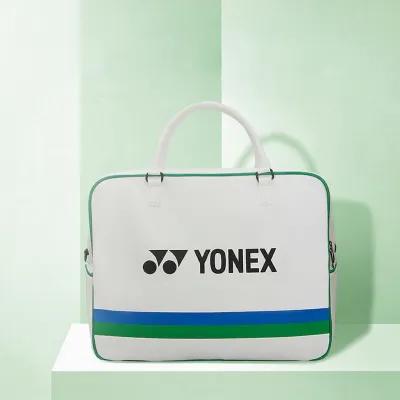
Square Bags and Backpacks: Square bags offer a modern, boxy aesthetic with excellent vertical space efficiency, making them popular for urban commuters who want a stylish yet functional gear carrier. Backpacks are the ultimate choice for casual play or multi-sport fitness integration, featuring a dedicated rear racket slot that keeps your hands free while cycling or walking.
Final Verification Checklist Before You Buy
Before finalizing your purchase, take a moment to verify the exact specifications of your chosen model. Check the manufacturer’s product descriptions to confirm the internal compartment layout, ensuring there are enough zippered pockets to organize small items like keys, phones, and grip tape.
Examine the carrying system closely. Look for thick, adjustable shoulder straps with breathable mesh padding, especially if you plan to carry a heavy 6-racket or 9-racket bag over long distances. Dual-strap configurations that allow you to wear the bag like a backpack are highly beneficial for distributing weight evenly across your shoulders.
Lastly, confirm whether the model includes a thermal-lined pocket if you live or play in high-temperature regions. Protecting your high-tension strings from heat degradation is essential for maintaining consistent performance, making this feature a worthwhile check for serious players.
Frequently Asked Questions (FAQ)
Do I need a thermal compartment for my rackets in Singapore?
Yes, a thermal compartment is highly beneficial in Singapore due to the consistently warm and humid tropical climate. High temperatures can cause graphite frames to experience structural stress and cause badminton string tension to drop prematurely. If you commute outdoors, travel on sunny days, or leave your gear in a car, a thermal-lined pocket helps regulate the internal temperature, preserving your string tension and protecting your racket investment from heat-related damage.
Can I use a standard Yonex backpack for badminton?
Yes, a standard Yonex backpack is an excellent option for casual players and daily commuters. However, you should be aware of the trade-offs regarding racket protection. Most backpacks leave the racket handles exposed to the elements, which can lead to wet or dirty grips if you travel in the rain. Additionally, backpacks offer less overall space for multiple frames, making them best suited for carrying one or two rackets alongside your basic court essentials.

Community discussion
Share your experience or ask a question. Comments are reviewed before publication.