
Starting a home fitness journey in Singapore often begins with a single, versatile piece of equipment: the kettlebell. A 4kg kettlebell is a common entry point for beginners, particularly those looking to master fundamental movement patterns without overloading their joints. Choosing the right one involves evaluating handle comfort, base stability, and material durability to withstand local humidity. By focusing on these physical characteristics and matching them to your specific fitness goals, you can secure a reliable training tool that supports safe, progressive strength development right in your living room. This guide will walk you through the essential criteria for selecting your first kettlebell, ensuring your investment is safe, durable, and highly effective.
Is 4kg the Right Starting Weight for You?
To determine if a 4kg kettlebell is the correct starting point, it is helpful to understand how different exercises place demands on your body. For absolute beginners, a 4kg weight is often suitable for learning complex, multi-joint upper-body movements. Exercises such as the overhead press, the halo, or the Turkish get-up demand significant shoulder stability, core coordination, and wrist control. Starting with a lighter weight like 4kg allows you to focus entirely on your form, reducing the risk of joint strain or compensation patterns where stronger muscles take over for weaker ones.
However, your lower body is naturally much stronger than your upper body. For lower-body dominant movements like squats, deadlifts, or basic swings, the glutes, hamstrings, and quadriceps are highly capable of moving heavier loads. For these exercises, a 4kg kettlebell might quickly feel light, though it remains an excellent tool for practicing hip-hinge mechanics and building confidence before moving to heavier weights. If you are using the kettlebell primarily for cardiovascular conditioning or high-repetition endurance training, the 4kg size can serve as a highly effective tool for longer, continuous sets.
Products mentioned in this guide
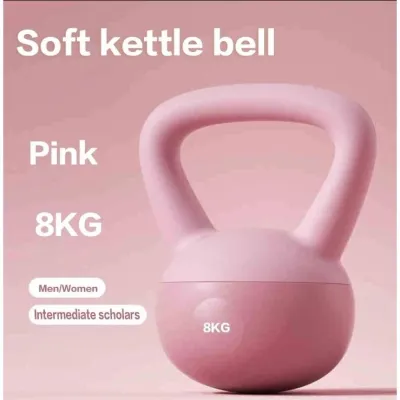
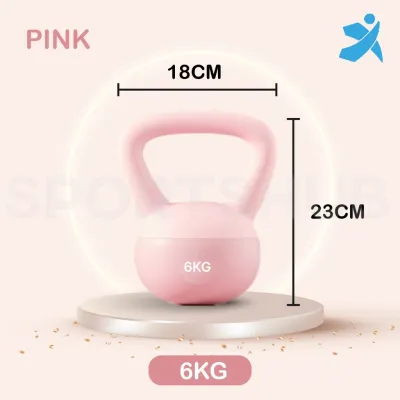
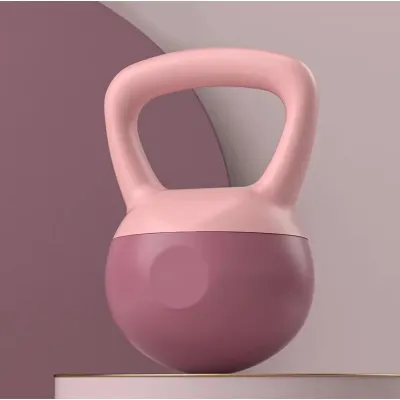
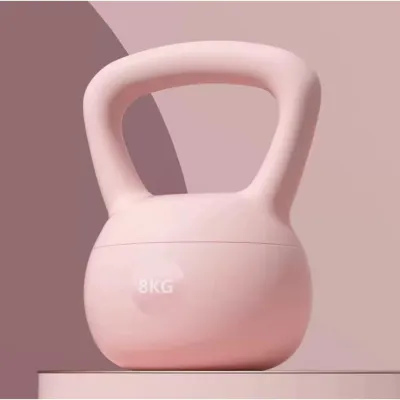
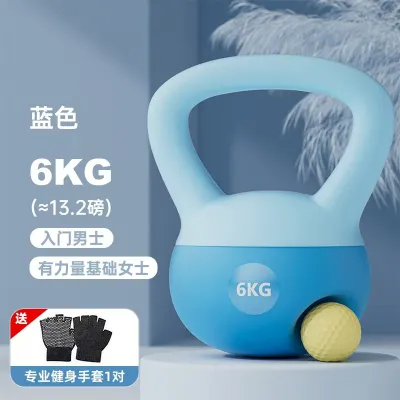
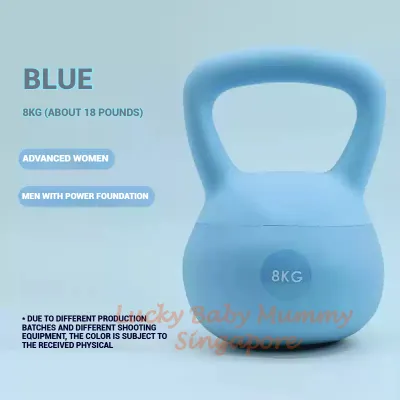
Prices are valid at publication and may change. Please refer to the product page for the latest price.
Paying attention to physical feedback during your workout is crucial for assessing weight suitability. If you can perform an exercise with proper form for more than 15 to 20 repetitions without feeling any muscular fatigue or elevation in heart rate, the weight is likely too light to stimulate strength gains. Conversely, if you struggle to maintain a neutral spine, find your shoulders shrugging excessively, or feel your grip slipping before completing 5 to 8 repetitions, the 4kg load is too heavy for your current strength level.
Stepping up to a heavier weight is a natural progression that should be guided by your performance. You should consider moving up when you can comfortably execute three sets of 12 to 15 repetitions of a specific movement with proper technique and controlled breathing. If your primary goal shifts from learning movement patterns to building explosive power or lower-body strength, transitioning to an 8kg or 12kg kettlebell will eventually be necessary to continue challenging your muscles.
Essential Features to Check Before Buying
When shopping for a 4kg kettlebell, the physical design and construction quality directly impact your safety and comfort. The handle is your only point of contact with the weight, making its design critical. For a 4kg kettlebell, the handle diameter should be comfortable enough for your fingers to wrap around securely without straining your grip. Ensure there is sufficient clearance—the space between the underside of the handle and the bell itself. If this window is too narrow, your knuckles will rub against the bell during transitions, causing discomfort. A good rule of thumb is that you should be able to fit both hands on the handle for two-handed swings, or at least have enough room for a clean, single-handed grip transition.

Another critical feature is the flatness of the base. A stable base is essential for safety, especially if you plan to perform floor-based exercises such as renegade rows, push-ups on the bell, or plank transfers. Look for a kettlebell with a wide, machined flat bottom. If the base is uneven or rounded, the kettlebell can wobble or tip over under pressure, risking wrist strain or finger pinch injuries. Cast iron kettlebells with a molded base are generally more stable than vinyl-dipped ones that may have excess material pooling at the bottom.
Singapore’s high humidity levels present a unique challenge for fitness equipment, as bare metal is highly susceptible to rust. Common coatings include powder coating, vinyl, neoprene, and chrome. Powder-coated cast iron offers a textured, matte finish that holds chalk well and resists chipping, making it a favorite for grip stability. Vinyl or neoprene-encased kettlebells protect your floors from scratches and reduce noise, but moisture can sometimes get trapped underneath the sleeve if not dried properly. Chrome handles look sleek but can become slippery when your hands sweat. To maintain your kettlebell, always wipe it down with a dry microfiber cloth after every session to remove sweat and moisture, and store it in a well-ventilated indoor area rather than a damp balcony.
Seam placement and smoothness are often overlooked but can make or break your workout experience. Cheaper cast-iron kettlebells are often made using two-part molds, which can leave a sharp seam along the underside of the handle. During high-repetition sets of swings or cleans, this rough seam acts like sandpaper against your palms, leading to painful blisters and torn skin. Before buying, run your fingers along the entire handle to verify that it is smooth and free of rough patches, casting bubbles, or sharp ridges. If you find a minor seam on an otherwise good kettlebell, you can sometimes smooth it down with fine-grit sandpaper, but it is often better to purchase a well-finished product from the start.
Navigating Purchase Channels and Seller Verification
Buying fitness equipment in Singapore offers two main paths: visiting a physical sporting goods store or browsing online marketplaces. Testing a kettlebell in-store allows you to physically assess the handle grip, check the balance, and feel the texture of the coating before spending any money. You can perform a few practice swings or presses to ensure the ergonomics suit your hand size. However, physical retail spaces in Singapore often have limited shelf space, meaning they may only carry a few basic models. Online marketplaces and specialized fitness distributors offer a much wider selection of materials, brands, and handle styles, though you must rely on reviews and specifications rather than physical touch.
When shopping online, prioritizing official brand storefronts or authorized local distributors is key to avoiding poor-quality items. Look for sellers with high ratings, positive customer feedback specifically mentioning product packaging and delivery speed, and clear product descriptions. Avoid generic, unbranded listings that do not specify the material composition, as these are often filled with concrete or sand rather than solid cast iron, leading to bulkier dimensions and poor weight distribution.
Because kettlebells are heavy, shipping fees can add up quickly. Some local sellers offer free delivery once you cross a certain spending threshold, while others calculate shipping strictly by weight in S$. Always factor these delivery fees into your total budget. Additionally, review the seller’s return policy. Returning a heavy iron weight due to a minor defect can be costly and inconvenient if the seller does not cover return shipping. Look for local warranties that protect against structural defects, such as the handle separating from the bell, to ensure your investment is secure.
Safe Handling and Initial Workout Boundaries
Even a relatively light 4kg kettlebell can cause lower back strain if lifted incorrectly from the floor. Consistently treat the setup with the same respect as a heavy lift. Stand directly over the kettlebell with your feet hip-width apart, hinge at your hips while keeping your spine neutral, and bend your knees slightly to reach the handle. Engage your core and drive through your legs to stand up, keeping the weight close to your body. Avoid bending over with a rounded back to pick up or set down the kettlebell.
As a beginner, your grip strength will often fatigue before your larger muscle groups do. If you notice your fingers slipping, your wrists bending backward, or your shoulders creeping up toward your ears, these are immediate stopping signals. Continuing to exercise past this point increases the risk of dropping the kettlebell or straining your joints. Rest for a minute or two to allow your grip to recover before starting your next set.
Exercising in a typical Singapore home, such as an HDB flat or condominium, requires careful spatial planning. Ensure you have a clear workout zone of at least two meters in every direction, free of furniture, low-hanging light fixtures, or glass doors. To protect your tiled or vinyl flooring from impact damage and to minimize noise transmission to neighbors living below you, always perform your workouts on a thick, high-density exercise mat or dedicated rubber gym tiles. Avoid dropping the kettlebell directly onto bare residential floors.
Frequently Asked Questions (FAQ)
Should I buy a fixed 4kg kettlebell or an adjustable one?
A fixed 4kg kettlebell, typically made of solid cast iron or steel, offers excellent durability and a consistent center of gravity. Because it has no moving parts, there is minimal risk of components rattling or breaking during dynamic movements like swings or cleans. On the other hand, adjustable kettlebells allow you to change the weight by adding or removing plates or turning a dial. While adjustable models save space and offer a convenient progression path as you get stronger, their mechanisms can sometimes feel bulky, and they may carry a risk of internal parts shifting or wearing out over time if subjected to high-impact drops. For a beginner starting at 4kg, a fixed kettlebell is generally the most reliable and cost-effective entry point.
Can I use a 4kg dumbbell instead of a kettlebell?
While you can perform many basic strength exercises like overhead presses or goblet squats with a 4kg dumbbell, it cannot fully replicate the unique mechanics of a kettlebell. A dumbbell’s weight is evenly distributed on either side of the handle, keeping the center of mass directly in your hand. A kettlebell’s center of mass is offset, hanging several inches below the handle. This offset design creates a pendulum effect during ballistic movements like swings, cleans, and snatches, forcing your core and stabilizing muscles to work harder to control the path of the weight. If your workout routine focuses on dynamic, fluid movements, investing in a dedicated kettlebell is highly recommended.

Community discussion
Share your experience or ask a question. Comments are reviewed before publication.