
Choosing your first baitcasting rod is a pivotal step toward mastering precision casting and handling heavier lures. Unlike spinning setups, a baitcasting rod is designed to work with the reel mounted on top, offering superior leverage, direct line control, and the accuracy needed to target specific structures. To find the right rod, you must look beyond aesthetics and focus on how its power, action, length, and material align with your target species, skill level, and fishing environment.
Understanding Why a Baitcasting Rod Fits Your Goals
Baitcasting tackle is the go-to choice for anglers who need pinpoint accuracy and the power to pull strong fish out of dense cover. While spinning rods excel at casting lightweight lures long distances with minimal effort, baitcasting rods provide unmatched control over your line during the cast. By using your thumb on the reel spool, you can feather the line to slow down the lure, allowing it to land softly on the water exactly where you want it. This level of control is invaluable when targeting precise spots like under overhanging branches, near dock pilings, or along the edges of aquatic vegetation.
In addition to accuracy, baitcasting rods offer significantly more pulling power. The guides on a baitcasting rod face upward, meaning that when a fish pulls down, the line presses against the rod blank, distributing the load across the entire length of the rod. This design allows you to use heavier lines and stronger drag settings, making it much easier to wrestle fish out of thick weeds, submerged timber, or rocky structures. If your fishing goals involve targeting larger species or using techniques that require heavy lures and strong lines, a baitcasting setup is highly effective.
Products mentioned in this guide
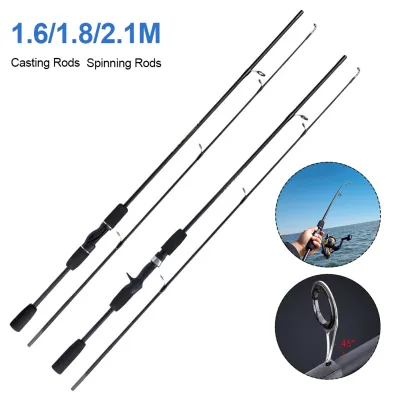
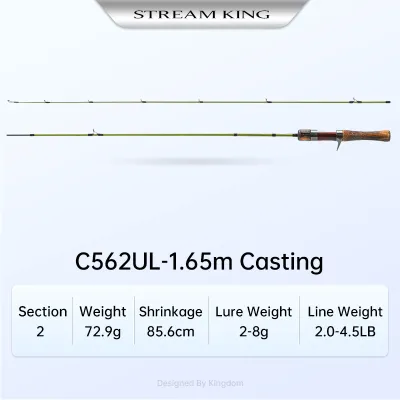
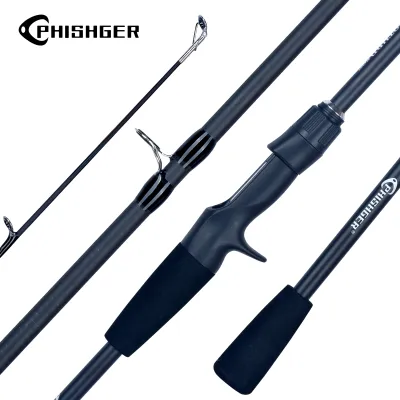
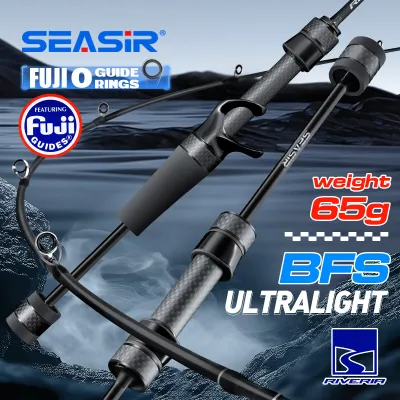
![Abu Garcia [genuine product] New style Black Max BMAX Baitcasting Lure Fishing Rod1.98M/2.13M/1.8M/high Carbon Spinning/casting Fishing Rod hardness ML/M/MH/H/UL/L 2023upgrade](https://img.lazcdn.com/g/p/0a69ceb79fe2193df266724bdef0354a.jpg_400x400q80.jpg_.webp)
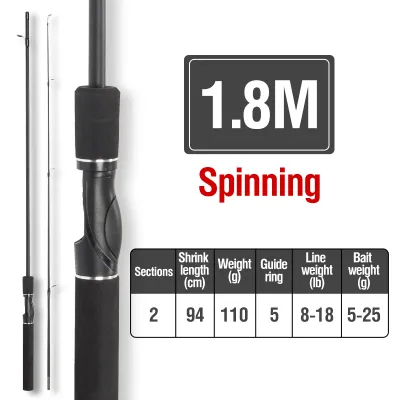
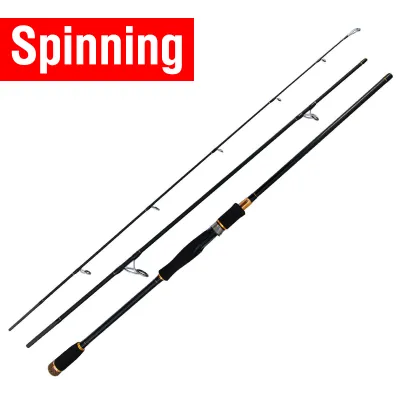
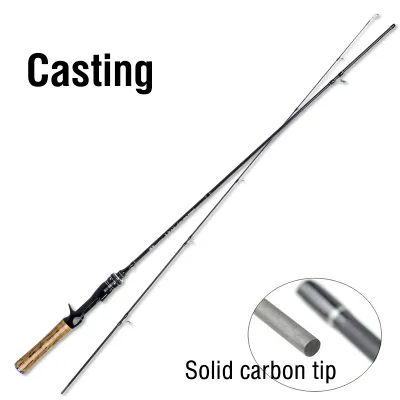
Prices are valid at publication and may change. Please refer to the product page for the latest price.
However, first-time users must prepare for a distinct learning curve. Because the reel spool rotates during a cast, it can spin faster than the line exits the guides, resulting in a tangled mess known as a backlash or “bird’s nest.” Overcoming this requires patience, practice, and a rod that matches your lure weight perfectly to ensure smooth loading and casting.
Decoding Rod Power and Action for Your Target Species
To select the right baitcasting rod, you must first understand rod power, which refers to the amount of force required to bend the rod. Power ratings range from ultra-light to extra-heavy, with medium and medium-heavy being the most versatile options for beginners. A medium-power rod is highly adaptable, handling lighter lines and a wide range of common lures, while a medium-heavy rod provides the extra backbone needed to set larger hooks and pull fish out of moderate cover.

Rod action, on the other hand, describes where the rod bends along its blank when pressure is applied. A fast-action rod bends primarily near the tip, offering high sensitivity and a quick transfer of power for fast hook sets. This makes fast-action rods ideal for single-hook techniques like jigs or soft plastics, where you need to feel subtle bites and drive a thick hook into the fish’s mouth instantly. Conversely, a moderate or slow-action rod bends deeper down the blank, absorbing the shock of a striking fish and keeping treble hooks from tearing out of soft mouths, which is perfect for moving lures like crankbaits.
For a beginner, matching these specifications to your target species is key to success. If you are targeting species in local reservoirs or urban waterways, such as peacock bass or snakeheads, a medium-heavy rod with a fast action is often the most reliable starting point. This combination provides the necessary stiffness to cast medium-sized lures, control aggressive fish, and drive hooks through tough jaws. If you plan to focus primarily on smaller species or open-water casting with treble-hook lures, a medium-power, moderate-action rod will offer a more forgiving experience.
Selecting the Right Rod Length and Blank Material
The physical dimensions and material composition of your rod blank play a critical role in how far you can cast, how much leverage you have, and how well you can feel what is happening underwater. Rod length is a primary consideration, with most baitcasting rods measuring between 6.5 and 7.5 feet. A longer rod, such as one measuring 7 feet or more, provides greater casting distance and allows you to sweep more line during a hook set, which is highly beneficial in open water. However, shorter rods offer much better accuracy and maneuverability, making them ideal if you are fishing from a kayak or navigating tight, brush-lined banks.
The material of the rod blank determines its weight, sensitivity, and durability. Graphite is the most popular choice for modern baitcasting rods due to its exceptional sensitivity and lightweight feel, allowing you to detect the faintest nibbles and fish for hours without fatigue. Fiberglass, while heavier and less sensitive, is incredibly tough and offers a slow, forgiving bend that is highly prized for crankbait fishing. Composite rods combine both materials, offering a balanced middle ground that pairs the sensitivity of graphite with the rugged durability of fiberglass.
Before making a purchase, always verify the manufacturer’s printed specifications on the rod blank, usually located just above the handle. These markings indicate the recommended line weight and lure weight range for that specific rod. Operating outside these recommended limits can severely compromise casting performance or, worse, cause the rod to snap under pressure.
Evaluating the Reel Seat, Handle, and Line Guides
The components attached to the rod blank are just as important as the blank itself, as they directly affect your comfort, control, and the overall durability of your setup. The reel seat is the connection point between your reel and the rod, and it must feature a secure locking mechanism to prevent the reel from shifting during a fight. Look for ergonomic designs that expose a portion of the blank underneath, allowing your fingers to make direct contact with the rod material for maximum vibration transfer and sensitivity.
Handle materials are largely a matter of personal preference, but they offer distinct functional differences. Cork handles provide a classic look, feel warm to the touch, and offer excellent grip, though they can degrade or pit over time with heavy use. EVA foam handles are highly durable, easy to clean, and resistant to slipping even when wet or covered in fish slime. When choosing, consider the handle length as well; a longer handle provides leverage for two-handed casting and fighting large fish, while a shorter handle allows for quick, one-handed casts and easier maneuverability close to your body.
Line guides are the small rings that direct your fishing line along the rod blank, and they must be inspected closely. High-quality guides feature smooth ceramic inserts, such as aluminum oxide or zirconia, housed within sturdy stainless steel frames to minimize friction and heat buildup during casts. This smoothness is critical if you plan to use braided line, which can easily wear down or cut into low-quality guide materials.
Step-by-Step Checklist for Buying Your First Baitcasting Rod
To simplify your decision-making process, follow this structured checklist when selecting and purchasing your first baitcasting rod.
Step 1: Define Your Fishing Environment and Target Species
Begin by identifying where you will fish most often and what species you hope to catch. If you are fishing from the shore of a local reservoir with dense vegetation, your needs will differ from someone casting from a boat in open water. Write down the average weight of the lures you plan to use, as this will serve as the foundation for all your subsequent specification choices.
Step 2: Match Power, Action, and Length to Your Lures
Use your defined lure weights to select the appropriate rod specifications. For general-purpose beginner use, a 6-foot-10-inch to 7-foot rod with medium-heavy power and a fast action is highly recommended. This configuration is versatile enough to handle a wide variety of lures, from soft plastics to medium-sized swimbaits, while providing a forgiving platform for learning casting control.
Step 3: Inspect Build Quality and Verify Specifications
If you are shopping at a local tackle shop, physically hold the rod to check for straightness, secure guide wraps, and a comfortable reel seat. If you are purchasing from an online marketplace, carefully read the detailed product specifications, check customer reviews for feedback on durability, and verify the seller’s return policy. Ensure the rod’s rated line and lure weights align perfectly with your intended setup.
Step 4: Check the Balance with Your Reel
A well-balanced setup is crucial for preventing wrist fatigue during long casting sessions. Mount your chosen baitcasting reel onto the rod and find the balance point, which should ideally rest right where you grip the rod. If the rod feels tip-heavy, it will require constant wrist effort to keep the tip up; if it feels too butt-heavy, casting accuracy may suffer. Ensuring a harmonious balance between rod and reel will make your time on the water much more enjoyable.
Frequently Asked Questions (FAQ)
Can I use a spinning rod for a baitcasting reel?
No, you should not use a spinning rod with a baitcasting reel. Spinning rods are designed with the reel hanging underneath, featuring larger line guides that taper down to manage the wide loops of line coming off a spinning spool. Baitcasting rods have smaller, low-profile guides aligned along the top of the blank to handle the straight line coming off a rotating spool. Additionally, baitcasting rods feature a trigger grip on the reel seat to help you maintain control during a cast, which is absent on spinning rods. Using a baitcasting reel on a spinning rod will result in poor casting distance, line tangles, and potential damage to the rod blank.
What should I look for in a beginner baitcasting rod warranty?
When evaluating a warranty for your first baitcasting rod, look for clear terms regarding manufacturing defects and accidental damage. A good warranty should cover defects in materials and workmanship for at least one year from the purchase date. Since beginners are more prone to accidental breakage—such as car door pinches or high-sticking while trying to free a snag—check if the manufacturer offers a no-questions-asked replacement policy or a discounted crash-replacement program. Always read the claims process to understand if you will be responsible for shipping costs, and keep your purchase receipt in a safe place to ensure a smooth claim experience.

Community discussion
Share your experience or ask a question. Comments are reviewed before publication.