
Choosing your first fishing rod can feel overwhelming when confronted with rows of graphite blanks, varying lengths, and technical jargon. To make the right choice, you must match the rod’s specifications to your intended fishing environment, target species, and casting style. For most beginners, starting with a versatile, medium-power spinning rod offers the easiest learning curve and the greatest flexibility across both freshwater and saltwater spots. By understanding how length, power, action, and materials influence your fishing, you can confidently select a setup that helps you cast accurately and land your first catch.
Define Your Fishing Style and Target Species
Before looking at technical specifications, you need to decide where you will fish most often. Singapore offers diverse angling environments, ranging from tranquil freshwater reservoirs and payponds to bustling coastal jetties and offshore charter boats. If you plan to fish from popular coastal spots like Bedok Jetty or Woodlands Jetty, you will need a setup that can handle saltwater currents and cast heavy sinkers. Conversely, if you prefer casting artificial lures for peacock bass in reservoirs like Lower Peirce or MacRitchie, you will require a lightweight, highly maneuverable setup.
Your target species also dictates your gear requirements. Beginners targeting small snappers, rabbitfish, or halfbeaks along the coast do not need the heavy-duty gear required for offshore groupers or large barramundi in commercial ponds. Matching your rod to the typical size of your target catch prevents you from using a rod that is either too stiff to enjoy the fight or too weak to control the fish.
Products mentioned in this guide
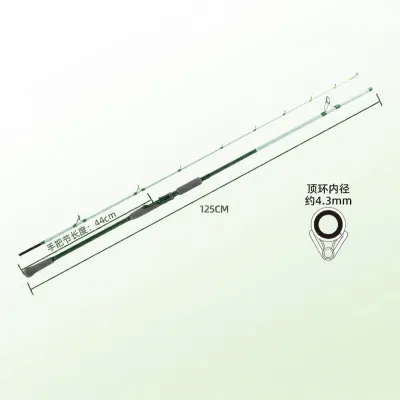
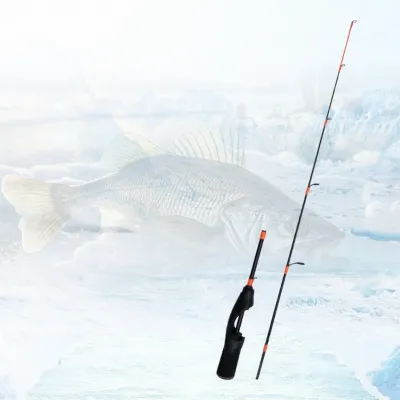
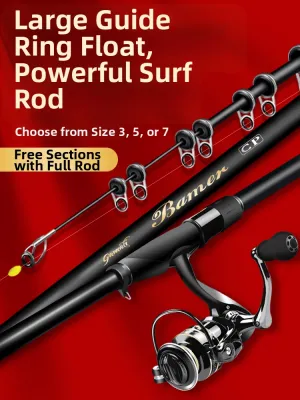
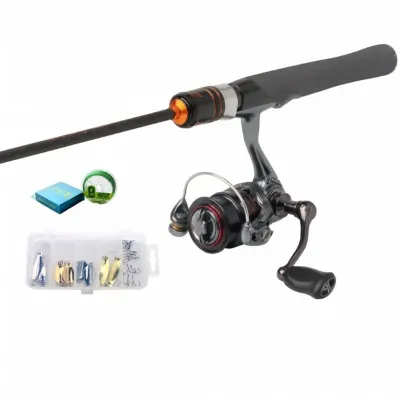
Prices are valid at publication and may change. Please refer to the product page for the latest price.
For almost every beginner, a spinning rod setup is the most practical starting point. Spinning reels mount on the underside of the rod and are highly forgiving, making them easy to cast without the risk of severe line tangles. Baitcasting setups, where the reel sits on top of the rod, offer excellent casting accuracy but require a steep learning curve and precise thumb control that can frustrate newcomers during their first few sessions.
Understand Rod Length and Its Impact on Casting
Rod length directly influences how far you can cast and how much control you have over a hooked fish. Fishing rods generally range from 5 feet to over 10 feet, with each length serving a specific tactical purpose. Choosing the right length requires balancing your physical height, the casting space available, and the distance you need to reach.

Shorter rods, typically between 5.5 and 6.5 feet, excel in tight spaces and offer superior leverage. If you are fishing from a crowded boat, under overhanging trees along a reservoir bank, or within the tight confines of a kayak, a shorter rod is much easier to handle. These rods allow for precise, short-range casts and provide excellent pulling power when fighting a fish directly beneath you, as the shorter lever puts less strain on your wrists.
Longer rods, measuring 7 to 9 feet or more, are designed for maximum casting distance. A longer blank allows you to sweep the rod through a wider arc, generating more tip speed to propel your bait or lure far into the water. This is essential for shore casting or surf fishing, where you must cast past the breaking waves or shallow coastal flats to reach deeper water. Longer rods also help you keep your line clear of jetty railings and rocks.
To help you select, consider this general length checklist for common beginner scenarios:
- Reservoir Lure Casting: A rod between 6'0" and 6'8" offers the ideal balance of accuracy, lightweight handling, and casting distance for lures.
- Jetty and Coastal Bait Fishing: A rod between 7'0" and 8'6" provides the necessary clearance over railings and helps cast weighted rigs further from the shore.
- Boat and Paypond Fishing: A rod between 5'6" and 6'6" gives you maximum control and leverage in tight quarters.
Match Rod Power and Action to Your Target
Understanding rod power and action is crucial for selecting a rod that can handle your chosen fishing style without snapping or failing to hook the fish. These two specifications are distinct attributes that describe how a rod bends under pressure.
Rod power refers to the rod’s resistance to bending, often described as its lifting strength. Power ratings range from Ultra Light (UL) to Heavy (H) or Extra Heavy (XH). An ultra-light rod bends easily and is designed for tiny fish and light lines, while a heavy rod is stiff, built to pull large fish out of heavy cover. For general fishing in local waters, a Medium (M) or Medium-Light (ML) power rod is highly recommended, as it is sensitive enough to detect small bites yet strong enough to handle unexpected larger fish.
Rod action describes where the rod bends along its blank when pressure is applied. Fast-action rods bend primarily near the tip, allowing for quick hook sets and excellent sensitivity, making them ideal for single-hook lures like soft plastics. Moderate-action rods bend down into the middle of the blank, absorbing the shock of hard-fighting fish and making them suitable for moving lures with treble hooks. Slow-action rods bend throughout the entire length of the blank, offering a highly flexible cushion that prevents light lines from snapping.
To verify these specifications, always check the manufacturer’s ratings printed directly on the rod blank, usually just above the handle. This printed label displays the recommended line strength (for example, 8–17 lb) and the recommended lure weight range (such as 1/4–3/4 oz). Operating within these printed limits ensures optimal casting performance and protects your rod from structural damage.
Evaluate Rod Materials and Construction
The material used to construct a rod blank determines its weight, sensitivity, durability, and price. Modern fishing rods are primarily made from fiberglass, graphite, or a composite blend of both materials.
Fiberglass rods are renowned for their extreme durability and flexibility. They can withstand rough handling, accidental bumps against jetty railings, and deep bends without breaking. However, fiberglass is relatively heavy and lacks sensitivity, making it difficult to feel subtle nibbles from smaller fish. This makes fiberglass a budget-friendly, rugged option for heavy bait fishing where sensitivity is secondary to toughness.
Graphite rods, also referred to as carbon fiber, are highly sensitive and lightweight. They transmit vibrations exceptionally well, allowing you to feel the structure of the bottom and the lightest fish taps. The trade-off is that graphite is stiffer and more brittle than fiberglass; it can fracture if subjected to sudden impacts or if bent past its limits, a mistake known as high-sticking.
Composite rods combine graphite and fiberglass to offer a balanced middle ground. These rods leverage the sensitivity and lightweight nature of graphite while incorporating the toughness and flexibility of fiberglass. For a beginner, a composite rod provides a forgiving learning tool that still offers enough sensitivity to learn how to detect bites effectively.
Before purchasing, inspect the rod blank carefully. Run your fingers along the blank to check for any visible cracks, deep scratches, or manufacturing defects. Ensure that multi-piece rods fit together snugly at the joints without twisting or slipping, and check the retailer’s warranty terms to understand what coverage is provided for accidental breakages.
Inspect Reel Seats, Guides, and Handle Comfort
While the rod blank is the core of your setup, the components attached to it directly affect your comfort and line management during long hours on the water. Paying attention to these physical details before buying will save you from frustration later.
Handle materials generally consist of either cork or EVA foam. Cork offers a classic look and a comfortable, warm feel, but it can degrade, stain, and harbor mold over time in hot, humid tropical climates. EVA foam is highly durable, weather-resistant, easy to clean, and provides a secure grip even when your hands are wet or covered in fish slime. For local conditions, EVA foam handles are highly practical and long-lasting.
The guides are the metal loops that direct your line along the rod blank. Inspect the inner inserts of these guides, which should be made of smooth ceramic materials like aluminum oxide or silicon carbide. Smooth inserts minimize friction, allowing for longer casts, and prevent your fishing line from fraying or snapping under tension. Ensure that all guides are perfectly aligned in a straight line down the blank.
Finally, test the reel seat, which is the mechanism that secures your reel to the rod. Look for a sturdy, threaded locking nut system that tightens smoothly. A loose or poorly constructed reel seat will allow the reel to wobble during a fight, ruining your control and potentially damaging your gear.
Assemble Your First Rod and Reel Combo
Once you have selected a rod, you must pair it with a compatible reel and line to create a balanced fishing system. An unbalanced setup can cause hand fatigue and make casting difficult.
Start by matching the reel size to your rod’s power rating. For a standard medium-power rod, a spinning reel in the 2500 to 3000 size range is generally the most appropriate fit. This size provides enough line capacity and drag strength without making the overall setup feel bottom-heavy. Check the reel’s gear ratio as well; a moderate ratio around 5.2:1 to 6.2:1 offers a versatile retrieval speed suitable for both bait fishing and lure casting.
Next, select your fishing line based on the limits printed on your rod blank. For beginners, a high-quality monofilament line of 10 to 15 lb test is highly forgiving, easy to knot, and inexpensive. If you prefer casting lures, a braided line of similar strength offers superior casting distance and sensitivity, though you will need to tie a fluorocarbon leader to the end to prevent fish from seeing the line.
To verify the balance of your assembled combo, mount the reel onto the rod and rest the setup on your index finger placed just in front of the reel seat. A well-balanced combo should sit relatively level or tip slightly forward. If the rod tip dives sharply downward or the handle drops heavily, the components are mismatched, which can lead to casting fatigue during long fishing sessions.
Frequently Asked Questions (FAQ)
What is the most versatile fishing rod for a beginner?
A medium-power, fast-action spinning rod measuring between 6 feet 6 inches and 7 feet is widely considered the most versatile setup for a beginner. This configuration is sensitive enough to cast light lures in reservoirs, yet possesses enough backbone to handle bait rigs at coastal jetties. The fast action provides excellent bite detection and quick hook sets, making it highly adaptable to a wide variety of local fishing techniques.
How much should I spend on my first fishing rod?
For your first fishing rod, a budget of S$50 to S$120 is generally sufficient to secure a reliable, durable entry-level rod or a pre-assembled rod and reel combo. At this price point, you can find quality composite or graphite blanks with durable EVA handles and reliable guides. It is wise to prioritize durability and a straightforward warranty over premium, ultra-lightweight materials, as your first rod will likely experience some rough handling as you learn.
Can I use a freshwater rod for saltwater fishing?
You can use a freshwater rod in saltwater, but you must take strict precautions to prevent rapid corrosion. Saltwater is highly corrosive and can quickly ruin non-treated metal guides, reel seats, and structural components. If you use freshwater gear in the sea, you must thoroughly rinse the entire rod with fresh, running water immediately after your session, dry it completely, and inspect the guides regularly for any signs of rust or green oxidation.

Community discussion
Share your experience or ask a question. Comments are reviewed before publication.