
Selecting your first golf towel is a straightforward yet essential step in assembling your golf gear. The right towel keeps your club grooves clean for optimal spin, ensures your grips remain dry for a secure swing, and wipes your ball clean on the green. To make the best choice, you need to evaluate fabric materials, physical dimensions, and attachment mechanisms that suit your playing style and local weather conditions. In humid tropical climates, where sudden downpours and high humidity are common, a quick-drying, highly absorbent towel is essential for maintaining dry grips and clean clubfaces throughout your round.
Why a Dedicated Golf Towel Matters for Beginners
When a club strikes a golf ball, the grooves on the clubface channel away water, grass, and dirt, much like the tread on a car tire. If these grooves are clogged with mud or grass clippings, the ball will slide up the face instead of grabbing, resulting in a flyer with significantly reduced spin and unpredictable distance. For a beginner trying to establish a consistent swing, this inconsistency can be highly frustrating.
Grip maintenance is equally critical. In warm, humid environments, perspiration and high humidity can quickly make rubber or synthetic grips slick. A slippery grip forces you to squeeze the club tighter, creating tension in your forearms that disrupts your natural swing tempo. Having a dry, dedicated section of your towel to wipe your hands and grips before every shot helps maintain a relaxed, secure hold.
Products mentioned in this guide
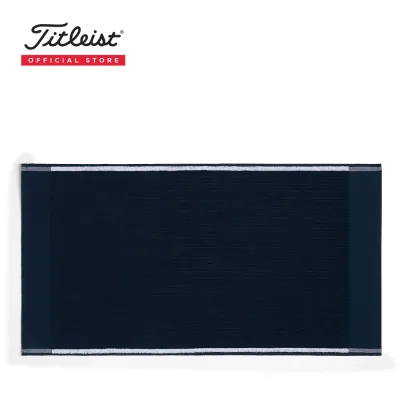
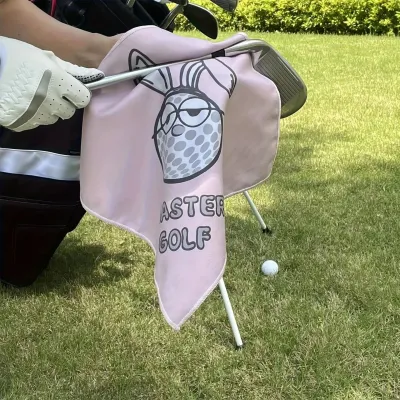
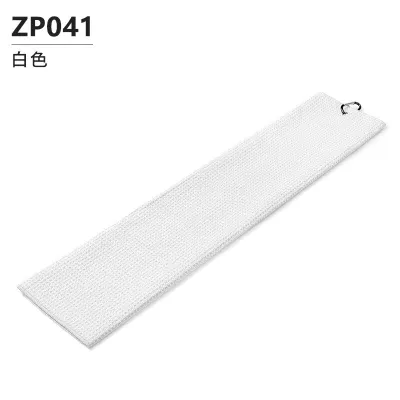
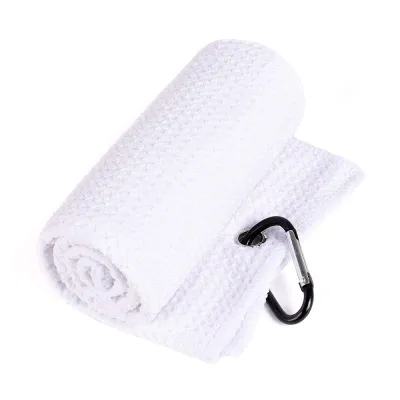
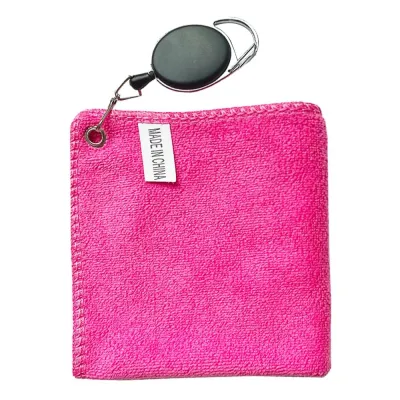
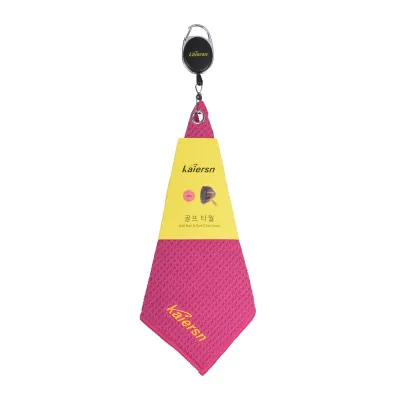
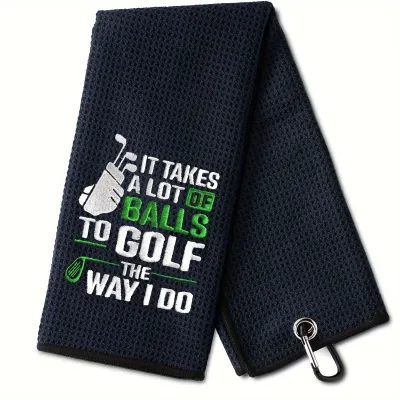
Prices are valid at publication and may change. Please refer to the product page for the latest price.
Finally, cleaning your golf ball on the green is a simple habit that directly impacts your score. Debris on the ball can easily deflect it off its intended line, turning a well-read putt into a miss. Under the rules of golf, you are permitted to lift and clean your ball once it is on the putting green, making a handy towel an indispensable tool for this specific routine.
Choosing the Right Material: Microfibre vs. Terry Cloth
The material of your golf towel dictates how well it absorbs moisture, how easily it releases dirt during washing, and how quickly it dries between holes.

Microfibre has become the dominant material on modern golf courses, and for good reason. Made from synthetic blends of polyester and polyamide, microfibre features split fibres that create a vast surface area capable of trapping tiny dirt particles and absorbing several times its weight in water. Many microfibre golf towels feature a waffle-weave pattern, which creates small, recessed squares that act as gentle scrubbers to clean club grooves without scratching delicate finishes. Additionally, microfibre dries rapidly, making it highly suitable for humid climates where cotton towels might remain damp and develop musty odors.
Terry cloth, typically made from cotton, is the traditional choice favored by many purists. It offers a thick, plush feel and excellent heavy-duty wiping capability, making it highly effective for clearing thick mud or heavy wet sand from clubheads. However, cotton is significantly heavier than microfibre, especially when wet. It also retains moisture for a much longer period, which can add noticeable weight to your golf bag during a rainy round and requires more time in the laundry cycle to dry completely.
Some manufacturers offer hybrid blends or dual-textured towels to provide the best of both worlds. These designs might feature a soft, smooth microfibre section on one side for wiping hands, glasses, or delicate club shafts, paired with a rougher, heavy-duty scrubbing weave or a nylon mesh patch on the reverse side for stubborn dirt.
Before purchasing, always check the care label on the towel. Microfibre requires specific laundering care; washing it at excessively high temperatures or using standard fabric softeners can clog the synthetic fibres, drastically reducing their absorbency and dirt-trapping capabilities over time.
Finding the Ideal Size and Shape for Your Bag
Golf towels come in various shapes and sizes, and the right choice depends heavily on how you transport your clubs around the course.
Standard rectangular towels offer a versatile balance of surface area and portability. These are large enough to provide separate clean and dirty zones while remaining compact enough not to drag on the ground when hung from a standard stand bag. If you prefer to walk the course and carry your bag, minimizing weight is crucial, making a smaller, lightweight rectangular towel the most practical option.
For players who primarily use a pushcart or ride in a motorized golf cart, larger caddy towels are a popular alternative. These oversized towels offer maximum surface area, allowing you to keep a large portion of the towel wet for cleaning clubs while leaving the rest dry for your hands. However, their bulk and weight make them less practical for carrying players, as they can easily get caught in the folding legs of a stand bag or drag in the grass, collecting dew and dirt.
The surface texture of the towel also plays a role in its effective size. A towel with a deep waffle-weave or ribbed pattern provides more functional cleaning surface area than a flat, smooth towel of the same physical dimensions. This textured surface allows you to clean deep into the grooves of your irons with minimal effort.
To ensure a proper fit, perform a quick spatial verification before buying. Measure the distance from your golf bag’s towel ring or accessory loop to the ground. You want to ensure that when the towel is attached, it hangs clear of the turf to prevent it from absorbing ground moisture and dirt as you walk.
Attachment Features: Clips, Carabiners, and Grommets
How your towel attaches to your bag affects both its security and how easily you can use it during a round.
Many traditional golf towels feature a metal grommet—a reinforced eyelet pressed into the corner or center of the fabric. This grommet provides a durable hole through which you can thread a clip or carabiner. When inspecting towels with grommets, verify that the metal is rust-resistant, such as brass, stainless steel, or anodized aluminum. In humid or rainy conditions, cheap metal grommets can quickly rust, staining the fabric and making the attachment difficult to use.
Carabiners and quick-release spring clips are the most common attachment hardware. They allow you to securely clip the towel to your bag’s D-ring, ensuring it won’t fall off when bumping along in a cart or walking down the fairway. A quick-release mechanism is highly convenient, as it allows you to easily detach the entire towel and take it with you to the putting green to clean your ball, rather than carrying your whole bag or walking back and forth.
Magnetic attachments are a modern innovation gaining popularity among cart riders. These systems use a powerful magnet embedded in the towel or attached via a clip, allowing you to stick the towel directly to the metal frame of a golf cart, your pushcart, or even the steel shaft of your club. If you consider a magnetic towel, verify the strength of the magnet to ensure it won’t shake loose over bumpy terrain, and check that your golf bag or cart has a compatible steel surface for attachment.
Alternatively, some towels feature a simple slit or center-hole design without any metal hardware. These towels are designed to slip directly over the grip of a club or drape over the top handle of your golf bag. This hardware-free design eliminates the risk of scratching your clubs with metal clips and is incredibly easy to wash, though it lacks the absolute security of a locked carabiner.
Multi-Section and Specialty Designs: Do You Need Them?
As you browse online marketplaces or specialty golf shops, you will encounter various advanced towel designs. Understanding their practical value can help you avoid overcomplicating your setup.
Tri-fold towels are pre-folded into three vertical sections and secured at the top with a grommet. This design keeps the inner surfaces protected from the elements, allowing you to use the inside folds for heavy dirt cleaning while keeping the outer folds clean and dry for your hands. It also presents a neat, streamlined appearance on your bag. However, because the folds are held together, they can be slightly harder to spread out flat for quick wiping.
Dual-sided towels often feature a wet-and-dry design, sometimes incorporating a waterproof inner barrier. This allows you to soak the inner lining with water to scrub away dried mud on the course, while the outer shell remains completely dry to wipe your hands and grips. While highly functional in dry, dusty climates where mud hardens quickly on the clubface, these multi-layered designs can be bulky and slow to dry in humid environments.
Some specialty towels come with built-in nylon brush patches or abrasive scrubbing pads sewn directly into the fabric. While these can help clear stubborn debris from iron grooves, they are often unnecessary for beginners who can achieve similar results with a standard waffle-weave microfibre towel and a simple tee peg to clear out stubborn dirt.
For your first purchase, prioritizing simplicity is usually the wisest path. A straightforward, high-quality single-panel waffle-weave towel is lightweight, easy to clean, and highly versatile, allowing you to develop your own on-course cleaning routine before investing in more complex specialty gear.
Building Your Shortlist: What to Check Before You Buy
Before making your final decision, run through a quick checklist to ensure your chosen towel matches your specific playing environment and equipment.
First, match the towel material to your local climate. If you play in a region with high humidity or frequent rain, prioritize quick-drying microfibre over heavy cotton to prevent the towel from remaining damp and developing odors in your car trunk or locker.
Second, verify hardware compatibility. Take a look at your golf bag’s accessory loop or D-ring. Ensure the carabiner or clip on the towel you are considering is large enough to attach easily to your bag’s hardware without binding.
Third, check the manufacturer’s care instructions. A golf towel will get incredibly dirty, so it must be easy to clean. Look for towels that are fully machine-washable and do not require delicate handling, as you will want to wash it frequently to maintain its absorbency.
Finally, assess the overall value. A golf towel is a functional utility tool, not a luxury item. Avoid overpaying for designer branding or overly complex features. A durable, well-constructed towel with a secure clip is a highly cost-effective investment that will serve you well for many rounds to come.
Frequently Asked Questions (FAQ)
How often should I wash my golf towel?
You should wash your golf towel after every one to two rounds, or whenever it becomes visibly soiled with mud, grass stains, or sand. In humid climates, washing it frequently is essential to prevent the growth of mold, mildew, and unpleasant odors. Always check the manufacturer’s care label for specific instructions. Generally, you should wash microfibre towels in cold or warm water with a mild liquid detergent, avoiding fabric softeners and bleach, which can coat the synthetic fibres and severely reduce their natural absorbency. Air drying or tumble drying on low heat is recommended to preserve the integrity of the material and any elastic or plastic attachment components.
Can I use a regular bath or hand towel for golf?
While you can technically use a standard household hand towel as a temporary substitute, it is not ideal for regular use on the course. Household towels are typically made of thick cotton that lacks a dedicated attachment point, meaning you will have to drape it over your clubs where it can easily fall off and get lost. Furthermore, standard bath towels are bulkier and heavier, absorbing more water from dew or rain and adding unnecessary weight to your bag. They also tend to shed lint, which can transfer to your club grips and hands, compromising your hold on the club. Investing in a dedicated golf towel with a secure clip and a textured, dirt-trapping weave is a small, highly practical upgrade that significantly improves your on-course experience.

Community discussion
Share your experience or ask a question. Comments are reviewed before publication.