
Selecting your very first fishing setup can feel like navigating a sea of technical jargon, especially when exploring a highly accessible brand like Sougayalang. For a beginner, the most forgiving and versatile starting point is a medium-power, moderate-fast action spinning rod measuring between 1.8 and 2.1 meters, paired with a 2000-series or 3000-series spinning reel. This combination balances ease of use, casting distance, and control, allowing you to learn fundamental casting techniques without the frequent line tangles associated with more advanced setups. By focusing on these core specifications, you can confidently select a setup that is easy to handle, highly adaptable, and capable of targeting a wide variety of fish.
Identify Your Primary Fishing Scenario
To choose the right setup, you must first define where you intend to fish and what species you hope to target. In Singapore, angling opportunities range from tranquil freshwater reservoirs to bustling coastal jetties and light offshore boat trips. Each environment demands specific gear characteristics to ensure your rod does not snap and your reel does not seize under pressure.
Freshwater shore fishing in designated reservoirs, such as Bedok Reservoir or Pandan Reservoir, typically involves targeting active, medium-sized species like peacock bass or giant snakehead. For these environments, a highly mobile, lightweight setup is ideal because you will be walking along the banks and casting repeatedly. The lures used are generally light, requiring a rod that can flex easily to fling lightweight baits.
Products mentioned in this guide
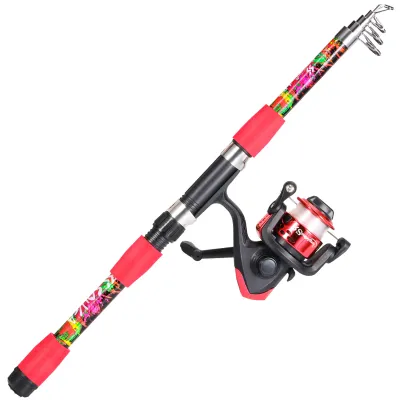
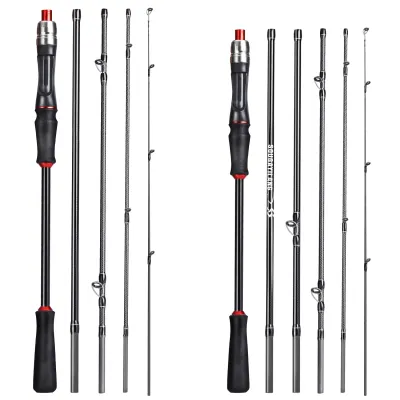
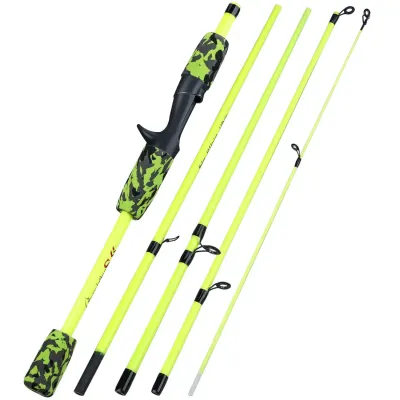
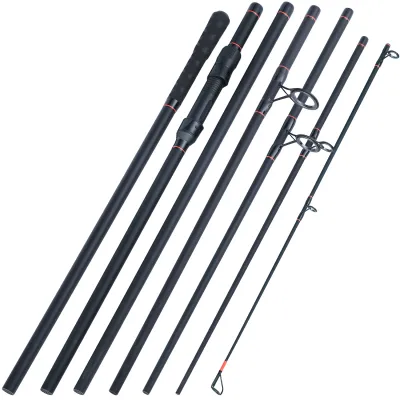
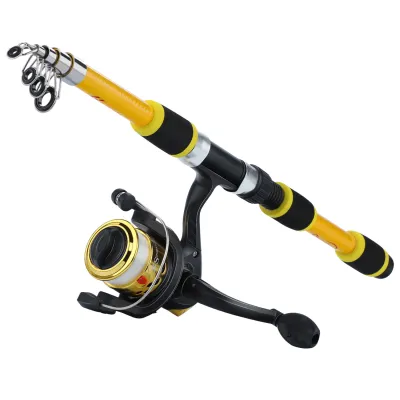
Prices are valid at publication and may change. Please refer to the product page for the latest price.
Coastal pier fishing, such as at Bedok Jetty or Woodlands Jetty, presents different challenges. Here, you are positioned high above the water, casting into deeper, faster-moving saltwater currents. You may target species like halfbeaks, small snappers, or yellowstripe scads. This scenario requires a slightly longer rod to clear the pier railings and a reel with sufficient line capacity to handle unexpected runs from larger marine fish.
Light boat fishing or kayak angling around the southern islands requires a more compact setup. Space is limited on a small vessel, making long rods cumbersome and prone to tangling with other anglers’ lines. A shorter, sturdier rod allows for better leverage when pulling fish vertically from the seabed.
Understanding local regulations is also critical for any beginner. Singapore’s Public Utilities Board (PUB) and National Parks Board (NParks) maintain strict guidelines on permitted fishing zones, bait types, and hook configurations. Many freshwater sites mandate the use of artificial lures and barbless hooks to protect the ecosystem. Choosing a versatile rod and reel combo ensures you can easily adapt to these regulatory requirements while practicing responsible catch-and-release.
Evaluate Sougayalang Rod Specifications for Beginners
When browsing Sougayalang rods on e-commerce platforms, the sheer volume of technical jargon can be overwhelming. To find a forgiving and versatile setup, you must learn to decode the specifications printed directly on the rod blank, just above the handle. The primary indicators to look for are power, action, length, and material composition.

Rod power refers to the amount of force required to bend the rod. For beginners, a “Medium” (M) or “Medium-Light” (ML) power rating is highly recommended. A medium-power rod offers a balanced middle ground; it is sensitive enough to feel the gentle nibble of a small fish, yet possesses enough backbone to control a larger catch without snapping. Avoid “Heavy” rods, which are too stiff for learning basic casting, and “Ultra-Light” rods, which require advanced line management skills to avoid breakage.
Rod action describes where the rod bends along its shaft when pressure is applied. “Fast” action rods bend primarily near the tip, offering excellent sensitivity and quick hook sets. “Moderate” or “Medium” action rods bend further down the shaft, providing a more forgiving cushion that helps absorb the shock of a fighting fish, which prevents the hook from tearing out. A moderate-to-fast action rod is the most versatile choice for a novice, accommodating both live bait and artificial lures.
Rod length directly influences casting distance and maneuverability. For general shore and jetty casting, a length between 1.8 meters and 2.1 meters is optimal. This range provides sufficient leverage to cast your lure a reasonable distance while remaining easy to control. If you plan to travel frequently via public transport, such as the MRT or local buses, consider a multi-piece rod (such as a 2-piece or 4-piece model) or a telescopic design that collapses down to a manageable size.
Finally, check the line weight and lure weight ratings printed on the rod blank. These ratings indicate the safe operating limits of the rod. For a beginner setup, a line rating of 6 to 15 pounds (lb) and a lure weight rating of 7 to 18 grams will cover the vast majority of light-to-medium fishing applications. Exceeding these limits can result in poor casting performance or structural failure of the rod blank.
Select a Forgiving Sougayalang Reel Size and Type
The reel is the mechanical heart of your fishing setup, responsible for storing line, letting it release smoothly during a cast, and retrieving it under tension. For anyone starting out, prioritizing a spinning reel over a baitcasting reel is highly advisable. Spinning reels are inherently more forgiving because the spool remains stationary during the cast, virtually eliminating the dreaded “backlash” or “bird’s nest” line tangles that plague beginners using baitcasters.
When selecting a Sougayalang spinning reel, you must choose the appropriate size, which is typically designated by a number series such as 1000, 2000, 3000, or 4000. For a general-purpose beginner setup, a 2000 or 3000 series reel is the sweet spot. A 2000-size reel is lightweight and pairs beautifully with a medium-light rod, making it perfect for reservoir casting. A 3000-size reel holds more line and offers slightly more drag power, making it better suited for coastal jetty fishing where you might encounter stronger currents and larger saltwater species.
The gear ratio is another critical specification found on the reel’s packaging or online listing. Expressed as a ratio like 5.2:1 or 6.2:1, it indicates how many times the internal spool rotates for every single turn of the handle. A ratio of 5.2:1 is considered a moderate speed, offering a balanced blend of retrieval speed and cranking power. This is ideal for beginners because it allows you to work a wide variety of lures at a natural pace without exhausting your wrist.
Pay close attention to the reel’s drag system, which applies adjustable friction to the spool to control how easily a fish can pull line off the reel. A smooth, adjustable front drag is essential for preventing line breakage when a strong fish makes a sudden run. Look for reels that feature a multi-disc drag system, and practice adjusting the drag dial so that the line releases under firm pressure but does not pull out too easily.
Verify Combo Compatibility and Seller Details Online
Many beginners opt to purchase pre-packaged rod and reel combos to simplify the buying process. While these bundles are convenient, it is crucial to verify that the components are genuinely compatible and suited to your target environment. E-commerce listings on online marketplaces can sometimes feature confusing or exaggerated titles designed to attract clicks rather than provide accurate technical data.
To verify compatibility, cross-reference the specifications of the rod and reel individually. Ensure the reel’s line capacity matches the line weight recommended for the rod. For example, if your rod is rated for 8 to 15 lb monofilament line, your 3000-series reel should comfortably hold at least 100 to 150 meters of line within that thickness range. If the reel is too small, you will run out of line quickly; if it is too large, the setup will feel heavy and unbalanced.
Always look for the manufacturer’s official specification sheet or product manual within the product listing, rather than relying solely on the promotional text. Check the materials used in construction; for instance, a graphite or carbon fiber rod blank offers superior sensitivity and strength compared to older fiberglass models, while an aluminum reel spool is much more durable than a plastic one.
Because you are purchasing online, evaluating the seller’s credibility is just as important as checking the gear specs. Look for authorized brand stores or highly rated third-party sellers on your preferred e-commerce platform. Read through customer reviews, paying close attention to feedback regarding packaging quality, shipping times, and how the seller handles damaged items. Verify the return policies and check if any warranty terms are offered, as this provides peace of mind in case of manufacturing defects. Whether you are investing S$40 or S$100 on your first setup, verifying these details ensures you get the best value for your money.
Inspect and Maintain Your Gear Before and After Use
Owning fishing gear comes with the responsibility of maintenance, especially in Singapore’s hot, humid, and salt-laden tropical climate. Proper care not only extends the lifespan of your Sougayalang rod and reel but also ensures they perform reliably when you hook into a fish. Establishing a simple pre-use and post-use routine will save you from frustrating gear failures on the water.
Before you head out to your fishing spot, perform a quick visual and physical inspection of your equipment. Run your fingernail along the inside of the ceramic guide rings on your rod to check for chips, cracks, or rough edges. A damaged guide ring can easily fray and snap your fishing line during a cast or while fighting a fish. Additionally, inspect the rod blank for any deep scratches or hairline cracks, particularly around the joints of multi-piece rods, to ensure the structural integrity is intact.
After every fishing session—especially if you have been near saltwater or brackish environments like coastal jetties or mangrove boardwalks—you must rinse your gear thoroughly with fresh water. Saltwater is highly corrosive and can quickly ruin metal components, seize bearings, and degrade the reel’s drag system. Use a gentle spray of tap water to rinse the rod guides, reel seat, and the entire exterior of the reel. Avoid using high-pressure water, as this can force salt and dirt deeper into the reel’s internal gears.
Once rinsed, wipe down the equipment with a clean, dry cloth and allow it to air dry completely in a shaded, well-ventilated area. Never store wet gear inside a sealed plastic bag or a damp cupboard, as the trapped moisture and tropical heat will accelerate rust and cause the synthetic grips on your rod to degrade or become sticky. Store your rods vertically in a rod rack or safely in a protective case, away from direct sunlight, to keep them in peak condition for your next angling adventure.
Frequently Asked Questions (FAQ)
Is a telescopic Sougayalang rod suitable for a beginner?
Telescopic rods offer exceptional portability, making them highly convenient for beginners who travel by public transport or have limited storage space in compact apartments. However, they generally offer less sensitivity and durability compared to traditional multi-piece rods. The multiple joints in a telescopic rod can slide out of alignment during casting, and dirt can easily get trapped inside the collapsing sections, causing wear. If you choose a telescopic model, always check that the locking mechanisms are secure and that the guide rings are perfectly aligned before you begin fishing.
How do I know if the rod and reel are balanced?
To check the balance of your combo, mount the reel securely onto the rod’s reel seat. Place your index finger under the rod blank just in front of the reel seat, where you would naturally grip the setup. If the rod remains relatively level and balanced on your finger without tipping dramatically toward the tip or the butt, the combo is well-balanced. A balanced setup significantly reduces wrist fatigue and muscle strain during repeated casting, allowing you to fish comfortably for longer periods.

Community discussion
Share your experience or ask a question. Comments are reviewed before publication.