
To choose your first travel fishing rod, prioritize a balance between collapsed length, structural durability, and versatile performance specifications. A beginner needs a rod that packs down easily into a backpack or suitcase while remaining sensitive enough to detect bites and strong enough to handle local catches. By focusing on a versatile medium-power rod with a reliable breakdown design, you can enjoy fishing on the go without the hassle of transporting a traditional one-piece rod.
Choosing the Right Travel Design: Telescopic vs. Multi-Piece Rods
Telescopic rods slide into themselves, offering unmatched convenience and rapid deployment. They are ideal for spontaneous sessions, fitting easily into a small daypack or under a car seat. However, the multiple overlapping sections can sometimes slide out of alignment, and they generally offer less sensitivity compared to multi-piece alternatives because the rigid joints interrupt the natural bend of the blank.
Multi-piece rods, usually consisting of three to five separate sections, assemble using friction-fit joints called ferrules. This design closely mimics the smooth bend and sensitivity of a standard one-piece rod. While they take slightly longer to put together, they provide superior structural strength and better feedback when a fish nibbles your bait. If a single section of a multi-piece rod breaks, you can often order a replacement part, whereas a broken section in a telescopic rod usually renders the entire system unusable.
Products mentioned in this guide
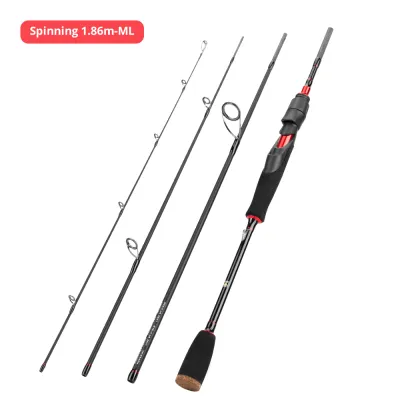
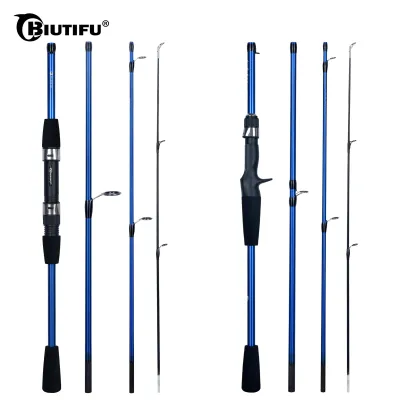
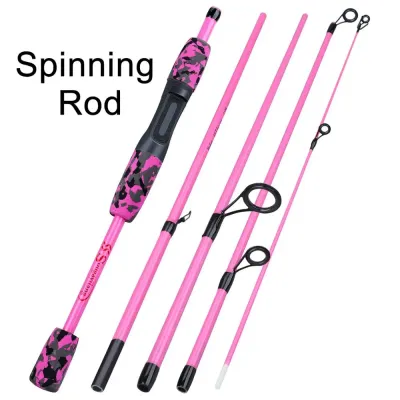
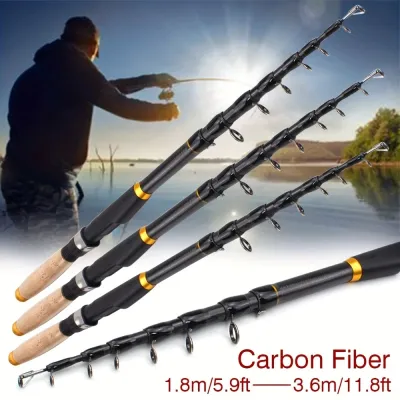
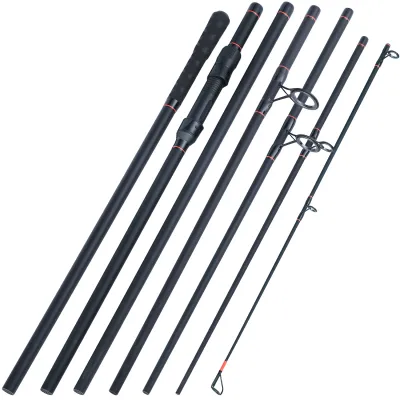
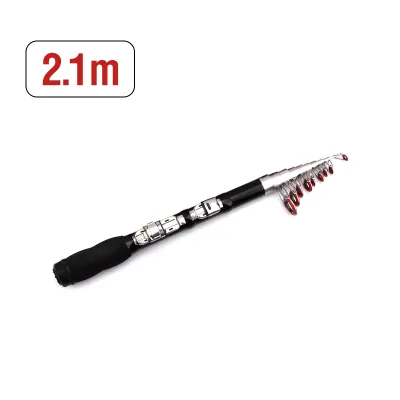
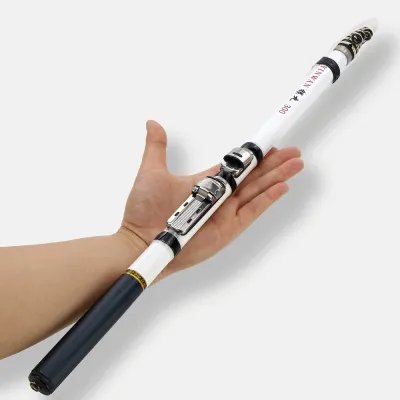
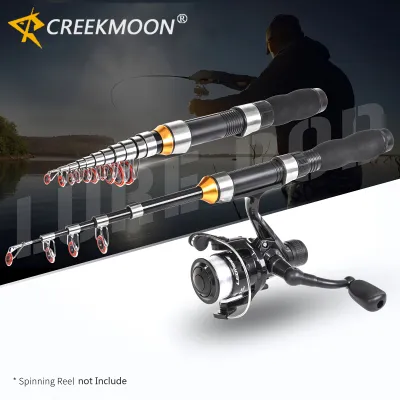
Prices are valid at publication and may change. Please refer to the product page for the latest price.
Your packing style should dictate your choice. If you plan to slip your rod into a standard carry-on suitcase or a commuter backpack for a trip to a local jetty, a multi-piece rod is often the most reliable option. If you prioritize instant setup for quick stops along a hiking trail or during a road trip, a telescopic rod fits the bill. For those commuting on public transport, such as buses or trains in Singapore, a highly compact rod prevents accidental bumps with other passengers in crowded spaces.
Maintenance is another critical factor. Telescopic rods have tight tolerances; a single grain of sand or salt trapped in the joints can scratch the blank or cause the sections to seize completely. Multi-piece rods are easier to wipe down and clean after a day near saltwater, making them highly durable over the long term if you commit to basic post-trip rinsing with fresh water.
Matching Rod Length, Power, and Action to Your Target Catch
Rod length directly influences how far you can cast and how easily you can maneuver in tight spaces. For beginners, a rod length between 6 and 7 feet (approximately 1.8 to 2.1 meters) offers an ideal middle ground. This length provides sufficient casting distance for open beaches or reservoirs while remaining manageable on crowded public jetties or under overhanging trees.

Shorter rods under 6 feet are excellent for tight, overgrown freshwater streams but lack the leverage needed for long casts. Conversely, longer rods over 8 feet are great for surf casting but are difficult to pack and handle for a beginner. Choosing a 6.6-foot rod provides a versatile balance that adapts well to various environments.
Rod power refers to the amount of force required to bend the rod, with ratings ranging from ultra-light to heavy. A medium or medium-light power rating is highly recommended for beginners. This range is versatile enough to handle smaller species like peacock bass in local reservoirs as well as moderate-sized coastal catches without snapping or feeling overly stiff.
A medium-power rod typically handles line weights between 6 and 14 pounds, which covers a broad spectrum of common target species. This versatility ensures you do not need to purchase multiple specialized rods when starting out.
Rod action describes where the rod bends along its blank when pressure is applied. Fast-action rods bend primarily near the tip, offering excellent sensitivity and quick hook sets, which is helpful when learning to feel subtle bites. Moderate-action rods bend further down, providing a more forgiving cushion that helps prevent beginners from tearing the hook out of a fish’s mouth during a frantic fight.
Matching these specifications to your environment is key. If you are fishing in calm, open waters, a lighter, more sensitive setup works beautifully. If you are casting around structure like pylons or rocks, a slightly heavier power rating gives you the leverage needed to steer a fish away from sharp obstacles.
Checking Portability Limits and Protective Gear
Before purchasing, always measure the collapsed length of the rod and compare it to your travel gear. Standard airline carry-on dimensions typically limit luggage length to around 55 cm. Many multi-piece travel rods break down to under 50 cm, allowing them to slide diagonally into a standard carry-on bag, saving you from checked baggage fees and the risk of lost luggage.
Be aware that some budget carriers have stricter personal item limits, where only ultra-compact telescopic rods or 5-piece rods will fit. Checking these specifications beforehand prevents unexpected gate fees.
A protective travel tube or hard case is non-negotiable for transit. Carbon fiber and fiberglass rods are highly vulnerable to side-impact crushing. A rigid plastic or reinforced nylon tube safeguards the delicate rod tip and guides from being bent or snapped when packed alongside heavy suitcases or jostled in a car trunk.
While some anglers use DIY PVC pipe cases, commercial cases often feature molded foam inserts or internal dividers to keep sections separated. This prevents the individual pieces from rubbing against each other and causing structural scratches during travel.
Consider the overall weight of the rod and its carrying system if you plan to walk long distances. A heavy, bulky case can quickly become a burden during a long hike to a remote fishing spot. Look for lightweight cases with integrated shoulder straps or attachment loops that secure easily to the exterior of a travel backpack.
Deciding Between a Standalone Rod and a Complete Combo
For beginners, a pre-packaged travel rod-and-reel combo offers exceptional convenience and cost-effectiveness. Manufacturers match the rod’s power and action with a reel of the appropriate size and line capacity, eliminating the guesswork. This allows you to start fishing almost immediately without worrying about balance issues, often for a reasonable price starting around S$60 to S$120 on a reputable online marketplace.
For a medium-power travel rod, a spinning reel in the 2000 to 3000 size range is the most versatile pairing. Spinning reels are highly recommended for beginners because they are easy to cast and less prone to line tangles compared to baitcasting reels.
On the other hand, buying a standalone rod allows you to customize your setup. If you already own a reliable spinning reel, you can pair it with a high-quality travel rod. This approach lets you invest more of your budget into a superior rod blank while utilizing gear you already trust.
If you choose a combo or pair separate components, pay close attention to the reel seat and line guides. The reel seat must hold your chosen reel securely without any wobbling, preferably featuring stainless steel hoods for corrosion resistance. Additionally, ensure the line guides are made of durable materials like ceramic or aluminum oxide, which resist the abrasive wear of braided lines and the corrosive effects of saltwater.
Running a Final Pre-Purchase Checklist
To ensure your first travel fishing rod is a perfect match, run through a final physical and practical verification. First, measure your primary travel bag and confirm the rod’s collapsed length fits comfortably inside with room for protective padding.
Next, verify that the rod’s power and action ratings align with the specific fish species and environments you plan to target on your upcoming trip. A setup designed for small freshwater ponds will struggle in heavy surf or strong coastal currents.
Finally, review your total budget. Ensure it covers not just the rod itself, but also essential travel accessories. A reliable reel, a sturdy protective case, a spool of high-quality line, and a compact tackle box for basic lures and hooks are all necessary to complete your travel angling kit.
Frequently Asked Questions (FAQ)
Can I Bring a Travel Fishing Rod as Carry-On Luggage?
Airline policies regarding fishing rods vary significantly worldwide, meaning you must always verify the specific rules of your carrier before heading to the airport. While many airlines permit compact travel rods that fit within standard carry-on dimensions, security personnel at individual airports have the final say on what is allowed through checkpoints.
Multi-piece travel rods generally have an advantage over telescopic models in this scenario, as they can be disassembled completely to fit flat inside a suitcase. This minimizes the profile of your gear and reduces the likelihood of it being flagged as an oversized item.
Keep in mind that while the rod itself may be allowed in the cabin, sharp fishing tackle such as hooks, lures, knives, and line cutters must always be packed in your checked baggage. Airport security regulations strictly prohibit these items in carry-on luggage due to safety concerns.
Do I Need a Hard Case for My Travel Rod?
A hard case is highly recommended if you plan to check your fishing gear or travel through rugged terrain. Luggage handlers and tight cargo holds can easily crush an unprotected rod blank, and a rigid tube provides the structural defense needed to prevent catastrophic damage.
If you are traveling light and keeping your rod strictly in your carry-on bag or a personal backpack, a soft sleeve or padded cloth wrap may suffice. This option keeps the overall weight down while protecting the rod sections from scratching against each other inside your bag.
Regardless of the case type you choose, always secure the individual rod sections inside. Using simple hook-and-loop straps or rubber bands prevents the pieces from shifting and knocking together during transit, protecting the delicate guides and rod tip from internal impact damage.

Community discussion
Share your experience or ask a question. Comments are reviewed before publication.