
When shopping for a foldable exercise mat, comparing brands solely by their advertised thickness can lead to uncomfortable workouts and inadequate joint protection. While a thicker mat seems like an obvious choice for sensitive knees and wrists, the actual support depends heavily on the internal foam density, material composition, and the structural integrity of the folding seams. A poorly constructed thick mat can compress completely under your body weight, causing your joints to strike the hard floor beneath, whereas a slightly thinner, high-density mat can offer superior shock absorption and stability.
To find a mat that truly protects your joints during floor exercises, you must look beyond basic product titles and evaluate how different brands engineer their cushioning. This guide outlines how to analyze material specifications, compare folding designs, and match mat thickness to your specific workout routines and physical needs.
Understanding Thickness and Joint Support in Foldable Mats
Many fitness enthusiasts assume that a thicker mat automatically provides better cushioning, but physical thickness is only one part of the joint-protection equation. In the context of foldable exercise mats, thickness refers to the vertical measurement of the panels, while joint support is determined by how effectively the mat absorbs and distributes impact. When you perform dynamic movements like jump lunges or static poses like a low lunge, your body weight concentrates on small contact points such as your knees, elbows, or wrists. If the mat lacks sufficient resistance, the foam compresses fully—a phenomenon known as “bottoming out”—leaving your joints vulnerable to direct impact with the floor.
Products mentioned in this guide
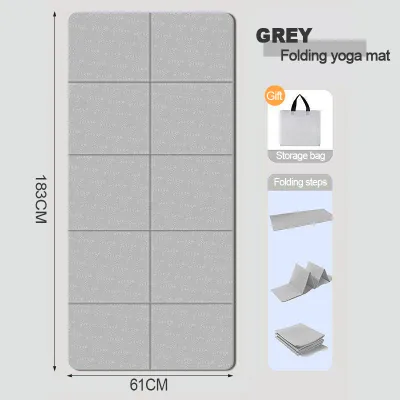
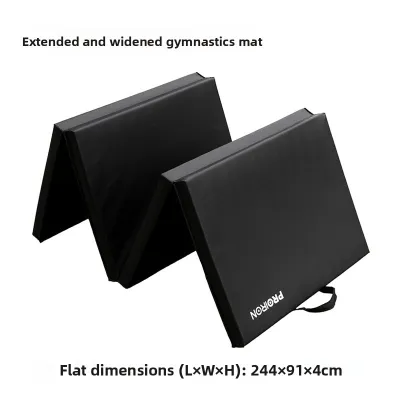
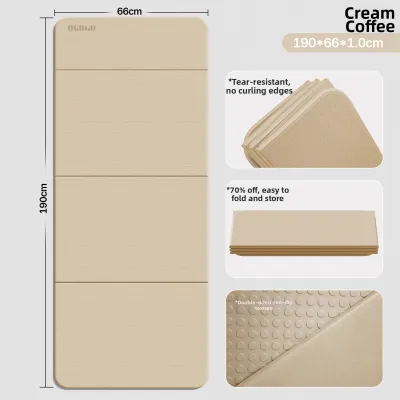
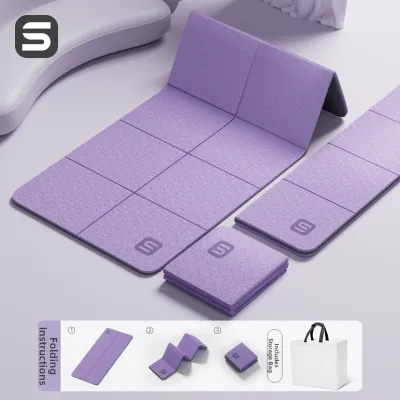
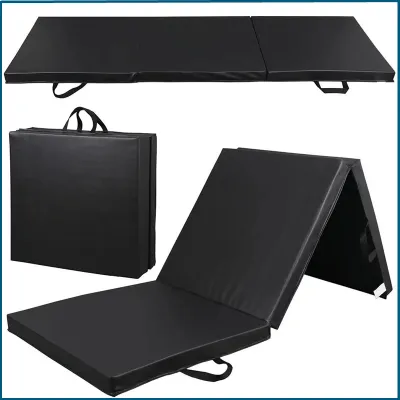

Prices are valid at publication and may change. Please refer to the product page for the latest price.
Foam density is the primary factor that prevents bottoming out. Foldable mats typically use one of several foam types, with ethylene-vinyl acetate (EVA) and expanded polyethylene (EPE) being the most common. Standard EVA foam is lightweight and highly flexible, but lower-density variations can compress easily under concentrated loads. High-density EPE foam, often found in thicker gymnastics-style folding mats, offers a firmer, more resilient structure that distributes weight across a larger surface area. When comparing brands, it is essential to verify whether the manufacturer specifies the density or weight-bearing capacity of the foam, rather than just listing the thickness in centimeters.
Beyond the foam itself, the structural design of a foldable mat introduces unique stability challenges that directly affect joint alignment. Foldable mats are divided into panels connected by fabric hinges or seams. These hinges create natural valleys where the cushioning is interrupted. If a seam is poorly positioned or lacks structural reinforcement, your foot or hand can slip into the gap during a movement, leading to sudden joint deviation or loss of balance. A stable, level surface is critical for maintaining proper joint alignment, especially during balance-heavy exercises where micro-adjustments in your ankles and wrists are required to stay upright.
Key Specifications to Compare Across Foldable Mat Brands
To make an informed comparison between different foldable exercise mat brands, you should categorize products into standard thickness tiers. Generally, foldable mats fall into three main categories: standard utility mats (typically 1 to 2 centimeters thick), extra-thick fitness mats (around 3 to 5 centimeters thick), and ultra-thick training or gymnastics mats (5 centimeters or more). Standard utility mats are highly portable and suitable for basic stretching, but they may not offer enough cushioning for high-impact landing or prolonged kneeling. Extra-thick and ultra-thick mats provide substantial impact absorption, making them ideal for intense core work, gymnastics, or martial arts, though they are bulkier to store and transport.

The material composition of both the inner foam core and the outer cover determines how well the mat retains its cushioning properties over time. High-quality brands often wrap their foam cores in heavy-duty polyurethane (PU) or polyvinyl chloride (PVC) leather covers. These covers protect the inner foam from moisture, sweat, and friction, which can degrade the foam structure and cause it to soften prematurely. When comparing brands, look for specifications detailing the thickness of the outer cover and whether the seams are double-stitched to prevent tearing under tension. A durable cover ensures that the internal foam remains tightly compressed and supportive throughout its lifespan.
The folding panel design—whether bi-fold, tri-fold, or quad-fold—also plays a significant role in how you interact with the mat. A bi-fold mat has a single central seam, which is convenient for quick storage but places a major crease directly in the middle of your workout space. Tri-fold and quad-fold designs distribute the seams differently, allowing for more versatile folding configurations. For instance, some users fold a tri-fold mat into a double-layer block to create an extra-thick platform for specific physical therapy exercises. When evaluating these designs, consider the dimensions of each individual panel to ensure that your hands, knees, and feet will rest on solid foam sections rather than on the folding seams during your primary exercises.
Matching Thickness to Your Workout and Joint Needs
Your choice of foldable mat thickness should align directly with the type of exercise you perform, your skill level, and your current physical condition. Low-impact, balance-focused routines like yoga, Pilates, and barre require a high degree of sensory feedback from the floor. If a mat is too thick or too soft, your feet and hands will sink into the material, making it difficult to maintain stability and putting unnecessary strain on your wrists and ankles as they struggle to find a solid foundation. For these activities, a thinner, firmer foldable mat (around 1 to 1.5 centimeters) is generally preferred, as it provides just enough barrier to prevent bruising while preserving your balance.
Conversely, high-impact, floor-based, or kneeling workouts demand maximum cushioning to protect your joints from repetitive stress. Activities such as high-intensity interval training (HIIT), calisthenics, gymnastics, and martial arts involve rapid movements, jumps, and hard landings. For these routines, an extra-thick or ultra-thick foldable mat (3 to 5 centimeters or more) is essential to absorb the kinetic energy of your landings. The thicker foam acts as a decelerator, reducing the peak force transmitted to your knees, hips, and spine. If you frequently perform exercises that require kneeling, such as bird-dogs or kneeling lunges, a thicker mat prevents the localized pain that occurs when thin foam compresses completely under your kneecaps.
If you have pre-existing joint sensitivities, arthritis, or are recovering from an injury, you must take extra precautions when selecting a mat. Before purchasing, verify your specific physical limits and consult a healthcare professional if you are unsure about the safety of certain movements. When testing a new mat, perform a simple compression check: press your knee or elbow firmly into the center of a panel. If you can feel the hard floor beneath the foam with moderate pressure, the mat is likely too soft or too thin for your therapeutic needs. For sensitive joints, a medium-thickness mat with exceptionally high-density foam often provides the safest balance of cushioning and stability.
How to Verify Brand Specifications Before Buying
Because marketing terms like “orthopedic support” or “maximum cushioning” are not standardized, you must learn to verify technical specifications independently before making a purchase. Start by looking for precise measurements in the product description rather than relying on promotional images, which can often distort the scale and thickness of the mat. Reliable brands will clearly state the exact dimensions of the mat when fully extended, as well as the thickness of the individual panels. If a brand fails to provide these basic measurements, or if the specifications seem inconsistent across different retail listings, treat the product with caution.
Another critical step is to check for manufacturer-provided guidelines regarding weight limits, compression ratings, or intended use. While not all brands publish explicit weight capacities for exercise mats, many high-quality manufacturers will indicate whether the mat is designed for heavy residential use, commercial gym environments, or specific activities like gymnastics. Look for terms like “high-density EPE foam” or “rebound foam,” which suggest a structure designed to resist permanent deformation. Avoid mats that only list “foam” without specifying the type, as these are often made from low-grade materials that degrade rapidly under regular use.
Finally, take advantage of return policies and trial periods to evaluate the mat in your actual home environment. Because you cannot fully assess joint comfort or surface stability from an online description, testing the mat on your specific flooring is invaluable. Set up the mat on the surface where you plan to exercise—whether it is hardwood, tile, or carpet—and perform a few basic movements. Check if the mat slides during lateral movements, if the seams remain flat, and if your joints feel adequately supported. If the mat does not meet your expectations during this initial trial, a flexible return policy allows you to exchange it for a model that better suits your physical requirements.
Frequently Asked Questions (FAQ)
Can I combine two thinner foldable mats for extra joint support?
Stacking two thinner foldable mats to increase overall thickness is generally not recommended due to significant safety and stability risks. When you layer one foldable mat on top of another, the non-slip bases may not grip each other effectively, creating a serious slipping hazard during dynamic movements. Furthermore, the overlapping folding seams can create an uneven, unstable surface that increases the risk of ankle rolls or wrist strain. Unless a manufacturer explicitly states that their mats are designed, tested, and equipped with securing mechanisms (such as integrated hook-and-loop straps) for stacking, you should avoid combining them and instead invest in a single mat of the correct thickness.
Does a thicker foldable mat always mean better durability?
No, a thicker foldable mat does not automatically guarantee better durability. The lifespan of a foldable mat is determined by the quality and density of its internal foam and the strength of its outer cover, not its height. A thick mat made from low-density, cheap foam can compress permanently, tear, or lose its supportive properties within a few months of regular use. Conversely, a thinner mat constructed from high-density, professional-grade materials can maintain its shape and joint-supporting capabilities for years. When comparing products, prioritize high-density material specifications and robust outer covers over thickness measurements alone to ensure long-term durability.

Community discussion
Share your experience or ask a question. Comments are reviewed before publication.