
Finding a scuba diving or snorkeling mask that seals properly against your face is a highly important step to ensuring an enjoyable underwater experience. A poorly fitting mask leads to constant clearing, water leakage, and painful pressure points that can cut a dive short. When choosing a Scubapro mask, understanding how the brand’s design features interact with your unique facial structure allows you to make an informed choice before ever dipping your head below the surface. By focusing on physical verification tests and key specifications, you can confidently select a mask that remains watertight throughout your adventures.
Understanding Key Mask Specs That Affect Fit
Scubapro masks utilize various design elements that directly influence how the skirt conforms to your face. The skirt is the flexible silicone boundary that creates the watertight seal. High-quality masks often feature a double-feathered edge skirt, which provides an extra layer of contact along the outer perimeter. This dual-skirt design helps distribute pressure evenly and accommodates minor facial movements without breaking the seal. When evaluating different models, pay close attention to the softness and flexibility of the silicone, as more pliable materials conform more readily to diverse facial contours.
The structural frame of the mask also plays a significant role in overall fit and flexibility. Frameless masks mold the silicone skirt directly to the lens, eliminating a rigid plastic frame. This design typically offers greater flexibility, allowing the mask to bend slightly and adapt to wider or narrower faces while folding flat for easy packing. Traditional framed masks, on the other hand, feature a rigid structure that maintains a consistent shape. While framed models offer excellent stability, they are less forgiving if the frame width does not match your facial structure.
Products mentioned in this guide
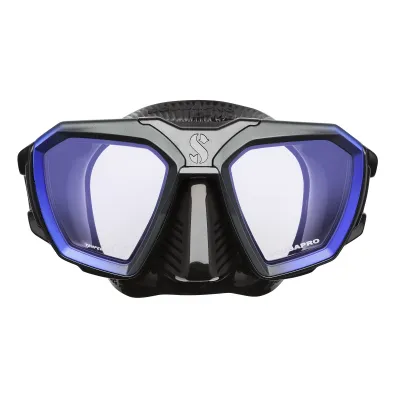
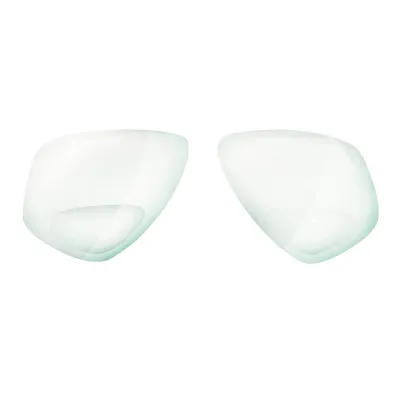
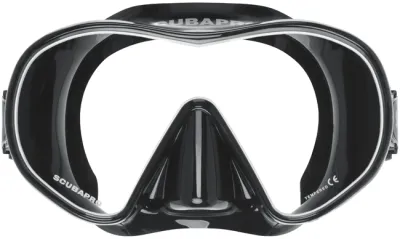
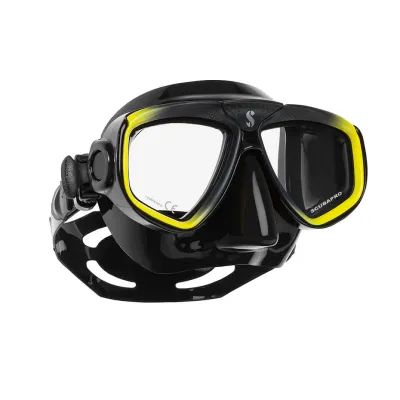
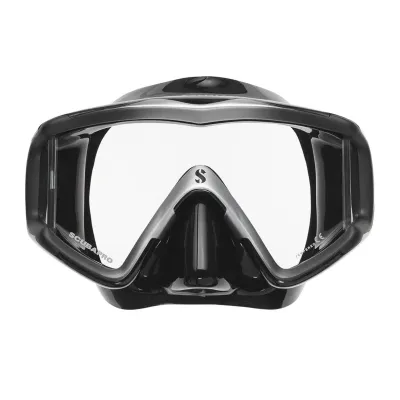
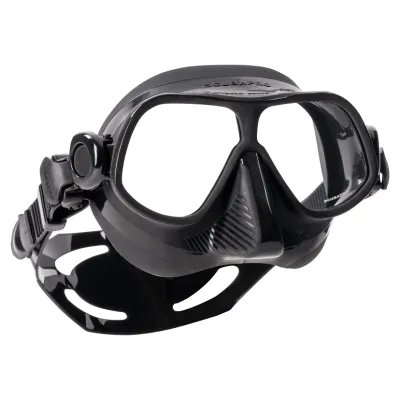
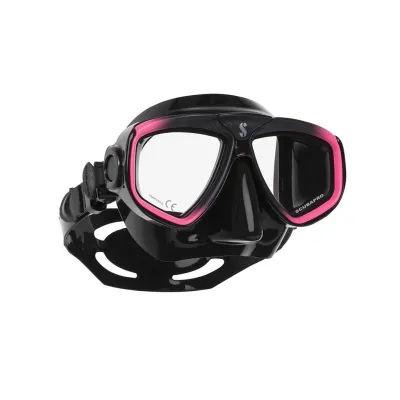
Prices are valid at publication and may change. Please refer to the product page for the latest price.
Lens configuration and internal volume are additional factors that dictate how a mask sits on your face. Single-lens masks provide an open, unobstructed field of view and often sit slightly further from the brow, which can be beneficial for individuals with prominent brow ridges. Dual-lens masks position the glass closer to your eyes, reducing the internal volume of air inside the mask. A lower internal volume makes the mask much easier to clear if water does enter, but it also means the frame or glass is closer to your face, requiring careful verification of clearance around the nose bridge and forehead.
The Step-by-Step Physical Fit Test (Without the Strap)
To determine if a Scubapro mask is compatible with your face, you must perform a dry physical fit test without using the head strap. The strap is designed solely to keep the mask in place, not to pull it tight against your face to force a seal. Begin by pulling the strap completely forward over the front of the lens so it does not interfere with the test. Look slightly upward and place the mask gently onto your face, ensuring the silicone skirt rests flat against your skin without any folds.

Before testing the seal, check for any physical obstructions that could let air or water slip inside. Brush away any stray hairs from your forehead and temples, as even a single strand of hair trapped under the silicone skirt can create a micro-channel for leaks. Ensure your skin is clean and free of heavy sunscreen or moisturizers that might cause the skirt to slip. Once the mask is positioned, breathe in gently through your nose. This action should create a slight vacuum, pulling the mask snugly against your face.
While holding your breath, let go of the mask with your hands and look forward. A properly fitting mask should remain securely in place on your face through suction alone. If the mask falls off immediately or if you feel air rushing in around the edges, the skirt is not making continuous contact with your skin. Pay close attention to where the seal fails, such as around the temples or under the nose, as this indicates the mask shape is not a match for your facial structure.
Additionally, pay attention to how the mask feels during this suction test. If you feel immediate pressure on your forehead or the bridge of your nose, the mask may be too narrow or shallow for your face. A secure fit means the mask clings comfortably without causing any localized discomfort. Repeat this test a few times, moving your head slightly from side to side to ensure the seal remains stable during realistic movement.
Evaluating Strap Tension and Final Seal
Once the mask passes the initial suction test, you can evaluate the fit with the head strap in place. Loop the strap over the back of your head, positioning it high on the crown rather than low near the neck. This high placement ensures the mask is pulled straight back against your face at a natural angle, preventing it from sliding downward during use. The strap should split comfortably across the back of your head to distribute tension evenly.
The most common mistake beginners make is over-tightening the strap in an attempt to stop leaks. In water sports, a “less is more” approach to strap tension is essential. The strap should only be tight enough to hold the mask gently in place against your face. If you tighten the strap too much, you will deform the soft silicone skirt, causing it to buckle and actually create gaps that let water in. Over-tightening also presses the rigid frame against your forehead and nose bridge, leading to painful red marks and headaches.
To ensure easy adjustments, check the buckle system on the sides of the mask. Scubapro masks feature quick-adjust buckles that are typically mounted directly to the skirt or the frame. Press the release tabs to verify that the strap slides smoothly in both directions and locks securely into place when released. Being able to make micro-adjustments easily while wearing gloves or when in the water is a key usability factor that contributes to a stress-free dive.
Adapting the Fit for Facial Hair and Face Shapes
Facial hair presents a unique challenge when trying to achieve a watertight seal, as mustaches and beards prevent the silicone skirt from making direct contact with the skin. If you have facial hair, you can apply a small amount of a safe, water-compatible sealant, such as food-grade silicone grease or a specialized mask sealant, to your mustache before putting the mask on. This helps fill the tiny gaps between the hairs and the skirt. Alternatively, trimming the very top millimeter of your mustache directly under your nose can provide a clean strip of skin for the skirt to seal against.
Different face shapes require specific mask geometries to avoid discomfort. If you have high cheekbones or a broader face, look for masks with wider skirts and deeper nose pockets. A nose pocket that is too shallow will press painfully against the bridge of your nose, especially as water pressure increases at depth. Ensure there is adequate clearance between your nose and the internal frame by pinching your nose through the pocket; you should be able to block your nostrils easily for equalization without the rigid frame pinching your skin.
For individuals with narrower or smaller faces, standard masks may extend too far past the temples, causing the skirt to buckle near the eyes. In this case, seeking out compact or “mini” versions of masks is highly recommended. These models feature scaled-down skirts and frames designed specifically to provide a secure seal on smaller facial profiles without sacrificing the field of view.
Troubleshooting Common Leaks and Pressure Points
If you experience persistent leaks during your fit test, you can often diagnose the issue by identifying exactly where the water or air is entering. Leaks near the top of the mask usually point to trapped hair or a strap that is positioned too low on the back of the head, which pulls the top of the skirt away from the forehead. Leaks near the bottom of the mask, under the nose, often occur when you smile or laugh, as facial expressions alter the shape of your upper lip. Try to maintain a relaxed facial posture when testing and using the mask.
Persistent pressure points on the forehead or the bridge of the nose are clear signs of an ill-fitting mask. If loosening the strap does not resolve the discomfort, the mask’s internal frame shape is likely incompatible with your bone structure. Continuing to use a mask that causes pain will lead to bruising and a highly uncomfortable experience. Do not attempt to force a fit through excessive strap tension.
If you cannot achieve a reliable seal or comfortable fit after trying different strap positions and clearing obstructions, stop adjusting the mask. This is the point where you should consult a professional retailer or the manufacturer to explore alternative models. Every face is unique, and trying on several different styles is often necessary to find a suitable match for your specific anatomy.
Frequently Asked Questions (FAQ)
Can I use a Scubapro mask if I wear prescription glasses?
You cannot wear standard prescription glasses inside a scuba mask, as the temples of the glasses will break the silicone seal and cause severe leaks. However, many dual-lens Scubapro masks are compatible with drop-in optical lenses, which replace the standard tempered glass lenses with your specific prescription. Another option is using adhesive prescription lenses that bond directly to the inside of the mask glass. If you plan to use prescription inserts or optical lenses, it is crucial to test the mask’s physical fit with these components installed to ensure they do not contact your eyelashes or brow.
How do I know if the mask volume is too high or too low for me?
You can assess mask volume by observing how close the lenses sit to your face and how easy it is to pinch your nose. A low-volume mask sits very close to your eyes, offering a wide field of view and requiring very little air to clear or equalize. However, if a low-volume mask is too small, the frame may press against your brow or nose bridge. A high-volume mask sits further away, providing a spacious feel, but it requires more effort to clear of water and can feel more buoyant. Choose a volume that allows you to comfortably pinch your nose for equalization without any part of the rigid frame pressing hard against your face.

Community discussion
Share your experience or ask a question. Comments are reviewed before publication.