
When assembling a climbing safety system, the carabiner serves as the critical link connecting your harness, rope, and protection. Identifying trusted heavy-duty carabiner brands is not merely a matter of recognizing popular logos; it requires a systematic understanding of manufacturing standards, independent safety certifications, and material engineering. A reliable carabiner must withstand extreme dynamic forces during a fall while remaining easy to operate under pressure.
To navigate the vast market of climbing hardware, climbers must look beyond marketing claims and focus on verifiable safety metrics. Reputable brands distinguish themselves by subjecting their products to rigorous third-party testing, maintaining strict quality control protocols, and providing complete transparency regarding their manufacturing processes. By learning how to evaluate these factors, you can confidently select heavy-duty connectors that meet the highest safety standards of the climbing community.
What Defines a Heavy-Duty Carabiner in Climbing?
In the context of vertical sports, “heavy-duty” does not simply mean heavy. Instead, it refers to carabiners engineered for high-stress applications, exceptional durability, and enhanced safety margins. While a standard non-locking carabiner used on a quickdraw is optimized for minimal weight and quick clipping during sport climbing, a heavy-duty carabiner is designed to anchor systems, manage belay devices, and endure the constant friction of moving ropes. These robust connectors are typically locking models, featuring reinforced frames and specialized shapes designed to handle complex rigging scenarios.
Products mentioned in this guide
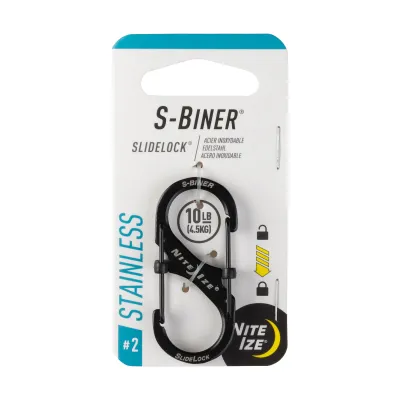
![[Free Gift CamelBak Collab] Nite Ize S-Biner Slidelock Stainless Steel Carabiner Size 4](https://img.lazcdn.com/g/p/177906c4f865018f34b1b06f8615bf7c.jpg_400x400q80.jpg_.webp)
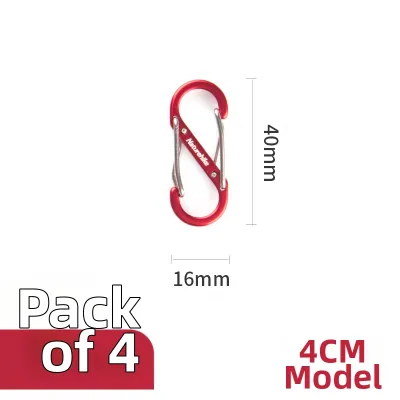
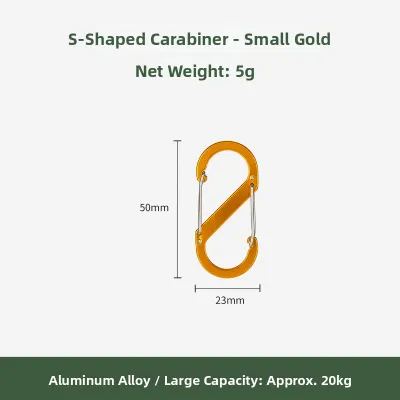
Prices are valid at publication and may change. Please refer to the product page for the latest price.
The primary use cases for heavy-duty carabiners center around critical safety nodes. In belay systems, an HMS (Halbmastwurfsicherung) or pear-shaped carabiner is essential for accommodating the wide profile of a belay device or a Munter hitch, allowing the rope to run smoothly without binding. For anchor construction, high-strength D-shaped or offset-D carabiners are utilized to build master points, where they must bear the collective load of the climbing team. Additionally, top-rope setups and hauling systems require heavy-duty connectors that can withstand hours of continuous rope movement, which would rapidly wear down lighter, thin-profile hardware.
Choosing heavy-duty gear involves a conscious trade-off between durability and weight. Heavy-duty carabiners often feature thicker baskets—the curved area where the rope rests—to distribute friction over a larger surface area, which significantly extends the lifespan of both the carabiner and the rope. While this added material increases the physical weight and bulk on your harness, it provides a crucial safety buffer against wear and tear. For long multi-pitch climbs or alpine expeditions where every gram counts, climbers must balance this trade-off, often carrying a mix of lightweight connectors for protection points and heavy-duty locking carabiners for anchors and belay stations.
How to Verify Safety Certifications and Load Ratings
The primary way to verify the safety of any heavy-duty carabiner is to inspect its physical markings for international safety certifications. Every legitimate climbing carabiner must be certified to meet strict engineering standards established by European and international governing bodies. The two primary markings to look for are the CE mark (followed by a four-digit identification number of the testing laboratory) and the UIAA (International Climbing and Mountaineering Federation) safety label. These stamps prove that the carabiner has passed rigorous laboratory testing for strength, gate function, and manufacturing consistency under the EN 12275 standard for mountaineering connectors.

In addition to certification stamps, every certified carabiner features laser-etched or stamped load ratings on its spine, measured in kilonewtons (kN). One kilonewton represents approximately 225 pounds of force. A heavy-duty carabiner will display three distinct strength ratings: the major axis rating, the minor axis rating, and the open-gate rating. The major axis rating indicates the strength of the carabiner when loaded end-to-end with the gate fully closed and locked, which is its strongest orientation. For heavy-duty applications, this rating typically ranges from 24 kN to over 30 kN.
Conversely, the minor axis and open-gate ratings represent the carabiner’s strength under compromised conditions. The minor axis rating measures strength when the carabiner is cross-loaded—meaning the force is applied sideways across the gate rather than along the spine. The open-gate rating measures strength if a fall occurs while the gate is accidentally held open by a rope or rock edge. Both of these ratings are significantly lower than the major axis rating, often falling between 7 kN and 10 kN. Understanding these markings is vital, as they remind climbers that even the strongest heavy-duty carabiner loses up to two-thirds of its strength if loaded incorrectly.
How to Evaluate Brand Reputation and Reliability
Evaluating a brand’s reputation requires looking at its history of specialization in vertical safety equipment. Trusted manufacturers—such as Petzl, Black Diamond, DMM, Camp, and Grivel—have dedicated decades to refining metallurgy, gate mechanics, and quality control specifically for climbing and rescue operations. These brands do not treat carabiners as generic hardware; they employ dedicated engineering teams, collaborate with professional mountain guides, and actively participate in the development of international safety standards.
A key indicator of a reliable manufacturer is product traceability. Reputable brands laser-etch a unique serial number or batch code onto every individual carabiner. This code allows the manufacturer to trace the product back to the specific batch of aluminum alloy, the production date, and the quality control shift. If a defect is ever discovered, this level of traceability enables the brand to issue precise, transparent safety recalls. When evaluating a brand, check their official website for a history of transparent safety notices and recalls; a brand that proactively addresses manufacturing anomalies is far more trustworthy than one that lacks clear communication channels.
Furthermore, trusted brands provide comprehensive technical documentation with every product. This includes detailed user manuals that outline correct usage, chemical compatibility, storage requirements, and specific retirement criteria. Before purchasing a heavy-duty carabiner, avoid unbranded or generic hardware found on online marketplaces that lacks clear manufacturer documentation, batch testing disclosures, or a verifiable physical address. If a manufacturer does not provide a detailed, multi-language user manual and clear contact information, the gear should never be trusted for climbing safety.
Matching Carabiner Shapes and Gates to Your Setup
Selecting the right heavy-duty carabiner requires matching its physical shape to the specific task at hand. The three most common shapes used in heavy-duty setups are HMS (pear-shaped), D-shape (including offset-D), and oval. HMS carabiners feature a wide, symmetrical top basket designed specifically for belaying and rappelling, as they provide ample space for ropes to glide smoothly and accommodate bulky knots like the clove hitch. Offset-D carabiners, on the other hand, are engineered to direct the load along the strong spine of the connector, making them the strongest shape for anchor master points and rigging systems where maximum load capacity is required. Oval carabiners offer a symmetrical design that centers pulleys and gear, preventing shifting, though they generally possess lower major-axis strength than D-shapes.
Equally important is the gate locking mechanism, which prevents accidental opening during use. Manual screwgates require the climber to manually thread a sleeve over the gate-nose to lock it. They are highly reliable, lightweight, and perform well in freezing or dirty environments, but they introduce the risk of human error if the climber forgets to lock them. Auto-locking gates, such as double-action twist-locks or triple-action pull-and-twist mechanisms, lock automatically when the gate snaps shut. While auto-lockers provide an extra layer of security, they can be more challenging to operate with one hand or when wearing gloves, and they require regular cleaning to prevent dirt from jamming the spring mechanism.
When configuring your climbing setup, always cross-reference the carabiner’s gate clearance and basket radius with your existing equipment. A heavy-duty carabiner with a narrow gate opening may be difficult to clip into thick anchor chains or bulky belay loops. Similarly, ensure that the curvature of the basket matches the diameter of your climbing rope; a basket that is too narrow can pinch the rope, increasing friction and accelerating wear on both the sheath and the metal surface.
When to Inspect and Retire Heavy-Duty Carabiners
Maintaining climbing safety requires a strict, systematic inspection routine for all heavy-duty hardware. Before and after every climbing session, perform a thorough visual and tactile check of each carabiner. Begin by inspecting the metal body for any signs of physical damage, such as deep grooves, sharp edges, cracks, or corrosion. Rope friction naturally wears down aluminum over time, creating grooves in the basket. A general safety standard is to retire any carabiner once the rope groove wear exceeds 10% of the metal’s original thickness, as this thinness reduces the overall strength and creates sharp edges that can damage your rope.
Next, evaluate the mechanical action of the gate and locking sleeve. The gate must open smoothly and snap shut instantly and completely under its own spring tension when released. If the gate lags, sticks, or fails to align perfectly with the nose keylock, the carabiner is unsafe for use. For locking mechanisms, ensure the screw sleeve or auto-locking collar rotates freely along the entire thread without binding or catching. You can clean dirty gates with warm, soapy water and lubricate the hinge with a dry, wax-based lubricant, but if the mechanical stickiness persists, the gear must be retired immediately.
Finally, establish clear retirement triggers that mandate immediate disposal of the gear. Any carabiner that has been dropped from a significant height onto a hard surface should be retired, as the impact can introduce internal micro-fractures that are invisible to the naked eye but severely compromise structural integrity. Exposure to corrosive chemicals, such as battery acid in a car trunk or harsh household solvents, also requires immediate retirement. When in doubt about the history or condition of a heavy-duty carabiner, always err on the side of caution and destroy the gear to prevent anyone else from using it.
Frequently Asked Questions (FAQ)
Can I Use Hardware Store Carabiners for Climbing?
No, hardware store carabiners must never be used for climbing or any life-safety applications. These utility connectors are designed solely for static, low-load tasks such as securing keys, hanging hammocks, or tying down light cargo. They are typically manufactured from low-grade metals without the precise heat treatment or quality control required for vertical safety gear. Most importantly, hardware store carabiners lack the dynamic load testing, shock-absorption capabilities, and certified UIAA or CE ratings necessary to withstand the extreme forces generated during a climbing fall, making their use in climbing highly dangerous.
Does a Heavier Carabiner Guarantee More Strength?
No, the physical weight of a carabiner does not directly correlate with its strength or safety margin. Modern climbing manufacturers utilize advanced metallurgy and hot-forging techniques to optimize the distribution of material. Hot forging allows engineers to concentrate aluminum alloy in high-wear areas, such as the rope basket, while removing excess metal from low-stress zones along the spine. This process creates incredibly strong, heavy-duty carabiners that remain remarkably lightweight. To determine a carabiner’s actual strength, always rely on the certified kilonewton (kN) ratings stamped on the spine rather than its physical heft.

Community discussion
Share your experience or ask a question. Comments are reviewed before publication.