
To determine if your S clip is safe for climbing, you must first verify its certification and intended use. A standard accessory S clip is never safe for life-critical climbing applications; it should only be used to organize gear. For any S clip or carabiner used in climbing, you must verify it has a certified load rating stamped on its spine (typically 20 kN or higher for the major axis), ensure the body is completely free of deep grooves or hairline cracks, and confirm that both gates snap shut instantly and completely without hesitation.
Climbing is an inherently high-risk sport where equipment failure can lead to severe injury or death. No inspection routine or piece of gear can replace proper professional training, sound climbing judgment, and adherence to established safety protocols. Before using any hardware, you must understand its limits, perform systematic checks, and know exactly when to stop and retire a compromised item.
In Singapore’s tropical climate, high humidity and sweat can accelerate metal corrosion and gum up gate mechanisms with chalk and grit. Whether you are climbing indoors at local commercial gyms or heading outdoors to the granite walls of Dairy Farm Quarry, regular gear inspections are essential to ensure your safety on the wall.
Products mentioned in this guide
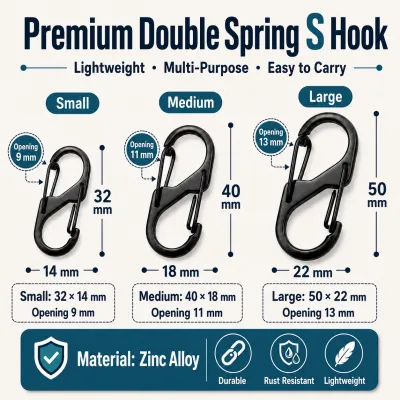
Prices are valid at publication and may change. Please refer to the product page for the latest price.
Understanding S Clip Uses and Critical Safety Limits
An S clip, often referred to as an S-biner or double-gated carabiner, features a dual-chambered design with two opposing gates. This configuration makes it incredibly convenient for organizing gear, racking specialized equipment on your harness, or securing accessories like water bottles, climbing shoes, and chalk bags. Because the two gates operate independently, you can easily attach one side to your harness loop while keeping the other side free to clip and unclip your accessories.
However, a critical safety distinction must be made: the vast majority of S clips on the market are designed strictly for static, low-load gear organization. They are not rated, certified, or constructed to withstand the dynamic forces generated during a climbing fall. Unless an S clip is explicitly rated for climbing and certified by recognized safety bodies, it must never be used in life-critical systems, such as belaying, rappelling, personal anchor systems (PAS), or top-rope anchors.
Using an unrated accessory clip for life support is a critical error that can result in catastrophic equipment failure. The dual-gate design of a standard S clip also introduces multiple potential failure points where ropes, slings, or bolt hangers can accidentally unclip or cross-load the gates. Always verify the manufacturer’s intended design parameters and limit your S clip use strictly to non-safety-critical gear management unless you possess a specialized, certified model.
How to Perform a Visual and Tactile Inspection
Performing a systematic visual and tactile inspection before every climbing session is a fundamental habit that keeps you safe. This routine takes only a few minutes but can identify hidden wear and structural damage before you leave the ground. Always conduct these checks in a well-lit area where you can carefully examine every surface of the metal.

Checking the Spine and Curves for Friction Wear
Begin your physical inspection by examining the load-bearing areas of the S clip. Focus your attention on the main spine and the inner curves where ropes, webbing, or other metal hardware make contact. Over time, friction from nylon ropes and metal-on-metal contact will wear down the protective anodized coating and grind into the aluminum or steel alloy.
Look closely for deep grooves, sharp edges, or any visible thinning of the metal profile. After a visual check, perform a tactile inspection by running your bare fingers slowly along the entire surface of the clip. Feel for rough spots, sharp burrs, or metal snags that could slice, abrade, or prematurely wear out your climbing ropes and soft slings.
Compare any observed wear against the manufacturer’s stated limits, which are typically found in the product’s user manual. Many manufacturers specify that if the metal thickness is reduced by more than 10% at any point, the gear must be retired immediately. If you cannot find the specific wear limits for your model, err on the side of caution and retire the clip if you can feel a distinct, sharp ridge or deep groove.
Testing Gate Action and Spring Mechanisms
Next, test the mechanical function of both gates individually. Open each gate fully and release it; it must snap shut completely, crisply, and instantly without any hesitation or rubbing. In Singapore’s humid environment, chalk dust, sweat, and dirt can easily combine to create a sticky residue inside the hinge, which can cause the gate to stick open or close slowly.
Inspect the gate assembly for any signs of physical damage, such as bent gates, cracked hinges, or missing rivets. Check for excessive lateral play by gently shaking the gate side to side; while a tiny amount of movement is normal, significant wobbling indicates that the hinge pin is worn or damaged. A gate that does not align perfectly with the nose of the clip will fail to lock or close securely under tension.
A gate that remains even slightly ajar is an immediate safety hazard. When a carabiner’s gate is open, its overall structural strength is reduced by up to 60%, making it highly susceptible to breaking under relatively minor loads. If cleaning and proper lubrication do not restore a lightning-fast, complete snap-shut action, the clip must be permanently retired from service.
Verifying Load Ratings and Safety Markings
Every legitimate piece of climbing hardware must feature clear, permanent markings stamped or laser-etched onto its body. To verify if your S clip is safe for climbing, locate these markings on the spine or the solid frame of the clip. These markings provide essential traceability and confirm that the gear has been manufactured to withstand vertical sport forces.
Look for the load ratings, which are measured in kilonewtons (kN). For life-support climbing carabiners, standard ratings typically exceed 20 kN along the major axis (gate closed), 7 kN along the minor axis, and 7 kN with the gate open. If your S clip is stamped with “Not for Climbing,” “Accessory Use Only,” or displays low weight limits in kilograms or pounds (e.g., 10 kg or 50 lbs), it is not safe for climbing loads.
In addition to load ratings, look for recognized safety standard marks. These include the CE (Conformité Européenne) mark followed by a four-digit identification number of the notified body, and the UIAA (International Climbing and Mountaineering Federation) logo. These certifications prove that the gear has passed rigorous laboratory testing for strength, gate function, and corrosion resistance.
If the markings on your S clip have completely worn off due to friction and age, and you cannot verify its exact history or load specifications, you must retire the clip. Never guess the strength of an unmarked piece of metal hardware, as cosmetic similarities to rated gear do not guarantee structural equivalence.
When to Retire Your S Clip: Immediate Warning Signs
Knowing when to retire your gear is a life-saving skill. There are several definitive warning signs that require you to immediately and permanently remove an S clip from service. If you observe any of the following issues, do not attempt to repair or reuse the hardware:
- Visible cracks or fissures: Even a tiny, hairline crack on the surface can propagate rapidly under tension, leading to sudden, catastrophic failure.
- Deep gouges or sharp cuts: Any nick or gouge deeper than 1 mm or exceeding 10% of the metal's thickness compromises the structural integrity of the clip.
- Deformation or warping: If the spine is bent, twisted, or the gates are visibly misaligned, the clip has likely been subjected to a severe overload or cross-loading event.
- Extreme heat or chemical exposure: Exposure to open flames, high heat, or corrosive chemicals (such as battery acid, strong solvents, or harsh household cleaners) can alter the molecular structure of aluminum alloys, causing invisible embrittlement.
Additionally, you must apply the “unknown history” rule. If your S clip has been dropped from a significant height onto a hard surface (such as a concrete gym floor or the rocky base of an outdoor crag), or if it was involved in a severe dynamic fall, it must be retired immediately. Hard impacts can create internal micro-fractures within the aluminum alloy that are completely invisible to the naked eye but drastically reduce the metal’s load-bearing capacity.
To ensure that a retired S clip is never mistakenly used again by you or anyone else, you must physically destroy it before disposal. Use a hacksaw to cut the frame in half, bend the gates completely out of shape with pliers, or deface the body so that it is visually obvious the clip is unusable. Once destroyed, dispose of the metal pieces in an appropriate recycling container.
Safe Cleaning and Storage Practices
Proper maintenance and storage can significantly extend the safe working life of your climbing hardware and prevent premature degradation. Because Singapore’s tropical climate exposes gear to high humidity, sweat, and coastal salt air, keeping your S clips clean is essential for preventing corrosion.
After climbing in dusty environments, using heavy chalk, or exposing your gear to sweat, rinse the S clip thoroughly with fresh, lukewarm water. For stubborn dirt or salt buildup, use a soft-bristled toothbrush to gently scrub the hinge and gate mechanisms. Do not use harsh detergents, chemical solvents, or abrasive pads, as these can strip the protective anodized layer from the aluminum.
Once rinsed, dry the clip thoroughly with a clean towel, then leave it to air dry completely in a well-ventilated indoor space away from direct sunlight. If the gate action remains sticky after cleaning, apply a tiny drop of a manufacturer-approved dry lubricant (such as a dry PTFE-based lubricant) directly to the hinge pin and spring area. Open and close the gate several times to distribute the lubricant, then wipe away any excess completely with a dry cloth to prevent it from attracting dirt and chalk grit.
Store all climbing hardware in a cool, dry, and dark place. Avoid storing gear in damp environments, unventilated plastic bins, or hot car trunks, as extreme heat and moisture can accelerate metal fatigue and corrosion. Keep your hardware far away from chemical fumes, battery acids, and household solvents, which can cause invisible stress corrosion cracking in high-strength alloys.
Frequently Asked Questions (FAQ)
Can I use an S clip to attach myself to an anchor?
No, you must never use a standard S clip to attach yourself to an anchor, build a top-rope anchor, or connect any part of a life-critical personal anchor system. Standard S clips feature non-locking gates that can easily twist, catch on rock features, or rub against webbing, causing them to open accidentally under load. For all life-support connections, anchor systems, and belaying, you must use dedicated, locking carabiners (such as screwgate, twist-lock, or triple-lock carabiners) that are certified to EN 12275 and UIAA standards.
How often should I replace my S clips if they look fine?
Even if your S clips look perfectly fine, they do not have an infinite lifespan. Most manufacturers recommend a maximum absolute lifespan of 10 years from the date of manufacture for metal hardware, provided it has been stored correctly and used under normal conditions. However, frequent use in harsh, humid, or salty environments can shorten this lifespan considerably. Always consult the specific manufacturer’s user manual or official website to find the exact retirement timeline for your gear, and immediately replace any clip that shows signs of wear, regardless of its age.

Community discussion
Share your experience or ask a question. Comments are reviewed before publication.