
Deciding on the right starting weight is a critical first step in any home fitness journey. A 2 kg dumbbell is a highly popular entry-level option, but its suitability depends entirely on your current physical baseline, your specific exercise selection, and what you hope to achieve. For some, this weight provides the perfect amount of resistance to wake up dormant muscles; for others, it may feel like lifting air.
To make an informed decision before purchasing equipment for your home setup, you must evaluate how this specific load interacts with your body. Choosing too heavy a weight can lead to joint strain and compromised form, while choosing too light a weight might leave your muscles understimulated. Let’s break down how to determine if a 2 kg dumbbell matches your current fitness level and goals.
Assess Your Current Fitness Baseline
Your current physical conditioning dictates where your strength journey should begin. If you are a complete beginner who has not engaged in resistance training before, a 2 kg dumbbell offers a manageable entry point that minimizes the risk of early injury. This weight allows you to focus on learning proper movement patterns without overwhelming your neuromuscular system.
Products mentioned in this guide
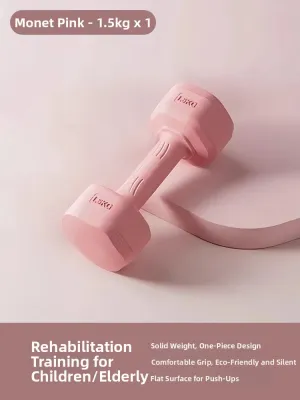
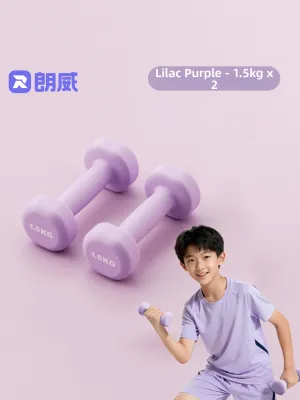
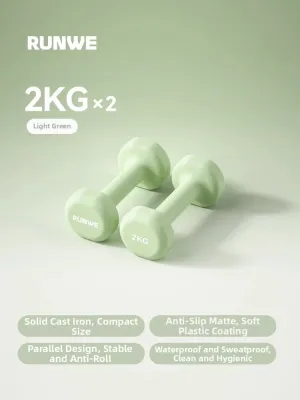
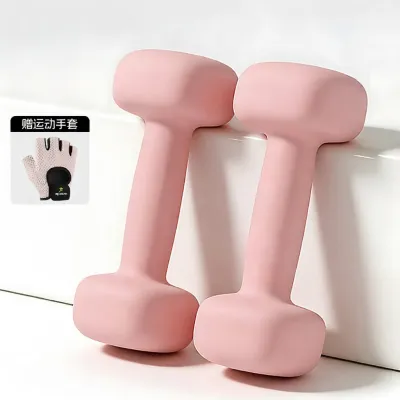

![[SG Ready Stock] Fitness Dumbbells Home Strength Training 1Kg/2Kg/3Kg Rubber dumbbells for girls](https://img.lazcdn.com/g/p/923f27057110e9aadae3d93d3c8f3495.jpg_400x400q80.jpg_.webp)
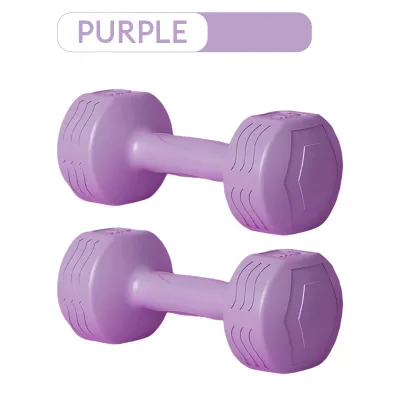
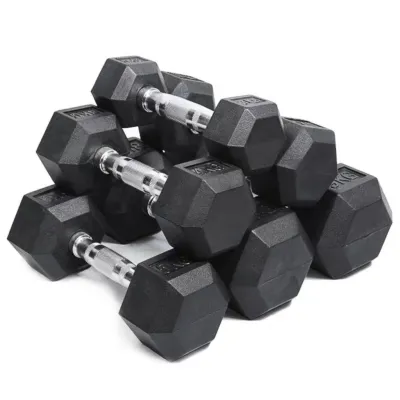
Prices are valid at publication and may change. Please refer to the product page for the latest price.
For individuals returning from an injury or undergoing physical rehabilitation, a 2 kg load is frequently used to rebuild stability. However, if you have prior training experience or regularly perform manual labor, you will likely find that 2 kg does not offer enough resistance to stimulate your muscles effectively. In such cases, starting with a heavier option is usually more appropriate.
Before lifting any weight, you can perform a simple baseline test using common household objects or bodyweight movements. Try performing a shoulder press or a lateral raise with a full 1.5-liter water bottle, which weighs approximately 1.5 kg. If you can complete 15 repetitions with perfect form and feel only mild fatigue, a 2 kg dumbbell is a safe and logical next step.
If you experience any joint pain, clicking, or instability during this test, you should scale back. In these situations, starting with bodyweight exercises or a lighter 1 kg weight is necessary to build basic joint mobility first. Equipment should never replace personal judgment; if a movement feels unsafe, stop immediately and consult a certified professional.
Match the Weight to Your Training Goals
Your fitness objectives determine whether a 2 kg dumbbell remains a useful tool or becomes a temporary stepping stone. If your primary goal is to improve muscular endurance, cardiovascular conditioning, or muscle toning, a lighter weight is highly effective. These goals rely on high-repetition ranges, typically between 15 to 25 repetitions per set, where a 2 kg load can accumulate significant fatigue over time.

Conversely, if your goal is muscle hypertrophy or absolute strength, a 2 kg dumbbell has clear physiological limitations. Building substantial strength requires progressive overload, which means gradually increasing the resistance over time to challenge your muscles. A fixed 2 kg load will quickly lead to a training plateau because it cannot provide the mechanical tension necessary for deep muscle fiber recruitment.
To maximize a lighter weight, you can manipulate your training variables, such as repetition ranges and time under tension. Slowing down the lowering phase of an exercise to three or four seconds increases the duration the muscle is contracting. While this technique makes a 2 kg weight feel significantly heavier, it still cannot fully substitute for the progressive resistance needed for long-term strength gains.
Consider Your Target Muscle Groups and Movements
A single dumbbell weight rarely fits every exercise in a workout routine because different muscle groups possess vastly different strength capacities. Small, isolated muscle groups, such as the deltoids in your shoulders, the rotator cuff, or the triceps, are perfectly suited for a 2 kg load. These muscles are relatively small and easily damaged by excessive weight, making a lighter resistance safer and more effective.
In contrast, large compound movements that recruit multiple joints and major muscle groups will find 2 kg highly inadequate. Exercises like squats, lunges, deadlifts, and chest presses utilize the largest muscles in your body, such as the glutes, quadriceps, and pectorals. For these movements, a 2 kg dumbbell does not provide enough resistance to trigger adaptation, even for beginners.
Leverage and exercise mechanics also play a massive role in how heavy a weight feels. During a lateral raise, the weight is held far from your body, creating a long lever arm that amplifies the perceived heaviness of the 2 kg load. During a bicep curl, the weight stays closer to your pivot point, making the same 2 kg feel much lighter. Understanding this distinction helps you categorize which movements in your routine can utilize a 2 kg dumbbell and which require heavier loads.
Recognize When to Adjust Your Dumbbell Load
As your body adapts to training, you must monitor specific checkpoints to decide when to adjust your dumbbell load. The most critical signal to stop or adjust is form breakdown. If you find yourself swinging your body, using momentum, or arching your back to lift the 2 kg weight, the load is either too heavy or your muscles are fatigued, and you must stop to prevent joint discomfort.
On the other hand, you will know it is time to progress when the weight feels too easy. If you can complete your target repetitions—such as three sets of 15 reps—with minimal effort and a low rate of perceived exertion, the 2 kg weight is no longer challenging your body. Continuing to train at this level will maintain your current fitness but will not yield further improvements.
When you reach this plateau, you can transition safely by increasing the weight in small increments, such as moving to a 3 kg or 4 kg dumbbell. If you do not have access to heavier weights, you can temporarily modify the exercise variation. For example, you can transition from a standard squat to a single-leg split squat, which naturally increases the load on the working leg without requiring a heavier dumbbell.
Plan a Practical Starter Dumbbell Setup
If you decide to invest in home fitness equipment, planning your setup carefully will save you space and money. Buying multiple pairs of fixed-weight dumbbells allows for quick transitions between exercises, but it can quickly clutter your living space. This is a particularly important consideration for those living in compact apartments or HDB flats where storage space is at a premium.
An alternative is investing in a set of adjustable dumbbells, which allow you to change the weight plates on a single handle. While the initial investment in S$ may be higher than buying a single pair of 2 kg dumbbells, an adjustable set offers far greater long-term value and versatility as your strength progresses.
When shopping on online marketplaces or at local sporting goods stores, always verify key product specifications on the labels. Look for a comfortable grip texture, such as knurled steel or a non-slip neoprene coating, which is essential for maintaining a secure hold in warm, humid climates. Check the handle diameter to ensure it fits your hand comfortably, and verify the durability of the casing material to protect your floors from accidental drops.
Frequently Asked Questions (FAQ)
Can I build significant muscle mass using only 2 kg dumbbells?
Building significant muscle mass requires progressive overload and high levels of mechanical tension, which are difficult to achieve over the long term with only a 2 kg dumbbell. While beginners may experience some initial muscle definition, your body will quickly adapt to this fixed resistance. To continue building muscle, you must eventually transition to heavier weights as recommended by established strength training guidelines.
Are 2 kg dumbbells suitable for cardiovascular or HIIT workouts?
Yes, 2 kg dumbbells are excellent for adding light resistance to cardiovascular or high-intensity interval training (HIIT) sessions. Incorporating this light load increases your heart rate and elevates the metabolic demand of bodyweight movements like shadowboxing, stepping, or lunges. However, safety is paramount; during rapid, high-repetition movements, you must focus on maintaining strict form to avoid joint strain or losing control of the weights.

Community discussion
Share your experience or ask a question. Comments are reviewed before publication.