
Selecting the right badminton racket is a critical decision that directly impacts your performance, comfort, and safety on the court. To find the ideal Li-Ning racket, you must align your physical capabilities and tactical habits with the specific engineering goals of each product line. Li-Ning categorizes its rackets into distinct families—such as the power-focused Axforce, the speed-oriented Wind, and the control-centric Halbertec—to serve different tactical roles. By matching your swing speed, court position, and physical endurance to these design intents, you can select a frame that enhances your natural strengths while protecting your joints from unnecessary strain.
Assess Your On-Court Playing Style and Physical Profile
Before browsing specific racket models, you must conduct an honest self-assessment of your tactical approach and physical conditioning. Your primary court position and shot selection dictate the physical characteristics your racket should possess. For instance, players who dominate the rear court with powerful, downward smashes require a different setup than those who excel at rapid net interceptions or defensive blocks. Identifying whether you play primarily singles or doubles also influences this decision, as doubles play generally demands faster racket handling and quicker recovery times.
Your current skill level and physical strength are equally important when determining the appropriate racket weight and shaft flexibility. A heavier racket can generate more momentum for powerful shots, but it requires significant forearm and shoulder strength to swing repeatedly without fatigue. Conversely, a lighter racket offers superior maneuverability but may lack the stability needed for deep clears. Shaft flexibility is another critical factor; a flexible shaft bends more during the swing, providing a whip-like effect that assists players with slower swing speeds, while a stiff shaft offers precise control for players with fast, explosive wrist action.
Products mentioned in this guide
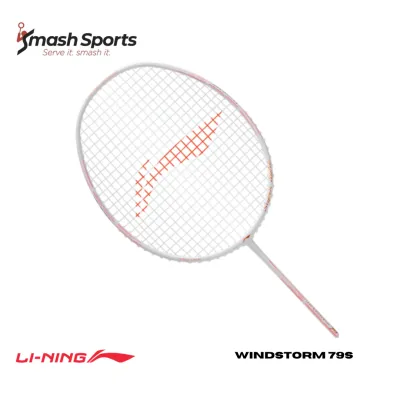
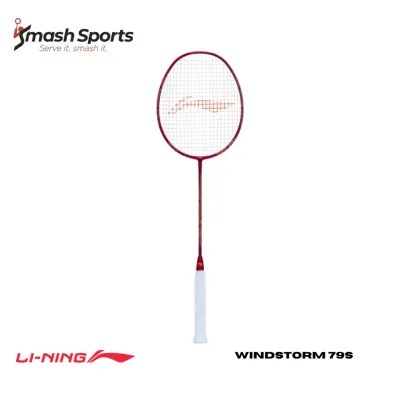
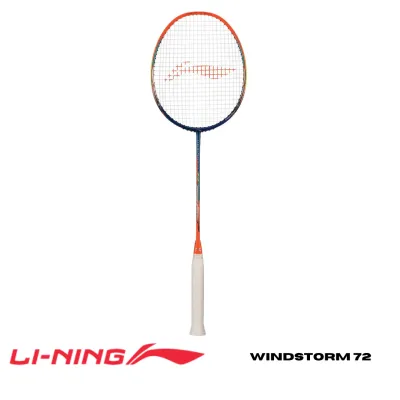
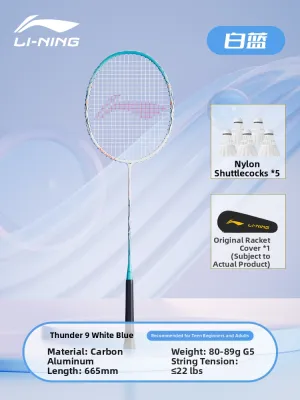
Prices are valid at publication and may change. Please refer to the product page for the latest price.
Finally, you must account for any physical limitations, joint sensitivities, or past injuries. Badminton is a high-speed sport that places repetitive stress on the wrist, elbow, and shoulder joints. If you have a history of tennis elbow or shoulder strain, using an excessively heavy or stiff racket can exacerbate these issues. Choosing a frame with built-in shock absorption features or opting for a slightly more flexible shaft can help cushion the impact of off-center hits, allowing you to enjoy the game without risking further injury.
Decode the Design Intent of Core Li-Ning Racket Series
Li-Ning has structured its product lineup into distinct series, each engineered to support a specific style of play. The Axforce series is designed primarily for offensive players who rely on heavy smashes and aggressive rear-court play. These rackets typically feature a head-heavy balance, which places more weight toward the top of the frame to increase swing momentum. Combined with stiffer shafts, the Axforce line is built to maximize energy transfer from your arm to the shuttlecock, resulting in faster smash speeds and steeper angles.

For players who prioritize speed and rapid defensive reactions, the Wind series offers a highly aerodynamic solution. These rackets are characterized by specialized frame geometries designed to minimize air resistance, allowing for faster swing speeds. The Wind series generally features lighter overall weights, making them exceptionally easy to maneuver during quick drive exchanges and tight net play. This rapid handling helps defensive players return fast smashes and transition quickly from defense to offense.
The Halbertec series is engineered for tactical players who focus on control, precision, and consistent rally building. These rackets typically feature an even balance and medium shaft flexibility, offering a harmonious blend of power and maneuverability. The design intent behind the Halbertec line is to provide a stable, predictable response on every shot, making it easier to execute delicate drop shots, tight net spins, and precise defensive blocks.
While these series descriptions provide a helpful starting point, you must remember that individual models within each family can vary significantly. A high-end, professional-grade racket in the Axforce series will feel and perform very differently from an entry-level model in the same line. Therefore, it is essential to verify the specific physical specifications of each individual model rather than relying solely on the overarching series name.
Map Your Diagnosed Style to the Right Racket Series
Once you have assessed your playing style and understood the design intent of each series, you can map your needs to the most suitable product line. If you are an aggressive singles player or a rear-court doubles specialist who seeks maximum power, the Axforce series is your primary pathway. Look for models within this line that feature a head-heavy balance and a shaft stiffness that matches your physical strength. This combination will help you generate the explosive power needed to pierce through your opponent’s defense.
If your game revolves around fast-paced doubles play, quick defensive reactions, and rapid drive exchanges, the Wind series is the logical choice. The aerodynamic frames and lighter weights of these models will help you keep up with high-speed rallies and make quick adjustments at the net. This setup is particularly beneficial for front-court players who need to intercept shots quickly and maintain a high tempo throughout the match.
For tactical players who prioritize shot placement, consistency, and court control, the Halbertec series offers the ideal balance. The even-balance design ensures that you can transition smoothly between offensive clears and defensive blocks without feeling hindered by a heavy head or a sluggish frame. This versatility is perfect for players who prefer to wear down their opponents through long, controlled rallies and precise placement.
If you are a hybrid player who enjoys a mix of attacking and defensive play, or if your style is still developing, it is best to avoid extreme specifications. In these cases, opting for a versatile, even-balance racket with a medium-flex shaft is highly recommended. This balanced configuration allows you to practice and refine all aspects of your game without forcing your technique into a specific mold too early, providing a solid foundation for future specialization.
Verify Technical Specs and Test Before You Buy
Before making a final purchase, you must verify the technical specifications printed on the racket’s product label. The weight of the racket is typically indicated by a “U” rating, with 3U (approximately 85 to 89 grams) being heavier and 4U (approximately 80 to 84 grams) being lighter and more common for doubles play. The balance point, measured in millimeters from the handle base, indicates whether the racket is head-heavy, even-balanced, or head-light. Ensure these measurements align with your self-assessment and playing style.
You must also check the maximum recommended string tension and the grip size. Exceeding the manufacturer’s recommended string tension can place excessive stress on the frame, increasing the risk of cracking and voiding your warranty. Grip size, usually designated as G5 or G6, should fit comfortably in your hand; a grip that is too small can cause you to squeeze too tightly, leading to forearm fatigue, while a grip that is too large can restrict your wrist movement.
Whenever possible, test the racket before committing to a purchase. Many reputable sports retailers and specialized pro shops offer demo programs that allow you to try different models on the court. You can also ask peers or club members if you can borrow their rackets for a few practice swings. Consulting a certified stringer can provide valuable professional insights into how different string types and tensions will interact with your chosen frame to suit your playing style.
If you experience any physical discomfort, joint pain, or unusual fatigue during a test swing or demo session, stop immediately. A racket that causes strain or feels awkward to swing is not the right fit for you, regardless of its technology or popularity. Prioritize your physical comfort and safety above all else, and do not hesitate to seek advice from qualified coaches or experienced sports professionals to find a frame that truly supports your game.
Frequently Asked Questions (FAQ)
Can Beginners Use Professional Li-Ning Racket Series?
Beginners should prioritize rackets that offer forgiveness, ease of use, and flexibility, regardless of the overarching series name. Professional-grade models often feature very stiff shafts and extreme head-heavy balances that require advanced technique and physical strength to utilize effectively. Instead, beginners should look for entry-level or mid-tier models within these series that feature flexible shafts and even balances, which help develop proper swing mechanics and prevent injury.
How to Verify the Authenticity of a Li-Ning Racket?
To ensure you are purchasing a genuine Li-Ning racket, check for the official holographic anti-counterfeit label on the handle or packaging. This label contains a scratch-off area revealing a unique verification code that you can enter on the official Li-Ning website to verify its authenticity. Additionally, always purchase your equipment from authorized brand stores, reputable local sports retailers, or official online flagship stores to guarantee authenticity and secure warranty coverage.

Community discussion
Share your experience or ask a question. Comments are reviewed before publication.