
To rig and use circle hooks properly as a beginner, you must shift your angling mindset from active striking to patient tension. Unlike traditional hooks, a circle hook is designed to slide safely out of a fish’s throat and lock securely into the corner of its mouth as the fish swims away. Achieving a high hookup rate requires keeping the hook point completely clear of your bait and executing a smooth, steady rod sweep rather than a sharp, aggressive jerk. By mastering these fundamental adjustments, you can significantly reduce gut-hooking and ensure cleaner, more reliable catches.
Understanding the Mechanics of Circle Hooks
The physical design of a circle hook is recognizable by its deeply curved shank and a point that angles sharply back toward the eye. This inward-facing point is a mechanical feature designed to prevent the hook from snagging tissue immediately. When a fish swallows the bait, the curved point remains shielded, allowing the assembly to pass safely through the throat without catching on internal organs. This makes the circle hook an invaluable tool for catch-and-release angling.
The hook functions when the fish swims away with the bait. As the fish moves, the line tightens and pulls the hook out of the throat. Because of the hook’s unique geometry, the eye exits the mouth first, causing the entire hook to pivot. As the curved point reaches the jaw hinge, the pulling force rotates the point directly into the corner of the mouth for a secure hold.
Products mentioned in this guide
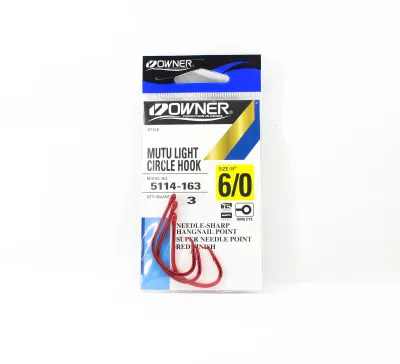
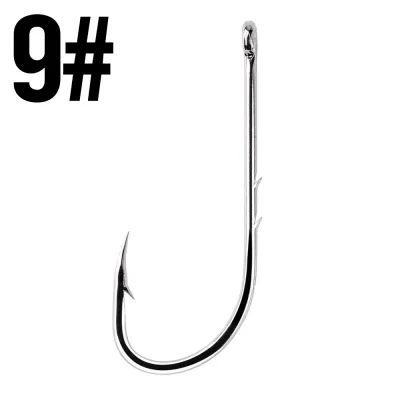
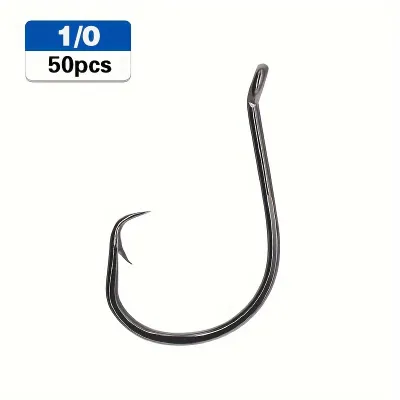
Prices are valid at publication and may change. Please refer to the product page for the latest price.
This process requires a complete shift in how you react to a bite. For beginners accustomed to J-hooks, the instinctive reaction to a tug is to pull back hard. However, a sudden strike pulls the curved point clean out of the mouth before it can rotate. Success relies on self-restraint, allowing the fish’s own momentum and steady line tension to set the hook automatically.
Selecting the Right Circle Hook and Bait
Choosing the correct circle hook requires matching the hook’s gap to the size and texture of your bait. The gap—the open space between the hook point and the shank—must remain unobstructed to allow the hook to rotate freely. If you select a hook with a gap that is too narrow, the bait will compress and mask the point, preventing the hook from catching the jaw hinge.

Hook sizing is not standardized across manufacturers. A 2/0 circle hook from one brand may have a significantly different gap width or wire thickness than a 2/0 hook from another. Before purchasing, inspect the physical hooks or consult the manufacturer’s sizing charts to verify that the gap clearance is appropriate for your intended baits.
You must also choose between inline and offset circle hooks. Inline hooks have the point aligned perfectly with the shank, whereas offset hooks have the point bent slightly to one side. Inline hooks are highly recommended because they almost exclusively hook the fish in the lip, minimizing deep-hooking injuries. In Singapore, certain managed fishing zones or reservoirs require inline circle hooks to protect local fish populations, so verify local regulations before setting up.
Finally, ensure your bait is appropriately sized for both the hook and your target species. If you are targeting local species like snapper or grouper around Singapore’s southern islands, your bait choice—such as live prawns or cut squid—must be scaled to the hook. Overloading a small hook with a massive chunk of bait is a primary cause of missed hookups, as the excess material prevents the hook from rotating.
Step-by-Step Bait Rigging Techniques
Rigging live bait properly is essential for maintaining natural movement while keeping the hook secure. When using live prawns, pass the hook carefully through the tail segment or through the carapace just behind the horn, avoiding the dark spot of the brain. This keeps the prawn active, sending out vibrations that attract predatory fish. For live baitfish, hooking through the nostrils works best in moving currents, while hooking through the back is ideal for still water.
When rigging cut bait, such as chunks of sardine or squid, thread the hook securely so it does not slide down and cover the point. Pass the hook through the skin side first, then through the flesh, and back out through the skin. The skin provides the structural integrity needed to hold the bait in place during casting and against the current, ensuring the hook point remains fully exposed.
For soft baits that tear easily, using elastic bait thread is highly beneficial. Wrap the bait thread tightly around the bait and the hook shank to secure the presentation without filling the hook gap. This technique keeps the bait compact and prevents it from sliding down and masking the curved point, allowing the mechanical rotation of the hook to function perfectly.
Before casting your rig, always perform a final visual check. Hold the hook up and inspect it from multiple angles to verify that the entire curved point and the barb are completely unobstructed. If any portion of the gap is covered by bait, scales, or thread, adjust the bait immediately. A fully exposed hook point is the single most critical factor in achieving a successful hookup.
Mastering the Circle Hook Set: The Sweep Technique
Mastering the circle hook set requires patience and a smooth, controlled motion known as the sweep technique. When a fish first takes your bait, you will often feel rapid taps or a steady pull. It is crucial to resist the temptation to react immediately to these initial vibrations. Instead, wait until the rod tip bends over steadily and stays loaded, indicating the fish has fully swallowed the bait and is swimming away.
Once the rod is fully loaded, execute the sweep set by smoothly lifting the rod tip upward or to the side while simultaneously winding your reel handle to collect slack line. This continuous, firm pressure slides the hook out of the throat and forces the curved point to rotate into the corner of the mouth. There is no need for a sudden jerk; the steady tension of the line and the movement of the fish do the work.
Understanding why the traditional J-hook set fails is key to breaking old habits. A sharp, aggressive jerk of the rod pulls the inward-curved point of a circle hook straight out of the fish’s mouth without catching any tissue. This mechanical mismatch is the primary reason beginners lose fish when transitioning to circle hooks. Trusting the design of the hook and maintaining a smooth, steady sweep will dramatically increase your hookup ratio.
Your reel’s drag settings play a vital role in this process. If your drag is set too tight, the sudden resistance when the fish runs may cause it to spit the bait or snap your leader. Set your drag to a moderate tension that allows the fish to pull line steadily against the rod’s bend. This controlled resistance provides the exact tension needed for the hook to rotate and seat itself securely.
Common Beginner Mistakes and How to Avoid Them
One of the most common beginner mistakes is the premature hookset. The adrenaline rush of feeling a bite often triggers an instinctive, rapid strike. Training yourself to keep your hands off the reel and rod until the line goes completely taut is essential. If you strike too early, you will simply pull the bait away from the fish before it has had a chance to turn and hook itself.
Another frequent error is burying the hook point inside the bait. Many beginners believe that hiding the hook makes the presentation more natural. However, with circle hooks, this practice is self-defeating. If the point is buried in tough flesh or skin, the hook cannot rotate or catch the jaw hinge, leading to a missed strike. Always ensure the point and barb are fully exposed.
Using the wrong hook size can also severely impact your success rate. Selecting a hook that is too small for a large fish’s jaw structure means the hook cannot wrap around the jawbone. Conversely, a hook that is too large for your bait will look unnatural and prevent the bait from moving realistically. Always match the hook size to both the dimensions of your bait and the mouth anatomy of your target species.
Finally, ignoring line tension during the fight can lead to lost fish. A slack line is the enemy of the circle hook, as the hook relies on continuous tension to remain seated in the jaw hinge. If you allow slack to develop, the hook can easily back out of the hole it created. Keep your line taut from the moment you feel the weight of the fish until it is safely landed.
Frequently Asked Questions (FAQ)
Do I need to use a specific type of fishing rod for circle hooks?
A rod with a moderate or moderate-fast action is highly beneficial when fishing with circle hooks. The softer, more forgiving tip of a moderate-action rod bends gradually as the fish takes the bait, preventing the fish from feeling sudden resistance and dropping the bait too early. Stiff, heavy-action rods can apply tension too abruptly, pulling the hook out of the mouth before it has rotated into position. When selecting gear, check the manufacturer’s rod specifications to ensure the action matches your target species and line class while offering a responsive, forgiving tip.
Can I use circle hooks with artificial lures?
Circle hooks are generally not recommended for fast-moving artificial lures like plugs, spinners, or jigs. These lures rely on active retrieval, where a fish strikes quickly and often detects the hard plastic or metal immediately, spitting it out before steady tension can be established. For artificial lure fishing, traditional J-hooks, treble hooks, or inline single hooks are much more effective because they are designed to penetrate immediately upon a fast strike. Keep circle hooks reserved for natural bait presentations where the fish has time to swallow, turn, and swim away.

Community discussion
Share your experience or ask a question. Comments are reviewed before publication.