
A quick release buckle is a convenient piece of hardware often found on backpacks, utility belts, and tactical vests. However, when it comes to vertical environments where your life depends on your gear, convenience must never supersede certified safety. A standard quick release buckle is not safe for climbing under any circumstances unless it is explicitly manufactured, tested, and certified for life-support applications.
Using an unrated or non-certified buckle in a climbing system introduces a catastrophic risk of fall, severe injury, or death. When you climb, your gear is subjected to sudden, intense forces that far exceed your static body weight. A standard utility buckle is simply not designed to withstand these dynamic shock loads and can fail instantly under tension.
Before assessing any piece of hardware, you must recognize that no equipment can replace proper climbing training, risk assessment, and sound personal judgment. High-risk vertical sports require specialized knowledge, and relying on unverified gear is a critical safety error.
Products mentioned in this guide
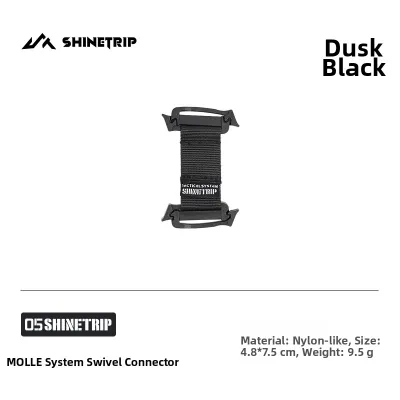
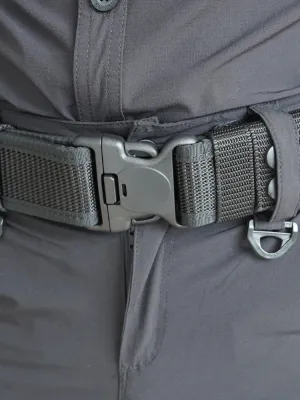
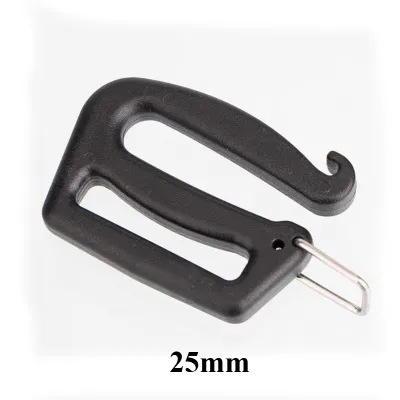
Prices are valid at publication and may change. Please refer to the product page for the latest price.
Many manufacturers market their products as “heavy-duty,” “tactical,” or “high-strength.” These marketing claims are frequently found on general outdoor or military-style gear, but they do not equate to climbing safety. True climbing hardware must meet rigorous international standards, and labels like “heavy-duty” carry no legal or structural guarantee for life-support use.
Essential Certifications and Load Ratings to Verify Before You Climb
To determine if a quick release buckle is safe for climbing, you must look past marketing descriptions and verify its structural engineering. The most critical step is checking for explicit load ratings measured in kilonewtons (kN). One kilonewton represents approximately 100 kilograms of force, and climbing gear must withstand multiple kilonewtons of dynamic impact.
Look for Permanent Markings A genuine climbing-rated buckle will have its load ratings permanently stamped, laser-engraved, or cast directly into the metal hardware itself. Never trust load ratings that are only printed on removable paper tags, adhesive stickers, or product packaging. If the metal surface of the buckle is completely blank, it must be treated as unsafe for load-bearing climbing applications.
Verify CE and UIAA Certifications Climbing hardware used for life support must comply with strict international safety standards. You must check for the CE (Conformité Européenne) mark and the UIAA (International Climbing and Mountaineering Federation) safety label. For climbing harnesses, the relevant European standard is EN 12277. If a quick release buckle is used as an integrated component of a climbing harness, the harness as a whole must be certified to this standard, and the buckle’s role in the system must be documented in the manufacturer’s technical manual.
Cross-Reference with Official Documentation Do not take physical markings at face value if you are unfamiliar with the brand. Always cross-reference the stamped codes or model numbers on the buckle with the manufacturer’s official technical specifications, user manual, or certified product registry. Reputable climbing manufacturers publish detailed technical sheets showing the exact breaking strength of their hardware under different loading axes.
Avoid Unverified Online Listings You should be highly skeptical of third-party seller descriptions on generic e-commerce platforms. Listings often use terms like “climbing buckle” or “tensile strength tested” without providing traceable certification documents or laboratory test reports. If a seller cannot provide a declaration of conformity or a traceable batch number, the product is unsafe for vertical use.
The Golden Rule of Gear Verification If you cannot definitively verify the buckle’s origin, its exact material grade, or its intended use, you must stop immediately. Do not attempt to use the gear. Consult the manufacturer directly or seek the guidance of a qualified climbing professional, such as a certified guide or gear inspector, to evaluate the hardware before taking it into a vertical environment.
Visual and Structural Red Flags: Identifying Unsafe Buckles
Recognizing the physical characteristics of non-climbing hardware is a vital skill for any climber. Many quick release buckles are designed for utility tasks—such as securing a backpack lid or a camera strap—and possess clear structural traits that make them dangerous for life-support.

Avoid Plastic and Unreinforced Polymers The most obvious red flag is the material composition. Standard plastics, unreinforced polymers, and cheap molded synthetics must never be used for life-loading in climbing. While modern engineering has produced incredibly strong plastics, they are not designed to absorb the high-impact shock loads generated during a lead fall. Plastic buckles can snap instantly under sudden tension.
Identify Weak Internal Mechanisms Many utility quick release buckles rely on small internal metal springs, single-point friction locks, or thin push-tabs to remain closed. These designs are highly vulnerable to failure under dynamic forces. A thin metal spring can easily slip out of alignment, and a single-point lock can disengage if pressure is applied unevenly. True climbing buckles utilize robust, dual-action locking mechanisms that require deliberate, multi-step manipulation to open.
Beware of Hollow or Thin-Walled Constructions Examine the metal frame of the buckle closely. Cheap alloys or cast metals often feature hollow backs, thin side walls, or visible molding seams. These manufacturing shortcuts reduce weight and production costs but create severe stress concentration points. Under a dynamic load, these weak points will deform or shatter, leading to complete system failure.
Understand the Limits of Tactical Hardware A common point of confusion is the tactical quick release buckle, often constructed from aluminum or brass. While these buckles may boast high static tensile strength (sometimes rated up to several hundred kilograms for carrying heavy military gear or static suspension), they are not designed or tested for dynamic climbing falls. They lack UIAA certification and are not engineered to integrate safely with the geometry of a climbing harness.
Consider Environmental Vulnerabilities Non-climbing materials are highly susceptible to environmental degradation. For example, standard plastics become extremely brittle when exposed to cold temperatures, a common condition in alpine climbing. Ultraviolet (UV) radiation from sunlight also degrades unrated polymers over time, causing them to crack under minimal force. Certified climbing hardware is specifically tested to maintain its structural integrity across extreme temperature ranges and environmental conditions.
Pre-Climb Inspection, Maintenance, and Retirement Conditions
Even if you possess a certified, climbing-rated quick release buckle, its safety depends entirely on its physical condition. Regular inspection and strict retirement protocols are non-negotiable practices for maintaining a safe climbing system.
Perform a Visual and Tactile Inspection Before every climb, conduct a thorough visual and physical check of the buckle. Examine the metal body for any signs of hairline cracks, structural deformation, deep gouges, or corrosion. In humid climates like Singapore, moisture can accelerate the oxidation of low-grade metals, making regular inspection even more critical. Run your fingers over the edges to feel for sharp burrs that could cut or abrade your climbing webbing. Ensure that the buckle frame is perfectly straight and has not bent under previous use.
Verify the Locking Engagement Test the mechanical action of the quick release buckle multiple times. When closed, the mechanism must lock securely with a distinct, audible, and tactile click. Once engaged, try to pull the buckle apart manually without pressing the release tabs. It must remain completely locked. Additionally, verify that the release tabs are recessed or protected so they cannot be accidentally pressed or disengaged when brushed against rock faces, other gear, or your clothing.
Establish Strict Retirement Conditions You must retire the buckle and its associated webbing immediately if you observe any of the following conditions:
- Any visible cracking, micro-fissures, or deep corrosion on the metal components.
- Significant wear, play, or looseness in the locking teeth, internal springs, or release tabs.
- Exposure to extreme heat (such as being left near a heater or in a hot car trunk) or corrosive chemicals (like battery acid, bleach, or strong solvents).
- The buckle has sustained a severe shock load, such as holding a hard fall, even if there is no visible damage.
Follow Manufacturer Care Instructions Always consult and strictly follow the specific care, cleaning, and retirement guidelines provided in the manufacturer’s official user manual. If you need to clean the buckle, use only the recommended mild soaps and fresh water, avoiding harsh chemical cleaners that can damage internal springs or degrade the synthetic webbing.
Destroy Retired Gear When a piece of hardware reaches the end of its lifespan or fails an inspection, do not simply throw it in the trash where someone else might salvage it. Cut the webbing completely and use a hammer or saw to disable the buckle mechanism permanently. Destroying retired gear ensures that it can never be accidentally reused in a life-support scenario.
Frequently Asked Questions (FAQ)
Can I use a tactical quick release buckle for my climbing harness?
No, you should never use a tactical quick release buckle for a climbing harness unless it is explicitly certified by the UIAA or CE for life-support climbing applications. Tactical buckles are engineered for static load-bearing tasks, such as carrying heavy gear, securing tactical vests, or static suspension. They are not designed to absorb or withstand the extreme dynamic forces generated during a climbing fall. Using non-certified tactical hardware on a harness introduces a severe risk of catastrophic buckle failure during a fall.
What should I do if my quick release buckle accidentally opens during a climb?
If a quick release buckle opens or slips during a climb, you must immediately stop climbing and secure yourself. Use a backup system, such as tying directly into an anchor or using a secondary locking carabiner and sling, to ensure you are safe. Once you are securely anchored, carefully descend to the ground. You must retire the compromised gear immediately and do not use it again. If the buckle was a certified climbing component and failed under normal use, report the incident in detail to both the manufacturer and relevant safety organizations like the UIAA.

Community discussion
Share your experience or ask a question. Comments are reviewed before publication.