
Evaluating how Igloo sports water bottles compare to other major hydration brands requires looking beyond brand names and focusing on the specific engineering of each model. While Igloo is a household name for large outdoor coolers, its personal sports bottles occupy a highly competitive market alongside brands dedicated solely to personal hydration. Because independent, standardized insulation tests are rarely published across all brands, the most reliable way to compare performance is by analyzing verifiable design specifications, material grades, and lid constructions.
Choosing the right bottle for your athletic activities involves balancing temperature retention with weight, durability, and practical usability. A bottle that excels at keeping water ice-cold during an outdoor workout in high humidity might be unnecessarily heavy for a quick indoor gym session. By understanding how different insulation technologies function, you can look past marketing claims and identify which bottle design truly matches your hydration needs.
Understanding Insulation Technologies in Sports Bottles
To make an accurate comparison between Igloo and other sports bottle brands, you must first understand the primary insulation methods used in modern sports bottles. The most effective technology is double-wall vacuum insulation, which features an inner and outer container, usually made of stainless steel, with the air evacuated from the space between them. Because a vacuum contains no air molecules, it prevents heat transfer by conduction or convection, keeping cold liquids cold and hot liquids hot for extended periods.
Products mentioned in this guide
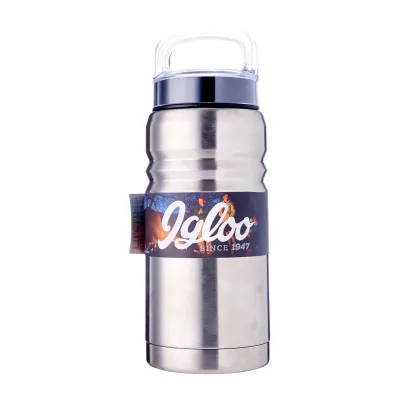
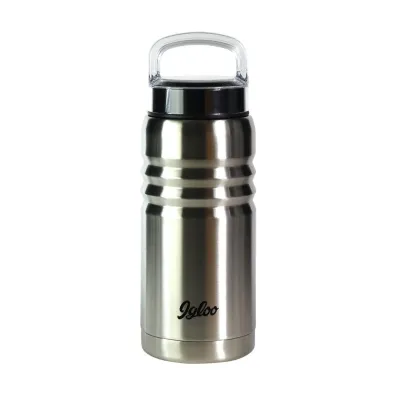
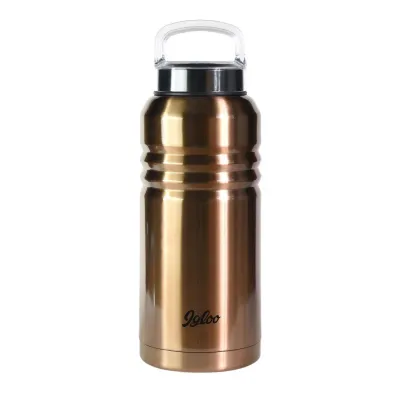
Prices are valid at publication and may change. Please refer to the product page for the latest price.
In contrast, foam insulation relies on a layer of polyurethane or similar insulating foam sandwiched between double plastic walls. While foam-insulated bottles are significantly lighter and more flexible than vacuum-insulated stainless steel, they offer substantially less thermal resistance. Single-wall bottles, whether made of plastic, aluminum, or stainless steel, provide virtually no insulation and are designed purely for lightweight fluid transport rather than temperature control.
The design of the lid and its sealing mechanism is another critical factor in overall thermal performance, as a significant amount of heat exchange occurs through the top of the bottle. Lids with thick, high-quality silicone gaskets create an airtight seal that prevents air exchange, while insulated lids—those filled with foam or featuring double-wall construction—further minimize thermal transfer. Additionally, the type of opening matters; a narrow spout or a straw lid limits the surface area exposed to ambient air when drinking, whereas a wide-mouth opening allows more heat to enter every time the bottle is opened.
When shopping at local sports retailers or browsing online marketplaces, you can evaluate these technologies by reading the manufacturer’s product specifications. Look for stated cold and hot retention hours, which are typically based on standardized internal testing under controlled ambient temperatures. Comparing these stated hours, along with the capacity metrics, provides a baseline for how different brands expect their bottles to perform in real-world conditions.
Evaluating Igloo Sports Bottles for Temperature Retention
Igloo’s personal hydration lineup reflects its long history in cooling technology, adapting the rugged design principles of its famous coolers into portable formats. The brand offers a diverse range of sports bottles, utilizing both double-wall vacuum-insulated stainless steel and insulated plastic constructions. This variety allows users to choose between maximum temperature retention and lightweight, squeeze-active convenience depending on their specific sport.

For athletes prioritizing cold retention, Igloo’s stainless steel models utilize food-grade stainless steel paired with double-wall vacuum technology. These bottles are designed to withstand the drops and impacts typical of outdoor sports while maintaining their vacuum seal, which is essential because any damage that breaches the outer wall can compromise the vacuum and ruin the insulation performance. The brand’s heritage in thermal engineering is evident in these designs, which often feature robust outer coatings and reinforced bases to protect the internal vacuum structure.
When evaluating an Igloo model, it is important to verify its specific features rather than assuming all models perform identically. Before making a purchase, use a simple checklist to confirm the bottle’s specifications: check the packaging or product description to ensure it explicitly states “vacuum insulated” if you require long-term temperature control, inspect the lid to confirm it has a secure silicone gasket, and verify that the capacity fits your daily hydration targets. This careful verification ensures you select a model engineered for your specific thermal expectations.
Framework for Comparing Igloo Against Other Sports Brands
When comparing Igloo to other prominent sports bottle brands, a structured framework helps balance thermal performance against daily usability. The first major trade-off to consider is weight versus durability. Heavy-duty vacuum-insulated stainless steel bottles offer superior temperature retention and excellent durability, but their physical weight can be a drawback during high-intensity running or long-distance cycling. Lighter, foam-insulated plastic alternatives are easier to carry and often squeezable, but they cannot match the hours of cold retention provided by vacuum-insulated steel.
Form factors and physical dimensions also play a crucial role in how a bottle integrates into your athletic routine. Consider the handle design, as integrated carry loops or swing-up handles make a bottle much easier to transport between gym stations or along a trail. Furthermore, check the base diameter of the bottle against the standard dimensions of your gym equipment cup holders, car console holders, or bicycle bottle cages to ensure a secure fit that prevents tipping or dropping during movement.
Finally, assess the price-to-insulation value by comparing models at local sports retailers. Prices are typically marked in S$, and comparing the cost of an Igloo bottle against competitors with similar volume capacities and insulation ratings will reveal which brand offers the most cost-effective solution. Additionally, check the warranty terms offered by each manufacturer, as a robust warranty on the vacuum seal provides long-term peace of mind and protects your investment against premature insulation failure.
Matching Bottle Specs to Your Athletic Activities
Selecting the ideal sports bottle requires matching its specific insulation capabilities and design features to the duration and environment of your workouts. For short, indoor gym sessions lasting an hour or two, a lightweight, single-wall or foam-insulated bottle is often sufficient, as you can easily refill it with chilled water from a gym dispenser. However, for all-day outdoor hiking, beach volleyball, or long-distance cycling, a high-capacity, double-wall vacuum-insulated bottle is indispensable for keeping your water cold from start to finish.
Environmental conditions in Singapore, characterized by high ambient heat and intense tropical humidity, place extreme demands on sports bottles. In this climate, non-insulated bottles will sweat profusely as warm, humid air condenses on the cold outer surface, creating a slippery grip and leaving puddles in your gear bag. A quality double-wall vacuum bottle prevents condensation entirely, keeping the exterior dry and easy to hold while maximizing the lifespan of your ice supply under the hot sun.
To maintain the insulation performance and hygiene of your sports bottle over time, regular cleaning and maintenance are essential. Over time, moisture can trap dirt and bacteria inside the silicone gaskets and lid crevices, leading to mold buildup that affects both taste and safety. Regularly remove the silicone seals according to the manufacturer’s instructions, wash them with mild soap and warm water, and allow all parts to dry completely before reassembling to ensure a tight, leak-free seal that preserves the bottle’s thermal efficiency.
Frequently Asked Questions (FAQ)
Are all Igloo water bottles vacuum insulated?
No, Igloo produces a wide variety of water bottles, and they do not all feature vacuum insulation. Their product range includes double-wall vacuum-insulated stainless steel bottles, foam-insulated plastic bottles, and single-wall plastic models designed for lightweight convenience. To confirm the insulation type of a specific Igloo bottle, always check the product labeling, the material specifications on the packaging, or the markings on the base of the bottle before purchasing.
Does a heavier sports bottle always mean better insulation?
A heavier sports bottle does not automatically guarantee superior temperature retention. While double-wall vacuum construction inherently adds more weight than single-wall plastic due to the dual layers of steel, the overall insulation performance also depends heavily on the quality of the lid seal, the thickness of the vacuum gap, and the materials used in the lid. Rather than relying solely on the physical weight of the bottle, compare the manufacturer’s stated cold-retention hours to evaluate its thermal efficiency.

Community discussion
Share your experience or ask a question. Comments are reviewed before publication.