
To find a metal blender bottle that keeps your drinks coldest during intense workouts in Singapore’s tropical heat, you must look beyond brand names and focus on specific engineering standards. The coldest bottle is not determined by a logo, but by double-wall vacuum insulation, copper-plated thermal barriers, and airtight, insulated lid designs. High humidity and ambient temperatures exceeding 30°C accelerate heat transfer, meaning a standard single-wall metal bottle will sweat and warm up within minutes. By understanding how to verify these technical specifications on product labels, you can select a shaker that maintains ice-cold temperatures throughout your entire gym session.
When evaluating different options, it is helpful to recognize that thermal performance is a game of physics. Heat enters your bottle through conduction, convection, and radiation. A well-designed shaker addresses all three pathways. This guide provides a systematic verification framework to help you evaluate product labels, inspect lid mechanisms, match shaker designs to your specific workout environment, and maintain your bottle’s thermal performance over time.
Core Insulation Specs to Check on Product Labels
When browsing online marketplaces or sports retail stores, you will encounter various marketing terms promising superior cold retention. To cut through the hype, you must verify the structural specifications listed on the product packaging or manufacturer spec sheets. The primary technology responsible for keeping your protein shakes cold is double-wall vacuum insulation. This construction features an inner and an outer stainless steel wall with the air completely evacuated from the space between them. Because a vacuum contains no air molecules, it virtually eliminates heat transfer via conduction and convection. When verifying this feature, look specifically for the terms “vacuum insulated” or “vacuum sealed.” Avoid bottles labeled simply as “double-wall” or “insulated stainless steel” without the word “vacuum,” as these may only contain air or foam, which offer significantly lower thermal resistance.
Products mentioned in this guide
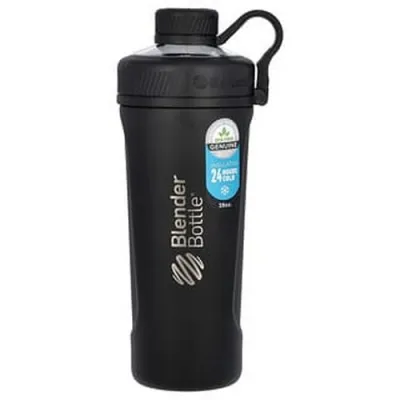
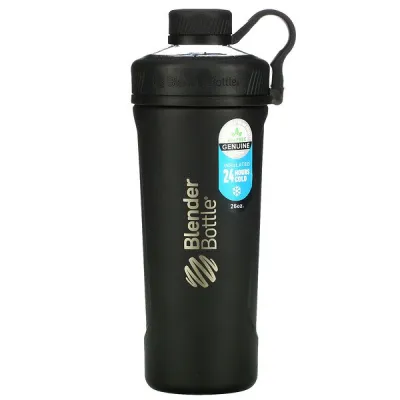
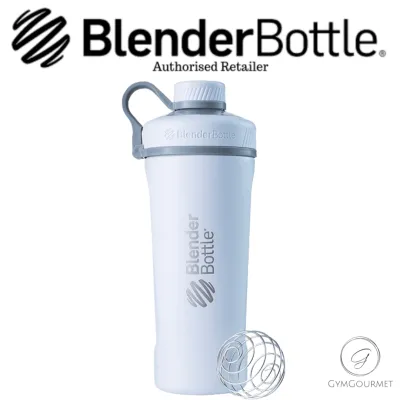
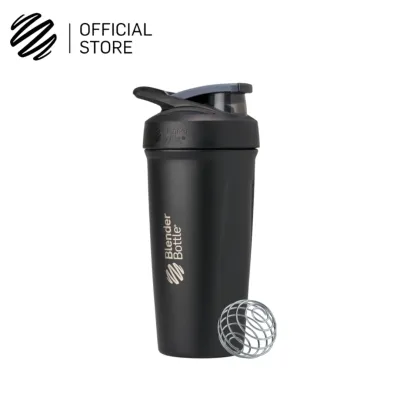
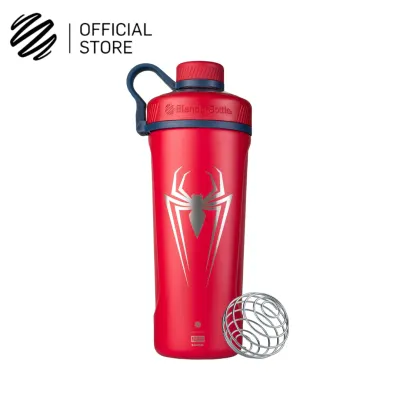
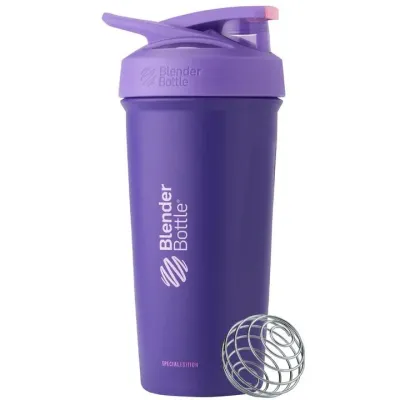
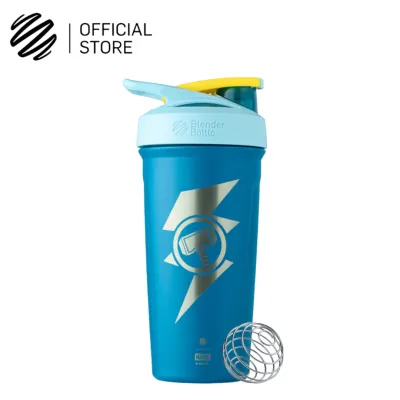
Prices are valid at publication and may change. Please refer to the product page for the latest price.
Another premium feature to look for is a copper or reflective foil lining. In high-end shaker bottles, the outer surface of the inner steel wall is plated with a thin layer of copper. This copper layer acts as a thermal radiation barrier, reflecting radiant heat away from the cold liquid inside and back toward the exterior. If you train outdoors or in non-air-conditioned spaces, a copper-lined bottle provides a distinct advantage in slowing down temperature rise. You can verify this by checking the technical specifications for mentions of “copper lining,” “copper coating,” or “thermal radiation barrier.”
Additionally, the physical dimensions and capacity of the bottle play a critical role in temperature retention. Larger volumes of liquid possess greater thermal mass, meaning they resist temperature changes more effectively than smaller volumes. A 950 ml (32 oz) bottle will generally keep its contents cold longer than a 590 ml (20 oz) bottle of identical construction, assuming both start with the same ratio of ice to liquid. However, a larger bottle also has a greater surface area exposed to the ambient air, which can accelerate heat transfer if the vacuum seal is imperfect. Therefore, matching the bottle’s capacity to your hydration needs while ensuring high-quality vacuum integrity is essential.
| Insulation Feature | Verification Method on Label/Spec Sheet | Impact on Cold Retention |
|---|---|---|
| Double-Wall Vacuum | Look for "vacuum insulated" or "vacuum sealed"; avoid plain "double-wall" | Eliminates conduction and convection heat transfer |
| Copper-Plated Barrier | Check for "copper lining" or "reflective copper coating" | Reflects radiant heat, extending cold duration |
| 18/8 (304) Stainless Steel | Look for "18/8 stainless steel" or "grade 304" | Provides structural durability to maintain vacuum seal |
| Volume-to-Surface Ratio | Compare total capacity (e.g., 950 ml vs. 590 ml) | Larger volumes retain cold longer due to thermal mass |
Evaluating Lid Designs and Heat Leaks
While the stainless steel body of a shaker bottle is highly effective at blocking heat, the lid is almost always the primary thermal weak point. Most lids are constructed from plastic or silicone, which conduct heat much faster than a vacuum-insulated steel wall. Consequently, the design of the lid and its sealing mechanisms will heavily influence how long your drink stays cold during a workout.

When comparing lid styles, the choice between a flip-cap spout and a screw-top seal involves a trade-off between convenience and thermal efficiency. Flip-caps offer rapid, one-handed access during high-intensity training, but their snap-shut mechanisms rely on small silicone gaskets that can wear down or misalign over time, allowing warm air to seep into the bottle. Conversely, a fully threaded screw-top lid provides a more secure, airtight seal that compresses the gasket evenly around the entire rim. This minimizes convective heat exchange and reduces the risk of leaks when the bottle is tossed into a gym bag.
The material composition of the lid also matters. Standard plastic lids are thin and offer minimal resistance to ambient heat. To maximize cold retention, look for shaker bottles that feature insulated lids. These lids are either filled with dense foam or designed with a double-wall structure to create an additional thermal barrier. A fully insulated lid significantly reduces the rate of heat transfer through the top of the bottle, keeping your ice from melting prematurely.
In humid climates, you must also consider the relationship between leak-proof guarantees and ease of cleaning. Complex lid designs with multiple moving parts, deep crevices, and intricate silicone seals are highly effective at preventing leaks, but they are also prone to harboring mold and bacteria from protein residues. If you cannot thoroughly clean every nook and cranny, organic buildup can compromise the seal’s airtightness, leading to both hygiene issues and increased heat leaks. A simpler, wide-mouth screw lid with a removable flat gasket balances thermal performance with hygienic maintenance.
Decision Framework: Matching Shaker Design to Your Workout
Selecting the ideal metal blender bottle requires matching its physical design to your specific workout venue, duration, and carrying method. No single bottle is perfect for every scenario, so you should evaluate your routine against the following framework.
If your workouts primarily consist of outdoor training, long runs on park connectors, or bootcamps under the sun, your main challenge is radiant heat and prolonged exposure to high temperatures. For these conditions, choose a narrow-mouth, fully vacuum-sealed shaker with a copper-lined interior. The narrow opening minimizes the surface area exposed to warm air when you open the bottle to drink, preserving the internal temperature for several hours. This design is ideal for athletes who need their water or electrolyte drinks to remain ice-cold from the first mile to the last.
If you primarily train in air-conditioned indoor gyms and consume your protein shakes within an hour of mixing, extreme thermal performance is less critical than convenience and mixing efficiency. In this scenario, a wide-mouth shaker with a standard insulated lid is highly suitable. The wide opening allows you to dump in large ice cubes and protein powder without spilling, and it facilitates rapid mixing. This design is also much easier to clean between workouts, making it a practical choice for daily gym-goers.
However, neither of these options may fit your needs if you require a completely dishwasher-safe bottle or use a complex mixing mechanism. Many vacuum-insulated bottles are strictly hand-wash only because the high heat and harsh detergents of a dishwasher cycle can degrade the vacuum seal or damage the exterior powder coating. Always verify the manufacturer’s care instructions before purchasing. Furthermore, if a bottle features a built-in motorized mixing blade or a complex mechanical shaft, these components are rarely dishwasher-safe and may have lower thermal retention due to heat-conducting metal parts.
Finally, always verify the physical dimensions of the bottle before buying. If you plan to use treadmill cup holders, spin bike cages, or car console slots, measure the bottle’s base diameter. Bottles with a capacity over 800 ml often feature wider bases that do not fit standard holders, forcing you to place them on the gym floor where they are prone to being kicked, tipped over, or dented.
Practical Care for Hot and Humid Climates
Maintaining the thermal integrity of your metal shaker bottle in hot and humid climates requires specific cleaning and handling habits. Because the vacuum insulation relies on a perfect seal between the inner and outer steel walls, physical damage or improper cleaning can permanently compromise its performance.
To protect the inner vacuum wall, avoid using abrasive cleaning tools such as steel wool, harsh scouring pads, or chlorine-based bleach. Micro-scratches on the inner stainless steel surface can harbor bacteria and protein residues, leading to persistent odors that are difficult to remove. Instead, use a soft bottle brush with nylon bristles and mild dish soap. For stubborn odors, a mixture of warm water and baking soda left to soak for an hour can safely clean the interior without damaging the steel.
High humidity accelerates mold growth on damp surfaces, making thorough drying essential. After washing, disassemble all removable parts, including the silicone gaskets, flip-cap seals, and the mixing ball. Dry them completely in a well-ventilated area before reassembling or storing the bottle. Storing the bottle with the lid tightly closed while still damp creates a humid microclimate that promotes bacterial proliferation and unpleasant smells.
You must also establish clear stop conditions for when a bottle should be replaced. The vacuum insulation relies on the physical separation of the inner and outer steel walls. If you drop your bottle on a hard gym floor and cause a deep dent, the two walls may touch, creating a thermal bridge that allows heat to bypass the vacuum. If you notice the exterior of the bottle feels cold to the touch when filled with ice water, or if condensation (sweating) forms on the outside, the vacuum seal has failed. At this point, the bottle’s insulation performance is permanently compromised, and it should be replaced if cold retention is required.
Frequently Asked Questions (FAQ)
Can I put hot protein drinks in an insulated metal shaker?
No, you should avoid putting hot liquids in a sealed vacuum shaker, especially those with flip-cap lids. When you shake hot liquids, the rapid expansion of air and steam inside the airtight chamber creates significant pressure. Opening the flip-cap can cause the hot liquid to spray out violently, posing a serious burn risk. Always check the manufacturer’s temperature limits; most insulated shakers are rated strictly for cold or room-temperature liquids. If you must mix warm liquids, do so in an open container or use a lid with a manual pressure-release valve, and never shake it vigorously.
Does the metal mixing ball damage the inner vacuum wall?
Standard stainless steel mixing balls (usually made of 316 surgical-grade stainless steel) are designed to be highly durable, but they are generally softer than or equal in hardness to the 18/8 stainless steel inner wall of the bottle. Under normal shaking conditions, the wire whisk will not puncture or compromise the vacuum seal. However, over months of heavy use, aggressive shaking can cause minor surface scratches or wear down protective interior coatings. If you observe deep scratches or are concerned about metal-on-metal wear, consider switching to a shaker that uses a plastic mixing grid, a silicone-coated whisk, or a top-mounted mixing screen.

Community discussion
Share your experience or ask a question. Comments are reviewed before publication.