
Choosing the right resistance band length is critical for ensuring you can perform exercises through their full range of motion without bottoming out the tension or overstretching the material. A 2-metre resistance band is a highly versatile option, particularly well-suited for full-body workouts, overhead presses, and anchored exercises where you need extra length to secure the band. However, whether it is the ideal choice for your routine depends on your height, your available workout space, and the specific exercises you plan to perform.
Why Resistance Band Length Matters for Your Training
The length of a resistance band directly dictates how tension accumulates during an exercise. Unlike free weights, which provide a constant gravitational resistance, elastic bands generate progressive resistance as they stretch. A longer band, such as a 2-metre model, requires a greater physical distance to stretch before it reaches its rated tension compared to a shorter band of the same thickness.
This relationship means that a 2-metre band offers a more gradual increase in resistance throughout your movement. If you use a short band for a high-amplitude movement, the tension can spike rapidly, potentially straining your joints or forcing you to compromise your form. Conversely, the generous length of a 2-metre band allows for a smoother, more predictable resistance curve across a wider range of motion.
Products mentioned in this guide
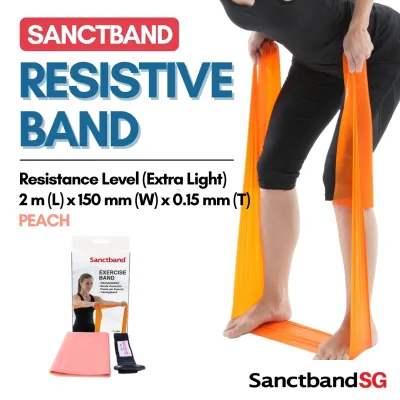
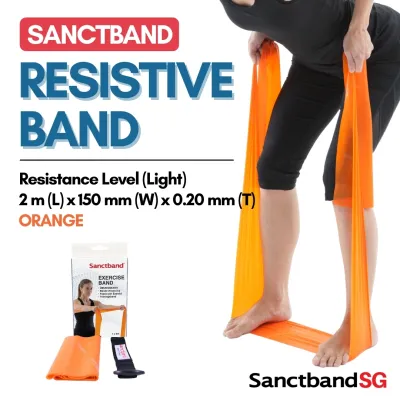
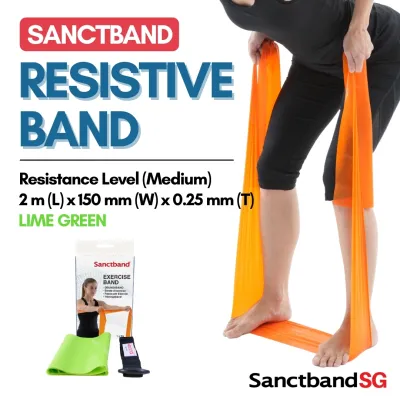
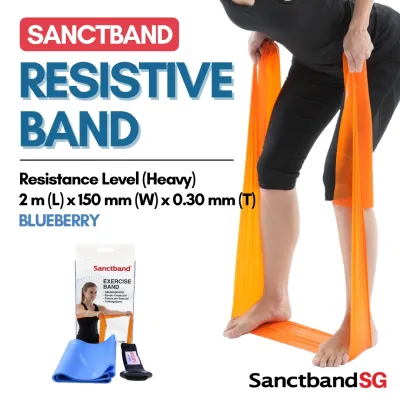
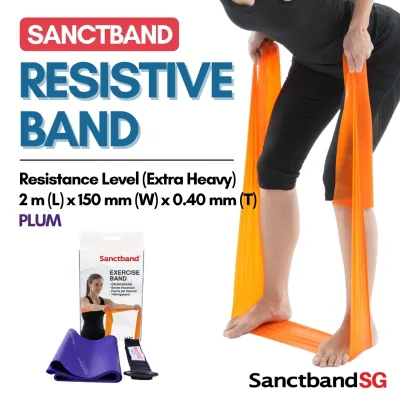
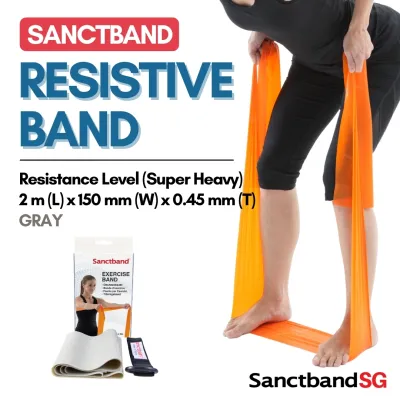
Prices are valid at publication and may change. Please refer to the product page for the latest price.
Starting positions also change based on band length. With a 2-metre band, you have more slack to work with, which is highly beneficial when setting up complex movements. You can easily wrap the band around your feet or hands to fine-tune the starting tension without feeling restricted before the movement even begins.
When anchoring your band to a fixed object like a door frame, a sturdy pole, or under your feet, the distance to the anchor point is a key variable. A 2-metre band provides the necessary length to loop around large anchors while still leaving enough active material to perform pulling or pressing motions. If the band is too short, anchoring it can consume most of its length, leaving you with insufficient range to complete your exercises.
Is 2 Metres the Right Length for Your Body and Space?
Your physical height is one of the most important factors when deciding if a 2-metre band fits your body. For taller individuals—typically those over 1.8 metres—a 2-metre band is often the minimum length required to perform overhead exercises comfortably. It provides enough material to stretch from under the feet to fully extended hands without over-tensioning.

For shorter users, a 2-metre band offers plenty of versatility but may require some adjustments. If you find there is too much slack at the start of an exercise, you will need to gather or wrap the excess material around your hands or anchor points. While this is easy to do, it does require a bit of extra setup time during your workout transitions.
Your physical workout environment also dictates whether this length is practical. If you plan to anchor the band overhead, you must verify your ceiling height. A 2-metre band anchored to a high door frame requires sufficient vertical clearance so that you do not hit the ceiling at the peak of your movement. Similarly, ensure you have enough clear floor space to step back and stretch the band safely without colliding with furniture or walls.
Before purchasing, always check the manufacturer’s specifications for the maximum stretch limit. Most high-quality bands can safely stretch to a specific multiple of their original length, but exceeding this elastic limit risks snapping the band. For a 2-metre band, ensure that your widest stances or highest overhead reaches do not push the material past its recommended safety threshold.
Matching a 2-Metre Band to Your Intended Exercises
A 2-metre resistance band excels in exercises that require a wide range of motion or complex anchoring setups. For lower-body training, this length is ideal for movements like deadlifts or squats where you stand on the band. The length allows you to loop the band under both feet with a wide stance while still having enough material to bring up to your shoulders or hold comfortably in your hands.
For upper-body and pulling movements, a 2-metre band is highly compatible with door anchors or vertical poles. Exercises such as chest presses, standing rows, and woodchops require you to stand a safe distance away from the anchor point. The 2-metre length ensures you can maintain a stable stance and execute a full range of motion without pulling the anchor loose or bottoming out the band’s elasticity.
However, there are scenarios where a 2-metre band might not be the most efficient tool. For localized lower-body work, such as lateral glute walks or clamshells, a long band is highly impractical. It requires excessive wrapping and tying, which can be uncomfortable and slip during movement; in these cases, short loop bands (often called mini-bands) are much more suitable.
Conversely, if you are exceptionally tall or performing highly dynamic, multi-planar movements, even a 2-metre band can occasionally feel restrictive if anchored far away. Always map out your planned exercises to ensure the band’s physical length aligns with the distance between your body and your chosen anchor point.
Pre-Purchase Checks for a 2-Metre Resistance Band
Before finalizing your purchase on any online marketplace or sports retailer, run through a quick checklist to ensure the band meets your training needs. First, inspect the product label or online specifications for the material composition. Resistance bands are typically made from latex, thermoplastic elastomer (TPE), or fabric-blend materials. Latex offers excellent elasticity and a smooth stretch but can trigger allergies, while fabric bands provide a comfortable grip and do not roll up easily but have less overall stretch.
Second, verify the manufacturer’s stated resistance rating and maximum stretch limit. Resistance is often categorized by color or weight equivalent (e.g., light, medium, heavy). Ensure the resistance level matches your current strength and that the maximum stretch limit safely accommodates your tallest overhead movements.
Finally, examine the included accessories. If you plan to anchor the band, check if a door anchor, handles, or ankle straps are included in the package. Verify that these accessories are designed to work safely with a 2-metre band and can be securely attached to the structural points in your home, such as solid doors or heavy-duty poles.
Frequently Asked Questions (FAQ)
Can I cut a 2-metre resistance band to make it shorter?
Cutting a resistance band is highly discouraged. Altering the band by cutting it damages its structural integrity, creating micro-tears along the cut edge that can easily split or snap under tension, posing a significant safety risk. Additionally, modifying the product will void any manufacturer warranty. If you need a shorter length for a specific exercise, it is much safer to fold the band in half, wrap the excess material around your hands or anchor point, or purchase a dedicated shorter band.
Is a 2-metre band suitable for physical therapy and rehabilitation?
A 2-metre band can be used for rehabilitation, but suitability depends entirely on the band’s material and resistance level. Heavy-duty gym bands designed for strength training are often too stiff and provide too much resistance for recovering joints and muscles. For physical therapy, thin, flat latex or TPE therapy bands with very low resistance are typically preferred. Always consult a qualified physiotherapist to determine the exact resistance profile and exercises appropriate for your recovery process before using any band.

Community discussion
Share your experience or ask a question. Comments are reviewed before publication.