
A 5kg dumbbell is one of the most common starting points for home fitness enthusiasts, but its suitability depends entirely on your current strength, the specific exercises you perform, and your ultimate fitness goals. For a complete beginner, a pair of 5kg weights can feel surprisingly heavy during shoulder movements, yet they might feel incredibly light during lower-body exercises like squats. Determining if this is the right weight for you requires evaluating how your body responds to the load across different movement patterns.
Instead of viewing 5kg as a universal starting point, it is more practical to treat it as a specialized tool within a broader training progression. This guide will help you assess your baseline strength, align your equipment choices with your fitness objectives, and decide whether a fixed 5kg dumbbell or a more flexible setup is the right investment for your home workouts.
How to Assess If 5kg Matches Your Current Fitness Level
Evaluating your baseline strength is the first step before purchasing any fitness equipment. A practical way to test this without specialized gym machinery is to perform a simple movement check using a common household object of a known weight, or by visiting a local fitness corner to gauge your comfort level. If you can perform a controlled overhead press with a similar weight for several repetitions without arching your lower back, 5kg may be a manageable starting point for upper-body training.
Products mentioned in this guide
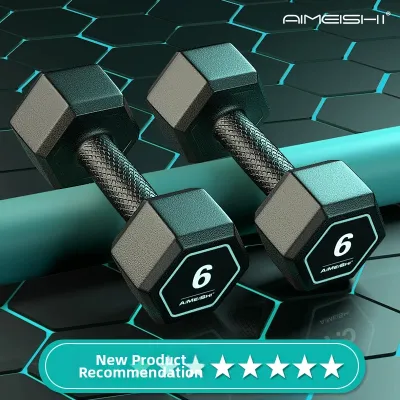
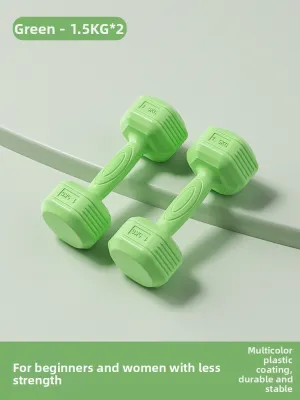
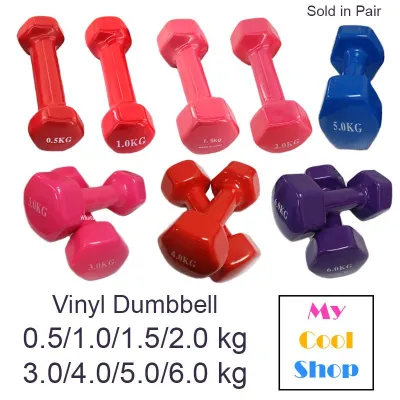
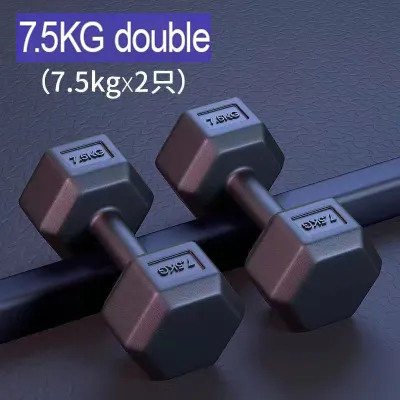
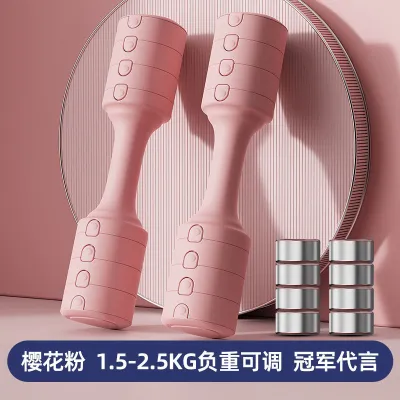
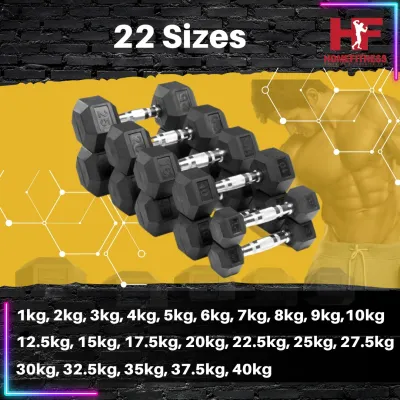
Prices are valid at publication and may change. Please refer to the product page for the latest price.
Your perceived exertion during these movements provides immediate feedback. If your muscles begin to shake or your posture collapses within the first few movements, the resistance is too high for your current joint stability. Conversely, if you can perform dozens of repetitions without feeling any muscular fatigue, a 5kg load will likely fail to stimulate physical adaptation.
Demographic baselines can offer general guidance, but they should never be treated as absolute rules. Individuals with smaller frames or those recovering from a sedentary lifestyle often find 5kg too demanding for isolation movements like bicep curls. Meanwhile, those with active daily routines might find 5kg insufficient for anything other than high-repetition endurance work or dynamic warm-ups.
Aligning the 5kg Load With Your Specific Workout Goals
Your fitness objectives dictate how much resistance your muscles need to adapt and grow. Training for muscular endurance, cardiovascular conditioning, or rehabilitation requires a completely different loading strategy than training for maximum strength. Understanding where 5kg fits into these training styles prevents premature plateaus and reduces the risk of overtraining.

For those focusing on muscular endurance, high-intensity interval training (HIIT), or active recovery, a 5kg dumbbell is often highly effective. This weight allows you to maintain a rapid tempo and high repetition ranges, keeping your heart rate elevated while challenging your muscular stamina. It is also an excellent resistance level for physical therapy exercises designed to strengthen the rotator cuff, where control is far more important than heavy loading.
However, if your primary goal is to build maximal strength or stimulate significant muscle growth, a fixed 5kg load has clear limitations. Larger muscle groups, such as the glutes, hamstrings, and chest, require substantial mechanical tension to trigger growth. While 5kg might offer a mild challenge initially, your body will quickly adapt, requiring heavier loads to continue making progress.
Exercise-Specific Weight Requirements
A single weight load does not perform the same way across different exercises because of leverage, joint mechanics, and the size of the active muscle groups. A 5kg dumbbell can feel incredibly heavy during an isolation exercise but virtually weightless during a compound movement.
Isolation exercises target a single joint and a specific muscle group, such as lateral raises for the shoulders or tricep kickbacks. Because these movements involve smaller muscles and longer lever arms, a 5kg load places a high amount of torque on the target joint. For many beginners, executing these movements with strict form using 5kg is highly challenging and can lead to compensatory movements.
In contrast, compound exercises recruit multiple joints and large muscle groups simultaneously. Movements like goblet squats, lunges, or bent-over rows utilize the power of your legs, hips, and back. For these exercises, a 5kg dumbbell provides very little resistance for most adults, as these muscle groups are naturally built to carry your entire body weight daily. Categorizing your planned routine into isolation and compound movements will help you see where 5kg is appropriate and where it falls short.
Clear Signs You Need a Lighter or Heavier Dumbbell
Monitoring your body’s physical and technical signals during a workout is crucial for safety and progress. If you find yourself swinging your torso, shrugging your shoulders, or arching your spine to complete a repetition with a 5kg dumbbell, the weight is too heavy. Forcing a load that compromises your posture increases the risk of joint strain and muscle tears, particularly in the shoulders and lower back.
On the other hand, there are clear indicators that a 5kg dumbbell is too light for your current capabilities. If you can complete your entire set while holding a conversation, or if you do not feel a deep muscular burn in the target area toward the end of your routine, the stimulus is insufficient. Relying on a weight that is too light means you are missing out on the benefits of progressive overload, which is the gradual increase of stress placed upon the body during training.
To continue progressing, you must be prepared to transition to different weights when your current load no longer challenges you. If 5kg has become too easy for your squats but is still too heavy for your shoulder presses, it is a clear sign that your body requires a varied weight selection rather than a single fixed pair.
Planning Your Dumbbell Setup for Long-Term Progress
When setting up a home gym, especially in compact living spaces like Singapore apartments where storage space is at a premium, equipment efficiency is key. Purchasing a single pair of fixed 5kg dumbbells is a cost-effective entry point, but it may limit your training variety as you get stronger.
For long-term progress, investing in a set of adjustable dumbbells is often a more practical strategy. These systems allow you to change the weight plates on a single handle, giving you a range of options from 2kg up to 10kg or more. While the initial cost of adjustable systems is higher than a single pair of fixed weights, they save significant floor space and eliminate the need to buy new dumbbells every time your strength increases.
Before finalizing any purchase, perform essential safety and quality checks on the equipment. Verify the stability of the locking mechanisms on adjustable models to ensure plates cannot slip during overhead movements. Check the grip texture of the handle; a knurled metal grip or a textured rubber coating prevents slipping when your hands sweat. Always review the manufacturer’s specifications regarding material durability and weight tolerance to ensure a safe training experience.
Frequently Asked Questions (FAQ)
Can I build muscle using only 5kg dumbbells?
Yes, it is possible to build muscle with 5kg dumbbells by focusing on metabolic stress and training close to muscular failure. By increasing the number of repetitions, slowing down the tempo of each movement, or reducing rest times between sets, you can create enough muscular fatigue to stimulate growth. However, this approach is highly demanding on your cardiovascular system and becomes less effective over time for larger muscle groups, which eventually require heavier mechanical tension to continue developing.
Are 5kg dumbbells suitable for full-body workouts?
A pair of 5kg dumbbells can be used for full-body workouts, but you will need to modify your exercises to keep the intensity consistent. For lower-body movements like squats and lunges, you can increase the difficulty by performing single-leg variations, such as Bulgarian split squats, or by slowing down the lowering phase of the movement. For upper-body exercises, 5kg is generally well-suited for presses and rows for beginners, though you may need to scale down to lighter weights for delicate shoulder movements.
How do I know if my 5kg dumbbells are of good quality?
To evaluate the quality of a 5kg dumbbell, inspect the construction materials and the accuracy of the weight. High-quality dumbbells typically feature a solid cast-iron core encased in durable rubber or neoprene, which protects your floors and reduces noise. Check the connection between the handle and the weight heads; there should be no wobbling or loose parts. Finally, read the manufacturer’s specifications to ensure the actual weight matches the labeled 5kg within a reasonable tolerance.

Community discussion
Share your experience or ask a question. Comments are reviewed before publication.