
Evaluating the safety of high-tech gear before heading into vertical environments is a fundamental rule of climbing. When considering the HyperShell—an advanced, motorized lower-body exoskeleton—climbers often wonder if this device can double as safety or climbing equipment. The direct answer is no: HyperShell is not certified, designed, or safe for use as climbing safety gear or personal protective equipment (PPE). Confusing an assistive device with life-critical protection can have catastrophic consequences.
While the HyperShell is an innovative tool for trail hiking, load-bearing assistance, and approach marches, it lacks the structural engineering and certifications required to sustain vertical fall forces. Understanding where assistive technology ends and life-support gear begins is vital for maintaining safety in alpine and vertical environments. This guide explains the critical distinctions between these product categories, the safety standards that govern them, and how to safely integrate assistive wearables into your outdoor pursuits.
Understanding HyperShell: Assistive Device vs. Life-Support Gear
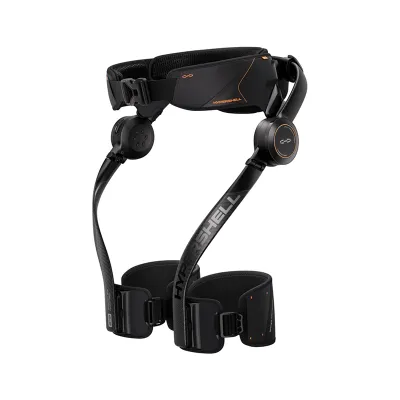
To safely use any wearable technology in the outdoors, you must understand its primary engineering purpose. The HyperShell is designed as an active, motorized exoskeleton. Its primary function is to provide lower-body assistance, reducing the metabolic cost of movement and minimizing muscle fatigue during extended horizontal travel, uphill hiking, and heavy pack carries. It achieves this by using internal motors to apply torque to the hip joints, effectively mimicking and supporting the natural movement of your legs.
Products mentioned in this guide
![[NEW] Hypershell X Pro S | AI Outdoor Exoskeleton | Reduce Physical Exertion Up to 30%](https://img.lazcdn.com/g/p/739e3aa6526ac195d02b1796f7a2d248.jpg_400x400q80.jpg_.webp)
Prices are valid at publication and may change. Please refer to the product page for the latest price.
Because of its sleek frame and outdoor-focused marketing, some users mistakenly categorize it alongside climbing equipment. However, the mechanical architecture of an exoskeleton is fundamentally different from personal protective equipment. Exoskeletons are built for parallel load distribution. They assist your muscles by transferring a portion of the payload weight directly through the mechanical frame down to the ground. They are not engineered to withstand sudden, high-impact forces from a vertical fall.
In contrast, climbing gear such as harnesses, ropes, and carabiners are designed for series load distribution. In the event of a fall, these components form an unbroken chain that catches your full body weight, absorbing thousands of Newtons of dynamic energy. The lightweight polymers, carbon fiber linkages, and electronic actuators in the HyperShell are not rated for tension, suspension, or shock absorption. If subjected to the violent deceleration of a lead fall, the device’s joints and structural linkages would likely fail catastrophically.
Recognized Climbing Certifications: UIAA and CE Standards Explained
When you trust your life to a piece of climbing equipment, you rely on rigorous, independent safety certifications. The gold standard for climbing gear safety is established by the UIAA (International Climbing and Mountaineering Federation) and European Standards (Conformité Européenne, or CE). These organizations define strict testing protocols to ensure that every piece of gear can withstand the extreme forces encountered during vertical activities.

For example, climbing harnesses must meet the EN 12277 standard, which mandates minimum static strength requirements. Under this standard, a harness must withstand high tensile forces (often exceeding 15 kilonewtons, or roughly 1,500 kilograms of static force) without structural failure. Climbing ropes must comply with EN 892, which requires dynamic drop tests to measure the rope’s ability to absorb energy, ensuring the impact force transmitted to the climber remains within safe physiological limits.
These rigorous tests measure several key safety parameters:
- Fall Factor: The ratio of the fall distance to the length of rope available to absorb the fall.
- Impact Force: The peak force transmitted to the climber and the anchor system during a dynamic arrest.
- Static and Dynamic Strength: The ultimate breaking strength under continuous tension versus sudden, violent drops.
Any equipment intended to protect a climber from a fall must bear these specific, verifiable marks. You can locate these certifications on sewn-in labels on harnesses, laser-etched markings on carabiners and belay devices, and printed technical notices on climbing ropes. If a device does not explicitly carry a CE EN or UIAA climbing certification, it must never be used to support human weight or arrest a fall.
Evaluating HyperShell’s Certifications and Environmental Ratings
When examining the HyperShell, you will find various certifications on its product label, packaging, or official manual. However, it is crucial to interpret these markings accurately. The CE mark found on the HyperShell certifies compliance with consumer electronics, electromagnetic compatibility (EMC), and machinery safety directives. It indicates that the device’s motors, sensors, and circuit boards will not cause harmful interference, present electrical shock hazards, or fail during normal operational use.
Additionally, the device’s battery packs must comply with safety standards such as UN38.3. This certification ensures that the lithium-ion batteries have undergone rigorous testing for thermal stability, vibration resistance, external short circuits, and impact safety during transport and general operation. While these certifications are essential for preventing battery fires or electrical malfunctions, they do not validate the device’s structural integrity for fall-arrest scenarios or human suspension.
Another critical specification to verify is the Ingress Protection (IP) rating, which measures the device’s resistance to dust and liquid penetration. For outdoor use, check the manufacturer’s manual to confirm whether the motors and battery housing are rated for light splashes (such as IP54) or complete immersion (such as IP68).
- IP54 Rating: Protects against limited dust ingress and water splashes from any direction, suitable for light rain.
- IP68 Rating: Offers complete protection against dust and continuous immersion in water under specified conditions.
Understanding these environmental ratings helps you prevent electrical short circuits while on the trail, but it does not alter the fact that the chassis is purely an electronic and mechanical aid, not a structural safety anchor.
Safe Usage Boundaries in Alpine and Approach Environments
While the HyperShell is not climbing gear, it can still play a valuable role in a climber’s overall journey when restricted to its intended operational boundaries. The ideal use case for an outdoor exoskeleton is the “approach march”—the often grueling hike carrying heavy gear packs from the trailhead to the base of the crag. By reducing fatigue during this approach, you can arrive at the technical climbing site with more physical energy and sharper mental focus, which indirectly enhances your safety.
However, using assistive wearables in rugged terrain introduces specific hazards that require careful management:
- Power Failure: A sudden battery depletion or thermal shutdown on a steep descent can instantly remove the motorized assistance, causing a sudden shift in your center of gravity and potentially leading to a slip or fall.
- Restricted Mobility: The rigid frame of an exoskeleton is optimized for linear walking. On technical scrambles, it can restrict the extreme hip, knee, and ankle articulation required to step high, stem, or maintain balance on loose rock.
- Tropical Climate Risks: For climbers traveling from Singapore to regional tropical climbing destinations in Southeast Asia, high humidity (often exceeding 80%) and intense heat present significant challenges. High ambient temperatures can trigger battery thermal management systems to shut down the device to prevent overheating. Additionally, heavy sweat combined with the tight straps of the exoskeleton can cause severe skin chafing if not managed with moisture-wicking layers.
To mitigate these risks, establish a strict operational boundary: the exoskeleton must be deactivated and removed before you transition from hiking to technical scrambling or climbing where a fall is possible.
Pre-Use Inspection and When to Stop Using the Device
To ensure your exoskeleton operates safely and does not interfere with your primary climbing gear, implement a systematic pre-hike inspection routine. Before strapping into the device, check the following components:
- Structural Frame and Joints: Inspect all carbon-fiber or polymer linkages for hairline cracks, deep scratches, or deformation. Ensure that all pivot bolts and mechanical hinges rotate smoothly without excessive play.
- Straps and Buckles: Examine the webbing for signs of fraying, torn stitching, or wear. Verify that the quick-release buckles snap together securely and release cleanly under tension.
- Battery and Electronics: Check the battery casing for swelling, cracks, or signs of moisture ingress. Power on the device to ensure the firmware boots without displaying error codes and that the motors run quietly.
Establish clear “stop-use” conditions. If you hear unusual grinding noises from the motors, observe persistent error codes, discover cracked frame components, or notice frayed load-bearing straps, immediately discontinue use. Do not attempt to repair structural elements yourself; consult the manufacturer’s authorized service guidelines.
Finally, if you choose to wear a climbing harness during an approach hike while keeping the exoskeleton on, you must ensure the two systems do not interfere. The exoskeleton’s waist belt and leg attachments must never overlap or compress the climbing harness’s structural webbing, gear loops, or belay loop. Any compression of the harness can alter its fit, restrict access to safety gear, or damage the harness fibers, compromising your safety once you begin your vertical climb.
Frequently Asked Questions (FAQ)
Can I clip a climbing lanyard or rope directly to the HyperShell?
No, you must never clip a climbing rope, lanyard, sling, or carabiner directly to any part of the HyperShell frame. The exoskeleton is not load-rated for fall arrest or human suspension. Subjecting the device to these forces can cause immediate structural failure, leading to catastrophic injury. Always use a properly fitted, UIAA/CE-certified climbing harness for all tethering, belaying, and protection systems.
How does high humidity affect the exoskeleton during jungle approaches?
High humidity, heavy tropical rain, and excessive sweat can accelerate the corrosion of electronic contacts and degrade the fabric straps of the device. When trekking in humid environments typical of Southeast Asian destinations, ensure all port covers are sealed tightly. After your hike, wipe down the sensors and metal joints, allow the fabric straps to air-dry completely in a well-ventilated space, and store the device in a dry, cool environment to prevent moisture damage.
Will wearing an exoskeleton restrict my movement on technical rock?
Yes, wearing an exoskeleton will restrict the range of motion needed for technical rock climbing. The mechanical joints are designed for linear walking and stepping motions. On technical rock, moves like high-stepping, heel-hooking, or stemming require extreme hip and knee articulation that the rigid frame cannot accommodate. To maintain full mobility and safety, always remove the device before starting a technical climb.

Community discussion
Share your experience or ask a question. Comments are reviewed before publication.