
Determining whether the BR-35 light attachment is compatible with your bicycle depends on matching the physical dimensions of your handlebars, seatpost, or frame with the mount’s design and clearance requirements. Because bicycle tubing varies significantly across road, mountain, hybrid, and folding bikes, a secure fit cannot be assumed based on bike category alone. To ensure compatibility, you must measure your specific mounting zone’s outer diameter and verify that your frame geometry allows sufficient clearance for the mounting bracket and light body.
How to Measure and Match Tube Diameters
To confirm if the BR-35 light attachment will fit, you should measure the exact outer diameter of the tube where you plan to install it. Using digital calipers is the most reliable way to obtain an accurate reading in millimeters. Place the calipers directly over the intended mounting zone, ensuring they sit flat against the surface without pinching any cables.
Once you have your measurement, compare it directly with the official diameter range listed on the BR-35 product packaging, user manual, or the manufacturer’s official website. Because there are no universal standards for bicycle tube thicknesses, relying on generic category assumptions can lead to an incompatible purchase.
Products mentioned in this guide
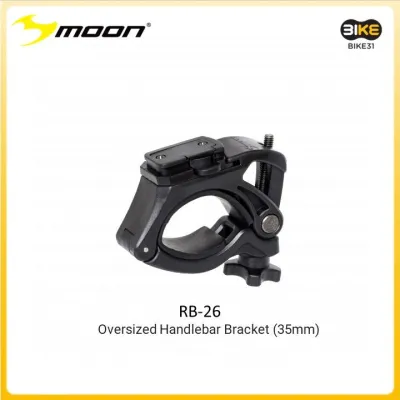
Prices are valid at publication and may change. Please refer to the product page for the latest price.
Be especially careful when measuring tapered, ovalized, or butted handlebars and seatposts. Many modern handlebars feature a wider diameter near the stem that quickly tapers down toward the grips. If you plan to mount the BR-35 close to the center, measure that exact section rather than the outer portions of the bar.
Evaluating the Mounting Mechanism and Frame Clearance
The physical design of the BR-35 mounting mechanism determines how it interacts with your bike’s frame and components. Depending on whether the attachment uses a flexible silicone strap, a rigid plastic clamp, or a quick-release bracket, it will require a specific amount of clear surface area to grip securely.

Before purchasing, inspect your cockpit or seatpost for potential obstructions. Brake hoses, gear cables, and integrated handlebar-stem units can block the path of the mount or prevent the light from pointing straight ahead. Ensure there is enough physical clearance to wrap the strap or tighten the clamp without pinching or rubbing against your cables.
The material of your frame also influences how the mount should be installed. On smooth carbon fiber surfaces, rigid clamps can slip if not properly tensioned, while over-tightening risks crushing the delicate carbon weave. For textured or painted alloy tubes, check if the mount includes a rubber shim or protective lining to prevent scratches and enhance grip.
Finally, verify that the installed light and mount do not obstruct your steering movement or interfere with suspension travel. On mountain bikes, a poorly positioned light can strike the fork crown during deep suspension compression, while on folding bikes, it may impede the folding joints.
Fit Considerations for Specific Bike Types
Road and Hybrid Bikes
Road and hybrid bikes often feature streamlined designs that present unique mounting challenges. Many modern road bikes utilize aerodynamic handlebars with flat, non-circular profiles rather than traditional round tubes. If your handlebars are aero-shaped, a standard rigid circular clamp will not fit, and you must verify if the BR-35 strap is flexible enough to stretch around the wider profile.
Additionally, integrated cockpits with internal cable routing leave very little exposed space near the stem. Check the clearance around your stem faceplate and computer mounts to ensure the BR-35 has a clear path. When mounting on carbon fiber handlebars or seatposts, always check the manufacturer’s torque specifications to avoid structural damage during installation.
Mountain and Folding Bikes
Mountain bikes and folding bikes typically feature robust frames with wider tube diameters and moving parts. Mountain bikes frequently use oversized handlebars, which may exceed the maximum capacity of standard light mounts. You must measure your handlebar diameter near the stem to ensure it falls within the BR-35’s supported limits.
For folding bikes, the primary concern is the folding mechanism itself. A light mount left on the handlebar or seatpost can prevent the frame from latching correctly or scratch adjacent tubes when folded. Ensure the BR-35 can be easily removed or positioned where it will not interfere with folding hinges and latches.
Furthermore, off-road riding subjects your equipment to intense vibrations. If you ride on rough trails, verify that the mounting mechanism provides a highly secure, non-slip grip to prevent the light from rotating downward when hitting bumps.
Your Pre-Purchase Compatibility Checklist
To avoid the hassle of returns and ensure a safe ride, use this step-by-step checklist before purchasing the BR-35 light attachment:
- Measure with Calipers: Take an exact millimeter measurement of the outer diameter of your handlebar, seatpost, or frame at the precise spot you plan to mount the light.
- Check Manufacturer Specs: Cross-reference your measurement with the official BR-35 specification sheet to confirm it falls within the approved range.
- Inspect for Obstructions: Ensure the mounting zone is free of cables, computer mounts, bell brackets, or reflectors that could block the installation.
- Identify Needed Accessories: Determine if you need third-party rubber shims, spacers, or specialized adapters to achieve a snug fit on unusually thin or thick tubes.
- Verify Carbon Safety: If mounting on carbon fiber, confirm that the clamp design is compatible with carbon components and can be tightened safely without causing damage.
If your bike’s geometry or tube diameter falls outside the documented limits of the BR-35, do not attempt to force the installation. Stop and consult the manufacturer or visit a local bike shop in Singapore to find a compatible mounting solution.
Frequently Asked Questions (FAQ)
Can I use the BR-35 on an aero-shaped handlebar?
Compatibility with aero-shaped handlebars depends entirely on the design of the BR-35 mounting mechanism. If the attachment uses a rigid, circular plastic clamp, it will not fit non-circular aero profiles. However, if it features a flexible silicone or rubber strap, it may stretch to accommodate the shape, provided the handlebar’s circumference does not exceed the strap’s maximum tension limit. Always check the manufacturer’s guidelines to avoid slippage or damaging carbon handlebars.
Do I need extra adapters for oversized mountain bike handlebars?
Oversized mountain bike handlebars often feature a central diameter that is thicker than standard road or hybrid bars. You must measure your specific handlebar diameter and compare it to the maximum limit of the BR-35 mount. If your handlebar exceeds this limit, you may need to purchase a separate oversized clamp, a longer strap, or a specialized adapter to ensure a secure and stable fit on rough terrain.

Community discussion
Share your experience or ask a question. Comments are reviewed before publication.