
Quick Answer: Is Titanium Climbing Equipment Safe?
Titanium alloy climbing gear is safe for vertical use, provided it carries official certifications from recognized international bodies and is manufactured by reputable brands. The mere presence of the word “titanium” on a product label does not guarantee structural integrity. Safety in high-angle environments relies entirely on precise engineering, rigorous quality control, and standardized testing rather than the raw material alone.
For climbers navigating vertical routes, understanding how titanium behaves under load is essential. Uncertified hardware sourced from unverified online marketplaces poses severe risks, as it often lacks the metallurgical refining required to withstand dynamic fall forces. To ensure your safety, always verify that your hardware carries physical stamps of compliance before trusting it on the rock.
Titanium vs. Aluminum and Steel: Material Characteristics
Choosing the right climbing hardware requires a clear understanding of how titanium compares to traditional materials like aluminum and steel. Titanium alloys, particularly Grade 5 (Ti-6Al-4V), are highly valued for their exceptional strength-to-weight ratio. This characteristic allows manufacturers to produce lightweight gear that does not sacrifice tensile strength, offering a middle ground between the featherweight profile of aluminum and the rugged durability of stainless steel.
Products mentioned in this guide
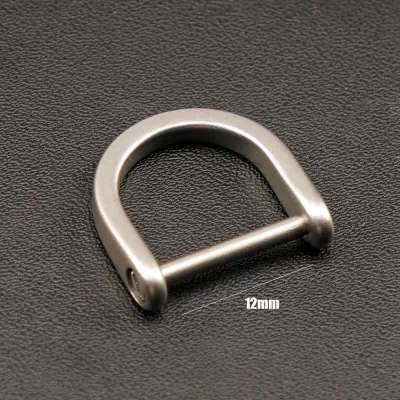
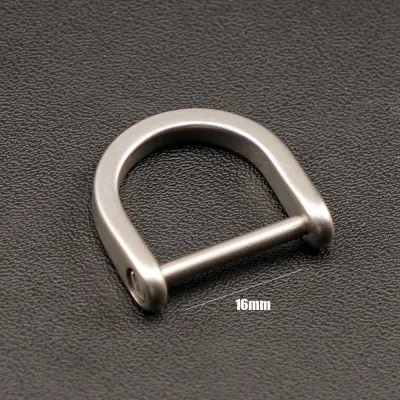
Prices are valid at publication and may change. Please refer to the product page for the latest price.

Aluminum remains the standard for most active and passive climbing protection due to its low cost, lightweight nature, and excellent ductility. However, aluminum wears down relatively quickly when subjected to constant rope friction or abrasive rock surfaces. Stainless steel, while significantly heavier, is the premier choice for permanent anchors and high-wear components because of its extreme hardness and resistance to mechanical wear.
Titanium bridges this gap by offering superior surface hardness compared to aluminum, meaning it resists grooving and scratching far better over extended use. It also boasts exceptional resistance to environmental degradation, making it highly prized for coastal climbing environments where salt spray quickly ruins standard steel anchors. However, titanium is more expensive to source and machine, which is why it is typically reserved for specialized applications like permanent sea-cliff bolts, premium carabiners, or lightweight rigging plates.
These material differences introduce distinct operational trade-offs. For example, titanium has a lower thermal conductivity than aluminum, meaning heat generated during rapid rappels or long lowers can build up quickly on the device surface. Climbers must match their material selection to the specific demands of their venue, balancing weight savings against thermal performance and long-term durability.
Decoding Strength Ratings and Safety Certifications
When evaluating titanium climbing gear, you must rely on standardized load ratings rather than marketing claims. Climbing hardware is rated in kilonewtons (kN), where 1 kN represents approximately 100 kilograms of static force. Rated equipment displays specific markings indicating its minimum breaking strength across different axes, such as the major axis, minor axis, and with the gate open.
To confirm that a piece of titanium gear is safe for climbing, look for physical stamps indicating compliance with international standards. The most critical markings are the CE (Conformité Européenne) mark, followed by a four-digit identification number of the notifying body, and the UIAA (International Climbing and Mountaineering Federation) logo. These symbols prove that the gear has passed rigorous laboratory testing designed to simulate extreme climbing forces.
Never assume that all products from a specific brand are certified simply because the company is well-known. Some manufacturers produce non-rated titanium accessory carabiners alongside their certified climbing gear. You must inspect the body of each individual item to confirm it is stamped with the relevant standard, such as EN 12275 for connectors or EN 959 for rock anchors.
It is also vital to understand that strength ratings represent the point of catastrophic failure under controlled laboratory conditions, not a recommended working load limit. Real-world forces can escalate rapidly due to dirty ropes, poor alignment, or sharp rock edges. Certified ratings give you a baseline of safety, but proper rigging practices are required to keep operational forces well below these testing limits.
Failure Modes and Operational Risks of Titanium Gear
While titanium is incredibly strong, it is not indestructible and exhibits specific failure modes that differ from aluminum and steel. One primary concern is notch sensitivity. Titanium can be highly sensitive to sharp scratches, deep grooves, or surface nicks. A deep gouge caused by dragging gear over sharp granite can create a localized stress concentration point, potentially leading to micro-fractures that propagate under repeated loading.
Metal fatigue is another operational risk that develops over long periods of use. Unlike steel, which has a distinct fatigue limit below which it can theoretically survive infinite cycles, titanium will eventually fatigue if subjected to enough repeated stress cycles. This makes regular inspection crucial for older titanium gear that has seen years of active service.
Furthermore, titanium is generally less ductile than certain aluminum alloys. Ductility refers to a metal’s ability to deform plastically (bend) before it breaks. While an aluminum hanger or carabiner might bend visibly under an unusual load, providing a warning sign of overload, titanium can sometimes transition from elastic deformation to sudden, brittle failure with very little visible warning.
This risk of sudden failure is significantly higher in counterfeit or uncertified titanium products. Poorly manufactured titanium often suffers from oxygen embrittlement or inadequate heat treatment during production, leaving the metal brittle and prone to cracking under normal climbing loads. No material can compensate for poor manufacturing quality, nor can it replace proper safety training, sound judgment, and conservative risk assessment on the wall.
Inspection, Maintenance, and Retirement Criteria
To maintain the safety of your vertical system, establish a strict routine for inspecting and maintaining your titanium hardware. Before every climb, perform a thorough visual and tactile check. Run your fingers along the metal surfaces to feel for hairline cracks, sharp burrs, or deep grooving from rope friction. For carabiners, verify that the gate opens smoothly and snaps shut instantly without sticking or catching.
Set clear retirement criteria to remove compromised gear from service immediately. You must retire any titanium component that has sustained a major dynamic fall, even if there is no obvious external damage, as internal micro-fractures may have formed. Other non-negotiable retirement triggers include wear grooves deeper than the manufacturer’s specified limit, visible cracks, bent frames, or exposure to extreme heat, such as direct flame or welding torches, which alters the metal’s crystalline structure.
Basic maintenance will extend the working life of your certified gear. Wash your equipment in clean, fresh water to remove grit, dirt, and salt residue, which is especially important after climbing on humid coastal cliffs. Dry the gear thoroughly with a clean cloth, and apply a small drop of dry, wax-based lubricant to moving parts like gate hinges or springs, taking care to wipe away any excess so it does not attract dirt or contaminate your ropes.
If you ever encounter a piece of gear with an unknown history, or if you suspect it has been exposed to harsh chemicals or structural compromise, stop using it immediately. Do not attempt to repair cracked or severely worn hardware yourself. When in doubt, consult the manufacturer’s official instructions or contact a qualified professional to evaluate the equipment before taking it back onto the rock.
Frequently Asked Questions (FAQ)
Can I mix titanium carabiners with aluminum or steel gear?
Yes, you can mix titanium carabiners with aluminum or steel gear in your climbing system, but you must monitor mechanical wear closely. While galvanic corrosion is a theoretical risk when different metals contact each other in wet environments, it rarely causes practical issues during standard climbing trips. The primary concern is mechanical friction: because titanium is harder than aluminum, a titanium carabiner can rapidly wear down softer aluminum components if they rub together under load. Always consult the manufacturer’s compatibility guidelines and inspect contact points regularly for signs of excessive wear.
Does titanium climbing gear rust or corrode?
Titanium climbing gear is exceptionally resistant to rust and environmental corrosion because it naturally forms a stable, protective oxide layer on its surface when exposed to air. This makes it highly superior to standard steel in wet, humid, or coastal climbing areas. However, while the main titanium body will not rust, you must still perform regular maintenance. Many titanium devices contain non-titanium internal components, such as steel springs, rivets, or pins, which can still corrode and seize if neglected. Always rinse your gear with fresh water, dry it completely, and lubricate moving parts to keep the entire mechanism functioning safely.

Community discussion
Share your experience or ask a question. Comments are reviewed before publication.