
Determining whether the Kingsmith R1 Pro is the right fitness addition to your Housing & Development Board (HDB) flat requires a careful look at its technical specifications and how they map to compact Singaporean living spaces. While compact treadmills are designed to solve the spatial challenges of modern apartments, their actual utility depends on your specific room layout, floor type, and fitness habits. By verifying key metrics such as folded dimensions, motor horsepower, weight limits, and noise-dampening capabilities, you can ensure the equipment integrates seamlessly into your home without disrupting your daily routine or your downstairs neighbors.
Decoding Dimensions: Folded vs. Unfolded Footprint
Before purchasing, measure your available floor space and compare it against the manufacturer’s official specifications. For safe workouts, account for both the physical footprint and the safety clearance zones. Manufacturers typically recommend leaving at least 0.5 meters of open space on both sides of the belt and up to 1.5 to 2 meters of clear space directly behind the machine to prevent injury in the event of a slip. In a typical HDB master bedroom or living room, map out this unfolded footprint alongside your existing queen-sized bed, wardrobe, or sofa console to ensure walking paths remain unobstructed.
Equally important is verifying the folded dimensions to confirm where the unit will be stored. If you plan to slide the treadmill under a bed frame or sofa, measure the vertical clearance of your furniture legs to ensure the folded height of the machine can slide underneath easily. For vertical storage against a wall or inside a household shelter, check the folded depth and height against your wall space.
Products mentioned in this guide
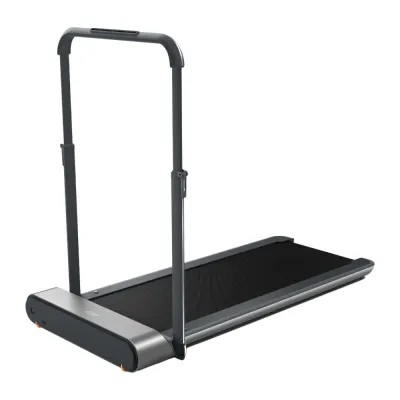
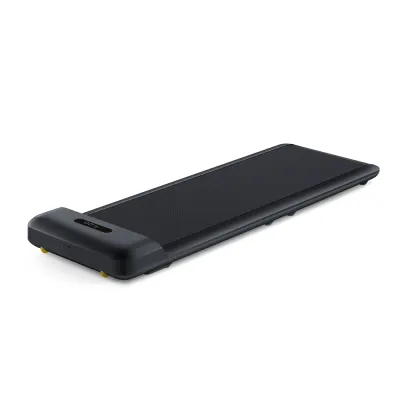
Prices are valid at publication and may change. Please refer to the product page for the latest price.
Finally, do not overlook the logistics of moving the treadmill into your home. Measure the clear width of your main door frame, bedroom doors, and narrow hallway turning radiuses. HDB door frames typically range from 800mm to 900mm in width, which should comfortably accommodate most compact treadmills, but tight L-shaped corridors can present maneuvering challenges during delivery.
Motor and Noise Specs: What They Mean for HDB Living
Understanding motor specifications is crucial for predicting both performance and its impact on your household’s acoustic environment. When examining treadmill motors, distinguish between continuous horsepower (CHP) and peak horsepower. CHP represents the motor’s ability to maintain a consistent speed under a continuous load, making it the primary metric to check if you plan on sustained running. Peak horsepower is the maximum output the motor can reach for brief intervals, which is less indicative of everyday performance. If your routine consists primarily of brisk walking, a lower CHP motor is generally sufficient, whereas regular running demands a more robust motor to prevent overheating.

In high-density HDB blocks, structural noise transmission is a primary concern. Treadmill noise comes from the motor itself and the impact of your feet hitting the deck. While brushless motors tend to operate more quietly than traditional brushed motors, the physical impact of running creates low-frequency vibrations that travel through concrete floors to the unit below.
To maintain good neighborly relations, verify the built-in shock absorption features of the treadmill deck, which help cushion your joints and dampen impact sound. Additionally, plan to place a high-density anti-vibration mat beneath the machine. This is especially important on hard HDB flooring options like ceramic tiles, vinyl planks, or polished parquet, which can amplify structural resonance and suffer scratches from the machine’s feet.
Weight Capacity and Belt Size: Matching Your Profile
A treadmill’s physical limits must align with your body profile and training intensity to ensure safe operation. Start by checking the manufacturer’s official maximum user weight capacity. As a general safety rule, it is wise to maintain a buffer of at least 10 to 15 kilograms between your body weight and the machine’s maximum limit. This buffer accounts for the dynamic force exerted on the deck during running, which is significantly higher than your static standing weight.
The dimensions of the running belt—specifically its width and length—directly influence your stride comfort and safety. Taller users or those with longer strides require a longer belt to avoid stepping off the rear of the deck during fast runs. A wider belt provides more lateral room, reducing the risk of accidentally stepping onto the side rails. If you plan to transition from casual walking to active running, verify that the belt dimensions accommodate your natural stride length at higher speeds.
Additionally, consider the net weight of the treadmill itself. While a heavier machine often feels more stable during use, it exerts more localized pressure on your flooring. Standard HDB floor slabs are designed to support substantial structural loads, but if you live in an older flat or have installed raised access flooring, verifying the weight distribution of the machine is a necessary step to prevent floor damage.
Folding Mechanism and Daily Setup in Compact Spaces
The practicality of a space-saving treadmill relies heavily on how easily you can transition it from storage to active use. Examine the folding mechanism design, noting whether it utilizes a manual lift, a double-folding deck, or a hydraulic assist system. A double-folding mechanism allows for an exceptionally compact footprint, but it requires you to bend down and manually secure the hinges. Ensure you have the physical strength to perform this setup daily, and verify that the folding path has enough clearance so you do not accidentally strike nearby walls or delicate furniture.
Power management is another critical safety factor in compact HDB layouts. Identify the location of your nearest wall outlet relative to where you plan to position the treadmill. Avoid using extension cords or multi-way adapters, as treadmills draw significant electrical current and can pose fire hazards if overloaded. Ensure the power cord can reach the outlet without stretching across active walking paths, which creates a dangerous tripping hazard.
Lastly, check the manufacturer’s instructions regarding post-unfolding checks. Some folding treadmills require periodic belt alignment or tension calibration after being stored vertically or moved frequently. Familiarize yourself with the safety key mechanism, ensuring it is always reinserted and clipped to your clothing before starting any workout session.
Frequently Asked Questions (FAQ)
Do I need a special mat for using a treadmill in an HDB flat?
Yes, using a high-density equipment mat is highly recommended for HDB apartments. These mats protect your tiled, vinyl, or parquet flooring from scratches caused by the treadmill’s feet, and they absorb low-frequency vibrations that would otherwise travel through the concrete floor slab to your downstairs neighbors. When selecting a mat, verify its thickness—typically 4mm to 6mm is ideal—and ensure its overall dimensions fully cover the unfolded footprint of your treadmill to catch any sweat or debris.
Can the Kingsmith R1 Pro be moved easily between rooms?
Moving the treadmill depends on its net weight and your home’s layout. You should verify the official net weight in the specifications to assess if you can safely lift or tilt the unit. Most compact treadmills feature built-in transport wheels at the base, allowing you to roll the machine across flat surfaces once tilted. However, navigating floor transitions, raised door thresholds, or thick carpet edges in an HDB flat will require extra physical effort, and you should always use proper lifting techniques to avoid strain.

Community discussion
Share your experience or ask a question. Comments are reviewed before publication.