
Selecting the right badminton racket can completely transform your performance on the court, turning defensive struggles into controlled rallies and weak clears into decisive smashes. Li-Ning organizes its extensive racket lineup into distinct, specialized series designed to match specific playing styles, skill levels, and physical capabilities. By understanding the core philosophies behind these series—ranging from the power-focused Axforce to the control-oriented Halbertec and the speed-driven Bladex—you can narrow down your choices and find a frame that complements your natural movements.
While professional players often showcase high-end models on television, the ideal racket for your game depends on your personal technique, physical stamina, and tactical role. Each Li-Ning series offers a spectrum of models, from user-friendly entry-level options to demanding, stiff-shafted professional frames. Navigating these options requires a clear understanding of how frame geometry, weight distribution, and shaft flexibility interact with your swing.
Li-Ning Racket Series Explained: Power, Control, and Speed
Li-Ning has streamlined its modern racket catalog into three primary pillars, each engineered to support a distinct tactical approach to the game. The Axforce series is built specifically for power-dominant players who prefer an aggressive, attacking style. These rackets typically feature a head-heavy balance, which shifts the center of gravity toward the top of the frame to maximize momentum during overhead smashes. The added weight at the head helps generate greater downward force, making it easier to push opponents deep into their court from the baseline.
Products mentioned in this guide
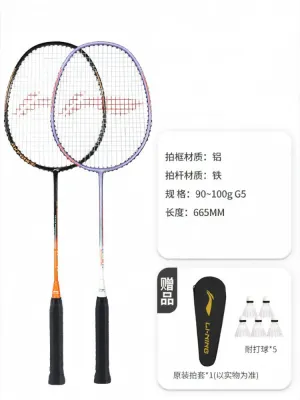
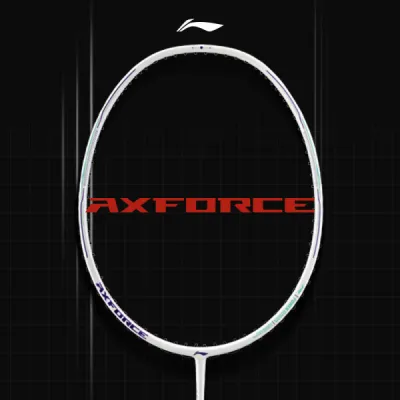
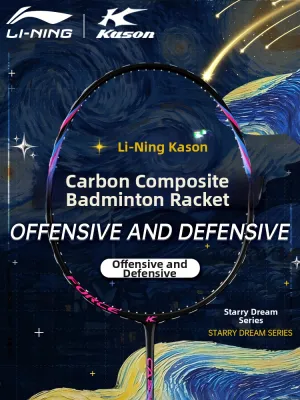
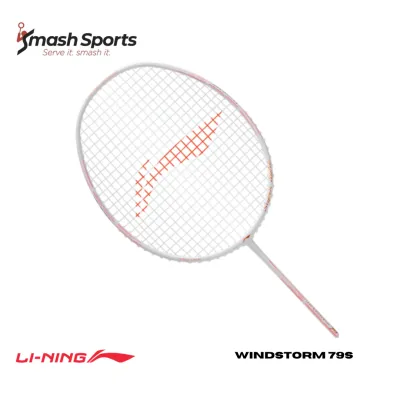
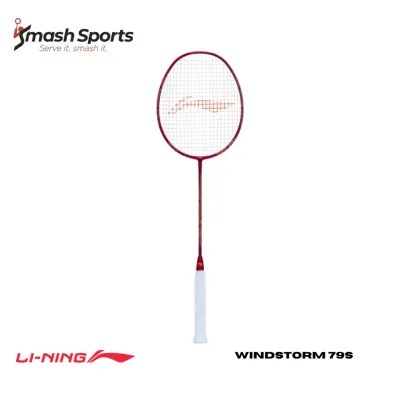
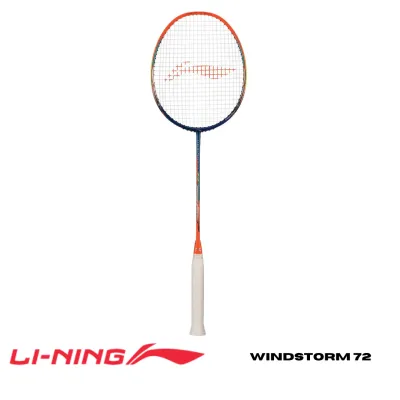
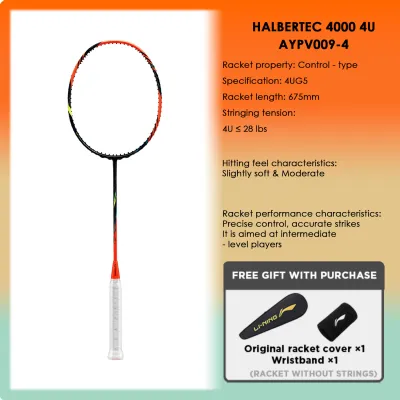
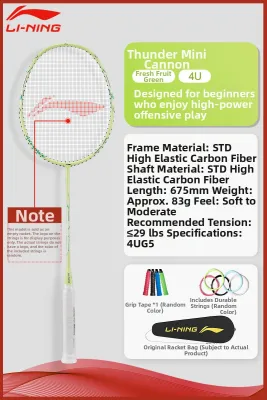
Prices are valid at publication and may change. Please refer to the product page for the latest price.
In contrast, the Halbertec series focuses entirely on control, precision, and tactical placement. Designed for players who dictate the tempo of the rally through accurate drops, tight net play, and deceptive clears, Halbertec rackets generally employ an even balance. This balanced weight distribution allows for a highly stable frame that minimizes twisting upon shuttle impact, giving you the predictable response needed to guide the shuttlecock into tight corners.
For fast-paced exchanges, defensive recovery, and rapid mid-court drives, the Bladex series is engineered for maximum speed. These rackets utilize highly aerodynamic frame profiles designed to cut through the air with minimal drag, paired with a head-light or slightly even balance. The reduced swing weight allows you to react quickly to fast smashes, transition rapidly from defense to offense, and dominate flat, high-speed rallies common in doubles play.
While these three series represent the current flagship categories, you will still encounter legacy Li-Ning series in retail stores and online catalogs. The Tectonic series, known for its flexible frame structures at the five and seven o’clock positions, was designed to store and release energy quickly for snappy attacks. The Windstorm series remains popular among players seeking ultra-lightweight frames that offer effortless swing speeds, while the Aeronaut and 3D Calibar series utilized unique air-stream channels and geometric frame shapes to reduce air resistance. These older models generally align with the same power, control, or speed classifications defined by the modern lineup.
How to Match a Li-Ning Series to Your Playing Style
Finding the right racket series requires an honest assessment of your playing style, physical conditioning, and typical court positioning. Attacking players who rely heavily on powerful smashes and aggressive baseline play will naturally gravitate toward the Axforce series. However, wielding a head-heavy racket effectively demands significant wrist and forearm strength, as well as proper hitting technique. Without sufficient physical preparation, the continuous effort required to swing a head-heavy frame can lead to early fatigue and reduced shot quality during extended matches.

Defensive players, net specialists, and doubles players who spend most of their time in fast-paced flat rallies generally benefit more from the Bladex or Halbertec series. In doubles, where reaction times are incredibly short, a head-light Bladex racket allows you to keep your racket up and ready to intercept quick drives. If your game relies on tactical variation, precise net drops, and shifting your opponents around the court with high clears, the balanced stability of the Halbertec series provides the consistent feedback required for delicate touch shots.
Your current skill level should also dictate which specific model you choose within a given series. Beginners and intermediate players should generally avoid the top-tier, professional-grade models in any series, as these are designed with stiff shafts and demanding sweet spots that require precise timing and high swing speeds. Instead, look for entry-level or mid-range models within the Axforce, Halbertec, or Bladex lines, which typically feature more flexible shafts and forgiving frame shapes that help generate power even with imperfect technique.
As your skills progress and your physical conditioning improves, you can gradually transition to stiffer, more demanding frames. Advanced players possess the refined technique and wrist snap necessary to flex a stiff shaft, unlocking explosive power and exceptional control that flexible rackets cannot match. Matching the racket’s physical demands to your current physical capabilities ensures steady skill development while protecting your muscles and joints from unnecessary strain.
Essential Racket Specifications to Check Before Buying
To fine-tune your selection within a chosen Li-Ning series, you must carefully evaluate the technical specifications printed on the racket shaft or frame. The weight of the racket is designated by a “U” rating, where a lower number indicates a heavier frame. For example, a 3U racket (typically weighing 85 to 89 grams) offers excellent stability and heavy momentum for powerful smashes, but requires more physical effort to swing. A 4U racket (80 to 84 grams) is widely considered the most versatile option for all-round play, while 5U or lighter rackets (under 80 grams) prioritize extreme maneuverability and speed.
+-----------------+-------------------+--------------------------------------+
| Weight Category | Weight Range (g)  | Primary Performance Benefit          |
+-----------------+-------------------+--------------------------------------+
| 3U              | 85 - 89           | Maximum power and smash momentum     |
+-----------------+-------------------+--------------------------------------+
| 4U              | 80 - 84           | Balanced speed, control, and power   |
+-----------------+-------------------+--------------------------------------+
| 5U and lighter  | Under 80          | Extreme maneuverability and speed    |
+-----------------+-------------------+--------------------------------------+
The balance point of the racket, measured in millimeters from the bottom of the handle, determines how the weight is distributed across the frame. A balance point of 300mm or higher indicates a head-heavy racket, which aids in power generation by adding weight to the hitting zone. An even-balance racket sits around 290mm to 295mm, offering a versatile blend of power and speed. Head-light rackets, with a balance point below 290mm, concentrate weight toward the handle, allowing for incredibly fast defensive reactions and quick recovery times.
Shaft stiffness is another critical variable that dictates how energy is transferred from your arm to the shuttlecock. Flexible shafts bend easily during a swing, acting like a spring to assist players with slower swing speeds or developing technique in clearing the shuttle to the backcourt. Stiff shafts bend very little, requiring rapid swing speeds and excellent wrist snap to generate power, but they offer unparalleled control and instantaneous feedback for advanced players who demand absolute precision.
Finally, always check the manufacturer’s recommended maximum string tension limits and the grip size before making a purchase. Grip sizes are typically labeled as G5 or G6, with G6 being the smaller handle option; choosing a size that fits comfortably in your hand prevents over-gripping and wrist tension. Adhering to the specified maximum string tension is crucial for safety and warranty compliance, as over-tensioning a frame beyond its engineered limits can cause structural deformation or catastrophic frame failure during a mis-hit.
How to Buy Authentic Li-Ning Rackets in Singapore
Due to the global popularity of the brand, counterfeit Li-Ning rackets are common in the marketplace, making it essential to purchase from authorized sources. To guarantee authenticity and secure valid warranty coverage, always buy from official Li-Ning brand stores or established, authorized physical sports retailers in Singapore. These reputable shops source their inventory directly from official distributors, ensuring that you receive genuine products and accurate advice regarding stringing and customization.
When inspecting a racket, look for standard authenticity markers that distinguish genuine Li-Ning products from cheap imitations. Authentic rackets feature a holographic security sticker on the handle cone, which contains a scratch-off area revealing a unique serial number that can be verified on the official Li-Ning website. Additionally, genuine frames exhibit flawless paint finishes, crisp and aligned decals, and clean, laser-engraved serial numbers on both the shaft and the cap, whereas counterfeits often show blurry graphics, rough paint edges, or misaligned grommets.
Be highly skeptical of suspiciously low prices on general online marketplaces or unverified third-party e-commerce platforms. If a premium, high-end Li-Ning racket that typically retails for over S$200 is listed for S$30 or S$40, it is almost certainly a counterfeit product. These fake rackets are constructed from low-grade materials that lack structural integrity, making them highly prone to cracking under standard string tensions or snapping during normal play, which poses a physical safety risk to you and other players on the court.
Frequently Asked Questions (FAQ)
How often should I restring my Li-Ning badminton racket?
As a general rule of thumb, recreational players who step onto the court once or twice a week should aim to restring their rackets every three to four months. Frequent or competitive players who train multiple times a week may need to restring their rackets every few weeks to maintain consistent performance. Singapore’s high humidity can also accelerate the loss of string tension over time, even when the racket is not in active use.
Regardless of how long the strings have been on the frame, you should inspect them regularly for visual and tactile signs of wear. Fraying fibers along the sweet spot, deep notches where the main and cross strings intersect, or a dull, hollow sound upon impact all indicate that the strings are nearing the end of their lifespan. If you notice a sudden drop in control or find yourself having to swing much harder to clear the shuttle to the baseline, it is time to visit a professional stringer.
Can beginners use professional-grade Li-Ning rackets?
Beginners should generally avoid professional-grade Li-Ning rackets, as these high-end models are engineered for players with highly developed technique and physical conditioning. Professional rackets often feature exceptionally stiff shafts and head-heavy balances that require precise timing and rapid wrist acceleration to flex. When a novice swings a stiff, demanding racket, the frame does not bend sufficiently to assist with power generation, resulting in short clears and weak defensive shots.
Furthermore, using a racket that is too demanding for your current skill level increases the risk of physical discomfort and joint strain. The vibrations from off-center hits on a stiff frame travel directly up the arm, which can contribute to tennis elbow or shoulder fatigue over time. Opting for an entry-level or mid-range model with a flexible shaft and a more forgiving, even-balance profile allows you to focus on developing proper hitting mechanics safely and comfortably.

Community discussion
Share your experience or ask a question. Comments are reviewed before publication.