
Selecting the right badminton shuttlecock is a critical decision that directly impacts your playing experience, skill development, and overall budget. While many players focus heavily on choosing an ideal racket, the shuttlecock actually dictates the pace, control, and feel of every single rally. Ling Mei has established itself as a prominent brand in the badminton community, offering a wide range of options designed for various skill levels and environments. Whether you are a casual weekend player or a competitive club athlete, understanding how to evaluate these shuttlecocks will help you make an informed purchase.
Evaluating a shuttlecock involves balancing flight performance against durability and cost. A model that works beautifully for an advanced player might be highly impractical for a beginner who frequently mishits the shuttle. By analyzing the materials, speed ratings, and construction quality of Ling Mei’s lineup, you can identify the specific tube that matches your weekly playing habits and court conditions.
Understanding Ling Mei Shuttlecock Categories and Materials
The construction of a shuttlecock determines how it cuts through the air and how it responds to your racket face. Ling Mei produces both natural feather and synthetic shuttlecocks, each catering to distinct playing styles and preferences. Natural feather shuttlecocks are typically crafted from either duck or goose feathers, while synthetic options utilize nylon skirts paired with either natural or synthetic cork bases.
Products mentioned in this guide
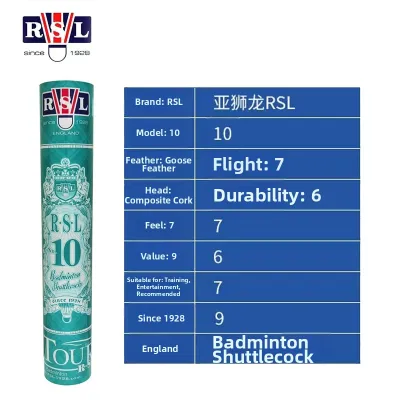
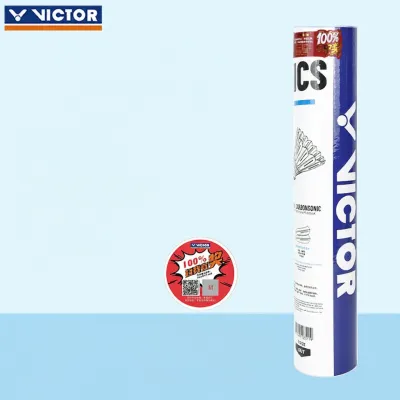
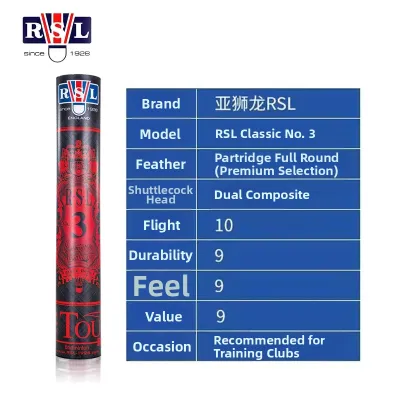
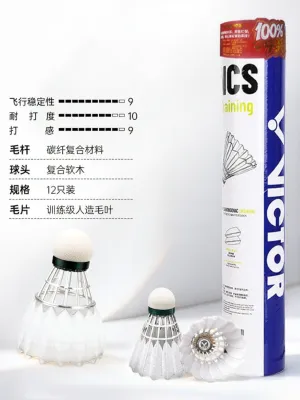
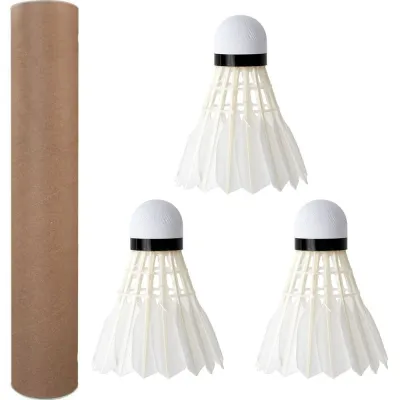
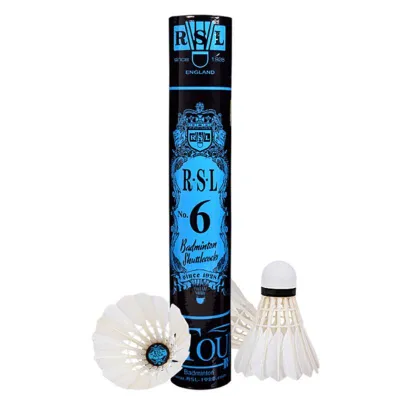
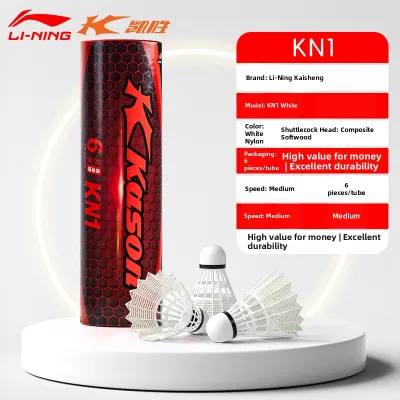
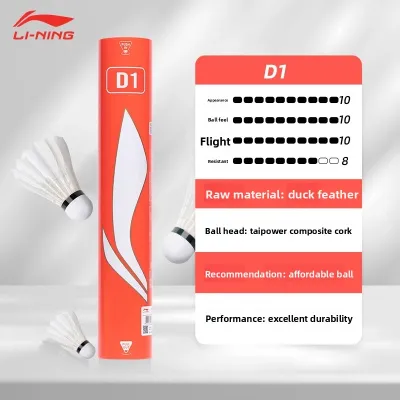
Prices are valid at publication and may change. Please refer to the product page for the latest price.
Goose feather shuttlecocks represent the premium tier of performance. Goose feathers are naturally thicker, stronger, and more aerodynamic than duck feathers, resulting in a highly consistent flight path and excellent structural integrity. When you hit a goose feather shuttlecock, it deforms slightly under high impact and quickly recovers its shape, providing a crisp feel and predictable deceleration. This makes them a suitable choice for intermediate and advanced players who rely on precise shot placement and consistent net play.
Duck feather shuttlecocks offer a practical mid-range alternative. While they still provide the natural flight characteristics of a feather shuttle, duck feathers are slightly thinner and more brittle than goose feathers. They are highly suitable for regular club sessions and training matches where players want the authentic feel of a feather shuttle without the premium price tag associated with top-tier goose feathers.
Synthetic nylon shuttlecocks are designed with a primary focus on durability. Instead of individual feathers, they feature a single-piece molded nylon skirt. While nylon shuttles do not decelerate as sharply as natural feathers and can feel slightly heavier on impact, they can withstand hundreds of hits without losing their shape. When purchasing, always check the product packaging to verify the exact material specifications, ensuring you select the right balance of flight quality and lifespan for your needs.
Matching Shuttlecock Speed to Your Playing Conditions
Shuttlecock speed is not about how hard you hit; it refers to how far a shuttlecock travels under specific atmospheric conditions. Shuttlecocks are rated by speed numbers, typically ranging from 75 to 79, or sometimes simplified into numerical categories from 1 to 5. Because air density changes with temperature, humidity, and altitude, a shuttlecock that flies consistently in a cold, high-altitude region will behave very differently in a warm, sea-level environment.

In Singapore’s warm and humid climate, the air is less dense, which offers less resistance to the shuttlecock. Consequently, shuttlecocks naturally fly faster and further in these conditions. To compensate for this, players in Singapore generally require slower shuttlecocks, typically speed 76 or 77. Using a speed that is too fast will result in clear shots constantly sailing past the baseline, disrupting the flow of your game and forcing players to hold back their power.
The specific venue you play in also plays a major role in speed selection. If you play in a modern, air-conditioned sports hall, the cooler air is denser, which naturally slows down the shuttlecock’s flight. In these air-conditioned environments, a speed 77 is often ideal to maintain a natural pace. However, if you are playing in a non-air-conditioned community center or school hall where the indoor temperature and humidity remain high, a slower speed 76 is usually the more appropriate choice to keep the game controllable.
Before purchasing a tube of Ling Mei shuttlecocks, always verify the speed indicator printed on the tube’s cap or label. Choosing the correct speed ensures that your training translates accurately to match play, allowing you to develop proper muscle memory for your clears, drops, and smashes without constantly adjusting for an incorrect flight distance.
Evaluating Durability and Cost-Effectiveness for Your Skill Level
Finding the right shuttlecock requires a realistic assessment of your current skill level and how often you play. Beginners and casual players often struggle with clean, consistent contact, frequently striking the feathers of the shuttlecock rather than the cork base. These off-center hits, or “slices,” put immense lateral pressure on the feather shafts, causing them to snap or bend instantly.
For beginners, prioritizing durability over absolute flight precision is the most cost-effective approach. Using premium goose feather shuttlecocks during the early stages of learning can become incredibly expensive, as a single tube might be ruined in just one or two sessions. Opting for durable synthetic nylon shuttlecocks or entry-level duck feather models allows beginners to focus on developing their footwork and stroke mechanics without the constant distraction of replacing damaged shuttles.
Intermediate and advanced players have more consistent striking techniques, meaning they rarely hit the feathers directly. However, because they hit with significantly more power and spin, they put different stresses on the shuttlecock. These players require the precise flight trajectory, natural spin, and crisp sound of high-quality feather shuttlecocks to execute advanced techniques like tight net drops and deceptive slices. For these players, investing in higher-grade goose feather shuttlecocks is necessary to maintain the quality of play.
To determine the true cost-effectiveness of your purchase, calculate the cost per session rather than focusing solely on the upfront price of a tube. You can use a simple formula to track your expenses: divide the price of the tube by the number of shuttlecocks inside, and then multiply that by the average number of shuttles used per session. Often, a slightly more expensive, high-quality tube of shuttlecocks that lasts longer will result in a lower cost per session than a cheap tube that requires you to open a new shuttle every few rallies.
How to Verify Authenticity and Quality Before You Buy
As badminton continues to grow in popularity, the market has seen an increase in counterfeit sporting goods, including shuttlecocks. Purchasing counterfeit products not only wastes money but also leads to frustrating sessions with erratic flight paths and terrible durability. To ensure you are buying genuine Ling Mei shuttlecocks, you must know what details to inspect before and after your purchase.
Start by carefully examining the packaging. Genuine Ling Mei tubes feature high-quality, crisp printing with precisely aligned logos and text. Most authentic tubes include a security scratch-off label containing a unique verification code or QR code. You can scan this code or enter the serial number on the official brand website to instantly verify the product’s authenticity. Be wary of tubes with blurry graphics, spelling errors, or missing security labels.
Once you open the tube, perform a physical quality check on a few shuttlecocks. Inspect the feathers to ensure they are uniform in shape, color, and thickness. The stitching around the feathers should be tight, even, and secured with a clean, moderate application of glue. Excessively thick or messy glue can alter the weight distribution and ruin the flight stability, while dry, brittle glue indicates old or poorly stored stock. The cork base should feel firm and be covered with a smooth, high-quality membrane without any visible cracks or peeling.
To minimize the risk of buying counterfeit or degraded stock, always purchase from authorized local sporting goods retailers or official flagship stores on established online marketplaces. Avoid buying from unverified third-party sellers offering prices that seem unusually low, as these are often counterfeit items or old stock that has dried out in storage, making the feathers incredibly brittle.
Frequently Asked Questions (FAQ)
How should I store feather shuttlecocks in Singapore's humid climate?
Singapore’s high humidity requires careful storage to prevent feather degradation. While dry feathers become brittle and break easily, excessive moisture can soften the feathers and cause mold to grow inside the tube. Store your shuttlecocks in a cool, dry indoor area away from direct sunlight and damp spots. Keep the tube stored vertically with both caps firmly closed to maintain a stable internal environment. Avoid leaving your badminton bag in hot areas, such as the trunk of a car, as extreme heat can dry out the natural oils in the feathers and weaken the glue holding them together.
Can I use synthetic shuttlecocks for competitive club matches?
Synthetic shuttlecocks are generally not accepted in formal club matches or competitive tournaments. The flight trajectory of a synthetic shuttlecock differs significantly from a natural feather one; synthetics tend to fly faster initially and do not decelerate as sharply at the end of their flight path, which alters defensive timing and net play. However, synthetic options are highly practical for recreational play, outdoor games, or structured training drills where players are focusing on physical conditioning and footwork rather than precise shot placement.
What is the safest way to humidify feather shuttlecocks before a game?
Humidifying feather shuttlecocks is a safe and effective way to restore moisture to dry feathers, making them more flexible and less prone to snapping during play. The safest method is to carefully expose the open end of the tube to steam from a water kettle for about 5 to 10 seconds. Be extremely careful not to let the steam directly hit the cork base, as excess moisture can soften the cork and ruin its rebound properties. After steaming, quickly seal the tube with the cap and let it sit for at least a few hours before your game to allow the moisture to distribute evenly throughout the feathers.

Community discussion
Share your experience or ask a question. Comments are reviewed before publication.