
Choosing the right arm resistance band depends on whether your training goals favor heavy, structured muscle isolation or highly portable, multi-joint functional movements. Both loop bands and tube bands offer unique mechanical advantages for targeting the biceps, triceps, and shoulders, but they interact with your hands, joints, and anchor points in fundamentally different ways. Understanding these physical differences is key to maximizing your workout efficiency while protecting your joints from unnecessary strain.
For most lifters, the decision comes down to the grip interface and the specific exercises planned. Tube bands, which feature rotating handles, closely mimic the feel of traditional gym equipment like dumbbells and cable machines, making them highly effective for classic isolation lifts. Loop bands, on the other hand, are continuous elastic loops that require you to grip the material directly, offering unmatched portability and versatility for full-body workouts, though they require more manual adjustment during arm-specific movements.
Core Differences in Design and Grip Mechanics
The physical construction of an arm resistance band dictates how force is transmitted to your muscles and how much stress is placed on your wrists. Tube bands are typically made of extruded, cylindrical rubber or latex, ending in metal carabiners or stitched webbing loops where handles are attached. These handles usually feature a rigid plastic or foam grip that rotates freely around a central strap. This rotational freedom is crucial for arm training because it allows your wrist to find its natural path of motion during dynamic pulling or pushing exercises.
Products mentioned in this guide
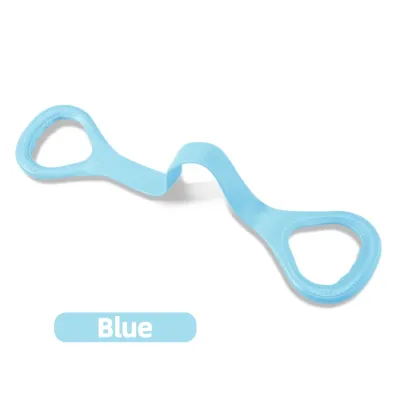
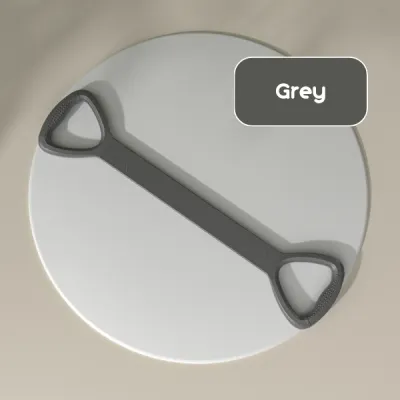
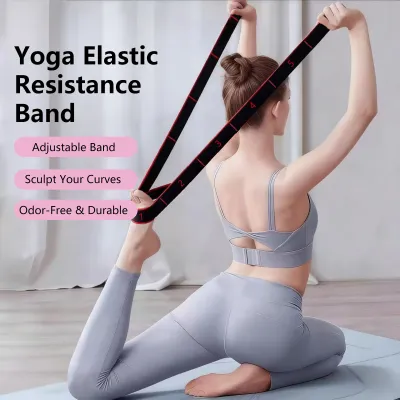
![[SG Stock] CALLIVEN Thicken Resistance Band Set Exercise Bands for Legs Arms Natural Latex Gym Pull up](https://img.lazcdn.com/g/p/307e3dccf60d331b1f2464a0ca4fd3d1.jpg_400x400q80.jpg_.webp)
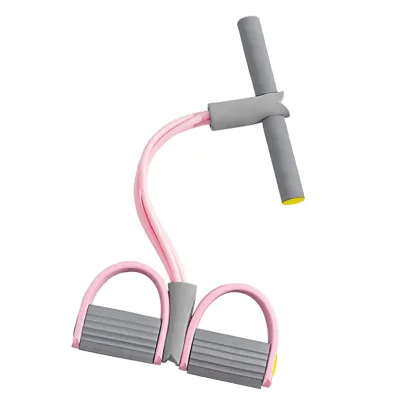
Prices are valid at publication and may change. Please refer to the product page for the latest price.
When you perform an exercise with a tube band, the rotating handle ensures that your wrist can transition smoothly from a neutral grip to a supinated or pronated position. This reduces lateral shear force on the wrist joint and minimizes the risk of elbow strain, particularly in the tendons surrounding the medial and lateral epicondyles. For individuals recovering from wrist injuries or those with limited joint mobility, this rotating handle design provides a safer, more comfortable platform for consistent strength training.
In contrast, flat loop bands are wide, continuous bands of layered latex or fabric-elastomer blends. Because they lack handles, you must grip the band itself, which alters your hand mechanics. To secure a flat loop band for arm exercises, users often wrap the band around their palms or wrists. While this creates a highly secure connection, the wrapping action can compress the soft tissues of the hand, pinch the skin, and potentially restrict blood flow during high-repetition sets.
Furthermore, gripping a flat band directly forces your wrist to adapt to the angle of the band’s tension, rather than allowing the grip to rotate independently. This can lead to awkward wrist deviation, especially at the peak contraction of a movement. When choosing between these designs, evaluate your personal joint health and whether your routine prioritizes heavy, single-joint isolation—which benefits from the structured grip of tube bands—or functional, multi-directional movements where the adaptability of a loop band is more advantageous.
Effectiveness for Biceps and Triceps Training
Targeting the biceps and triceps effectively requires maintaining consistent tension through a muscle’s full range of motion. During a standard biceps curl, the muscle is strongest in the middle of the movement and weakest at the start and finish. Tube bands are exceptionally well-suited for curls because the rotating handles allow you to fully supinate your forearms—turning your palms upward—at the top of the movement, which is a primary function of the biceps brachii. The band remains aligned with your forearm, providing smooth, predictable resistance.

Flat loop bands present mechanical challenges during biceps curls. Because the band is flat and wide, it has a tendency to twist or roll up into a tight, uncomfortable cord as you rotate your wrists. This rolling not only causes discomfort but can also cause the band to slip out of alignment under your feet, leading to a sudden loss of tension or a painful snap. Additionally, maintaining equal tension on both sides of a loop band requires precise foot placement and hand gripping, which can be difficult to replicate consistently from set to set.
For triceps training, exercises like overhead extensions and pushdowns require a secure, high anchor point. Tube bands excel here because they are designed to work with dedicated door anchors. By securing the anchor at the top of a door frame, you can perform triceps pushdowns with a natural, downward path of motion that keeps the tension directly on the lateral and medial heads of the triceps. The length of standard tube bands allows for a complete extension of the arms without the band reaching its elastic limit prematurely.
Loop bands can also be used for triceps extensions, but their shorter, continuous loop design limits their range of motion. If you anchor a loop band to a door or step on it for an overhead extension, the band may stretch to its maximum capacity before your elbows are fully locked out. This sudden spike in resistance can strain the elbow joints and limit your ability to achieve a full contraction. To get a full range of motion with a loop band, you often have to adopt modified body positions, such as kneeling or bending forward, which may not be ideal for all fitness levels.
Progressing your resistance also differs significantly between the two styles. Tube bands allow for systematic progression; you can easily clip on a heavier band or combine multiple bands onto a single pair of handles to increase the load. This makes it easy to track your strength gains over time. With loop bands, progression is less precise, often requiring you to choke up on the band or step wider to increase tension. While this allows for quick, on-the-fly adjustments, it makes it harder to quantify the exact resistance you are using, which can complicate long-term progressive overload.
Comfort, Skin Friction, and Safety Checks
The material composition of your arm resistance band directly impacts your comfort and skin safety during high-intensity workouts. Flat latex loop bands have a high-friction surface that can easily grab skin and pull arm hair during repetitive movements like lateral raises or overhead presses. This constant friction can lead to painful chafing, redness, or mild skin burns, especially when working out in warm environments where sweat increases skin sensitivity.
Tube bands offer a more comfortable experience, as many models feature smooth outer surfaces or are encased in protective nylon sleeves. These sleeves not only prevent the rubber from contacting your skin directly but also protect the inner tubing from environmental damage. If you prefer bare-metal or bare-skin workouts, fabric-coated tube bands or those with smooth, non-tacky finishes are highly recommended to minimize friction-related discomfort.
Regardless of the style you choose, performing a thorough pre-workout safety inspection is essential to prevent sudden band failure. Before every session, stretch your bands slightly under a bright light and inspect them for micro-tears, small punctures, white stress marks, or areas where the material appears dry and brittle. For tube bands, pay close attention to the connection points where the tubing meets the plastic or metal hardware, as these areas experience the highest stress. For loop bands, check the outer edges for tiny nicks that could quickly expand into a full tear under tension.
Anchoring safety is another critical consideration, particularly for overhead triceps movements. Always use a high-quality door anchor that is specifically designed for resistance bands, and place it on the hinge side of a door that closes away from you. This positioning ensures that the force of your pull pulls the door shut against the frame, rather than relying on the strength of the door latch alone. Never anchor a band to sharp metal edges, rough wooden posts, or unstable furniture, as these can damage the band or cause the anchor to slip, resulting in severe snap-back injuries.
Which Arm Resistance Band Should You Choose?
To select the ideal arm resistance band for your fitness routine, consider your primary training environment, your joint health, and how you prefer to progress your workouts.
You should choose tube bands if you want a workout experience that closely mirrors traditional gym weights, prioritize wrist and elbow comfort, and focus primarily on isolating your biceps and triceps. They are a practical choice for home gym setups where you can utilize a door anchor and want a structured, easily quantifiable system for progressive overload.
You should choose loop bands if portability is your absolute priority, as they can be folded completely flat and packed into a travel bag without taking up space. They are also ideal if you want a multi-purpose tool that can easily transition from arm exercises to lower-body mobility work, and you do not mind the tactile sensation of wrapping the band directly around your hands or limbs.
Before making your final decision, verify your physical requirements and limitations. If you have a known latex allergy, look for synthetic rubber or fabric-elastomer bands, and check the manufacturer’s specifications to ensure they are certified latex-free. If you have limited wrist mobility, verify that the tube band handles feature smooth, high-quality swivel joints. Finally, check the resistance ratings provided by the manufacturer to ensure the bands offer a suitable tension range for your current strength level and future progression goals.
Frequently Asked Questions (FAQ)
Can I use both loop and tube bands in the same arm workout?
Using both loop and tube bands in a single arm workout is an excellent way to leverage the unique strengths of each design. You can structure your routine by using tube bands with handles for your primary, heavy isolation lifts—such as standing biceps curls or overhead triceps extensions—where a stable grip and maximum range of motion are critical for safety and performance. Once your primary lifts are complete, you can transition to loop bands for high-repetition accessory movements or burnout sets, such as triceps kickbacks or horizontal arm pulses. The continuous loop design allows you to quickly shift your hand placement for rapid, short-range tension, though you should factor in the extra time needed to adjust your anchors or wrap the bands between exercises.
How do I clean sweat off my resistance bands after arm training?
To preserve the elasticity and structural integrity of your resistance bands, clean them immediately after your workout using a soft cloth dampened with warm water and a small amount of mild dish soap. Avoid using harsh chemical cleaners, bleach, or alcohol-based sanitizers, as these substances can dry out natural latex and synthetic rubber, leading to premature cracking, brittleness, and snapping. After wiping down the bands, rinse them thoroughly with a clean, damp cloth to remove any soap residue. Allow the bands to air dry completely in a flat position, away from direct sunlight, radiators, or other direct heat sources, as UV exposure and high temperatures rapidly degrade the material.

Community discussion
Share your experience or ask a question. Comments are reviewed before publication.