
Selecting the ideal Mizuno badminton bag size depends on matching your daily gear volume with the bag’s designated racket capacity. While these bags are categorized by the number of rackets they can hold—typically ranging from single-racket sleeves to massive nine-racket tournament bags—this rating serves as a baseline for total volume rather than a strict limit on rackets alone. For most regular club players in Singapore, a six-racket bag offers the most practical balance, providing dedicated space for two to three rackets alongside court shoes, a change of clothes, and essential accessories. Beginners or minimalist commuters often find a one- or three-racket bag sufficient, while competitive players and coaches carrying extensive gear will benefit from the expansive storage of a nine-racket model.
Assess Your Regular Gear Loadout
Before browsing specific Mizuno badminton bag models, you must inventory the exact items you plan to carry to your local sports hall or community club. Start by counting your rackets. Do you carry a single primary racket, or do you bring multiple backups with different string tensions to adapt to varying court conditions? Active players typically carry at least two rackets to ensure a broken string does not end their session prematurely.
Next, account for non-racket badminton essentials. A standard session requires at least one tube of shuttlecocks, spare grip tape, scissors, and perhaps a basic toolkit for minor adjustments. These small items can easily get lost if your bag lacks dedicated accessory pockets.
Products mentioned in this guide
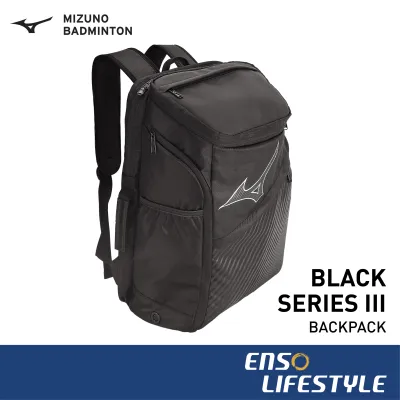
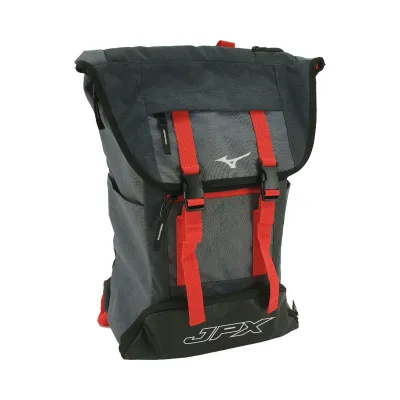
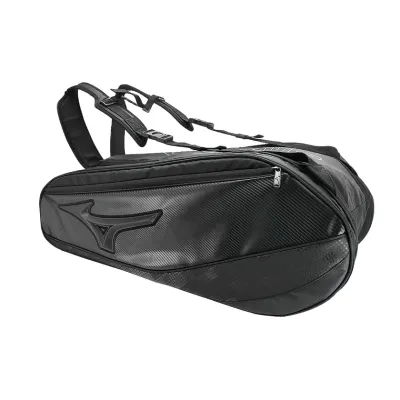
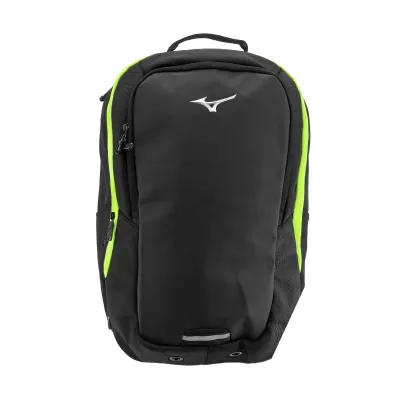
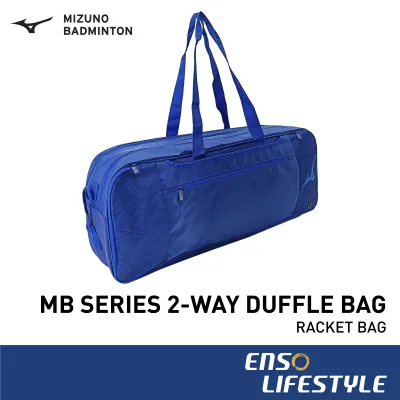
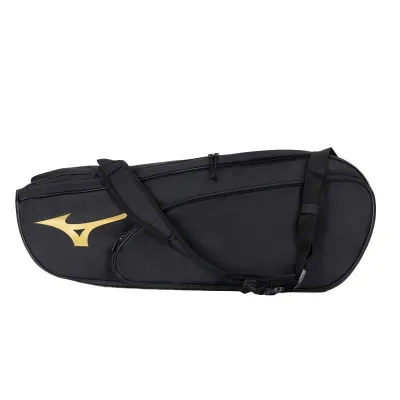
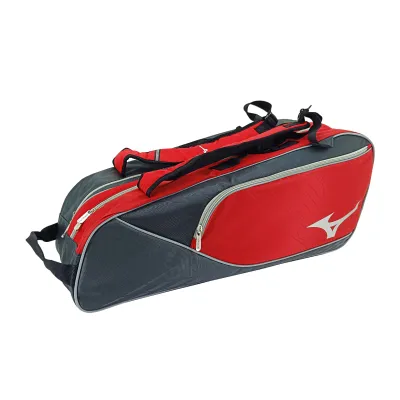
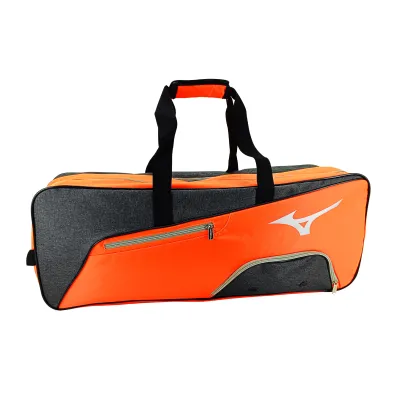
Prices are valid at publication and may change. Please refer to the product page for the latest price.
The bulk of your bag’s volume is often consumed by personal and hygiene items rather than the rackets themselves. In Singapore’s warm and humid climate, a post-game change of clothes is practically mandatory. You will need space for a fresh shirt, shorts, a towel, and toiletries. Additionally, court shoes are bulky and rigid; they require significant physical space and should ideally be isolated from your clean apparel. Do not forget to factor in a large water bottle, sports drinks, and quick-energy snacks.
Finally, consider your commute. If you travel directly from the office or school to the badminton court, your bag may also need to accommodate a laptop, tablet, work documents, or a lunchbox. If you rely on public transport like the MRT, carrying two separate bags can be cumbersome, making a single, well-organized multi-compartment badminton bag highly desirable.
Match Your Needs to Mizuno Bag Capacities
Mizuno categorizes its badminton bags using a standard racket-capacity framework, typically offering one-racket, three-racket, six-racket, and nine-racket options. It is crucial to understand that these numbers represent the maximum number of bare rackets the bag can hold if no other gear is packed. When you add shoes, clothing, and accessories, the actual number of rackets you can comfortably carry decreases significantly.

1-Racket and 3-Racket Bags: Minimalist and Daily Practice
Single-racket sleeves and three-racket bags are designed for casual players, beginners, or those who prefer to travel light. If you only own one or two rackets and change into your sporting attire before leaving home, these compact options are highly efficient. They are lightweight, easy to carry, and take up minimal space on public transport or in the back of a car.
When evaluating these smaller capacities, pay close attention to the carrying style. Most three-racket bags feature a single shoulder strap or a simple handheld grip. Check the product specifications to verify if the shoulder strap includes adjustable padding, which prevents the strap from digging into your shoulder during longer walks.
The primary limitation of these minimalist bags is their lack of specialized compartments. You will rarely find a dedicated shoe pocket or thermal lining in a standard three-racket bag. This means your court shoes must share space with your rackets and clean clothes, which can lead to dirt transfer and odor issues if you do not use separate shoe bags.
6-Racket Bags: The Versatile Standard for Regular Players
For the intermediate to advanced player who steps onto the court multiple times a week, a six-racket bag is often the most practical and versatile choice. This size category is designed to accommodate two to four rackets comfortably while leaving ample room for all your supporting gear, including shoes, apparel, and shuttlecock tubes.
A key feature to look for in a six-racket Mizuno bag is a dual-compartment layout. This design allows you to separate your clean clothing and rackets from your damp, post-game gear and dirty court shoes. Keeping these items isolated helps maintain hygiene and protects your expensive rackets from moisture buildup.
Additionally, check the manufacturer’s product details for thermal-lined compartments. High humidity and temperature fluctuations can negatively affect racket string tension and frame integrity. A thermal-lined pocket helps shield your rackets from external heat during your commute, preserving your string setup for longer periods.
9-Racket Bags: Maximum Storage for Tournaments and Travel
Nine-racket bags represent the premium tier of storage, engineered specifically for competitive players, coaches, and tournament participants. If you regularly carry four or more rackets, multiple changes of clothing for all-day events, training cones, resistance bands, and extensive medical or grip supplies, this is the capacity you require.
Because a fully loaded nine-racket bag can become exceptionally heavy, the carrying system is of paramount importance. Look for models equipped with a dual-backpack strap system. Verify that these straps are heavily padded, ergonomically curved, and fully adjustable to distribute the weight evenly across your shoulders and hips, reducing the risk of muscle strain before you even step onto the court.
You must also consider the physical footprint of these large bags. A nine-racket bag is significantly longer and wider than smaller models. Before purchasing, verify the external dimensions to ensure the bag will fit into standard sports venue lockers or the trunk of your vehicle without requiring excessive force.
Beyond Volume: Key Compartments and Carrying Comfort
Selecting the right Mizuno badminton bag involves looking beyond the headline racket capacity to evaluate the functional design and material quality. A bag with high volume but poor organization can quickly become a chaotic mess where items are difficult to locate.
First, verify the presence of a dedicated shoe compartment. Ideally, this pocket should be accessible from the exterior of the bag and feature ventilation grommets or mesh panels. This setup allows air to circulate, helping to dry out damp court shoes and preventing unpleasant odors from permeating the rest of your gear.
Second, inspect the product tags or online specifications for insulated lining technology. If you play in regions with high ambient temperatures, such as Singapore, thermal protection is not a luxury—it is a necessity to prevent your high-tension strings from stretching or snapping prematurely.
Third, align the carrying options with your typical commute. If you walk or ride a bicycle to the courts, a backpack-style bag with chest straps is essential for stability. If you drive, a traditional rectangular bag with comfortable grab handles and a removable shoulder strap may be more convenient for quick loading and unloading.
Finally, examine the materials and construction details. Look for heavy-duty, water-resistant outer fabrics that protect your gear from sudden rain showers. Check that the zippers are robust and operate smoothly, as cheap zippers are often the first point of failure on heavily packed sports bags. Reinforced base padding is also highly beneficial, protecting your rackets from impact when the bag is set down on hard concrete surfaces.
Common Sizing Mistakes to Avoid
One of the most frequent errors players make is purchasing a bag based solely on the maximum possible capacity, assuming that bigger is always better. A nine-racket bag that is only a quarter full will lack structural integrity, causing your rackets and gear to slide around inside, which can lead to accidental damage. Furthermore, carrying an oversized, bulky bag on crowded public transport during peak hours can be highly inconvenient.
Another common oversight is ignoring the specific shape and layout of the main compartments. Some bags are designed with narrow, tapered profiles that make it difficult to fit wide or bulky items, such as a large insulated water bottle or a rigid foam roller, even if the overall volume is technically sufficient. Always check the physical width and depth measurements rather than relying on the racket count alone.
Lastly, do not underestimate the importance of the carrying system. Opting for a large-capacity bag with only a basic, unpadded shoulder strap is a recipe for discomfort. If you anticipate carrying heavy loads, prioritize ergonomic backpack straps to protect your posture and physical well-being.
Frequently Asked Questions (FAQ)
Can I fit my court shoes in a 3-racket Mizuno bag?
While it is physically possible to fit a pair of court shoes inside a three-racket Mizuno bag, doing so will consume almost all the remaining space in the main compartment. This leaves very little room for extra clothes, shuttlecocks, or accessories, and you may struggle to fit more than one racket. If you must carry shoes in a three-racket bag, look for models that explicitly feature an external shoe pocket, or plan to carry your shoes separately in a dedicated shoe sack to keep your clean gear hygienic.
Does a higher racket capacity mean the bag is physically larger on the outside?
Generally, yes; a nine-racket bag will have larger external dimensions than a three-racket bag. However, the difference between a six-racket and a nine-racket bag can sometimes be deceptive. A highly organized six-racket bag with multiple external accessory pockets, shoe compartments, and thick protective padding can have a similar external physical footprint to a streamlined, minimalist nine-racket bag. Always check the exact length, width, and height specifications provided by the manufacturer to ensure the bag fits your storage and transport constraints.

Community discussion
Share your experience or ask a question. Comments are reviewed before publication.