
Finding a single air pump that can transition from inflating high-pressure road bike tires to high-volume pool floats and sports balls is a practical way to save storage space and money. In Singapore, where household storage space is often limited, owning multiple specialized pumps is rarely ideal. The key to finding a versatile pump lies in understanding how different inflatable items require distinct combinations of air volume and pressure. By evaluating your household’s specific inflation needs, comparing manual and electric mechanisms, and verifying compatibility features before purchasing, you can secure a single, reliable tool that handles every inflation task efficiently.
Assessing Your Everyday Inflation Needs
To select the right multi-purpose pump, you must first categorize the items you intend to inflate based on their pressure and volume requirements. Inflatables generally fall into two distinct categories: high-pressure, low-volume items and low-pressure, high-volume items. Bicycle tires, particularly road bikes, require high pressure—often ranging from 80 to over 100 PSI (pounds per square inch)—but contain a relatively small volume of air. Conversely, large leisure items like pool floats, inflatable kayaks, and air mattresses require very low pressure (often under 5 PSI) but demand a massive volume of air to fill their large chambers. Sports balls, such as basketballs and soccer balls, occupy a middle ground, typically requiring moderate pressure between 8 and 15 PSI.
Understanding valve compatibility is equally critical when assessing your household needs. Standard bicycle tires in Singapore typically use either Schrader valves (the wide, threaded valves also found on car tires) or Presta valves (the narrower, high-pressure valves common on road and performance bikes). Sports balls require a narrow metal inflation needle to bypass their self-sealing rubber bladders. Meanwhile, pool toys and camping air beds usually feature plastic pinch valves or larger Boston valves that require wide, tapered plastic nozzles. A versatile pump must either feature a multi-valve head or include secure, interchangeable adapters that can connect to all of these valve types without leaking air.
Products mentioned in this guide
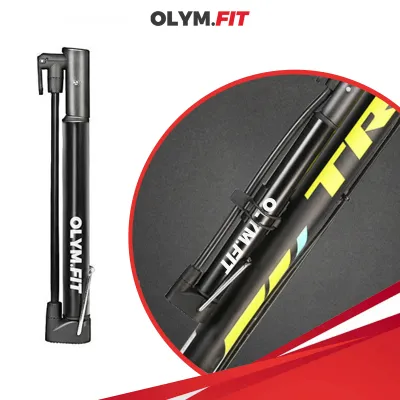
![[SG READY STOCK] Bicycle Floor Air Pump with 160 PSI Gauge High Pressure](https://img.lazcdn.com/g/p/89fe46e70ceb9c51096ffbd311708f6c.jpg_400x400q80.jpg_.webp)
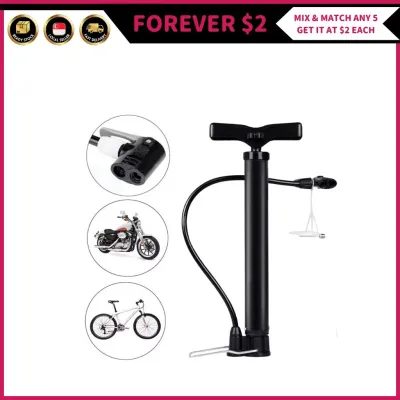
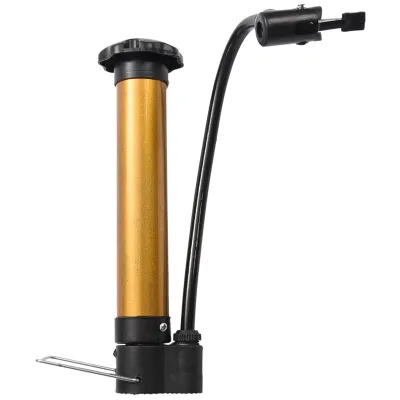
![[SG] High Pressure Bicycle Foot Pump Foot Pedal Portable Inflator MTB Bike Cycling Pump](https://img.lazcdn.com/g/p/dc377e6849b99c5c9ca814ed8a0e7a84.jpg_400x400q80.jpg_.webp)
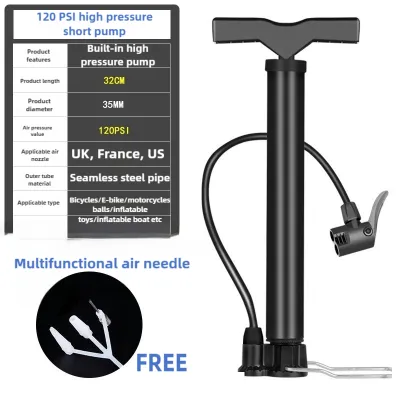
Prices are valid at publication and may change. Please refer to the product page for the latest price.
Balancing inflation speed against maximum pressure capability is the primary trade-off you will face. A pump designed to deliver high pressure easily will naturally have a narrower cylinder, meaning it moves less air with each stroke or motor cycle, making the inflation of a large pool float a slow and tedious process. On the other hand, a pump designed for high-volume output will have a wide cylinder that moves air quickly but will struggle to overcome the resistance of a high-pressure bicycle tire.
Key Features to Look for in a Versatile Pump
When evaluating a pump’s versatility, the design of its cylinder and internal mechanism is the first technical specification to examine. Dual-action manual pumps are highly efficient for low-pressure, high-volume items because they push air into the inflatable on both the downward push and the upward pull of the handle, effectively cutting inflation time in half. For high-pressure needs, robust steel or aluminum barrels resist flexing, ensuring physical effort translates directly into air pressure rather than being lost to structural deformation.

A built-in pressure gauge is an indispensable feature for protecting your equipment from damage. Over-inflating sports balls or pool floats can easily rupture their internal seams or bladders, rendering them useless, while under-inflating bicycle tires increases the risk of pinch flats and poor handling. When choosing a pump, look for a gauge with clear, legible markings and a dual-scale display showing both PSI and bar. For maximum versatility, the gauge should have a wide enough range to measure high-pressure tires while still offering enough resolution at the lower end of the scale to let you accurately inflate sports balls to precise single-digit pressures.
The quality and storage of interchangeable nozzle attachments are often overlooked but play a major role in long-term usability. Cheap, brittle plastic adapters are prone to cracking under pressure or stripping their threads after only a few uses. Look for pumps that feature brass or heavy-duty composite adapters that thread securely onto the pump hose. Furthermore, integrated storage compartments or clip-on brackets on the pump body itself are highly beneficial; they keep small needle valves and plastic nozzles organized and prevent them from getting lost in a cluttered drawer or storage cabinet.
Physical footprint, weight, and hose length are critical considerations for typical Singapore apartments where storage space is carefully managed. A floor pump with a folding base or a compact, vertical profile can easily slip into a utility closet or behind a shoe rack. The length of the air hose is also vital for practical usability. A flexible hose of at least 80 to 100 centimeters allows you to keep the pump stable on the ground while easily reaching valves on bicycles mounted on wall racks or large pool floats resting on a table.
Choosing Between Manual and Electric Mechanisms
Deciding between a manual and an electric air pump depends heavily on your physical capability, usage frequency, and where you plan to use the device. Manual floor pumps remain the gold standard for reliability and high-pressure performance. Because they rely entirely on mechanical leverage and human power, they are always ready to use, require no battery charging, and can easily achieve pressures exceeding 120 PSI. While highly durable and ideal for regular cyclists, they require physical exertion that can become tiring when inflating multiple large pool toys.
Rechargeable electric pumps offer unmatched convenience, especially for high-volume items and on-the-go inflation. These compact devices use lithium-ion batteries to power an internal motor, eliminating physical effort entirely. They are highly portable, making them excellent for bringing to the beach, community sports courts, or cycling paths around Singapore. When evaluating electric models, it is essential to check the battery capacity, typically measured in milliampere-hours (mAh), and the charging interface. Models that charge via standard USB-C ports offer the greatest convenience, as they can be easily powered up using your existing phone chargers or portable power banks.
Despite their convenience, portable electric pumps have distinct limitations when compared to quality manual floor pumps. Many compact electric pumps struggle to achieve precise high pressures efficiently; their small motors must work extremely hard to push air into a high-pressure tire, which drains the battery rapidly and generates significant heat. Additionally, the inflation speed of a small electric pump on a high-volume item like an air mattress can actually be slower than that of a large manual floor pump, as the electric motor’s physical displacement of air is limited by its compact size.
Before purchasing an electric pump, always consult the manufacturer’s specifications regarding continuous run time and thermal protection. Electric air compressors generate substantial heat during operation due to air compression and motor friction. Most portable models have a strict continuous run limit—often between 5 and 10 minutes—after which they must be switched off to cool down. Failing to observe these limits can permanently damage the motor or degrade the internal battery. If you regularly need to inflate multiple large items consecutively, a manual pump or a larger, mains-powered electric pump may be a safer and more durable choice.
Building Your Shortlist: Pre-Purchase Checks
Before finalizing your purchase of a multi-purpose air pump, conducting a few targeted pre-purchase checks will ensure the product meets your expectations and stands up to regular use. First, verify the maximum pressure rating printed on the product packaging or listed in the official specifications. If your bicycle requires 100 PSI, avoid pumps rated for a maximum of 80 PSI; operating a pump near its absolute limit accelerates seal wear and makes pumping extremely difficult.
Next, confirm the exact valve adapters included in the box rather than relying on vague “multi-purpose” labels. Ensure the pump head natively supports both Schrader and Presta valves without requiring you to screw on external adapters, as dual-head designs or smart-heads that automatically adjust to either valve type are far more convenient and less prone to leaking. Check that the accessory kit specifically includes a metal sports ball needle and at least two sizes of tapered plastic nozzles for inflatables. If these are missing, you will need to factor in the additional cost and hassle of sourcing compatible third-party adapters.
Warranty terms and the availability of replacement parts are key indicators of a pump’s quality and the manufacturer’s commitment to durability. High-quality manual pumps often feature user-replaceable internal parts, such as rubber O-rings, plunger seals, and hose connectors. Choosing a brand that sells replacement rebuild kits means you can easily service your pump if a seal wears out, rather than having to discard the entire unit. Check if the retailer or manufacturer offers a clear warranty period, which provides peace of mind against manufacturing defects in the gauge or cylinder mechanism.
Finally, pay close attention to user feedback regarding the durability of the pump’s high-wear components. Look for reviews on online marketplaces that mention how well the locking lever on the pump head holds up over time, as weak plastic levers can snap or lose their grip, preventing an airtight seal on tire valves. For electric models, search for feedback regarding real-world battery life and whether the digital pressure gauge remains accurate after repeated use. If multiple users report that the plastic nozzle attachments strip easily or that the hose connection leaks under high pressure, it is wise to look for an alternative model with sturdier metal fittings.
Maintaining Your Pump for Long-Term Reliability
Proper maintenance is essential to keep your air pump operating smoothly and to prevent premature failure of its internal seals. Periodically perform a quick visual inspection of the entire unit, checking the air hose for any signs of cracking, dry rot, or bulging, which can occur over time in Singapore’s warm and humid climate. Ensure that all threaded connections between the hose, pump body, and pressure gauge are tight.
To maintain a smooth pumping action and a tight seal inside the cylinder, the internal plunger requires occasional cleaning and lubrication. Over time, the factory grease inside the barrel can attract dust and grit, leading to friction that wears down the rubber O-rings. Consult your manufacturer’s manual for specific maintenance instructions; many high-quality manual pumps allow you to unscrew the top cap of the cylinder to slide the plunger out. Wipe away old grease and dirt with a clean cloth, and apply a thin layer of the manufacturer-recommended lubricant, which is typically a non-petroleum silicone grease, to keep the seals pliable.
Storage conditions play a major role in preserving the materials of your pump. Store your pump in a dry, shaded indoor area, such as a utility closet or a cabinet, rather than on an open balcony or in a damp service yard. Prolonged exposure to direct sunlight and high humidity accelerates the UV degradation of plastic components, causes rubber hoses to become brittle, and can lead to corrosion on metal barrels and internal springs. Keeping the pump protected from the elements ensures that the rubber seals remain flexible and airtight for years to come.
Knowing when to stop using your pump and seek professional assistance or replacement parts is crucial for safety. If you hear a constant hissing sound of escaping air from the pump head or the base of the hose during use, the seals have likely failed, and continuing to pump will only waste energy and potentially damage the valve. Similarly, if an electric pump’s motor sounds unusually strained, emits a burning odor, or if the digital display becomes unresponsive, immediately turn off the device and disconnect it from any power source. Do not attempt to disassemble pressurized components or complex electrical housings yourself; consult the manufacturer’s customer service or a qualified technician to address the issue safely.
Frequently Asked Questions (FAQ)
Can a standard bicycle floor pump inflate pool floats efficiently?
While a standard bicycle floor pump can technically inflate a pool float using a tapered plastic adapter, doing so is highly inefficient. Bicycle floor pumps are engineered for high pressure and low volume, meaning they deliver a relatively small amount of air with each stroke. Attempting to fill a large inflatable pool toy or air mattress with a bicycle pump will require hundreds of strokes, resulting in significant physical fatigue and unnecessary wear on the pump’s internal seals. For large, low-pressure inflatables, it is highly recommended to use a high-volume electric pump or a dedicated low-pressure manual bellows pump designed specifically to move large volumes of air quickly.
Do I need a special adapter for sports balls?
Yes, standard sports balls like basketballs, soccer balls, and volleyballs cannot be inflated directly with a standard bicycle pump head. They require a specialized, thin metal inflation needle to bypass the ball’s self-sealing rubber valve. This needle must be screwed or clamped securely into the pump’s nozzle. When purchasing a multi-purpose pump, always verify that a metal ball needle is included in the accessory kit. To prevent damaging the ball’s internal valve during inflation, it is also good practice to moisten the needle slightly with water or glycerin before gently inserting it straight into the valve.

Community discussion
Share your experience or ask a question. Comments are reviewed before publication.