
The cold retention performance of the Nalgene On The Fly (OTF) compared to other insulated sports bottles depends primarily on its specific construction—such as whether it utilizes vacuum insulation, double-wall barriers, or relies on an external sleeve—versus the vacuum-sealed technology used by many premium competitors. Because exact temperature retention times vary based on environmental conditions and initial liquid temperatures, determining which bottle keeps drinks colder requires verifying manufacturer specifications and matching the bottle’s structural design to your specific activity needs.
In warm and humid climates, such as Singapore, the temperature difference between your cold drink and the surrounding air quickly drives heat transfer. While a vacuum-insulated stainless steel bottle is designed to block this energy transfer almost entirely, a single-walled plastic bottle allows heat to pass through its walls rapidly. Understanding how the Nalgene On The Fly is built and how it compares to alternative designs will help you choose the right gear for your hydration needs, whether you are heading to a local fitness center or embarking on an all-day outdoor trek.
Verifying the Nalgene On The Fly Construction
To establish a reliable baseline for thermal performance, you must first identify the exact material and structural design of your specific Nalgene On The Fly bottle. Nalgene produces this model in several variations, and assuming all bottles perform the same can lead to disappointing results on a hot day. Check the product packaging, base stamp, or manufacturer specifications to confirm the primary material of your bottle.
Products mentioned in this guide
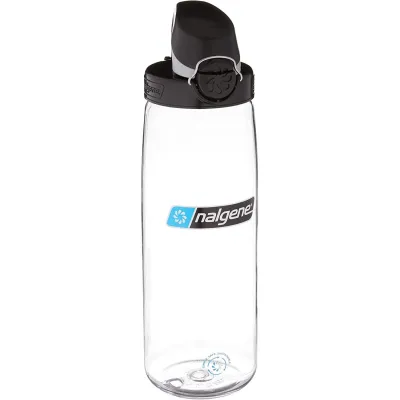
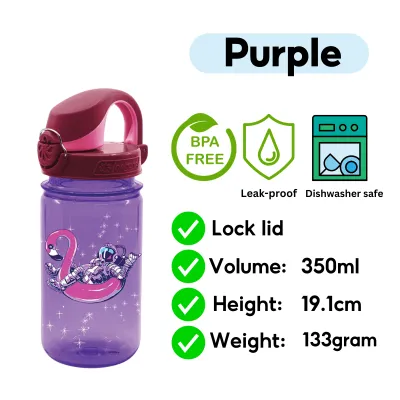
Prices are valid at publication and may change. Please refer to the product page for the latest price.
The most common version of the Nalgene On The Fly is molded from Tritan co-polyester, a lightweight, BPA-free, and highly shatter-resistant plastic. Because this classic version features a single-wall construction, it offers virtually no thermal insulation on its own. Heat from the outside air and your hands transfers directly through the plastic to the liquid inside. However, Nalgene also offers stainless steel variations and compatible insulating sleeves, which completely alter the bottle’s thermal profile.
Beyond the body material, the lid design plays a critical role in temperature control. The On The Fly lid features a push-button release, a metal locking bail, and a silicone gasket to prevent leaks. While this design provides excellent one-handed operation and a secure seal against spills, the lid itself is made of uninsulated plastic. Because heat rises and lids represent a significant surface area, this uninsulated top acts as a thermal bridge, allowing ambient heat to slowly enter the bottle even if the body is insulated.
Core Factors That Determine Cold Retention
To understand why different sports bottles perform differently, it helps to look at the physics of heat transfer. Heat moves from warmer areas to cooler areas through three primary mechanisms: conduction, convection, and radiation. A sports bottle’s ability to keep drinks cold depends entirely on how well its design disrupts these pathways.

Vacuum insulation is the most effective technology for stopping heat transfer in portable drinkware. This design features an inner and an outer wall, usually made of stainless steel, with the air completely vacuumed out of the space between them. Because conduction and convection require air molecules to transfer heat, the vacuum gap acts as a near-impenetrable barrier. Double-wall air insulation, by contrast, retains air between the walls; while better than a single wall, the trapped air still slowly conducts heat.
Aside from the bottle’s construction, several external variables dictate how long your beverage stays cold:
- Ice-to-Liquid Ratio: A bottle packed tightly with ice will maintain a low temperature much longer than a bottle with only a few cubes, as the melting ice absorbs a massive amount of latent heat before the liquid temperature begins to rise.
- Bottle Capacity: Larger volumes of liquid possess greater thermal mass, meaning they naturally resist temperature changes longer than smaller volumes under the same conditions.
- Lid Style and Usage: Every time you open a flip-top, straw, or wide-mouth lid, you introduce warm ambient air into the bottle. Lids with complex straw mechanisms or thin plastic seals generally allow more heat exchange than thick, insulated screw caps.
Comparing Cold Retention: Nalgene On The Fly vs. Competitors
When comparing the standard Tritan Nalgene On The Fly to vacuum-insulated stainless steel competitors, the difference in cold retention is substantial. In a direct comparison, a vacuum-insulated steel bottle will keep ice solid for many hours, whereas a single-walled plastic OTF bottle will typically allow ice to melt within an hour or two in warm ambient temperatures. This performance gap is a direct result of the materials used.
In highly humid environments, this thermal difference creates a very noticeable side effect: condensation, often called bottle sweating. Because the single-wall plastic of the Nalgene OTF quickly cools down to match the temperature of the ice water inside, moisture in the humid air condenses rapidly on the exterior surface. This can make the bottle slippery to hold, leave puddles on desks, and soak the contents of your gym bag or backpack. Vacuum-insulated stainless steel bottles do not sweat because the vacuum barrier prevents the outer wall from cooling down to the dew point.
However, maximum cold retention comes with distinct trade-offs. Vacuum-insulated stainless steel bottles are significantly heavier than the lightweight Tritan Nalgene OTF. If you are carrying your bottle over long distances, backpacking, or packing a bag for school, the weight of an empty steel bottle can be a drawback. Furthermore, while stainless steel is highly durable, a hard drop on concrete can dent the outer wall, potentially collapsing the vacuum gap and permanently ruining its insulating properties. The Tritan Nalgene OTF, by contrast, is exceptionally bounce-resistant and virtually indestructible under normal sporting conditions.
Decision Framework: Which Bottle Fits Your Activity?
Choosing between the Nalgene On The Fly and a vacuum-insulated competitor requires evaluating your daily routine, your sport of choice, and your personal preferences. No single bottle is ideal for every scenario, so matching the bottle’s strengths to your environment is key.
Choose the Nalgene On The Fly if:
- Weight is a priority: You need a lightweight bottle for running, fast-packing, or short gym sessions where you plan to consume your water quickly before it has a chance to warm up.
- Durability and impact resistance are essential: You participate in high-impact sports, climbing, or outdoor activities where the bottle is likely to be dropped onto hard surfaces.
- You prefer easy maintenance: You want a bottle that is easy to clean thoroughly. The Tritan OTF is generally dishwasher-safe (top rack) and has a wide mouth that accommodates standard bottle brushes easily.
Choose a vacuum-insulated stainless steel competitor if:
- Long-duration cold retention is your primary goal: You spend long hours outdoors, work in non-air-conditioned environments, or want ice-cold water waiting in your car after a long workout.
- You must avoid condensation: You carry your bottle inside a bag alongside electronics, papers, or dry clothing, making a sweating bottle highly inconvenient.
Before making your final choice, verify the physical dimensions of the bottle. Ensure the model you select fits securely into your bicycle’s bottle cage, your backpack’s side pockets, or your vehicle’s cup holders. Additionally, check the manufacturer’s care instructions, as many vacuum-insulated bottles must be hand-washed to protect their thermal seals, whereas plastic bottles offer more flexible cleaning options.
Maximizing Cold Retention in Any Sports Bottle
Regardless of which bottle design you choose, you can employ several practical, low-risk strategies to significantly extend how long your drinks stay cold during your workouts or outdoor adventures.
First, practice the habit of pre-chilling your bottle. Before filling the bottle with your actual beverage, fill it with cold tap water or a mixture of ice and water, and let it sit for a few minutes. This cools down the inner walls of the container. For vacuum-insulated bottles, this step prevents the inner steel wall from immediately absorbing heat from your cold drink. For single-walled plastic bottles, it helps lower the starting temperature of the material.
Second, consider the geometry of your ice. Whenever possible, use large ice blocks, spheres, or thick reusable ice sticks instead of crushed or small cubed ice. Larger ice shapes have a smaller surface-area-to-volume ratio, which slows down the rate of melting. If you are using a Nalgene OTF, you can also fill the bottle halfway with water and freeze it sideways overnight (ensuring the neck remains clear so the plastic does not crack as the ice expands), creating a massive ice block that melts very slowly.
Finally, shield your bottle from direct environmental heat. Keep your water bottle tucked inside your backpack or shaded under a towel rather than exposing it to direct sunlight. If you are using a single-walled plastic bottle, investing in a compatible neoprene insulating sleeve can provide a helpful physical barrier against ambient air and warm hands, while also absorbing annoying exterior condensation.
Frequently Asked Questions (FAQ)
Does a plastic sports bottle keep drinks as cold as stainless steel?
No, a standard plastic sports bottle cannot keep drinks cold as long as a double-walled, vacuum-insulated stainless steel bottle. Plastic is a natural conductor of heat compared to a vacuum gap, which contains no air molecules to transfer thermal energy. While some specialized plastic bottles feature double-wall construction with foam or air barriers, they still transfer ambient heat much faster than vacuum-sealed steel. To improve a plastic bottle’s performance, you must rely on external insulating sleeves or a high ratio of ice.
How can I test my bottle's insulation performance at home?
You can easily test your bottle’s insulation integrity with a simple ice-water test. Fill the bottle with cold water and several ice cubes, seal the lid, and let it sit on a counter at room temperature. After five to ten minutes, feel the outside of the bottle. If the exterior wall feels cold to the touch or begins to develop condensation (sweating), heat is actively transferring through the wall, indicating the bottle is either uninsulated or its vacuum seal has been compromised. A properly functioning vacuum-insulated bottle will always remain dry and at ambient room temperature on the outside.

Community discussion
Share your experience or ask a question. Comments are reviewed before publication.