
Choosing the right bicycle lock for daily commuting in Singapore requires balancing physical security against carrying convenience. With the expansion of the Park Connector Network (PCN) and the convenience of parking at Mass Rapid Transit (MRT) stations, cyclists face diverse parking environments. A cable number lock offers lightweight flexibility and keyless convenience, making it highly suitable for short stops along scenic paths. Conversely, a U-lock provides a rigid, heavy-duty barrier designed to withstand aggressive physical attacks, making it the preferred choice for long-term parking at busy transit hubs. Understanding how these locks perform under different conditions allows you to select the best option for your daily routine.
Understanding the Security Baseline: Cable Number Locks vs U-Locks
To make an informed decision, you must first understand the structural differences and physical limitations of both lock types. Cable number locks consist of braided steel wires encased in a protective plastic sleeve. While this design offers excellent flexibility, the internal steel strands are relatively thin. The thick plastic sleeve can often create an illusion of security, making the cable appear much thicker than the actual steel core inside. A thief equipped with basic hand tools, such as wire cutters or compact bolt cutters, can quickly sever these individual strands sequentially or crush the core. Consequently, cable locks serve primarily as visual deterrents against opportunistic theft rather than robust physical barriers.
In contrast, U-locks feature a solid, hardened steel shackle bent into a distinct “U” shape. This rigid structure provides superior resistance to cutting, prying, and shearing forces. High-quality U-locks often utilize advanced steel alloys, such as manganese steel or triple-heat-treated steel, which are specifically formulated to resist manual leverage attacks and hand tools. Defeating a high-quality U-lock typically requires heavy-duty tools like large bolt cutters, hydraulic jacks, or power tools like angle grinders. The sheer thickness and hardness of the steel shackle make it a formidable obstacle that requires significant time, noise, and effort to bypass, which acts as a strong deterrent in public spaces.
Products mentioned in this guide
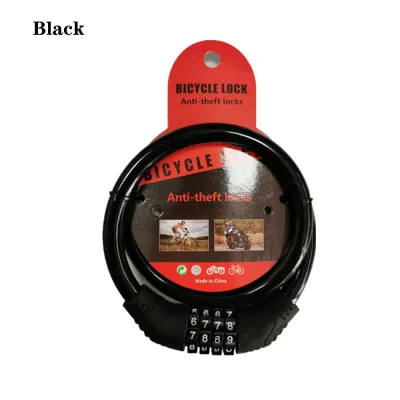
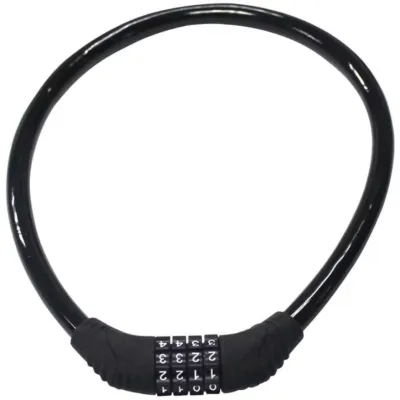
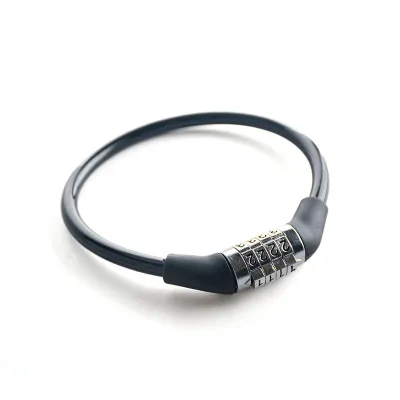
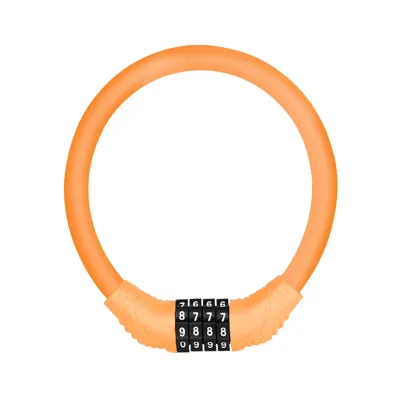
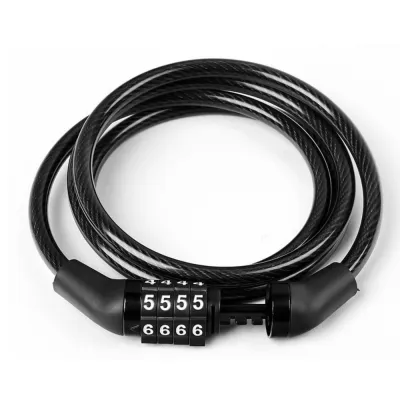
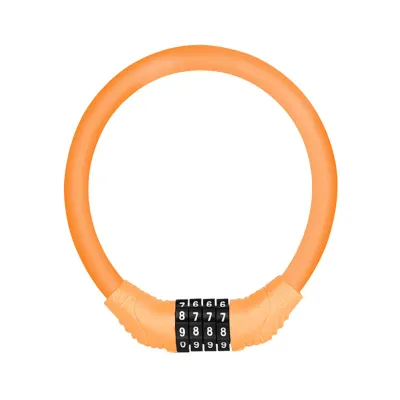
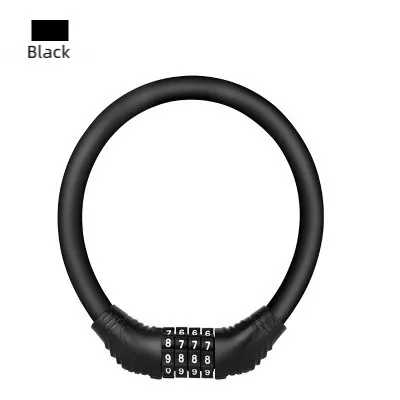
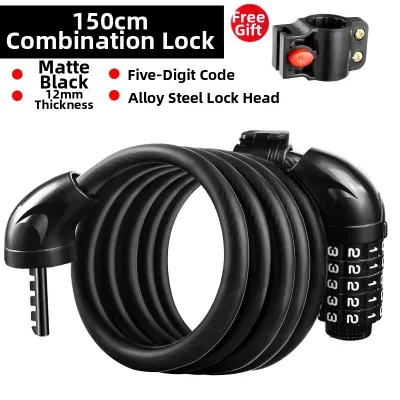
Prices are valid at publication and may change. Please refer to the product page for the latest price.
When shopping for a lock, you should verify the material specifications on the product packaging or manufacturer website. Look for shackles made of hardened steel, and check the thickness, which is usually specified in millimeters. A shackle thickness of 13mm or greater generally offers a solid baseline of physical resistance. Additionally, pay attention to the lock cylinder design. Disc-detainer cylinders offer higher resistance to picking and drilling compared to traditional pin-tumbler designs.
The locking mechanisms also differ significantly in daily operation. Cable number locks utilize a combination dial, eliminating the need to carry a physical key. When purchasing a combination lock, review the manufacturer’s instructions for the password reset procedure. High-quality models often feature a dedicated reset button or switch inside the locking collar that can only be accessed when the lock is open. You should also look for dials with anti-tamper features, such as false gates, which prevent individuals from feeling or hearing the correct combination by tensioning the lock.
Evaluating Parking Scenarios: MRT Stations vs PCN Hubs
Evaluating where you plan to park is crucial for matching the lock to the risk level of the environment. MRT station bicycle parking areas are characterized by high foot traffic, but they also offer a high degree of anonymity. Bicycles parked at transit hubs are often left unattended for extended periods, sometimes up to twelve hours while commuters are at work. This long duration gives potential thieves a wider window of opportunity to operate. MRT stations frequently utilize double-tier racks or designated yellow boxes where bicycles are crowded together. In these high-density areas, a robust physical deterrent like a U-lock is essential. A thief scanning a crowded rack is highly likely to bypass a bicycle secured with a heavy U-lock in favor of an easier target secured only by a thin cable. Furthermore, when using double-tier racks, you must consider the physical effort required to lift your bicycle; a very heavy lock left on the frame can make lifting the bike onto the upper tier more challenging.

On the other hand, PCN hubs, park pit stops, and coastal cafes present a different risk profile. Parking at these locations is typically short-term, often lasting only as long as a quick water break, a coffee stop, or a brief rest. Bicycles are usually parked within line of sight or in open, well-lit recreational areas frequented by fellow cyclists. In these scenarios, the primary threat is opportunistic “ride-away” theft, where someone simply hops onto an unsecured bicycle and rides off. A flexible cable number lock is highly effective here. It allows you to quickly secure your frame to a park bench, railing, or another bicycle without the hassle of carrying a heavy metal shackle. This flexibility is especially useful at PCN hubs where traditional bicycle racks may be full, forcing you to secure your bike to non-standard anchor points like wide wooden posts or metal railings.
Singapore’s tropical climate also introduces environmental factors that affect lock durability. High humidity, frequent heavy downpours, and salt-laden air in coastal areas like East Coast Park can rapidly accelerate rust and corrosion. When selecting a lock, check for weather-resistant features. Look for U-locks with vinyl or silicone coatings that protect both the lock and your bicycle frame from scratches and moisture. Ensure the lock cylinder features a sliding dust cover or weather seal to prevent water and grit from entering the keyhole. For cable number locks, verify that the dials are sealed against water ingress to prevent the internal combination wheels from seizing over time. Regular maintenance, such as applying a dry graphite lubricant to keyholes and dials, will help ensure smooth operation in wet conditions.
Convenience and Portability: Carrying Your Lock on Daily Commutes
The weight and shape of your lock directly impact your daily riding experience. U-locks are inherently heavy and rigid, which can make transportation challenging. Most U-locks come with a frame-mounted bracket that clamps onto your bicycle’s tubes or bolts into the bottle cage mounts. While this keeps the lock secure and out of your backpack, you must verify that your bicycle’s frame geometry has enough clearance. On smaller frames or step-through designs, a mounted U-lock may block your water bottle cage or interfere with your pedaling motion. Alternatively, you can carry a U-lock in a backpack or slide it over a rear luggage rack, though this adds noticeable weight to your back or bike.
Cable number locks offer unmatched portability and convenience. Because they are flexible and lightweight, they can be coiled tightly and wrapped around your seat post, handlebars, or frame tubes without requiring dedicated mounting hardware. This makes them an excellent choice for minimalist commuters who prefer not to carry a backpack or clutter their bicycle frame with brackets. The keyless design also means you never have to worry about misplacing a key during your commute, allowing for a faster transition from riding to walking.
Before purchasing any lock, it is wise to verify the compatibility of the mounting hardware with your specific bicycle. Measure the diameter of your frame tubes and compare them with the bracket specifications. Modern aluminum or carbon fiber frames often feature oval or oversized tubes that may not accommodate standard circular brackets. Ensuring a proper fit prevents the lock from rattling or shifting while you ride, which can be distracting and potentially damage your bicycle’s finish.
Decision Framework: Which Lock Fits Your Commuting Style?
To finalize your choice, consider how your daily commuting habits align with the following scenarios and requirements.
Choose a U-lock if:
- You regularly park your bicycle at MRT stations, bus interchanges, or public housing estates for more than two hours.
- Your bicycle has a high resale value, or you have invested in expensive upgrades.
- You park in areas with limited surveillance or low natural foot traffic.
- You prioritize maximum physical security and are willing to manage the extra weight and rigid carrying shape.
Choose a cable number lock if:
- Your rides consist primarily of recreational trips along PCN routes with brief stops at cafes or rest areas.
- You keep your bicycle within your line of sight or park in highly visible, active recreational zones.
- You prioritize a lightweight, keyless carrying experience that does not require complex frame mounts.
- You need a secondary lock to secure easily removable accessories, such as your helmet, saddle, or front wheel, in tandem with a primary lock.
Verify first if:
- You are considering a dual-lock setup. Verify that the combined weight of both locks is manageable for your daily commute and does not negatively affect your bicycle's handling.
- You have bicycle insurance. Check your policy guidelines, as some insurers require locks to meet specific security certifications (such as Sold Secure ratings) to qualify for theft coverage.
- You have measured the anchor points at your regular parking spots. Ensure the shackle dimensions of a U-lock are wide enough to fit around both your bicycle frame and the local parking racks.
Frequently Asked Questions (FAQ)
Can I use both a U-lock and a cable number lock together?
Yes, combining a U-lock and a cable number lock is an excellent way to create a multi-layered security system. You can use the rigid U-lock as your primary security measure to lock the bicycle frame and rear wheel directly to a permanent anchor point, such as an MRT bicycle rack. Then, thread the flexible cable number lock through your front wheel, the frame, and the anchor point. This dual-lock strategy forces a potential thief to use two completely different types of tools—bolt cutters for the cable and an angle grinder or heavy pry bar for the U-lock. This significantly increases the time, noise, and effort required to steal the bicycle, making it a highly effective deterrent. Just ensure that the combined weight of both locks is comfortable for your daily commute.
What should I do if I forget my number lock combination?
If you forget your combination, avoid using destructive methods like hammers or pry bars, which can easily damage your bicycle’s frame, wheels, or components. Your first step should be to consult the product manual or the manufacturer’s official website for recovery procedures. Some manufacturers offer a key-safe or combination registration service where you can retrieve your code online if you registered your lock after purchase. If the lock is currently open, many models feature a reset pin or dial on the side or inside the locking collar, but this typically requires you to know the current combination to turn it. If the lock is secured to your bicycle and you cannot open it, contact the manufacturer’s customer support or consult a professional locksmith to safely cut or remove the lock without damaging your bicycle.

Community discussion
Share your experience or ask a question. Comments are reviewed before publication.