
Choosing your first fishing line can feel overwhelming, but matching the material to your current skill level and target environment simplifies the process. For most beginners, nylon (monofilament) fishing line serves as the most forgiving, cost-effective, and user-friendly starting point. It stretches to absorb sudden shocks, ties easily, and behaves predictably on standard reels.
However, as you progress or target specific environments, you will encounter fluorocarbon and braided lines. Fluorocarbon offers low visibility underwater and sinks quickly, making it excellent for wary fish near the bottom. Braided line provides exceptional strength and sensitivity with virtually no stretch, allowing you to feel the slightest nibbles even in deep water.
To make the right choice, you must evaluate how these materials behave under tension, how they interact with your fishing rod and reel, and where you plan to cast your line. This guide will help you analyze these physical traits and match them to your setup.
Products mentioned in this guide
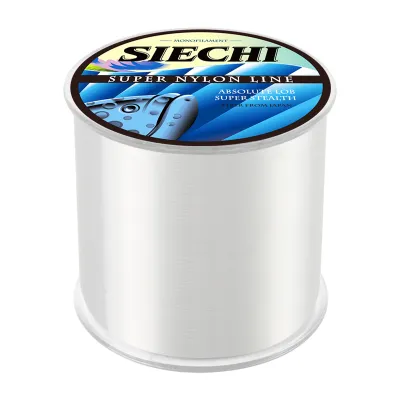
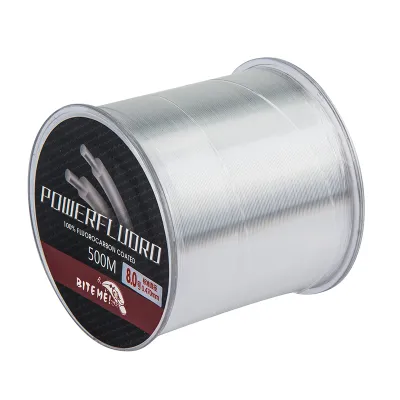
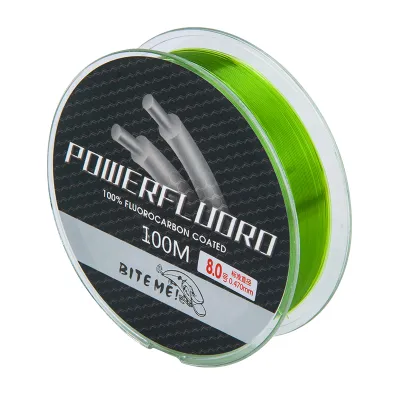
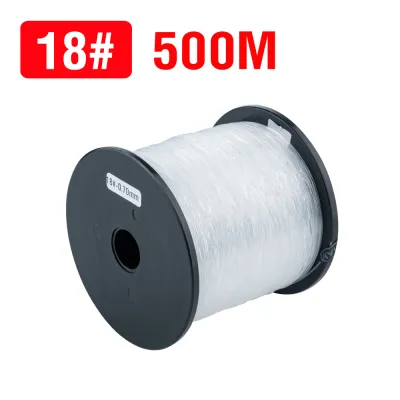
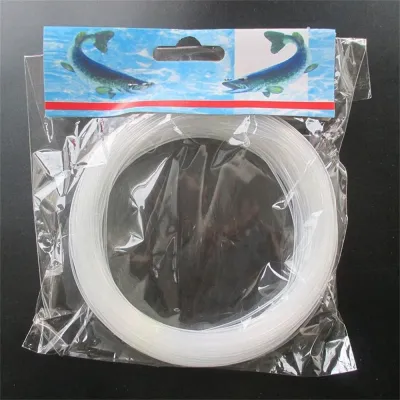
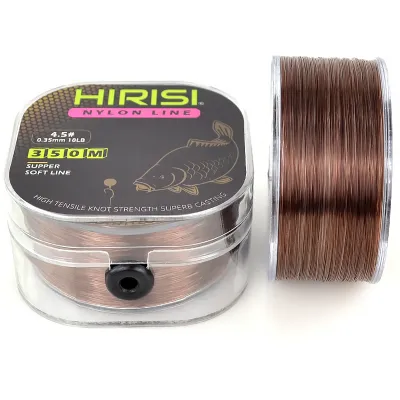
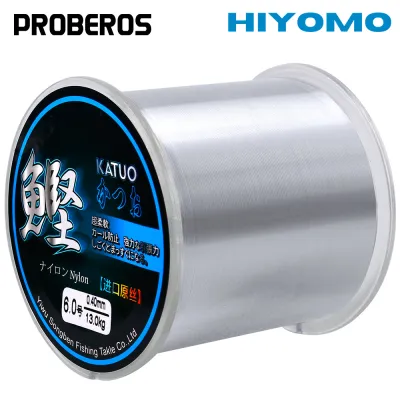
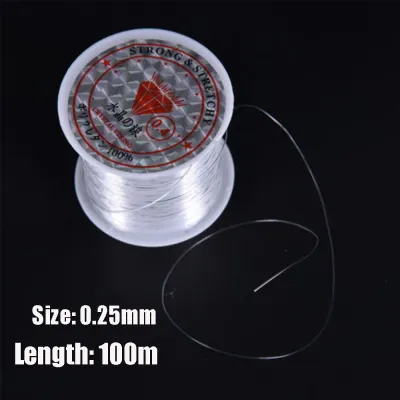
Prices are valid at publication and may change. Please refer to the product page for the latest price.
Core Traits: How Nylon, Fluorocarbon, and Braid Behave
When a fish strikes or your hook snags an obstacle, the line experiences sudden tension. Nylon line is highly elastic, stretching significantly under load. This elasticity acts as a shock absorber, which is incredibly forgiving for beginners who might set the hook with too much force or struggle to manage drag settings. In contrast, braided line has almost zero stretch, transmitting every vibration directly to your hands but offering no cushion against sudden pulls. Fluorocarbon sits in the middle, offering moderate stiffness and less stretch than nylon, providing a balance of sensitivity and moderate shock absorption.
Light behaves differently as it passes through water and various line materials. When inspecting fluorocarbon packaging, look for mentions of its refractive index, which is close to that of water, making it nearly invisible to fish. Nylon is more visible than fluorocarbon but is available in clear or tinted options to match different water conditions. Additionally, nylon is naturally buoyant and tends to float or sink very slowly, whereas fluorocarbon is dense and sinks rapidly. Braided line is made of woven synthetic fibers, making it highly visible in the water, which often requires a secondary leader line if you are targeting easily spooked fish.
Before purchasing, examine the line diameter chart printed on the side of the product packaging. You will notice that braided line has a much thinner profile than nylon or fluorocarbon of the same breaking strength. This thin diameter means you can spool significantly more braided line onto your reel, or use a lighter, more compact reel setup. Thicker lines like nylon and fluorocarbon take up more physical space on the spool, which can limit your total line capacity but makes the line easier to handle and untangle with bare hands.
“Line memory” refers to a line’s tendency to retain the coiled shape of the spool. Nylon has moderate to high memory, meaning it can form loops and coils when cast, especially if it has been sitting on the reel for a long time. When shopping, check the packaging for labels indicating memory-reduction treatments. Fluorocarbon generally has higher memory and stiffness, requiring careful handling to prevent coils. Braided line has virtually zero memory, laying flat and casting smoothly. However, nylon is susceptible to degradation from ultraviolet (UV) light; look for UV inhibitors on the label, and visually inspect your spooled line regularly for a chalky appearance or stiffness, which indicates it is time for a replacement.
Matching Line Types to Your Fishing Scenarios
If you plan to fish along the surface of the water using poppers, frogs, or walker baits, your line choice directly affects the lure’s action. Nylon’s natural buoyancy keeps your topwater baits riding high on the surface, allowing you to work the lure with erratic, realistic movements. If you were to use fluorocarbon in this scenario, its fast-sinking properties would pull the nose of your topwater lure downward, ruining its action and making it difficult to present the bait naturally.

When fishing in crystal-clear reservoirs, slow-moving rivers, or coastal flats, fish rely heavily on their vision. In these environments, a highly visible line can scare fish away before they ever consider biting. Spooling with fluorocarbon or using a long fluorocarbon leader ensures your presentation remains stealthy. Because fluorocarbon sinks quickly, it also helps lightweight soft plastics and bottom-bouncing jigs reach the strike zone faster and stay there longer without bowing in the current.
Fishing around dense aquatic vegetation, submerged timber, or in deep water requires a different set of tools. Braided line excels here because its thin diameter cuts through water and weeds easily, and its high tensile strength allows you to pull fish out of thick cover without snapping. The lack of stretch in braided line is also crucial for deep-water fishing, as it ensures that even a gentle tug on your bait yards away is felt instantly at the rod tip.
For absolute beginners, the physical mechanics of setting a hook require practice. When a fish bites, a beginner’s natural reaction is often a sudden, aggressive upward sweep of the rod. If you are using a zero-stretch braided line, this aggressive motion can easily tear the hook right out of the fish’s mouth or snap a weak knot. Nylon’s built-in stretch acts as a safety buffer, absorbing the excess force of an overenthusiastic hookset and keeping the fish pinned securely.
Gear Compatibility, Spooling, and Knot Tying
Your choice of fishing reel dictates how well certain lines will perform. Spinning reels are generally very forgiving, but stiff lines with high memory, like heavy fluorocarbon, can easily spring off the spool in loose coils, causing frustrating tangles. Baitcasting reels require precise control to prevent “backlash” (where the spool spins faster than the line exits), and using a stiff line can exacerbate this issue. Furthermore, because braided line is incredibly smooth and slick, it can slip and spin around the metal spool of your reel under pressure. To prevent this, check if your reel spool is marked as “braid-ready” with a rubber grip, or apply a few wraps of nylon line or electrical tape to the spool hub as backing before adding the braid.
The small rings along your fishing rod, known as guides, experience significant friction as line zips through them during a cast or rubs against them under the strain of a fish. Modern rods typically feature ceramic or metal oxide guides designed to handle all line types. However, if you are using an older rod or a budget-friendly setup, check the guide inserts. Rough, textured braided lines can act like a fine saw, wearing down softer guide materials over time, while abrasive-resistant lines like fluorocarbon can also cause wear if the guides are not rated for them.
A fishing line is only as strong as the knot holding it to your hook or lure. Nylon is soft, pliable, and has excellent natural grip, making it the easiest material for learning basic knots like the improved clinch or Palomar knot. Fluorocarbon is harder and slicker, meaning knots can slip if they are not tied perfectly and lubricated with water or saliva before tightening. Braided line is exceptionally slick and thin; standard knots can easily slip undone under tension. When using braid, you must use specific knots like the Palomar or double-wrap variations, ensuring you pull the tag end completely tight to lock the knot in place.
You do not always have to choose just one line type. Many anglers utilize a hybrid setup by spooling their reel with a strong, sensitive braided mainline and tying a short section (a leader) of nylon or fluorocarbon to the end. This gives you the casting distance and sensitivity of braid combined with the low visibility or shock absorption of the leader. If you choose this route, practice tying reliable line-to-line connection knots, such as the Double Uni knot or the FG knot, and inspect the connection before every trip to ensure it passes smoothly through your rod guides.
Decision Framework: Which Line Should You Spool?
To finalize your choice, evaluate your current gear, budget, and target environment against this straightforward decision framework.
Choose Nylon if:
- You are on a tight budget and want a cost-effective option.
- You are mastering basic casting and want to avoid tangles.
- You need a material that holds knots securely without slipping.
- You plan to fish primarily on the surface with topwater lures.
- You need a forgiving line that cushions aggressive hooksets.
Choose Fluorocarbon if:
- You fish in clear water where fish are easily spooked.
- You use sinking lures or bottom rigs that need to get deep quickly.
- You fish around abrasive structures like rocks or concrete pilings.
Choose Braided if:
- You need maximum sensitivity to feel subtle bites in deep water.
- You fish in heavy lily pads, reeds, or thick vegetation.
- You want to maximize the line capacity of a smaller reel.
Verify first if:
- Your rod's guide inserts are rated for abrasive braided lines.
- Your reel spool requires backing to prevent braided line from slipping.
- The line's breaking strength matches the specifications printed on your rod.
Frequently Asked Questions (FAQ)
Does nylon fishing line expire or go bad?
Yes, nylon fishing line degrades over time due to exposure to ultraviolet (UV) light, heat, and moisture. Unlike braided line, which can last for several seasons, nylon typically needs to be replaced annually. To check if your nylon line has gone bad, pull a few feet off the spool and run it between your fingers; if it feels brittle, has rough spots, or retains tight, spring-like coils that do not straighten out under light tension, it is time to discard it. Store your spare spools in a cool, dark place to maximize their shelf life.
Should I use a leader with braided fishing line?
In most situations, yes, using a leader with braided line is highly recommended. Because braided line is opaque and highly visible underwater, tying a leader of clear nylon or fluorocarbon to the end helps prevent fish from spotting your line. Additionally, braided line has poor abrasion resistance when rubbed against sharp rocks, whereas a fluorocarbon leader provides a tough, protective barrier. A leader also introduces a small amount of stretch back into your setup, reducing the risk of pulling the hook out of a fish’s mouth during a hard fight.

Community discussion
Share your experience or ask a question. Comments are reviewed before publication.