
Choosing between an over-the-door and a freestanding mini basketball hoop comes down to your living environment, noise tolerance, and how you plan to play. If you live in a compact apartment or condominium where floor space is at a premium, an over-the-door model offers an instant setup that utilizes unused vertical space. Conversely, if you have a spacious balcony, a private patio, or a dedicated playroom, a freestanding hoop provides the physical presence and height adjustability that mimics a real court experience. Both options bring the joy of the game indoors, but they serve very different spatial and functional needs.
Space Constraints and Installation Needs
Evaluating the physical constraints of your living environment is the first step in determining which mounting style is viable. In highly optimized living spaces, such as modern apartments, every square meter counts. An over-the-door mini basketball hoop is incredibly space-efficient because it requires zero floor space. However, you must carefully check your door frame dimensions before purchasing. Measure the thickness of your door—most standard residential doors are between 3.5cm and 4.5cm thick—and ensure the mounting brackets have a matching depth. Additionally, check the clearance at the top of the door; you need at least a few millimeters of space between the top of the door and the frame so the door can still close smoothly without scraping the paint.
Freestanding mini basketball hoops, on the other hand, require a dedicated footprint. The base of a freestanding unit typically occupies a rectangular area of about 50cm by 70cm, but you also need to account for the safety clearance around it. Players need room to move, shoot, and land safely without colliding with furniture, walls, or delicate home decor. Ceiling height is another critical factor for indoor freestanding setups. While standard residential ceilings are around 2.6 meters high, a freestanding hoop adjusted to its maximum height might leave very little room for the ball to arch, causing shots to hit the ceiling. Always measure your vertical clearance and compare it to the maximum height of the backboard.
Products mentioned in this guide
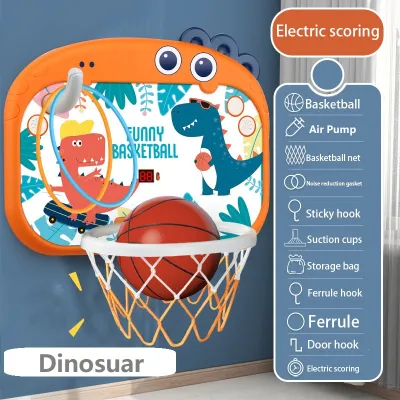
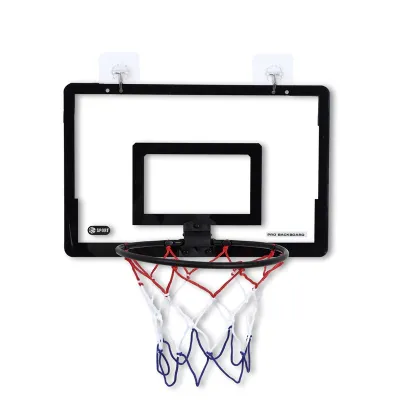
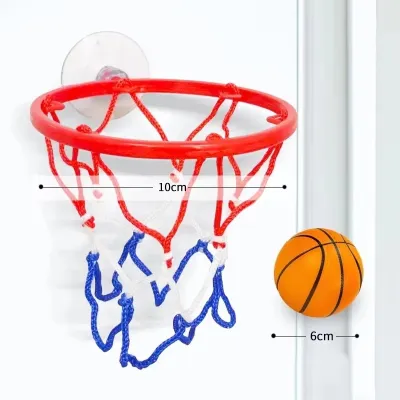
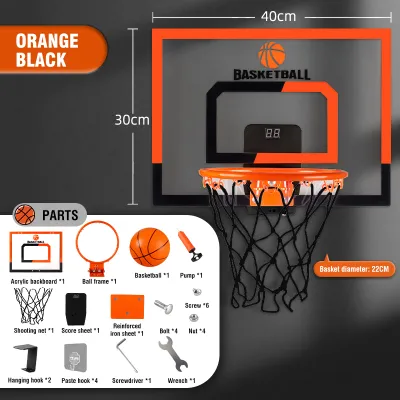
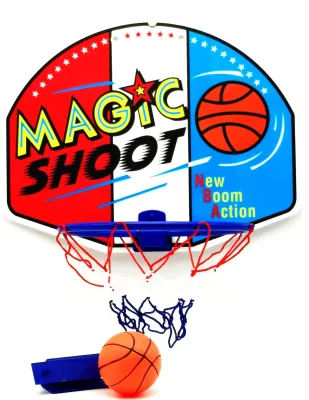
![[45cm x 29cm] Mini Basketball Board Hoop Slam Dunk Rim Spring Small Kids Children Ring Bola Keranjang](https://img.lazcdn.com/g/p/a9e774c532c92d64bf28ba8b02aa57c8.jpg_400x400q80.jpg_.webp)
![[SG Ready] Desktop Basketball Game | Childrens Day](https://img.lazcdn.com/g/p/8976bf4ce62d40168bbb26e561321a3c.jpg_400x400q80.jpg_.webp)
Prices are valid at publication and may change. Please refer to the product page for the latest price.
Rental restrictions are another crucial consideration. Over-the-door models are highly popular among renters because they require no drilling or permanent wall anchors. To protect your rental deposit, look for brackets lined with thick EVA foam padding to prevent scuffing the door’s finish. Freestanding models are also rental-friendly as they stand on their own, but their heavy bases can leave indentations or scratches on delicate parquet, laminate, or vinyl flooring if they are dragged. Placing a protective rubber mat under the base is an excellent way to safeguard your floors.
Stability, Noise, and Play Intensity
Matching the hoop’s structural design to your intended play intensity and noise tolerance is essential for long-term enjoyment. In high-density housing, noise transmission is a major concern. When a basketball hits an over-the-door backboard, the kinetic energy transfers directly into the door and its frame, creating a loud, echoing thud. This vibration can easily travel through walls and disturb family members or neighbors. To mitigate this, choose a model with comprehensive foam backing across the entire rear surface of the backboard to absorb vibrations. Furthermore, aggressive play, such as dunking or hanging on the rim, is highly discouraged with over-the-door setups. Even with a spring-action breakaway rim, the downward force can warp door hinges or crack the frame.

Freestanding hoops offer a more isolated playing experience because the hoop is supported by an independent base, meaning the impact of the ball does not transmit vibrations directly into the building’s structure. However, the sound of the ball bouncing on the floor remains a consideration for indoor play. To address this, many players use high-density foam silent basketballs, which bounce quietly while maintaining a realistic feel. The stability of a freestanding hoop depends almost entirely on how you weight the base. Most bases are designed to be filled with either water or sand. While water is easier to fill and empty, sand is significantly denser and provides a much more stable foundation, reducing the amount of wobble or sway when the ball hits the rim.
When evaluating backboard materials, check the manufacturer’s specifications for shatterproof properties and rebound response rather than assuming material superiority. Polycarbonate backboards are highly durable and impact-resistant, making them excellent for active play, while acrylic backboards offer a professional, clear look but can be more prone to scratching. If you plan to practice light dunks, a heavily weighted freestanding base paired with a steel breakaway rim is essential to prevent the entire unit from tipping forward. Always check the manufacturer’s specifications regarding weight limits and structural capabilities before attempting any high-impact play.
Height Adjustability and Player Age
One of the most significant advantages of a freestanding mini basketball hoop is its height adjustability. Most freestanding models feature a telescoping pole mechanism that allows you to easily raise or lower the rim. This adjustability is incredibly valuable for families with growing children. A younger child can start with the rim set at a manageable height of 1.2 meters to practice proper shooting form, and as they grow and improve, the hoop can be raised in increments up to 2 meters or more. This ensures the equipment remains challenging and useful for years, accommodating multiple players of different ages and skill levels.
In contrast, over-the-door hoops are inherently limited by the height of the door they are mounted on. Standard residential doors are typically around 2 meters high, meaning the rim will almost always sit at approximately 1.8 to 1.9 meters off the ground. While this height is perfect for older teens and adults looking for a quick office distraction or a casual bedroom shootout, it can be frustratingly high for younger children who lack the strength to shoot a ball that high. Some over-the-door models offer minor height adjustments via multi-slot brackets, but these usually only provide a variance of 10 to 15 centimeters, which does not significantly change the target user profile.
Therefore, if your primary goal is to provide a fun, developmental sports toy for young children, an adjustable freestanding hoop is almost always the superior choice. It allows them to build confidence at lower heights before progressing to standard levels. On the other hand, if the hoop is intended for adult recreation, office stress relief, or casual shooting in a confined space, the fixed height of an over-the-door model is perfectly adequate and saves valuable floor space.
Side-by-Side Feature Comparison
To help accelerate your decision-making process, the table below summarizes the core differences between over-the-door and freestanding mini basketball hoops based on key structural and practical criteria.
| Feature | Over-the-Door Hoop | Freestanding Hoop |
|---|---|---|
| Installation Method | Hangs over standard door frames; requires no drilling or tools. | Self-standing unit; requires assembly and filling the base. |
| Space Required | Zero floor footprint; requires minimal clearance at the top of the door. | Requires approximately 1 square meter of floor space and high ceilings. |
| Height Adjustability | Fixed height (determined by door height); minimal bracket adjustments. | Highly adjustable telescoping pole (typically 1.2m to 2.2m+). |
| Stability & Dunking | Low stability; prone to shaking; dunking can damage the door frame. | Moderate to high stability (when weighted); supports light dunking. |
| Noise Level | High vibration and thudding noise transmitted through the door. | Lower structural noise; floor impact from ball bounces remains. |
| Best Use Case | Compact apartments, offices, renters, and casual adult shooting. | Playrooms, spacious balconies, patios, and growing children. |
Final Decision: Which Mini Basketball Hoop Fits Your Needs?
Choosing the right mini basketball hoop requires balancing your physical space with your playing style. An over-the-door hoop is the ideal choice if you have limited floor space, live in a rental property where permanent modifications are not allowed, and plan to use the hoop for casual shooting, trick shots, or quick stress relief. It is a streamlined, budget-friendly option that keeps your floors clear while still delivering a fun basketball experience. Just ensure you verify that your doors are solid-core and that you use protective padding to prevent any surface damage.
Conversely, a freestanding hoop is the better option if you have a spacious room, a dedicated balcony, or an outdoor patio, and you want a more realistic playing experience. It is particularly suited for families with growing children who need adjustable rim heights to develop their skills. It also offers the structural stability required for light dunking and layups, provided the base is properly weighted.
Before making your final purchase, always perform a few crucial checks. If you are opting for an over-the-door model, verify that your doors are not hollow-core or glass, as these materials cannot withstand the impact forces of active play. If you are choosing a freestanding model for an outdoor balcony or patio, ensure you have a plan to secure the unit against strong winds and tropical downpours, which may require extra base weight or moving the hoop indoors during severe weather.
Frequently Asked Questions (FAQ)
Can I hang an over-the-door hoop on a hollow or glass door?
No, you should avoid hanging an over-the-door hoop on hollow-core or glass doors. Hollow-core doors have thin outer veneers and empty interiors, making them highly susceptible to puncturing, cracking, or warping under the leverage and impact forces generated by shooting and rim contact. Glass doors present an extreme safety hazard, as the vibrations and direct impact from a basketball can easily shatter the glass, leading to severe injury. Always mount over-the-door hoops on solid wood or metal doors, and ensure the brackets are lined with protective foam padding to absorb vibrations and protect the door’s finish.
How do I prevent a freestanding base from tipping over?
To prevent a freestanding mini basketball hoop from tipping over, you must properly weight the base according to the manufacturer’s instructions. Most bases can be filled with either water or sand. Sand is highly recommended because it is approximately 1.5 times denser than water, providing a heavier, more stable foundation that significantly reduces pole shake and tipping risks. If you use water, ensure you fill it to the maximum fill line and check regularly for slow leaks or evaporation. For outdoor setups on balconies or patios, always lower the telescoping pole to its lowest height setting during high winds or severe weather to minimize wind resistance and prevent the unit from blowing over.

Community discussion
Share your experience or ask a question. Comments are reviewed before publication.