
Choosing the right tennis balls as a beginner can significantly impact your skill development, budget, and overall enjoyment on the court. The decision between pressurized and pressureless tennis balls comes down to a balance between playability and durability. Pressurized balls offer a lively bounce and a lightweight feel that mimics real match play, but they lose their bounce quickly. Pressureless balls rely on a solid rubber core that maintains its bounce indefinitely, making them highly durable for repetitive practice, though they feel heavier and stiffer on impact. Understanding how these two types perform will help you select the most practical option for your training routine.
How Pressurized and Pressureless Tennis Balls Differ
To understand why these two types of tennis balls perform so differently, you must look at their internal construction. Pressurized tennis balls are filled with compressed air or nitrogen inside a hollow rubber shell. This internal gas pressure is what gives the ball its signature springiness and speed. The felt cover on a pressurized ball is typically woven to be highly flexible, allowing the ball to compress easily against your racket strings upon impact, which provides a soft, responsive feel.
In contrast, pressureless tennis balls do not rely on internal gas pressure for their bounce. Instead, they feature a much thicker, heavier, and more elastic solid rubber core. The bounce comes entirely from the structural memory of the rubber itself. Because the core is stiffer, the felt cover on a pressureless ball is often denser and more tightly bound to withstand the harder impacts. This structural difference means pressureless balls do not lose their bounce over time, but they do offer a very different tactile experience when hit.
Products mentioned in this guide
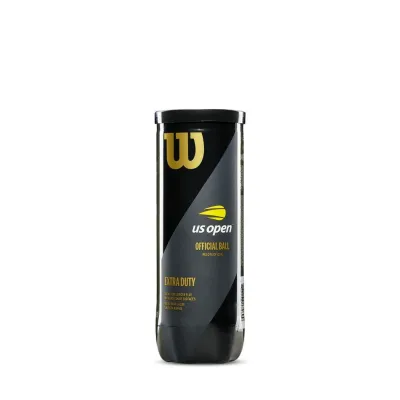
![[BUY 4 CANS AT PRICE OF 3] Wilson US Open Extra Duty Tennis Balls (4 Pack) 12 Balls - WRT106200](https://img.lazcdn.com/g/p/36c84ee42d3b582024ff3184f3ed2f6e.jpg_400x400q80.jpg_.webp)
![[BUY 4 CANS AT PRICE OF 3] Wilson US Open Green Tournament 3 Ball Can (4 Pack) Tennis Balls](https://img.lazcdn.com/g/p/86fde86638e317c874fb17b3dd893d90.jpg_400x400q80.jpg_.webp)
![[BUY 4 CANS AT PRICE OF 3] Wilson Championship Extra Duty Tennis Balls (4 Pack) 12 Tennis Balls - WRT100101](https://img.lazcdn.com/g/p/e4c5d48ca16e86c119d985bee3f966ee.jpg_400x400q80.jpg_.webp)
Prices are valid at publication and may change. Please refer to the product page for the latest price.
Identifying these balls before you make a purchase is relatively straightforward if you know what to look for. Pressurized balls are almost always sold in vacuum-sealed plastic or metal cans that release a distinct “hiss” of escaping air when opened. This pressurized packaging prevents the gas inside the balls from leaking out before use. Pressureless balls, on the other hand, are typically sold loose in mesh bags, cardboard boxes, or large plastic buckets. If you squeeze them in your hand, a pressureless ball will feel noticeably firmer and less yielding than a fresh pressurized ball.
Bounce Consistency and Playability for Beginners
For a beginner, the way a ball bounces off the court and responds to the racket is crucial for developing proper timing and stroke mechanics. Fresh pressurized balls offer an incredibly consistent, lively bounce that rises to a predictable height. This predictability helps you position your body correctly and time your swings with confidence. The ball compresses deeply into the racket strings, giving you a split second of control and excellent sensory feedback, which is essential for learning how to direct your shots.

However, this ideal playability begins to degrade the moment the pressurized can is opened. As the internal gas slowly leaks through the porous rubber shell, the ball loses its bounce height and responsiveness. This gradual loss of pressure can frustrate beginners, as a “dead” ball requires you to hit much harder just to clear the net, which can ruin your developing stroke mechanics. Pressureless balls behave in the opposite manner. When brand new, they can feel stiff and bounce slightly lower, but as you play with them, the thick rubber core softens or “breaks in,” actually causing the bounce to become more lively over the first few sessions.
Despite their long-lasting bounce, pressureless balls present some playability challenges for novice players. Because the rubber core is thicker, hitting a pressureless ball feels heavier and stiffer on your racket. This increased resistance transmits more shock and vibration up your arm. For beginners who may not yet have developed clean contact or strong forearm muscles, spending hours hitting stiff pressureless balls can lead to early arm fatigue or joint discomfort. Pressurized balls remain the gentler, more forgiving option for long, continuous rally practice.
Durability and Longevity on the Court
When evaluating durability, it is important to distinguish between pressure loss and physical wear. Pressurized balls have a notoriously short lifespan because they constantly lose gas, even when sitting unused in your tennis bag. Within a few weeks of opening a can, the balls will lose enough pressure to feel flat and sluggish, regardless of how many times you actually hit them. In humid tropical climates, such as in Singapore, the combination of heat and moisture can sometimes accelerate the degradation of both the rubber core and the outer felt.
Pressureless balls are virtually immune to this type of pressure loss. Because they do not rely on trapped gas, they will maintain their bounce for months, or even years, of regular use. Their primary wear point is not the core, but the outer felt cover. Over time, friction against the court surface will cause the felt to wear thin, turn bald, or fluff up excessively. When the felt wears away, the ball becomes lighter and flies faster through the air, while fluffy felt can slow the ball down dramatically.
Knowing when to replace your tennis balls is key to maintaining a productive practice session. For pressurized balls, you can perform a simple squeeze test: if the ball yields easily to thumb pressure or fails to bounce to hip height when dropped from shoulder level, it is time to discard it. For pressureless balls, you should replace them when the felt cover becomes completely smooth, dirty, or bald, or if you notice the rubber core beginning to crack. Even though a pressureless ball will still bounce, playing with a bald ball makes it difficult to practice spin and control.
Cost and Value for Frequent Practice Sessions
Your choice of tennis ball will have a direct impact on your ongoing playing expenses. In Singapore, a standard three-ball can of quality pressurized tennis balls typically costs between S$7 and S$12. While this upfront cost is low, the rapid pressure loss means that if you play twice a week, you may need to open a new can almost every week to maintain a consistent bounce. Over several months, these recurring purchases can add up to a significant investment.
Pressureless tennis balls require a higher initial outlay but offer exceptional long-term value. They are often sold in bulk, with buckets of 48 to 72 balls ranging from S$80 to S$150. Because these balls do not go flat, a single bucket can easily last a beginner for six months to a year of frequent practice. For players who practice daily, use a ball machine, or spend hours practicing their serves solo, pressureless balls are by far the most economical choice, reducing your cost-per-session to a fraction of what you would spend on pressurized options.
However, buying in bulk is only a smart financial decision if it aligns with your practice habits. If you are a casual player who only hits once every few weeks, buying a large bucket of pressureless balls is unnecessary and difficult to transport. Conversely, buying pressurized cans in bulk to save money can backfire; unopened pressurized cans still lose pressure slowly over time, so stocking up on dozens of cans is only practical if you plan to use them within a few months.
How to Choose the Right Tennis Ball for Your Skill Level
To make the right choice, you must evaluate how you spend your time on the court. If your primary goal is to play casual matches, practice rallies with a partner, or simulate real game conditions, pressurized tennis balls are the superior choice. Their lighter weight, soft feel, and authentic bounce will help you develop proper timing and stroke mechanics without straining your arm. The realistic feedback they provide is essential for transitioning from basic drills to competitive play.
If your practice routine consists of high-volume solo drills, serving practice, or using an automatic ball machine, pressureless tennis balls are the practical option. A ball machine requires dozens of balls to run effectively, and using pressurized balls in this scenario would be incredibly expensive, as they would go flat long before the felt wore out. Pressureless balls can sit in a practice basket for months in a humid storage locker and still bounce perfectly when you head out to the court.
As you transition from a complete beginner to an intermediate player, you do not have to limit yourself to just one type. Many developing players adopt a hybrid approach to maximize both their budget and their skill development. You can keep a bucket of pressureless balls specifically for solo serve practice and ball machine drills, and save a fresh can of pressurized balls for your weekend matches and partner rallies. This balanced approach ensures you get the durability you need for repetitive training while preserving the authentic feel required for competitive play.
Frequently Asked Questions (FAQ)
Can I use pressureless tennis balls in official matches?
No, pressureless tennis balls are generally not used in official, sanctioned tournament play. Most tennis governing bodies require approved pressurized balls to ensure a standardized level of speed, bounce, and weight across all matches. The heavier feel and stiffer impact of pressureless balls can alter the pace of the game and affect player performance, making them unsuitable for competitive environments where consistency is critical.
How should I store pressurized tennis balls to extend their life?
To maximize the lifespan of pressurized tennis balls, keep them in their original, vacuum-sealed cans until the exact moment you step onto the court. Once the can is opened, store the balls in a cool, dry place away from direct sunlight, as extreme heat and humidity can accelerate the rate at which gas escapes through the rubber core. Avoid leaving loose balls in a hot car trunk, and accept that once opened, standard pressurized balls will naturally lose their bounce over a few weeks regardless of how they are stored.

Community discussion
Share your experience or ask a question. Comments are reviewed before publication.