
For men entering the sport of topwater angling, few experiences match the excitement of a surface strike. A popper lure, designed to splash, chug, and spit water across the surface, triggers aggressive predatory instincts in fish. However, beginners often face a frustrating choice: invest in expensive, professional-grade lures that strain the budget, or opt for cheap, poorly balanced alternatives that fail to perform. A reliable beginner popper must offer stable casting, consistent surface action, and durable hardware without requiring a premium investment.
Before heading to the water, safety and preparation must come first. Topwater fishing involves exposed treble hooks and active, repetitive casting, often in public reservoirs or shared coastal spaces. Always perform a surrounding safety check before every cast to avoid hooking bystanders or vegetation, and carry a reliable pair of long-nose pliers for safe hook removal. Furthermore, tropical environments like Singapore are prone to sudden, severe lightning storms. Because carbon fiber fishing rods conduct electricity, you must stop fishing and seek shelter immediately at the first sound of thunder or sign of lightning.
What Makes a Popper Lure Reliable for Beginners
To learn topwater techniques effectively, a beginner requires a lure that behaves predictably. The primary requirement is stable casting performance. Beginners are still developing their casting stroke, and a poorly balanced lure will tumble or helicopter through the air, causing severe line twists and drastically reducing casting distance. Reliable poppers feature internal weight chambers—often utilizing steel or tungsten ball bearings positioned near the tail—to ensure the lure flies straight and tail-first, even when casting into a headwind.
Products mentioned in this guide
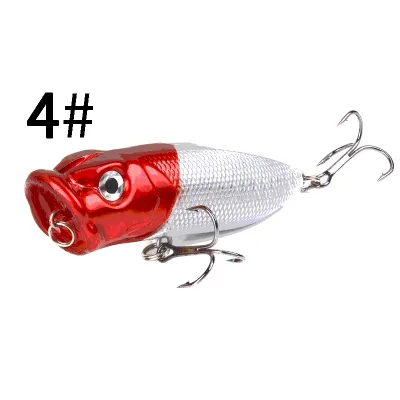
Prices are valid at publication and may change. Please refer to the product page for the latest price.
Predictable surface action is equally critical. When you twitch the rod tip, the cup-shaped face of the popper must grip the water to produce a distinct, audible splash or “bloop” sound. Low-quality lures often fail this test; they may roll onto their sides, dive beneath the surface, or skip uselessly across the water without creating any disturbance. A well-designed entry-level popper maintains its orientation, allowing you to establish a consistent retrieval rhythm and understand exactly how your rod movements translate to lure action.
Durability is another essential factor for those learning the ropes. Beginners are highly likely to misjudge distances and cast their lures into concrete canal walls, rocky shorelines, or overhanging tree branches. A fragile lure will crack, chip, or split upon impact, allowing water to seep inside and ruin its buoyancy. Look for lures constructed from thick-walled, high-impact ABS plastic, which can withstand repeated impacts and the crushing pressure of predatory fish strikes.
Finally, you must evaluate the reliability of the pre-installed hardware. The split rings and hooks are the only connection points between you and the fish. If a manufacturer cuts corners on these components, a strong fish can easily straighten the hooks or open the split rings, resulting in a lost catch. Reliable entry-level brands equip their lures with high-carbon steel or corrosion-resistant hooks that maintain their structural integrity under moderate drag settings.
Essential Specs to Check Before Buying
To ensure your popper performs correctly, you must match its physical specifications to your existing fishing rod and line setup. Every rod has a designated lure weight rating printed on the blank, typically near the foregrip (for example, 7–21g or 1/4–3/4 oz). Attempting to cast a popper that is too light for your rod results in poor casting distance and accuracy, while casting a lure that exceeds the rod’s maximum rating can overload and damage the rod tip.

Rod action and power ratings also dictate how effectively you can work a popper. A Medium (M) or Medium-Light (ML) power rod with a fast action is generally ideal for working smaller poppers in freshwater environments. The stiff tip of a fast-action rod allows you to transmit sharp, precise twitches directly to the lure, creating a clean popping sound. If your rod’s action is too slow or moderate, the blank will bend too much, absorbing the energy and causing the popper to slide sluggishly through the water instead of splashing.
Buoyancy and cup design are the primary specifications that determine a popper’s acoustic and visual signature. A deep, heavily concave cup face displaces a large volume of water, creating a loud, deep chugging sound that is highly effective for attracting fish from deeper water or in choppy surface conditions. Conversely, a shallower, tapered cup face produces a subtle spitting action and allows for a quicker, side-to-side “walk-the-dog” presentation, which is ideal for calm, glassy water where loud splashes might spook wary fish.
Always verify the hardware specifications listed on the product packaging or manufacturer website. Look for clear indicators of material quality, such as “saltwater-ready,” “3X strong hooks,” or “stainless steel split rings.” If the packaging lacks these details, assume the hardware is designed strictly for freshwater use and will require immediate replacement or meticulous freshwater rinsing to prevent rapid corrosion.
How to Spot Trustworthy Brands Without the Pro Price Tag
Identifying a reliable lure brand does not require spending S$30 or more on premium, hand-painted imports. Many reputable manufacturers produce highly effective, budget-friendly lines by focusing on structural quality rather than cosmetic perfection. To spot these trustworthy brands, start by conducting a close physical inspection of the lure in a local tackle shop or analyzing high-resolution product photos on reputable online marketplaces.
Examine the manufacturing consistency of the lure body. The seam line where the two molded halves of a plastic popper join must be perfectly flush, smooth, and completely sealed. Any visible gaps, rough plastic flashing, or misaligned halves indicate poor quality control, which inevitably leads to water leakage and loss of buoyancy. The paint finish should be uniform, free of bubbles, and protected by a durable, clear topcoat that resists scratching and chipping.
Trustworthy brands prioritize transparency by providing comprehensive specifications on their packaging. They will clearly state the exact weight, length, buoyancy type (floating or sinking), and the precise size of the pre-installed hooks. This level of detail indicates that the brand designs its lures with specific engineering standards, rather than mass-producing generic plastic shapes with arbitrary hardware.
Furthermore, reliable brands design their lures to accommodate standard, widely available hook sizes (such as #4, #6, or #8 trebles). This design choice ensures that when your hooks eventually dull, rust, or bend, you can easily purchase standard replacements from any local tackle shop. Avoid brands that utilize proprietary, non-standard hardware configurations that are difficult to source or replace.
Building Your First Popper Lure Shortlist
When assembling your initial selection of poppers, tailor your choices to the specific environments and target species you plan to pursue. In Singapore, freshwater anglers frequently target Peacock Bass and Giant Snakehead in designated reservoir zones. For these species, a compact popper measuring between 5cm and 7cm, and weighing between 5g and 10g, is highly effective. These smaller profiles closely mimic local baitfish, such as glass fish or small rasboras, which active predators hunt near the surface.
If you plan to fish coastal areas, jetties, or saltwater canals for species like Barramundi, Mangrove Jack, or small Trevally, you should scale up your gear. A larger popper measuring 8cm to 10cm and weighing 10g to 20g provides the necessary casting weight to cut through coastal breezes. This larger profile also matches the size of marine baitfish and creates a stronger surface disturbance to attract predators in turbid coastal waters.
Keep your color selection simple, practical, and versatile. For bright, sunny days and clear water, prioritize natural or translucent patterns that mimic silver baitfish, as these rely on subtle reflections to trigger strikes. On overcast days, during early morning or late evening sessions, or in murky water, switch to high-contrast colors. A classic red-head white-body pattern or a bright chartreuse finish makes it much easier for fish to locate the silhouette of the lure against a dark sky or turbid water.
Set a sensible budget for your initial gear. For beginners, losing lures to underwater structures, overhanging trees, or powerful fish is an inevitable part of the learning curve. Aim to spend between S$8 and S$18 per popper. This price range offers an excellent balance: the lures are engineered well enough to cast and pop reliably, but losing one will not ruin your day or your budget.
Frequently Asked Questions (FAQ)
Do I need expensive professional-grade poppers to catch fish?
No, expensive professional-grade poppers are not a requirement for catching fish, especially for beginners. Success on the water depends far more on your retrieval technique, casting accuracy, timing, and understanding of fish behavior than on the price tag of your lure. An entry-level popper fished with the correct cadence—allowing the water to settle between pops and matching the activity level of the fish—will consistently outproduce a premium lure fished poorly.
Professional-grade lures often feature specialized through-wire construction, custom hand-painted finishes, or extreme durability designed for targeting massive pelagic species like Giant Trevally on heavy offshore gear. For everyday reservoir and coastal fishing, standard entry-level lures are more than sufficient.
How do I maintain my popper lures after a fishing trip?
Proper maintenance is essential to extend the lifespan of your popper lures, particularly if you fish in saltwater or brackish environments. After every outing, rinse your lures thoroughly under clean, running fresh water to remove salt deposits, mud, and organic debris. Pay close attention to the hook eyes, split rings, and the cup face where salt can accumulate.
After rinsing, lay the lures out on a towel in a well-ventilated, shaded area to dry completely before placing them back in your tackle box. Storing wet lures in a sealed box traps moisture, leading to rapid rust on hooks and split rings, which can ruin the hardware and stain the lure body. Periodically inspect the hooks for sharpness and signs of corrosion, replacing them as needed to ensure secure hooksets on your next trip.

Community discussion
Share your experience or ask a question. Comments are reviewed before publication.