
Deciding whether RS tennis balls or other popular brands offer the best value in Singapore depends on matching specific ball construction traits to your playing style, court surface, and skill level. While established legacy brands are widely available across local clubs and retail shops, RS tennis balls—developed with a focus on premium feel and control—have carved out a distinct niche among players who prioritize specific aerodynamic properties and felt textures. Because performance, bounce consistency, and durability vary significantly by specific model rather than just the brand name, making an informed choice requires a close look at technical specifications, local court conditions, and your actual training volume.
In Singapore’s tropical climate, where high humidity and abrasive outdoor hard courts accelerate wear, choosing the wrong ball can lead to rapid pressure loss or premature felt degradation. By understanding how different rubber cores and felt compositions interact with these environmental factors, you can select a ball that maintains its playability over multiple sessions. This guide provides a structured framework to compare key specifications, evaluate local availability, and make a condition-based choice that fits your actual needs on the court.
Understanding Tennis Ball Specifications
Evaluating tennis balls objectively requires an understanding of how their core components are engineered. The most fundamental distinction lies between pressurized and pressureless balls. Pressurized balls are filled with compressed air or nitrogen, which provides a lively, responsive bounce and a soft feel upon impact. However, the gas inside gradually diffuses through the porous rubber core over time, meaning these balls eventually lose their bounce even when left unused in an opened can. Pressureless balls, on the other hand, rely on a thicker, highly elastic rubber core to generate rebound. While they maintain their bounce almost indefinitely, they feel noticeably heavier and stiffer on the racket strings, making them more common for ball machines and coaching rather than competitive match play.
Products mentioned in this guide
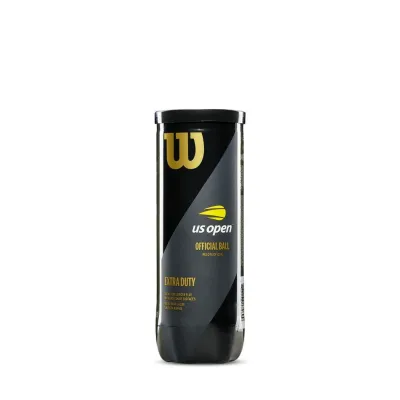
![[BUY 4 CANS AT PRICE OF 3] Wilson US Open Extra Duty Tennis Balls (4 Pack) 12 Balls - WRT106200](https://img.lazcdn.com/g/p/36c84ee42d3b582024ff3184f3ed2f6e.jpg_400x400q80.jpg_.webp)
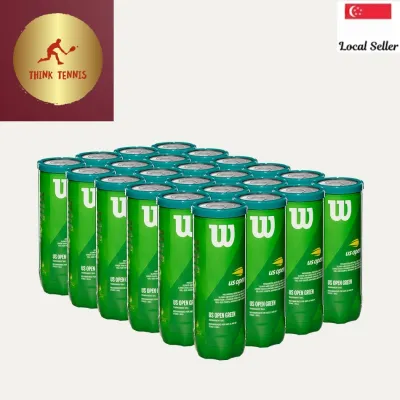
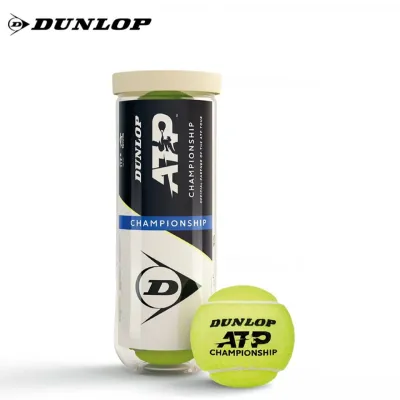
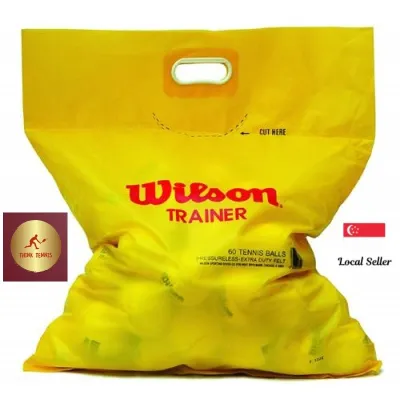
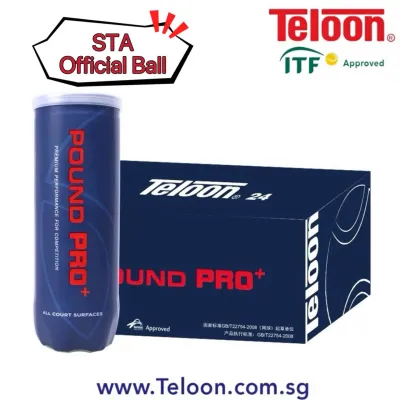
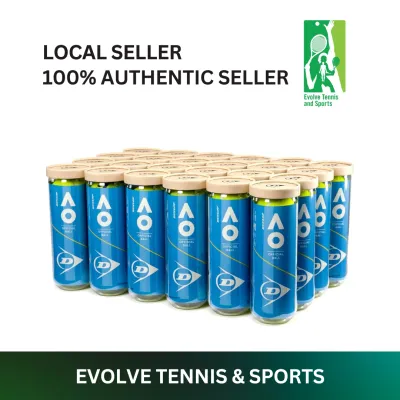
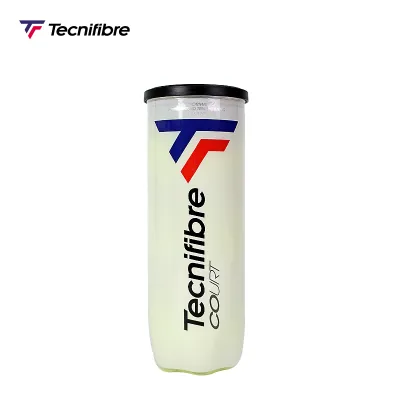
Prices are valid at publication and may change. Please refer to the product page for the latest price.
The outer felt covering is another critical specification that dictates speed, spin potential, and durability. Felt is generally classified as either woven or non-woven. Premium woven felt is crafted by interlacing wool and nylon fibers, resulting in a highly consistent, durable surface that wears down gradually and predictably. This construction is the standard for tournament-grade balls because it offers superior control and aerodynamic stability. Non-woven felt is produced by needle-punching fibers together, which is less expensive to manufacture but tends to fluff up rapidly or wear down unevenly, altering the ball’s flight path and speed during play.
For players participating in organized leagues or tournaments, verifying regulatory compliance is essential. The International Tennis Federation (ITF) tests and approves specific ball models to ensure they meet strict criteria for weight, size, rebound height, and deformation under load. Choosing an ITF-approved ball guarantees that you are practicing with equipment that behaves consistently and conforms to global competitive standards, preventing surprises when transitioning from friendly practice sessions to official matches.
RS Tennis Balls: Core Features and Typical Use Cases
RS tennis balls, founded by professional tennis player Robin Söderling, are designed with an emphasis on premium material selection and playability. A defining characteristic of standard RS models is the use of high-grade natural rubber in the core, paired with premium woven felt containing a high percentage of wool. This combination is engineered to deliver a soft, arm-friendly feel at contact, allowing players to maximize control and generate spin with greater predictability. The brand focuses heavily on maintaining a tight tolerance in manufacturing to ensure that each ball within a can behaves identically.

These construction traits make RS balls highly suitable for specific player profiles and training scenarios. Recreational players and intermediate club members who appreciate a comfortable hitting sensation often favor these balls for their responsive feel and consistent flight. Additionally, because the premium felt resists rapid clumping, they are frequently utilized in high-volume training sessions, private coaching, and ball machine practice where consistent trajectory is vital for developing clean stroke mechanics.
However, because performance characteristics can vary across different product lines, players should always verify the specific model specifications directly on the product label before purchasing. RS offers different models tailored to specific preferences, such as those prioritizing maximum speed or those designed for enhanced durability on abrasive surfaces. Checking the pressure rating and intended court surface on the packaging ensures you select a model that aligns with your specific playing environment.
Comparing RS Against Other Popular Brands
When comparing RS to other popular brands available in Singapore, the primary testing ground is the abrasive acrylic hard court, which is the dominant surface type across public facilities and private condominiums. On these high-friction surfaces, felt wear is the first point of failure. Premium woven felt models from established brands are specifically engineered to resist the grinding action of hard courts, maintaining their nap without shedding fibers too quickly. RS models utilizing premium woven felt compete closely in this category, offering a gradual wear pattern that preserves aerodynamic consistency over several sets, whereas lower-tier practice balls from various brands often bald rapidly, leading to an erratic, fast-flying ball.
Bounce consistency and overall feel are highly dependent on the model tier rather than the brand name alone. High-tier tournament balls from any reputable manufacturer, including RS, feature superior gas retention and uniform wall thickness, resulting in a predictable rebound and a plush feel. In contrast, budget-friendly club-tier balls often feel firmer and can exhibit minor variations in bounce height right out of the can. For players sensitive to arm discomfort or those recovering from tennis elbow, the softer feel of premium RS models can be a significant advantage over stiffer, budget-oriented alternatives.
To guide your purchasing decision, apply this clear decision framework based on your playing needs:
- Choose RS if you prioritize a premium, comfortable feel with excellent spin control and consistent flight, particularly if you are willing to invest in high-tier woven felt models for regular club play.
- Choose alternative premium brands if you require a specific, widely established tournament ball that is universally mandated by your local league, or if you prefer a firmer, faster ball response out of the can.
- Verify first if you are playing on specialized surfaces like synthetic grass or clay, as you will need to select a regular-duty felt model to prevent the ball from absorbing excess moisture or fluffing up excessively.
Evaluating Value and Availability in Singapore
To assess the true cost-effectiveness of your tennis balls, it is highly beneficial to calculate the price-per-ball ratio in S$ rather than simply comparing the upfront cost of a single tube. Purchasing a bulk carton containing 24 or 72 balls typically offers a much lower cost per ball compared to buying individual three- or four-ball cans. For frequent players or coaching academies, this bulk-buying strategy significantly reduces long-term expenses, making premium-tier balls much more accessible on a per-session basis.
Sourcing tennis balls in Singapore involves navigating different retail channels, each with its own set of trade-offs. Specialized local sports retailers, such as those found in dedicated sports shopping complexes, allow you to physically inspect the cans and seek advice from knowledgeable staff. These specialized shops are also more likely to store their inventory in temperature-controlled environments, preserving the integrity of the pressurized seals. Conversely, general e-commerce platforms and online marketplaces offer unmatched convenience and competitive pricing, but they require extra diligence to ensure you are purchasing from reputable sellers who rotate their stock frequently.
Because pressurized tennis balls have a finite shelf life, verifying product freshness is crucial to avoid purchasing degraded stock. When buying in person, check that the metal or plastic can is completely firm; any soft spots or dents indicate that the internal pressure has leaked, resulting in a “dead” ball that will not bounce correctly. Additionally, look for manufacturing batch codes or packaging design updates to ensure the stock has not been sitting in a humid warehouse for an extended period, as Singapore’s high ambient temperatures can accelerate the natural degradation of the rubber core.
How to Choose the Right Tennis Ball for Your Game
Selecting the ideal tennis ball requires matching the product’s design to your skill level and physical requirements. Junior players and beginners often benefit from low-compression transition balls, which are designed to bounce slower and lower, giving developing players more time to establish proper footwork and swing paths. Intermediate and advanced players, who strike the ball with greater force and spin, should opt for extra-duty pressurized balls. These models feature a thicker, more robust felt layer specifically engineered to withstand high-velocity impacts and the intense friction of outdoor hard courts.
Environmental factors are particularly influential in Singapore, where high humidity and sudden tropical downpours are common. High humidity causes the felt covering of a tennis ball to absorb moisture from both the air and damp court surfaces, making the ball heavier, slower, and harder on the arm. Furthermore, high ambient temperatures cause the gas inside pressurized balls to expand, temporarily increasing their bounce and speed. If you play frequently in these conditions, choosing a ball with a high-quality, moisture-resistant woven felt is essential to maintain consistent playability throughout your session.
Before making your next purchase, use this quick pre-purchase checklist to ensure the ball matches your playing environment:
- Check the felt duty: Ensure you select extra-duty felt for outdoor hard courts, or regular-duty felt for indoor or clay courts.
- Verify the pressure seal: Confirm the can is completely sealed and pressurized, with no signs of leakage or soft spots.
- Look for certification: Verify the ITF approval mark on the packaging if you plan to use the balls for sanctioned tournament play.
- Assess the batch freshness: Purchase from retailers with high stock turnover to ensure the rubber and internal gas pressure are at their peak.
Frequently Asked Questions (FAQ)
Are RS tennis balls ITF approved for official tournaments?
ITF approval is granted to specific ball models rather than an entire brand. To verify if a particular RS tennis ball model is approved for official tournament play, check the physical packaging for the official ITF approved logo or cross-reference the model name with the current, regularly updated list of approved balls on the International Tennis Federation’s official website.
How long do tennis balls typically last on hard courts?
On abrasive outdoor hard courts, a standard pressurized tennis ball typically maintains its optimal bounce and felt structure for approximately one to three sessions of active play, depending on the intensity of the hits. You can observe that a ball needs replacement when the felt becomes noticeably thin or bald, the ball feels soft or squishy when squeezed, or it fails to bounce to a consistent height during warm-ups.
What is the difference between regular duty and extra duty felt?
Regular duty felt is thinner and designed primarily for softer surfaces like clay or indoor courts, where it resists excessive fluffing and maintains a faster speed. Extra duty felt is thicker and woven with a higher wool-to-nylon ratio, specifically engineered to handle the intense friction and abrasion of outdoor hard courts without wearing down prematurely.

Community discussion
Share your experience or ask a question. Comments are reviewed before publication.