
Quick Answer: Choosing the Right Hex Dumbbell Material for Your Home Gym
Choosing the right hex dumbbell material requires balancing your budget, training environment, and tolerance for maintenance. For most home fitness enthusiasts, rubber-coated options offer a practical entry point if you have a well-ventilated space to handle the initial off-gassing. If you live in a compact apartment where odor is a major concern and you want a highly durable, wear-resistant finish, urethane is an excellent choice. Bare iron appeals to traditional lifters who prioritize a classic feel and have dedicated protective flooring, though it demands regular upkeep to prevent rust in humid conditions. Before purchasing any weight set, verify your flooring’s load limits and shock-absorption capacity to ensure safe training.
Comparing Durability and Floor Protection
The material coating of a hex dumbbell directly dictates how well it survives repeated impacts and how much stress it transfers to your subfloor. Rubber-coated hex dumbbells typically feature a cast iron core encased in vulcanized or recycled rubber. While this rubber layer provides a moderate cushion against minor drops, it is susceptible to environmental degradation over time. In warm, humid environments, lower-grade rubber can dry out, harden, and eventually split or peel away from the metal core, exposing the raw iron beneath.

Urethane (polyurethane) represents a significant step up in material engineering and physical resilience. Unlike rubber, urethane is highly resistant to abrasion, tearing, and cosmetic scuffing. It maintains its structural integrity under repeated impacts without cracking or hardening. Because urethane is a denser, harder polymer than rubber, it does not compress as easily; while this makes the dumbbell itself highly resilient, it also means impact energy is transferred more directly to the ground. Consequently, even with urethane weights, high-quality protective flooring remains essential to safeguard your subfloor.
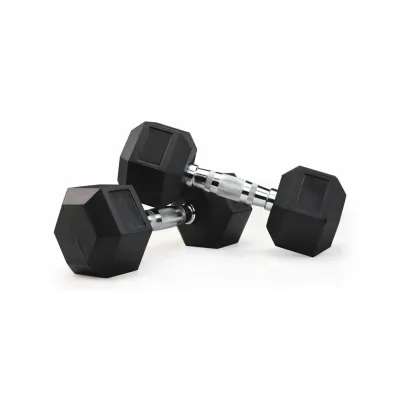
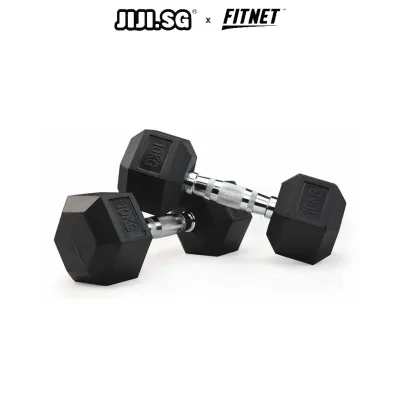
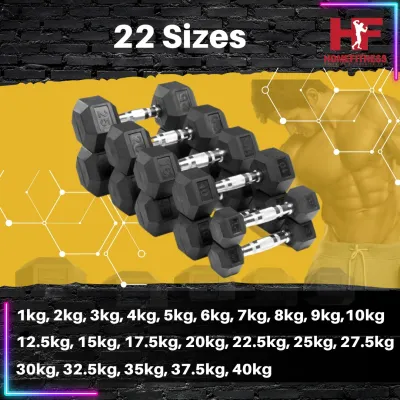
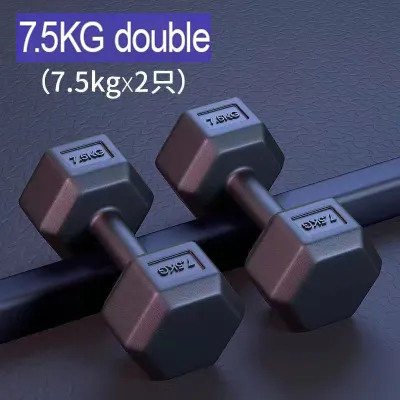
Products mentioned in this guide
![[BULKY]Hex Dumbbell Rubber Coated Chrome Dumbbell / Home Gym / Indoor Gym/Fitness/Weights (Not Sold in pair)](https://img.lazcdn.com/g/p/9cecb653fdef1b69b19d212d76b0c30a.jpg_400x400q80.jpg_.webp)
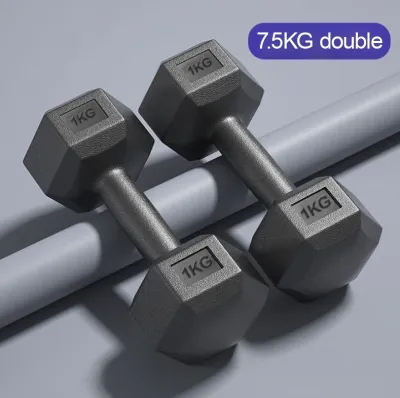
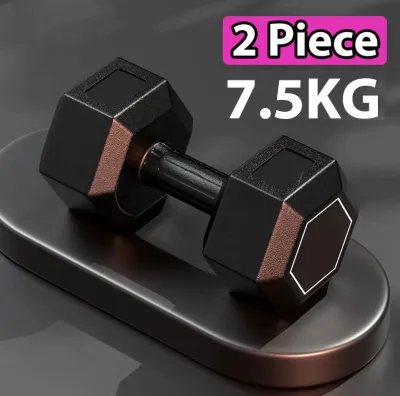
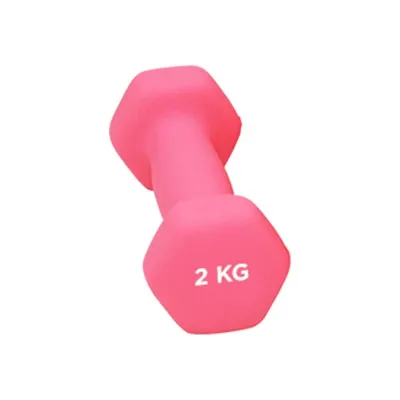
Prices are valid at publication and may change. Please refer to the product page for the latest price.
Bare iron hex dumbbells are cast as a single solid piece of metal or have iron heads pressed onto a steel handle. They are structurally durable under normal training conditions, but they offer zero impact protection. Dropping a bare iron dumbbell directly onto concrete, laminate, or tiled floors will almost certainly cause immediate structural damage to your home. Furthermore, the painted or enamel finish on bare iron is prone to chipping upon contact with other weights, leaving the exposed iron vulnerable to rapid oxidation.
To help you visualize how these materials compare under typical home training conditions, review the performance characteristics below:
| Material Type | Hardness & Wear Resistance | Drop Impact Tolerance | Recommended Flooring Type |
|---|---|---|---|
| Rubber-Coated | Moderate; prone to cracking over years of heavy use | Moderate; cushions light impacts well | Minimum 8mm rubber mats over concrete |
| Urethane | High; highly resistant to tears and scratches | High; maintains shape and finish | Minimum 8mm rubber mats or platform |
| Bare Iron | High structural strength; finish chips easily | Low; transfers all force to the floor | Dedicated lifting platform or thick rubber tiles |
Odor, Maintenance, and Daily Usability
Sensory factors and daily maintenance routines play a massive role in how comfortable your home gym feels, especially when training in enclosed residential spaces. Rubber-coated dumbbells are notorious for their distinct chemical odor, which stems from the sulfur used in the vulcanization process. This off-gassing can be particularly intense in small, unventilated rooms or air-conditioned apartments. While high-quality virgin rubber has a milder scent that dissipates within a few weeks, cheaper recycled rubber can retain a pungent, oily smell for months, requiring a dedicated outdoor ventilation period before indoor use.
Urethane dumbbells are completely odorless from the day they arrive. Because polyurethane is a non-porous material, it does not absorb sweat, moisture, or oils from your hands. This makes it exceptionally easy to clean and sanitize after intense training sessions. The smooth, matte finish of urethane also resists chalk buildup, ensuring that the weights maintain a clean, professional appearance with minimal effort.
Bare iron dumbbells require the highest level of hands-on maintenance to preserve their condition. In humid tropical climates, such as Singapore, moisture in the air reacts quickly with exposed iron to form rust. Sweat from your hands accelerates this oxidation process, particularly along the knurled handle. To prevent rust from taking hold, bare iron weights must be kept in climate-controlled rooms and regularly treated with a light coat of protective oil.
To keep your equipment hygienic and structurally sound, implement the following maintenance routines based on your chosen material:
Rubber-Coated Dumbbells
- Wipe down after workouts with a damp microfiber cloth and a mild, pH-neutral soap solution.
- Avoid using harsh petroleum-based solvents, which can break down the rubber compound.
- Keep the weights out of direct sunlight to prevent UV rays from drying out and cracking the coating.
Urethane Dumbbells
- Clean regularly with a simple water-dampened cloth or a mild sanitizing spray.
- Use a soft-bristled brush to remove any chalk residue from the textured surfaces.
- Store in any dry indoor area; no specialized environmental controls are required.
Bare Iron Dumbbells
- Wipe away sweat immediately after every training session using a dry towel.
- Apply a thin layer of mineral oil or 3-in-1 oil to the iron heads and handles once a month.
- Use a brass wire brush to gently scrub away any surface rust spots before reapplying protective oil.
Evaluating Value and Long-Term Costs
When planning your home gym budget, it is crucial to look beyond the initial purchase price and calculate the long-term cost-per-year of your equipment. Rubber-coated hex dumbbells are widely available and represent the most budget-friendly entry point. For lifters who need a wide range of weight increments without a massive upfront S$ outlay, rubber is highly attractive. However, if the rubber splits or the heads loosen after a few years of heavy use, the cost of replacing individual pairs can quickly erode those initial savings.
Urethane dumbbells require a much higher upfront S$ investment, often costing significantly more than their rubber counterparts. Despite this premium price tag, they frequently offer excellent long-term value for dedicated lifters. Because urethane is highly resistant to rotting, peeling, and cracking, a single set can easily last a lifetime in a home environment. This makes urethane a highly cost-effective choice if you are committed to long-term strength training and want to avoid replacement expenses down the road.
Bare iron sits in a moderate price bracket, offering a durable structural build at a lower cost than urethane. However, bare iron comes with hidden secondary costs. To use bare iron safely at home, you must invest in thicker, high-density rubber flooring or a specialized lifting platform to prevent severe floor damage. Additionally, you will need to purchase maintenance supplies like wire brushes and protective oils, which add to the overall lifetime cost of ownership.
Before finalizing your purchase, always review the manufacturer’s warranty terms. Look for specific clauses regarding coating delamination, head-to-handle structural failures, and weight accuracy guarantees. A manufacturer that offers a multi-year warranty on their dumbbell coatings provides valuable peace of mind and protection for your S$ investment.
How to Verify Build Quality Before Purchasing
Not all hex dumbbells are manufactured to the same standards, and verifying build quality before you buy is essential to ensure safety and longevity. The primary point of failure on any hex dumbbell is the joint where the handle meets the weighted head. High-quality dumbbells utilize a friction-welding process or a threaded, heavy-duty steel pin to permanently lock the head to the handle. Avoid dumbbells where the heads are simply glued or lightly pressed onto a smooth shaft, as these can loosen and slide off during overhead movements, posing a severe safety risk.
Next, closely inspect the handle knurling and finish. The knurling should be uniform across the entire gripping surface, providing a secure hold without being excessively sharp or painfully aggressive. Look for chrome plating or a zinc finish on the steel handle, which helps resist corrosion from hand sweat. If you are inspecting coated dumbbells, check the transition area where the metal handle enters the rubber or urethane head; there should be no loose gaps, adhesive residue, or uneven edges.
Coating uniformity is another key indicator of manufacturing precision. Run your hands over the rubber or urethane heads to check for consistent thickness, and look closely for any bubbling, pitting, or thin spots that could split open under pressure. Additionally, check the manufacturer’s stated weight tolerance margin. Quality dumbbells typically guarantee a weight accuracy within +/- 3% of the marked weight, whereas lower-quality options may deviate significantly, leading to unbalanced lifts.
Finally, always verify the retailer’s return and exchange policies before placing an order. Dumbbells are heavy and expensive to ship, so you want to ensure the seller covers return shipping costs if the weights arrive with defective coatings, loose heads, or severe shipping damage.
Frequently Asked Questions (FAQ)
Can I use rubber-coated hex dumbbells outdoors?
While you can use rubber-coated dumbbells outdoors for individual workouts, they should never be stored outside. Prolonged exposure to ultraviolet (UV) radiation from sunlight accelerates the breakdown of the rubber, causing it to fade, crack, and lose its elasticity. Rain and high humidity will also seep into the seam between the rubber coating and the steel handle, leading to hidden rust that can compromise the structural bond over time. Always bring your weights indoors and store them in a dry, climate-controlled environment after outdoor training.
Do urethane dumbbells leave scuff marks on floors?
Urethane is highly resistant to marking and is far less likely to leave dark scuff marks on your floors compared to cheaper recycled rubber. However, under high friction or heavy drops, any hard material can leave superficial marks on light-colored vinyl, laminate, or wood flooring. To prevent cosmetic damage to your home, always use a secondary protective barrier, such as a high-density rubber gym mat, rather than placing or dropping your weights directly onto your finished residential flooring.

Community discussion
Share your experience or ask a question. Comments are reviewed before publication.