
When you are suspended dozens of meters above the ground, the only thing standing between safety and a catastrophic fall is a small piece of metal: your climbing clip, or carabiner. To guarantee your safety, any clip trusted with human life must meet rigorous, internationally recognized safety certifications, specifically the European Conformity (CE) marking, the European Standard EN 12275, and the voluntary UIAA 121 standard from the International Climbing and Mountaineering Federation.
Before undertaking any climbing activity, it is vital to recognize that specialized equipment cannot substitute for professional training, personal judgment, and physical capability. Climbing is an inherently high-risk sport; you must always perform rigorous pre-climb safety checks and establish clear stop conditions for your session. If you are unsure of your gear’s integrity, do not climb. Always consult the manufacturer’s official instructions for your specific model and the user guides of all connected equipment, such as harnesses, ropes, and belay devices. If instructions conflict, or if your gear’s history is unknown, stop immediately and consult a certified professional.
Decoding the Labels: CE, EN, and UIAA Standards for Climbing Gear
In the outdoor industry, the term “heavy duty” is frequently used as a commercial marketing label to imply strength and durability. However, in the context of life-support equipment, “heavy duty” holds no legal or scientific weight. A heavy-duty clip designed for industrial rigging, cargo tie-downs, or dog leashes may have a high static load rating, but it lacks the specific engineering and testing required to survive the dynamic forces of a climbing fall. For climbing safety, you must rely exclusively on formal Personal Protective Equipment (PPE) certifications.
Products mentioned in this guide
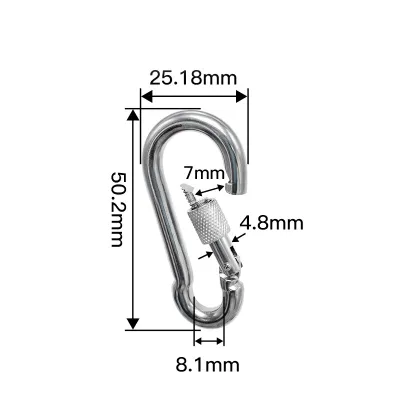
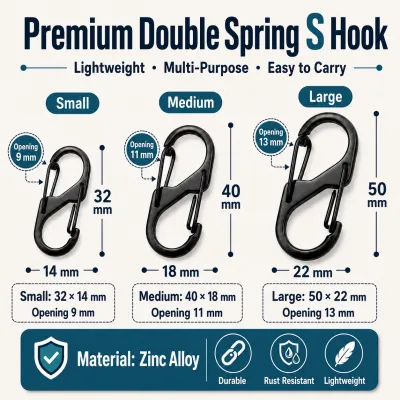
Prices are valid at publication and may change. Please refer to the product page for the latest price.
The foundational legal baseline for climbing gear in many global markets is the CE marking. This mark indicates that the product complies with the essential health and safety requirements of European Union Regulation (EU) 2016/425 on Personal Protective Equipment. When a carabiner is certified as PPE, it is subject to rigorous third-party testing by an independent notified body. This process ensures that the manufacturing process is consistent and that every production batch meets strict safety thresholds.
Closely tied to the CE mark is the European Norm standard EN 12275 (specifically for mountaineering equipment – connectors). This standard defines the exact physical and performance requirements for climbing carabiners. It categorizes connectors into specific types based on their intended application, such as:
- Type B (Basic): General-purpose connectors used in standard protection systems.
- Type H (HMS): Pear-shaped connectors designed specifically for belaying with a Munter hitch or belay device.
- Type K (Via Ferrata): Connectors designed for via ferrata systems, featuring a wider gate opening and higher strength requirements.
- Type T (Directional): Connectors designed to ensure loading occurs along a specific predetermined axis.
While the CE and EN standards are mandatory legal requirements for selling PPE in Europe and are widely respected globally, the UIAA 121 standard represents the voluntary pinnacle of climbing safety. Developed by the International Climbing and Mountaineering Federation (UIAA), these standards are created by climbers, for climbers. In many instances, UIAA standards require slightly more stringent testing parameters, higher safety margins, or different loading configurations than the baseline EN standards. When a climbing clip carries the UIAA safety label, it signifies that the manufacturer has gone beyond the legal minimum to meet the highest global benchmarks for mountain safety.
How to Physically Verify Certifications and Load Ratings
Before you trust any climbing clip with your life, you must physically inspect the body of the connector to verify its certifications and load ratings. This information is typically stamped, engraved, or permanently laser-etched onto the spine of the carabiner. If these markings are worn away, illegible, or missing entirely, the gear should be retired immediately.

When examining the spine of a certified climbing clip, you should expect to see several distinct markings:
- The CE Mark and Notified Body Number: Look for the letters "CE" followed by a four-digit number (e.g., CE 0082 or CE 0123). This four-digit code identifies the specific independent laboratory or notified body that audits the manufacturer's quality control systems.
- The EN Standard Number: The text "EN 12275" must be present to confirm that the clip has been certified specifically as a mountaineering connector.
- The UIAA Logo: If the gear is UIAA-certified, it will feature the stylized "UIAA" logo inside a circle or shield.
- The Manufacturer Name and Traceability Code: A reputable brand will always display its name or logo alongside a unique batch or serial number. This traceability code allows you to verify the exact production year and batch, which is critical for checking against product recalls.
In addition to certification marks, the spine will display three distinct strength ratings measured in kilonewtons (kN). One kilonewton represents approximately 100 kilograms of static force. You must understand how to read all three ratings:
- Major Axis Strength: Indicated by a vertical double-headed arrow, this represents the clip's strength when loaded along its longest dimension with the gate fully closed and locked. For a standard Type B carabiner, the minimum certified major axis strength is typically 20 kN.
- Minor Axis Strength: Indicated by a horizontal double-headed arrow, this represents the strength when loaded sideways across the gate. The minimum certified minor axis strength is significantly lower, often around 7 kN to 8 kN.
- Open Gate Strength: Indicated by an arrow pointing toward an open gate, this represents the strength of the clip if it is loaded while the gate is accidentally open. This rating is also low, typically between 7 kN and 9 kN.
Never rely on unbranded or generic clips purchased from unverified online marketplaces. Counterfeit gear often mimics the appearance of legitimate climbing brands but lacks the internal metallurgy and quality control required to withstand dynamic loads. Always cross-reference the physical markings on your clip with the manufacturer’s official technical specification sheets and user manuals.
Usage Boundaries: Preventing Loads That Bypass Certifications
Having a certified climbing clip is only half the battle; you must also use it within its designed parameters to maintain its certified strength. Certifications are granted based on ideal loading conditions. If you subject a carabiner to improper forces, it can fail at a fraction of its rated strength.
One of the most common and dangerous misuses is cross-loading. This occurs when the carabiner rotates in your system, causing the load to pull sideways across the minor axis rather than vertically along the major axis. Because minor axis strength is typically less than half of major axis strength, a severe dynamic fall can easily exceed this limit and cause the connector to snap. Similarly, tri-axial loading—where forces pull in three different directions simultaneously—distorts the metal frame and prevents the clip from distributing the load as intended.
To prevent these dangerous loading scenarios, you must understand the different locking mechanisms available and verify that they are fully engaged before weighting the system:
- Screwgate: A manual locking sleeve that you must physically screw closed. While highly reliable and resistant to freezing, they require manual vigilance and can vibrate open over time.
- Twistlock (2-Action): An automatic locking system that requires you to twist the sleeve and pull the gate open. It locks automatically when released but can be susceptible to rubbing open against ropes or rock.
- Ball-Lock or Tri-Lock (3-Action): These require three distinct movements to open (e.g., push a button, twist, and pull). They offer the highest level of security against accidental opening but can be more challenging to operate with one hand or while wearing gloves.
Another critical hazard is gate flutter and rope drag. Gate flutter occurs when the rapid vibration of a falling rope or a sudden strike against a rock face causes the gate to momentarily swing open due to inertia. If the carabiner is loaded at the exact millisecond the gate is open, it will fail at its lower open-gate strength. Rope drag can also physically rub against manual locking sleeves, unscrewing them and exposing the gate to accidental opening.
Always position your carabiners so that the gate faces away from the direction of travel, and ensure that ropes run smoothly across the spine rather than across the gate. Remember, no level of equipment certification can compensate for poor clipping technique, improper belaying, or a lack of basic safety training.
Inspection and Retirement: When to Stop Trusting Your Gear
No matter how high the initial load ratings or how prestigious the certifications, climbing clips do not last forever. Aluminum and steel are subject to mechanical wear, fatigue, and environmental degradation. You must establish a routine inspection process before and after every climbing session.
To perform a thorough visual and tactile inspection, follow these steps:
- Check the Gate Action: Open the gate fully and let it go. It should snap shut instantly and completely without sticking. If the gate is sluggish, sticks, or does not align perfectly with the nose, retire the clip immediately.
- Inspect the Locking Sleeve: Ensure the locking sleeve moves smoothly along its entire track. If it is gritty, stiff, or fails to lock securely, try cleaning it according to the manufacturer's instructions. If the issue persists, retire it.
- Look for Wear and Grooves: Inspect the areas where the rope runs. Deep grooves carved into the metal by dirty ropes can create sharp edges that can damage or cut your climbing rope. Many manufacturers specify a maximum wear depth (often 1 mm); if the groove exceeds this, the clip must be retired.
- Search for Corrosion and Pitting: In warm, high-humidity environments like Singapore, coastal salt air and sweat can accelerate corrosion. Look for white, powdery oxidation or deep pitting on aluminum, and red rust on steel pins or springs. Severe corrosion structurally weakens the metal.
- Inspect for Micro-Fractures and Gouges: Look for deep scratches, gouges, or dents. While microscopic internal fractures cannot be seen with the naked eye, severe impacts (such as dropping a carabiner from a significant height onto concrete or rock) can compromise the internal crystalline structure of the aluminum.
There are several strict retirement triggers where you must stop using a climbing clip immediately, regardless of its visual appearance:
- A Major Fall: If the clip was part of a system that arrested a severe, high-factor fall, it should be retired.
- Chemical Exposure: Exposure to harsh chemicals, battery acid, solvents, or strong cleaning agents can cause rapid, invisible degradation of the metal.
- Unknown History: Never use second-hand climbing gear. If you do not know the exact history of how a clip was used, stored, or maintained, you cannot trust it with your life.
- Lifespan Expiry: While metal components technically do not have a strict shelf-life expiration like soft goods (slings and harnesses), manufacturers typically recommend retiring metal gear after 10 years of moderate use, or sooner if used frequently in harsh environments.
When in doubt about the structural integrity of any life-support component, the safest decision is always to retire it. Destroy the retired gear physically—such as by cutting the gate with a hacksaw or crushing the body—to ensure that neither you nor anyone else can accidentally use it for climbing in the future.
Frequently Asked Questions (FAQ)
Can I use a general-purpose heavy duty carabiner for climbing?
No, you must never use general-purpose, industrial rigging, or hardware store carabiners for climbing. These utility clips lack the mandatory PPE certifications (CE, EN 12275, and UIAA) required for life support. They are designed and tested only for static load-bearing applications, such as securing cargo or hanging equipment. They are not engineered to handle the complex, dynamic forces generated during a climbing fall, nor are they tested for gate flutter, rope wear, or minor-axis loading. Using non-certified hardware for climbing is extremely dangerous and can result in catastrophic equipment failure.
Does a higher kN rating always mean a safer climbing clip?
No, a higher kilonewton (kN) rating does not automatically make a climbing clip safer in real-world scenarios. While a higher rating indicates greater static strength under laboratory conditions, it cannot compensate for improper usage, such as cross-loading, tri-axial loading, or climbing with an unlocked gate. A standard, properly certified carabiner rated at 22 kN that is used correctly is vastly safer than a 50 kN industrial steel clip that is loaded sideways or suffers from gate failure. Real-world safety depends on proper certification, correct clipping technique, and diligent gear maintenance rather than raw strength numbers on paper.

Community discussion
Share your experience or ask a question. Comments are reviewed before publication.