
When you are shopping for climbing gear, the term “heavy duty” is frequently thrown around by marketers to describe everything from tactical keychains to industrial utility hooks. However, in the high-stakes world of vertical sports, relying on marketing jargon rather than verified engineering standards can lead to catastrophic equipment failure. For any activity where your life depends on a piece of metal holding your weight during a fall, you must look for specific, internationally recognized safety certifications.
The primary safety certifications you should look for on climbing clips—correctly referred to as carabiners—are the CE mark (specifically conforming to the EN 12275 standard) and the UIAA safety label. These certifications guarantee that the equipment has undergone rigorous laboratory testing to withstand the extreme dynamic forces generated during a climbing fall. Whether you are scaling indoor routes in Singapore or tackling outdoor sport climbs, understanding these marks is the first and most critical step in selecting gear that will keep you safe.
Essential Safety Marks: CE, UIAA, and What They Mean
To make an informed decision, you must first understand that “heavy duty” is not a technical specification. A heavy-duty steel clip designed for securing cargo on a truck or hanging a hammock may look incredibly robust, but it is not engineered to handle the dynamic shock loads of human fall protection. True climbing gear is classified as Personal Protective Equipment (PPE) and is subject to strict legal and technical standards before it can be sold for life-support applications.
Products mentioned in this guide
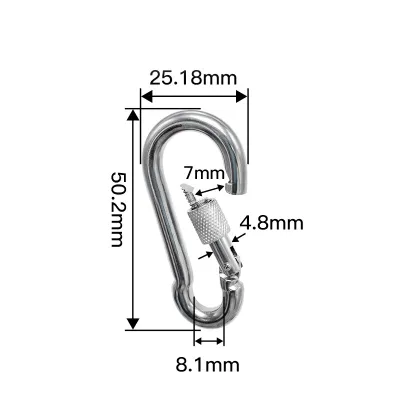
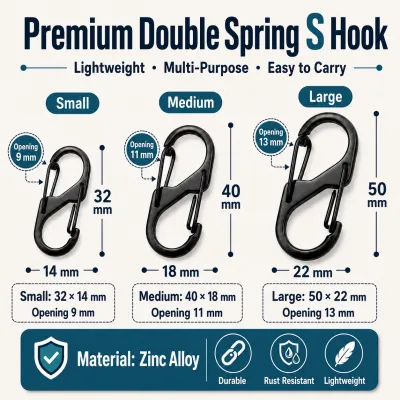
Prices are valid at publication and may change. Please refer to the product page for the latest price.
The CE mark (European Conformity) is the most common safety certification you will see on legitimate climbing equipment. For climbing carabiners, the relevant standard is EN 12275, which defines the safety requirements and test methods for connectors used in mountaineering, climbing, and related activities. When a manufacturer places the CE mark on a clip, they are declaring that the product complies with the essential health and safety requirements of European PPE regulations. This testing is conducted by an independent, third-party notified body, ensuring that the gear meets strict minimum strength thresholds and manufacturing quality controls.
In addition to the CE mark, the UIAA (International Climbing and Mountaineering Federation) safety label is the global gold standard for climbing equipment. The UIAA is an international organization made up of climbers, safety experts, and manufacturers who develop safety standards specifically tailored to the unique demands of mountain sports. The UIAA 121 standard governs climbing connectors and is often more stringent than the European EN standards. A UIAA safety label indicates that the gear has been tested in certified laboratories to meet these specialized requirements, offering an extra layer of safety and performance validation.
Relying on generic terms like “tactical,” “industrial strength,” or “military grade” when purchasing climbing clips is a dangerous mistake. These terms are unregulated in the consumer market and do not guarantee any level of safety for human fall arrest. When buying gear, always look for the physical engraving of both the CE and UIAA logos directly on the body of the clip, which serves as your proof that the item is certified for life-support use.
How to Read Load Ratings and Spot Counterfeits
Every certified climbing clip must feature permanent, legible markings stamped or laser-etched onto its spine. These markings are not decorative; they provide vital information about the clip’s strength and origin. When examining a carabiner, you should easily locate the manufacturer’s name or logo, the specific certification standards (such as EN 12275), the batch or serial number for traceability, and a series of numbers indicating the load ratings in kiloNewtons (kN).

A kiloNewton is a unit of force, where 1 kN is approximately equivalent to 100 kilograms of static force under gravity. Climbing clips are rated across three distinct loading axes, and these ratings are typically marked next to small icons representing each axis:
- Major Axis (Closed Gate): This is the strongest orientation of the clip, where the load runs parallel to the spine while the gate is fully closed and locked. For standard climbing use, a major axis rating of at least 20 kN to 24 kN is typical and required for safety.
- Minor Axis (Cross-Loaded): This occurs when the clip rotates and the force is applied sideways, pulling against the gate and the spine. Carabiners are significantly weaker in this direction, with certified ratings usually falling between 7 kN and 10 kN.
- Open Gate: If a fall occurs while the gate is open—either due to improper closure or "gate flutter" caused by rope vibration—the strength of the clip drops drastically. Open-gate ratings are typically between 7 kN and 9 kN.
To ensure your safety, you must cross-reference these stamped ratings with the manufacturer’s official technical documentation. Do not assume that a clip is safe simply because it has numbers etched onto it. Counterfeit manufacturers often stamp fake kN ratings and falsified CE logos onto substandard metal.
Spotting counterfeit or uncertified gear requires a keen eye and a healthy dose of skepticism. Genuine climbing gear is manufactured with high-precision hot- or cold-forging techniques, resulting in smooth finishes, uniform anodization, and flawless gate action. Counterfeit clips often exhibit rough edges, uneven surfaces, sluggish gate springs, or sloppy locking sleeves. Additionally, legitimate climbing gear will always be sold with a comprehensive, multilingual user manual detailing the batch numbers, certification bodies, and specific instructions for use. If a seller is offering “heavy-duty climbing clips” at a fraction of the price of established brands on unverified online marketplaces, it is highly likely a dangerous counterfeit.
The Dangers of Non-Climbing Clips and Common Misuses
The difference between a certified climbing carabiner and a standard hardware store clip lies in how they respond to dynamic energy. When a climber falls, the energy generated is dynamic, meaning it increases rapidly as gravity accelerates the body. Climbing-rated clips are engineered from high-grade aluminum alloys (like 7075 aircraft aluminum) or structural steel, designed to deform slightly under extreme loads to absorb energy rather than snapping. Non-climbing utility clips, often made of cast zinc or low-grade steel, are brittle and can fail catastrophically under a fraction of the force generated by a short fall.
Even if you are using a fully certified, high-quality climbing clip, improper use can quickly compromise its structural integrity. One of the most common and dangerous misuses is cross-loading. If a carabiner rotates in a bolt hanger or belay loop, the force is directed across the gate rather than along the spine, reducing its load capacity by more than half. Another hazard is tri-axial loading, which occurs when forces pull the clip in three different directions simultaneously, causing bending stresses that the frame was never designed to handle.
Nose hooking is another critical failure point that climbers must actively prevent. This happens when the nose of the carabiner catches on a hanger, rope, or webbing, preventing the gate from closing completely. In this position, any load applied is placed entirely on the weak nose hook rather than being distributed along the spine, often leading to immediate failure of the clip at very low forces. Similarly, allowing the spine or gate of a clip to rest directly against a sharp rock edge can introduce severe bending forces that can shear the metal during a fall.
To minimize these risks, you must match the specific type of clip to the task at hand. Locking carabiners, which require a manual or automatic action to lock the gate, are mandatory for critical connections such as belaying, rappelling, and building anchors. Non-locking carabiners are suitable for quickdraws used as intermediate protection, where speed of clipping is essential. However, no amount of certified equipment can replace proper training, experience, and sound judgment. Before heading to any climbing venue, ensure you have received professional instruction on how to correctly configure and manage your safety systems.
Inspection Checklist and When to Retire Your Gear
Climbing gear does not last forever, and regular inspections are vital to ensuring your safety. In warm, humid environments like Singapore, gear can be subjected to accelerated wear if stored incorrectly. Moisture, sweat, and salt air from coastal climbing trips can lead to corrosion and material degradation over time. Developing a strict pre-use and post-use inspection routine is an essential habit for every climber.
When inspecting your climbing clips, use the following checklist to identify potential issues:
- Gate Action: Open the gate fully and let it go. It should snap shut instantly and completely on its own. If the gate is sluggish, sticky, or fails to close, the internal spring may be damaged or dirty.
- Locking Mechanism: For locking clips, verify that the sleeve glides smoothly along the threads or rotates freely. It should lock securely without sticking or binding.
- Wear and Grooves: Inspect the areas where the rope runs through the basket of the clip. Over time, friction from dirty ropes can wear deep grooves into the metal. If a groove exceeds 1 mm in depth or has developed sharp edges, the clip must be retired immediately.
- Corrosion and Pitting: Look closely for any signs of rust on steel components or white, powdery oxidation on aluminum. Deep pitting or discoloration indicates chemical exposure or advanced corrosion, which severely weakens the metal.
There are certain conditions where you must stop using a clip immediately and retire it from service. If a carabiner is dropped from a significant height onto a hard surface—such as dropping it from a multi-pitch route onto concrete or rock—it must be retired. Even if there are no visible cracks on the surface, the impact can introduce micro-fractures deep within the metal structure that can fail unpredictably under tension.
Additionally, any exposure to harsh chemicals, such as battery acid, strong solvents, or corrosive cleaning agents, requires immediate retirement of the gear. If you have any doubt about the history of a clip—for example, if you find a discarded carabiner at a crag—never use it for life-support applications. When retiring a piece of gear, physically destroy it (such as cutting the gate with a hacksaw or bending it completely out of shape) to ensure that no one else can mistakenly use it in the future. Always consult the manufacturer’s specific retirement guidelines, as lifespan recommendations vary based on materials and frequency of use.
Frequently Asked Questions (FAQ)
Can I use a heavy-duty hardware store clip for climbing?
No, you must never use a hardware store or utility clip for climbing. These clips are designed for static loads, such as securing cargo or hanging equipment, and are not tested or certified to withstand the extreme dynamic forces of a human fall. Using non-certified hardware for climbing poses an immediate and severe risk of catastrophic gear failure and serious injury.
Do all climbing clips need to be locking?
No, not all climbing clips need to be locking, but they must be used appropriately for their intended function. Locking clips are mandatory for critical safety connections, including belaying, rappelling, personal tethers, and master points on anchors. Non-locking clips are typically used on quickdraws for intermediate protection, where quick and easy clipping is necessary, provided they are rigged correctly to prevent accidental opening.

Community discussion
Share your experience or ask a question. Comments are reviewed before publication.