
Elastic bands with hooks—commonly referred to as bungee cords or utility straps—do not meet any safety standards for climbing life-safety applications and must never be used to support human weight, secure climbers, or arrest falls. Because these elastic cords are designed solely for light utility and gear organization, they lack the structural integrity, predictable elongation, and certified load ratings required for high-risk vertical environments. For climbing safety, any load-bearing equipment must carry strict international certifications, leaving elastic bands to serve exclusively as non-critical organization tools well away from the active safety chain.
When preparing for an outdoor climb, understanding the limits of your equipment is a fundamental safety requirement. No amount of physical skill or climbing experience can compensate for gear failure at height. Substituting utility-grade items for certified climbing gear introduces catastrophic risks that can be easily avoided by adhering to established equipment standards. By learning how to distinguish between life-safety gear and organizational accessories, you can keep your crag setup efficient without compromising your personal safety.
The Critical Safety Boundary: Life Safety vs. Gear Organization
The physics of a climbing fall involve massive dynamic forces that require specialized equipment to manage safely. When a climber falls, the energy generated must be absorbed gradually to prevent severe impact forces on the body and the anchor points. Elastic bands with hooks are fundamentally incapable of managing these shock loads. Instead of absorbing energy predictably, elastic materials stretch excessively and unevenly, which can cause a falling climber to collide with ledges or the ground before the cord bottoming out.
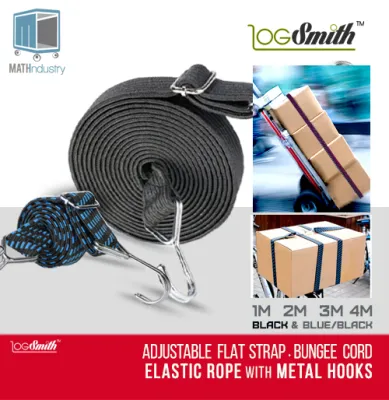
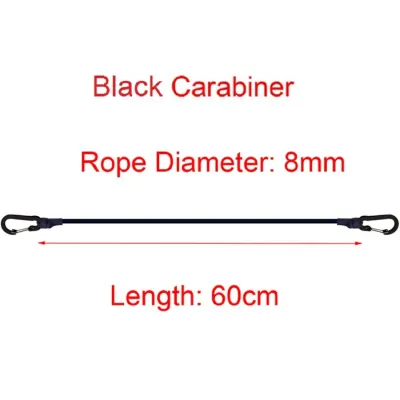
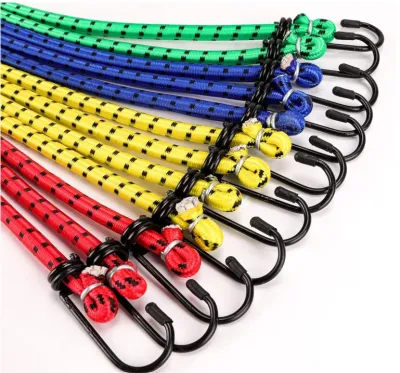
Products mentioned in this guide
![[Lifestylemart] Garter | Elastic Cord with 2 Hooks (Black)](https://img.lazcdn.com/g/p/fbf5caa45a328625d1bbb6edb628d562.png_400x400q80.png_.webp)
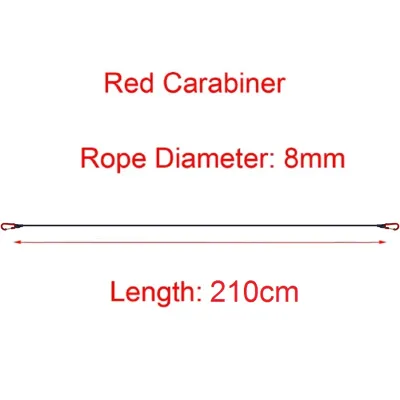
![Bungee Cord Strap With Hook Elastic Rope for Motorcycle Bicycle Luggage [Random Color]](https://img.lazcdn.com/g/p/9972ba5cd44bb877cb66970022e4d122.jpg_400x400q80.jpg_.webp)
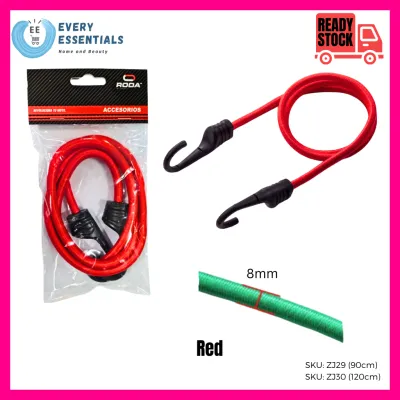
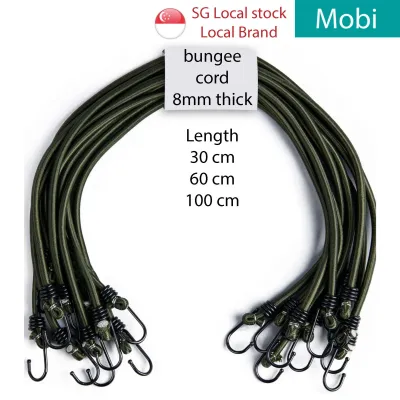
Prices are valid at publication and may change. Please refer to the product page for the latest price.
Furthermore, the stored energy in a highly tensioned elastic band presents a severe snap-back hazard. If an elastic cord is subjected to forces beyond its limit, the material can rupture, or the hook can slip from its anchor point. The resulting recoil sends the metal or plastic hook flying at extreme velocities, which can cause severe facial injuries, eye damage, or lacerations. In a high-angle environment, even a minor distraction or non-fatal injury from a recoiling hook can cause a climber to lose balance or drop critical gear.
Because of these unpredictable physical properties, recognized climbing safety bodies—such as the International Climbing and Mountaineering Federation (UIAA) and the European Committee for Standardization (CEN)—do not certify elastic bands for any life-safety applications. There are no approved testing protocols or safety standards that permit elastic cords to be used as personal anchors, quickdraws, or belay components. Their structural behavior under dynamic tension makes them entirely unsuitable for holding human weight.
Consequently, the only acceptable use for elastic bands with hooks in a climbing context is gear organization and storage. You can safely use these utility straps to bundle trekking poles, compress a sleeping pad, secure a rain cover over your pack, or keep non-essential camp items organized at the base of the crag. When using them for these secondary tasks, always ensure they are rigged in a manner that keeps them completely independent of your harness, rope, anchors, and active climbing line.
Recognized Safety Standards for Actual Climbing Load-Bearing Gear
To ensure your safety on the rock, any gear that forms part of your safety chain must carry specific, verifiable certifications. Genuine climbing equipment is subjected to rigorous laboratory testing to ensure it can withstand the extreme forces encountered during a fall. When purchasing slings, lanyards, webbings, or connectors, look for the CE (Conformité Européenne) mark and the UIAA safety label stamped directly on the product or its documentation. These markings indicate compliance with strict European standards (EN) and UIAA safety requirements.

Unlike utility elastic bands, certified climbing slings and personal anchor systems are manufactured from high-strength, low-stretch textiles such as nylon or Ultra-High-Molecular-Weight Polyethylene (UHMWPE, commonly known as Dyneema). These materials are woven to provide predictable static strength and highly controlled elongation. Under standard certifications like EN 566 for climbing slings, these textile components must meet a minimum breaking strength of 22 kilonewtons (kN), which is roughly equivalent to supporting 2,200 kilograms of static weight.
Similarly, climbing connectors and carabiners must comply with standards such as EN 12275 and UIAA 121. These standards dictate the minimum gate-open, gate-closed, and minor-axis strengths of the connector. A certified climbing carabiner will always have its load ratings clearly engraved on its spine, typically showing a major-axis strength of at least 20 kN. These rigid metal gates and locking mechanisms prevent accidental opening under load, a safety feature completely absent from standard utility hooks.
Before heading to the crag, verify that every load-bearing component in your kit displays these clear markings. If a piece of hardware lacks a stamped kN rating, a CE mark, or a UIAA label, it must be treated as utility-grade gear only. Never assume a metal hook or carabiner-style clip is safe for climbing simply because it looks robust; without official certification, it is not rated to protect human life.
Load Ratings and Safe Usage for Gear Organization
While elastic bands with hooks are excluded from life-safety systems, they remain highly useful for securing and hauling non-critical gear. When selecting utility straps for your pack, it is important to understand how manufacturers rate these items. Most utility cords carry a Working Load Limit (WLL) rather than a breaking strength. The WLL represents the maximum weight the manufacturer deems safe for regular, static use, and it is typically a small fraction of the force required to snap the cord.
When evaluating an elastic band for gear organization, pay close attention to the hook mechanism. Cheap, open-wire hooks can easily slip off gear loops or pack straps when the cord vibrates or shifts during a hike. For outdoor use, prioritize utility straps that feature impact-resistant plastic hooks, rubber-coated steel hooks, or integrated safety gates. Hooks with spring-loaded retention clips or carabiner-style gates are far less likely to detach accidentally, keeping your gear secure over rough terrain.
Safe rigging practices are essential even when securing lightweight items. Never over-stretch an elastic band to its absolute physical limit, as this accelerates material fatigue and increases the risk of sudden failure. When securing heavy backpacks or hauling non-essential gear up a low-angle slope, use multiple independent straps rather than relying on a single cord. This redundancy ensures that if one strap fails or slips, your gear will not fall onto climbers or belayers waiting below.
Environmental conditions also play a significant role in how utility elastic bands perform. Prolonged exposure to direct sunlight, moisture, and extreme temperatures can rapidly degrade both the elastic core and the outer protective sheath. In cold weather, plastic hooks can become brittle and prone to snapping under tension, while rubber cores may lose their elasticity. Always adjust your gear storage plans to account for these environmental factors, and avoid rigging heavy items overhead where a failure could cause injury.
Inspection, Maintenance, and Retirement Criteria
To prevent unexpected gear failure in the field, establish a routine inspection process for all utility straps and elastic bands before every outdoor trip. Begin with a thorough visual inspection of the elastic cord. Look for signs of UV degradation, such as color fading, cracking, or stiffness in the outer sheath. Check the entire length of the cord for fraying, cuts, or areas where the inner rubber strands are exposed through the protective textile cover.
Next, perform a tactile check by running the cord through your hands while applying light tension. Feel for any inconsistent thickness, soft spots, or internal lumps, which indicate that the inner rubber core has snapped or degraded locally. Pull the band to its comfortable limit to verify that it still retracts fully and holds its shape; if the cord remains stretched out or feels completely slack, its structural integrity is compromised.
Examine the hooks carefully for any signs of physical damage. For metal hooks, check for rust, corrosion, bending, or hairline fractures, particularly at the point where the hook connects to the elastic cord. For plastic hooks or those with integrated safety gates, test the spring mechanism to ensure it snaps shut smoothly and does not stick. Any deformation in the shape of the hook is a clear indicator of overloading and requires immediate replacement.
Establish a strict retirement policy for your utility gear. If an elastic band exhibits sheath fraying, core damage, hook deformation, or a permanent loss of elasticity, retire it immediately. To prevent accidental reuse by yourself or someone else, cut the degraded elastic cord into small, unusable pieces before throwing it away. Replacing a worn utility strap is a minor expense that prevents gear loss and maintains a safe, organized climbing environment.
Frequently Asked Questions (FAQ)
Can I use an elastic band with hooks as a personal anchor or quickdraw?
No, you must never use an elastic band with hooks as a personal anchor, quickdraw, or any other component of your climbing safety chain. Elastic materials cannot support human weight and are incapable of absorbing the dynamic forces generated during a climbing fall. Using an unrated utility cord in this manner carries an extremely high risk of catastrophic failure, snap-back injuries, and fatal falls. For all personal anchoring and protection needs, use only certified climbing slings, lanyards, and locking carabiners that carry UIAA and CE certifications.
How do I know if a hook is rated for climbing?
A hook or connector is rated for climbing only if it features explicit, permanently stamped markings indicating compliance with international safety standards. Look for the CE mark, the UIAA label, and a specific load rating measured in kilonewtons (such as 20 kN or higher) engraved on the spine of the hardware. Climbing-rated connectors are almost exclusively locking or non-locking carabiners made from high-strength aluminum or steel. Standard utility hooks, open wire hooks, and plastic clips found on elastic bands lack these markings, do not undergo life-safety testing, and must never be used for climbing support.

Community discussion
Share your experience or ask a question. Comments are reviewed before publication.