
Selecting the right trolling motor for a kayak or stand-up paddleboard requires balancing thrust, shaft length, and voltage against your vessel’s total weight and mounting height. A motor that is too small will struggle against wind and currents, while an oversized motor adds unnecessary weight and drains batteries rapidly.
Before modifying your watercraft, remember that adding a motor changes its classification in many jurisdictions. Motorized kayaks are often subject to local registration and safety regulations. Furthermore, equipment cannot replace proper training, safety gear, or sound judgment; always check weather forecasts and water conditions before heading out, and ensure you have a paddle as a backup.
Evaluating Thrust: Matching Power to Your Hull and Load
Thrust is the measure of a trolling motor’s pushing power, typically expressed in pounds. Unlike outboard motors rated in horsepower, trolling motors are designed to move a vessel at slow, controlled speeds rather than high velocities. The primary goal is to maintain steady propulsion and maneuverability rather than achieving high top speeds.
Products mentioned in this guide
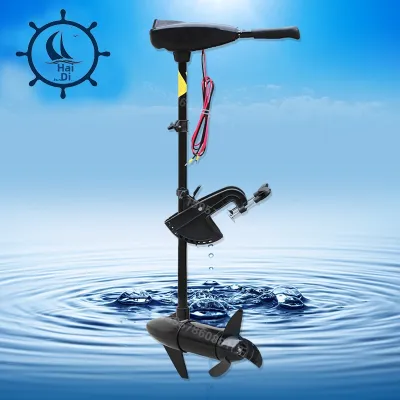
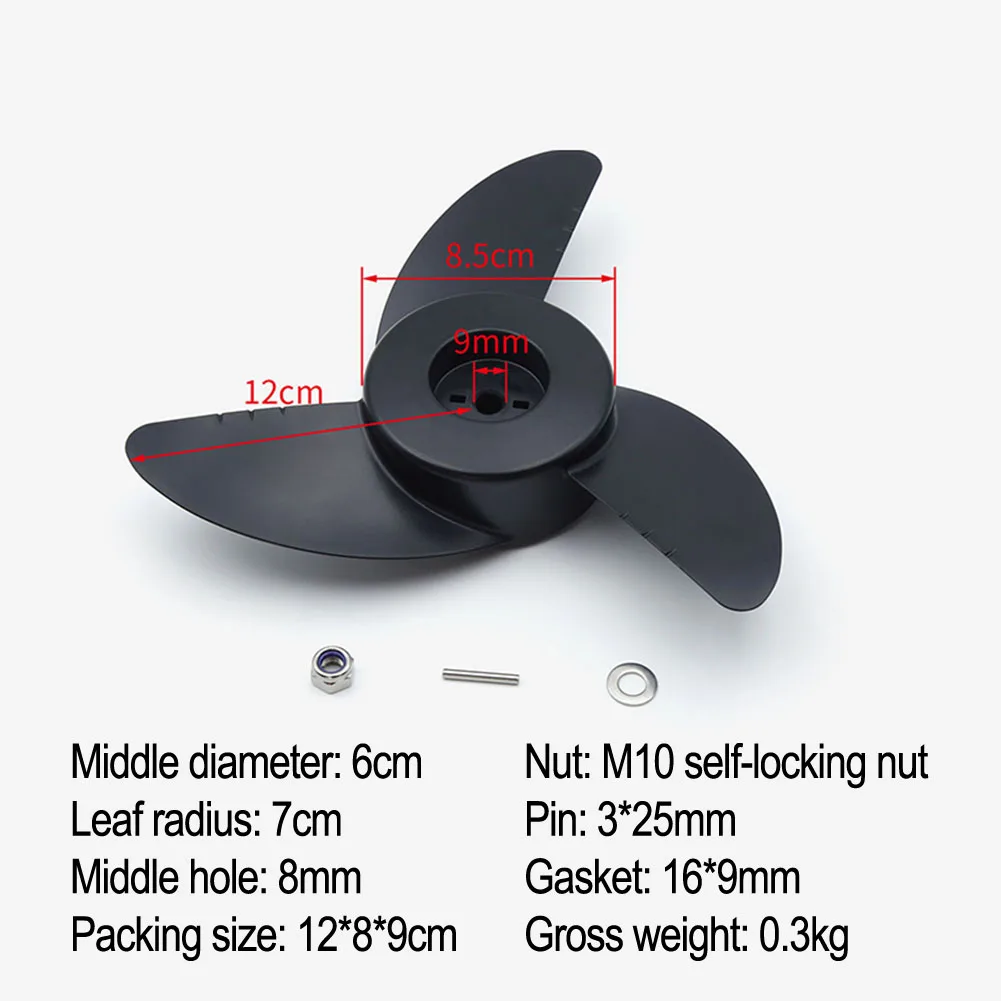
Prices are valid at publication and may change. Please refer to the product page for the latest price.
To determine the required thrust, you must calculate the maximum total weight of your fully loaded watercraft. This calculation must include the dry weight of the kayak or paddleboard hull, the weight of the motor itself, the battery, all fishing gear, and the maximum weight of the passengers. Underestimating this total weight can lead to an underpowered setup that struggles in active water.
While general guidelines often suggest a baseline of two pounds of thrust for every 100 pounds of fully loaded weight, you should always consult the manufacturer’s specific thrust recommendation charts. These charts account for the unique drag profiles of different hull designs. Relying on a standardized formula without checking the manufacturer’s specifications can lead to purchasing an incompatible motor.
Your typical paddling environment also dictates your thrust needs. If you plan to navigate coastal waters, tidal currents, or windy reservoirs, you will need more power to maintain control and safety. For calm, sheltered inland lakes, sticking closer to the recommended baseline prevents excessive battery drain and keeps the overall setup lighter and easier to transport.
Measuring Shaft Length for Kayaks and Paddleboards
Shaft length is the distance from the motor’s mounting base to the top of the propeller housing. Choosing the correct length ensures the propeller operates efficiently underwater without riding too high or striking the bottom. A shaft that is too short will cause the propeller to draw in air, while a shaft that is too long increases drag and draft.

To establish a measurement framework, place your kayak or paddleboard in the water with your typical load. Measure the vertical distance from the intended mounting point—whether a transom mount, bow plate, or side bracket—down to the waterline. This measurement serves as the foundation for your shaft length calculation.
Once you have the mount-to-waterline distance, you must add the manufacturer’s minimum required submersion depth. Typically, the top of the propeller housing must sit several inches below the water’s surface to prevent cavitation, which occurs when the propeller sucks air from the surface and loses thrust. Adding this required depth to your initial measurement gives you the minimum necessary shaft length.
Kayaks and stand-up paddleboards have different mounting heights and stability profiles. Kayaks generally sit lower to the water, requiring shorter shafts, while paddleboards sit higher and are more sensitive to the rider’s posture. Verify the specific bracket and hull specifications of your vessel to ensure the motor’s height-adjustment collar can accommodate these differences.
Planning Voltage and Battery Setup for Small Watercraft
Trolling motors generally operate on 12-volt, 24-volt, or 36-volt systems. For small watercraft like kayaks and paddleboards, 12-volt systems are the standard choice due to strict space and weight limitations. Higher-voltage systems require multiple batteries wired in series, which is rarely practical on a compact hull.
Higher-thrust motors often demand higher voltage, which significantly increases battery weight and footprint. Adding multiple heavy batteries to a kayak can quickly exceed the manufacturer’s maximum weight capacity, compromise stability, and leave little room for other gear. Keeping your setup to a single 12-volt battery helps maintain the vessel’s natural buoyancy and handling.
When planning your battery setup, verify the motor’s exact voltage and amperage requirements. Compare the weight and volume differences between battery chemistries, such as lithium iron phosphate (LiFePO4) and absorbed glass mat (AGM) lead-acid. Lithium batteries are significantly lighter and offer a more consistent voltage discharge, but they require a compatible charger and a higher initial investment. Always ensure the total rigged weight remains within the vessel’s safe capacity limits.
Verifying Mounting Compatibility Before You Buy
Before purchasing a trolling motor, inspect your kayak or paddleboard to determine how the motor will attach. Some modern fishing kayaks come with built-in transom mounts or bow plates, while others require aftermarket brackets that clamp onto the gunwales or attach to accessory tracks.
Verify the maximum weight and torque limits of both your vessel and the mounting bracket. A mount that is too weak can flex or fail under the torque of the motor, potentially damaging the hull or causing the motor to fall into the water. Ensure all hardware is rated for marine use to prevent corrosion.
Consider how you will steer and control the motor. Tiller handles require you to reach behind or beside your seat, which can be awkward in a narrow kayak. Foot pedals or wireless hand remotes offer hands-free operation but require additional deck space and power connections. Choose a control style that suits your physical comfort and the layout of your watercraft.
Always consult the official user manuals for your specific watercraft, mounting bracket, and trolling motor before finalizing your purchase. Ensuring all components are rated to work together is essential for maintaining your warranties and ensuring safe operation on the water.
Frequently Asked Questions (FAQ)
Can I use a trolling motor with too much thrust on a kayak?
Using a motor with excessive thrust on a small kayak is generally inefficient. While it might seem like a way to increase speed, kayak hulls have physical speed limits dictated by their design, and extra thrust will not override these limits. Instead, an oversized motor will drain your battery much faster, add unnecessary weight, and make precise maneuvering at low speeds more difficult.
Does a longer shaft length improve performance on a paddleboard?
No, a longer shaft does not improve speed or thrust. The shaft only needs to be long enough to keep the propeller fully submerged at the manufacturer’s recommended depth. An excessively long shaft adds unnecessary weight, increases the leverage and stress on your mounting bracket, and makes it much easier to strike underwater rocks, sandbars, or vegetation in shallow water.

Community discussion
Share your experience or ask a question. Comments are reviewed before publication.