
To fit a treadmill into a Housing & Development Board (HDB) flat without overcrowding your living area, you must prioritize a machine’s folded footprint, its active running deck dimensions, and the necessary safety clearances. While a compact treadmill offers an excellent way to maintain a cardio routine at home, selecting one requires a systematic evaluation of your physical space, your running style, and the mechanical design of the equipment. Balancing these factors ensures you can enjoy convenient home workouts without turning your living room or bedroom into an unusable obstacle course.
Measuring Your HDB Space for a Treadmill
Before browsing online marketplaces or visiting showrooms, you must establish the exact physical boundaries of your workout area. A common mistake is measuring only the static footprint of the treadmill. In reality, you must account for safety clearance: manufacturers typically recommend leaving at least two meters of clear space behind the running belt and at least half a meter on both sides to prevent injury in the event of a slip or fall.
Next, calculate your vertical clearance. When you run, your body rises, and if your treadmill has an incline feature, the deck itself will elevate several inches off the floor. To avoid head-clearance issues, add your height to the maximum deck height of the treadmill, plus an extra 15 to 20 centimeters of buffer space, and compare this total to your HDB ceiling height.
Products mentioned in this guide
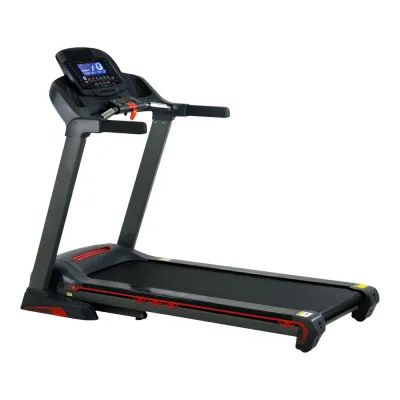
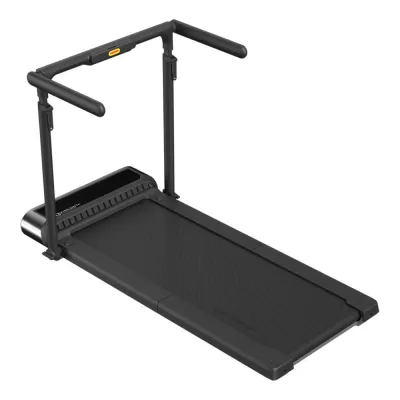
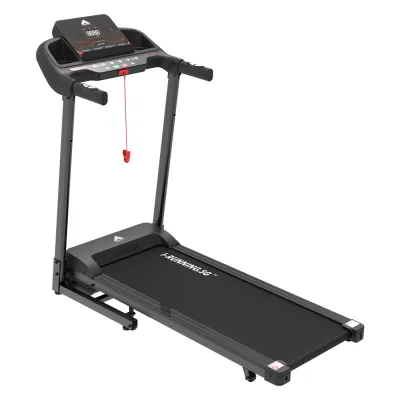
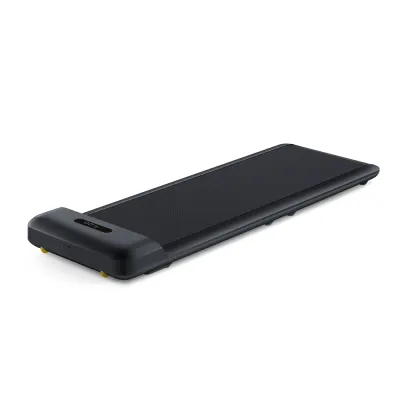
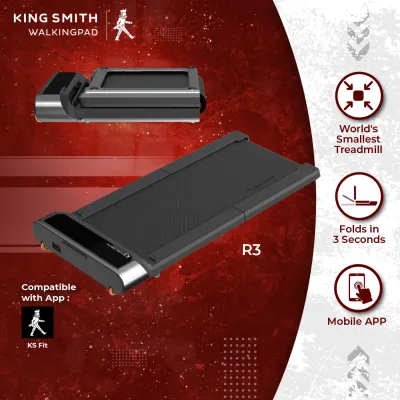
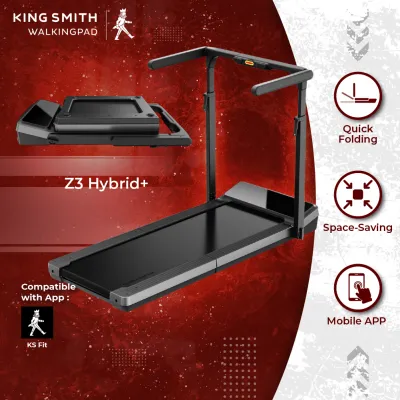
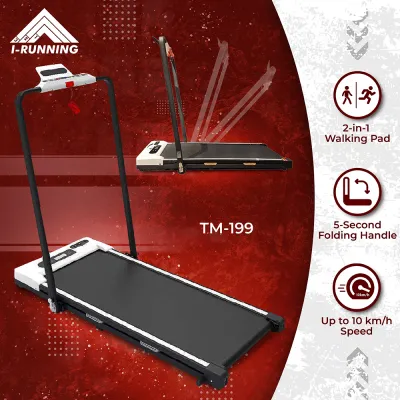
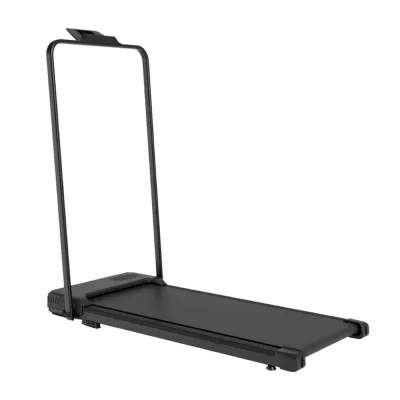
Prices are valid at publication and may change. Please refer to the product page for the latest price.
Finally, map out the delivery route. HDB corridors, lift doors, and unit entrance frames can be surprisingly narrow, especially in older estates. Measure the width of your main door, bedroom doors, and any tight corners in your hallway. Compare these measurements against the boxed dimensions of the treadmill to ensure the delivery team can safely transport the machine into your designated room without damaging your walls or the equipment itself.
Evaluating Foldable and Compact Treadmill Designs
Foldable treadmills generally fall into two design categories: traditional fold-up decks and flat-folding space-savers. Traditional models fold the running deck upward toward the console at an angle, which reduces the floor footprint but still leaves a substantial vertical structure. Flat-folding designs, on the other hand, allow the console and handrails to fold completely flat against the deck, enabling you to slide the unit under a bed or stand it upright against a wall. Choosing between these depends heavily on whether you plan to leave the machine in a dedicated corner or store it completely out of sight after every session.

The ease of folding and moving the machine is another critical factor. Look for models equipped with hydraulic assist mechanisms, often called soft-drop systems, which help support the weight of the deck during folding and unfolding. This feature prevents the heavy deck from slamming onto your floor and reduces the physical strain on your back. Additionally, verify the configuration of the transport wheels; some models only roll forward and backward, while others feature multi-directional wheels that make maneuvering around tight HDB furniture layouts much easier.
However, compact designs always involve structural trade-offs. A shorter and narrower running belt reduces the machine’s overall footprint, but it also limits your stride length. If you are taller or plan to run at higher speeds, a narrow belt (under 42 centimeters wide) or a short deck (under 120 centimeters long) can feel restrictive and increase the risk of stepping off the side of the belt. For walking or light jogging, a compact deck is usually sufficient, but active runners must carefully weigh space savings against the safety of a spacious running surface.
Assessing Compact Brands and iRunning Treadmill Options
When evaluating compact brands, such as iRunning treadmills, it is essential to verify the manufacturer’s specifications against your actual home setup. Do not rely solely on promotional images that depict treadmills in spacious, minimalist rooms. Instead, request the exact folded and unfolded dimensions, and physically mark those dimensions on your floor using masking tape to visualize how much space the machine will occupy during use and storage.
Beyond physical size, pay close attention to the motor’s continuous horsepower (CHP) and the maximum user weight capacity. Compact and budget-friendly treadmills often utilize smaller motors with lower CHP ratings, which may struggle under heavy, high-speed usage or longer running sessions. Ensure the motor is rated appropriately for your intended activity—typically at least 1.5 to 2.0 CHP for regular jogging—and confirm that your body weight falls safely within the manufacturer’s certified weight limit to prevent premature motor wear.
Lastly, consider the practicalities of ownership in Singapore. Before purchasing from an online retailer or local distributor, check the warranty terms, specifically looking at coverage for the motor, frame, and labor. Confirm whether the seller provides professional assembly services, as incorrect self-assembly can lead to belt misalignment or structural instability. Reliable after-sales support and readily available replacement parts are crucial for ensuring your treadmill remains operational and safe over the long term.
Setup, Safety, and Maintenance in Small Spaces
Operating a treadmill in a high-density HDB block requires consideration for both your equipment and your neighbors. The impact of running creates low-frequency vibrations that travel easily through concrete floors. To mitigate this, place a high-density rubber vibration-dampening mat beneath the treadmill. This mat not only protects your flooring from scratches and indentation but also significantly reduces the noise transmitted to the residents living downstairs.
Proper placement is also vital for the machine’s electrical and mechanical health. Avoid squeezing the treadmill into tight, unventilated closets or corners where airflow is restricted. The motor housing requires adequate ventilation to dissipate heat during operation, especially in Singapore’s warm and humid climate. If you run the machine in an air-conditioned room, ensure there is still sufficient clearance around the motor cover to prevent overheating and electrical faults.
Regular maintenance is the key to extending the lifespan of a compact treadmill. Because smaller machines have less powerful motors, any added friction can cause the system to overheat. Establish a routine to check the belt tension and alignment weekly, ensuring the running belt remains centered. Lubricate the deck beneath the belt according to the manufacturer’s schedule—typically every few months or after a set number of hours of use—using only the recommended silicone lubricant to keep friction to a minimum.
Frequently Asked Questions (FAQ)
Can I keep a treadmill permanently folded in my HDB flat?
Yes, you can store a treadmill in its folded position, but you must take specific safety precautions. Always ensure the safety locking pin or latch is fully engaged to prevent the deck from accidentally dropping. This is especially critical in households with children or pets, as an unsecured deck poses a severe crushing hazard. If your treadmill uses a hydraulic cylinder for soft-dropping, inspect the cylinder periodically for fluid leaks or loss of pressure, as a worn cylinder may fail to hold the deck securely or drop too quickly when released.
Do under-desk or walking pad treadmills work for small HDB bedrooms?
Under-desk walking pads are highly effective space-saving alternatives for light activity, but they have distinct limitations. These units typically lack handrails and have lower speed limits, making them unsuitable for running or high-intensity workouts. Because they are designed primarily for walking while working, they require a stable desk or wall nearby to help you maintain balance if you lose your footing. If your primary fitness goal is running, a traditional foldable treadmill with sturdy handrails and a higher-powered motor remains the safer and more appropriate choice.

Community discussion
Share your experience or ask a question. Comments are reviewed before publication.