
Determining whether the Spigen running vest offers better breathability than competing brands depends on evaluating specific fabric weaves, mesh panel placements, and back ventilation designs rather than relying on a single industry-standard metric. While some runners prioritize ultra-lightweight mesh for high-humidity environments like Singapore, others require structured panels to support hydration flasks without sagging. The ideal choice hinges on your individual sweat rate, typical running intensity, and how the vest interacts with your hydration gear, guiding you to inspect observable design traits rather than marketing claims.
Understanding Breathability and Ventilation in Running Vests
To evaluate any running vest, you must first distinguish between breathability and physical ventilation. Breathability refers to moisture vapor transmission, which is the ability of a fabric to let sweat vapor escape from the body through the textile fibers. Ventilation, on the other hand, relies on physical openings, loose weaves, or mesh panels that allow ambient air to flow directly across your skin or base layer.
Fabric weight, yarn type, and weave density dictate how effectively a garment dissipates heat during continuous movement. Synthetic fibers like polyester and nylon are naturally hydrophobic, meaning they resist absorbing water and instead pull moisture away from the skin. However, if the weave is too dense or the fabric is too heavy, heat becomes trapped, raising your core temperature and increasing sweat production.
Products mentioned in this guide
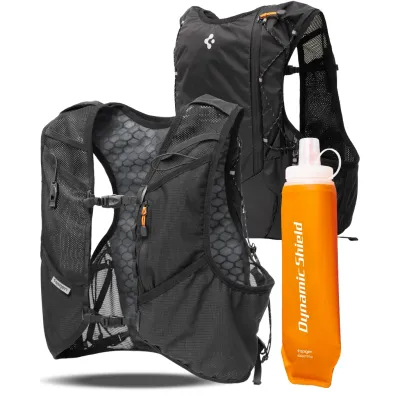
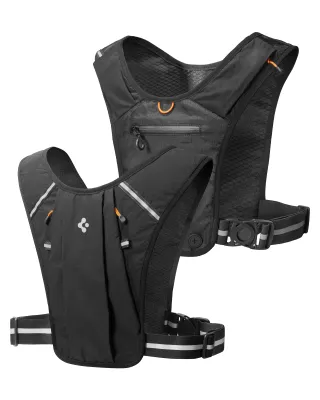
![SPIGEN Dynamic Shield [A720 Running Vest]Quick-Release Reflective Running Vest with 6.9” Phone Pocket & Multi-Storage Shoulders](https://img.lazcdn.com/g/ff/kf/S621ec4c8460e4049920f3a5f0766318bH.jpg_400x400q80.jpg_.webp)
Prices are valid at publication and may change. Please refer to the product page for the latest price.
Garment fit also plays a critical role in air circulation and sweat evaporation. A vest that sits flush against your torso can wick moisture efficiently, but it may restrict the physical airflow needed for rapid cooling. Conversely, a looser fit allows air to circulate underneath the fabric, but it can lead to friction, chafing, and excessive bounce when carrying hydration flasks or personal items.
Inspecting the Spigen Running Vest for Airflow Features
When evaluating a Spigen running vest, start by checking the material composition label to identify the ratio of synthetic fibers. Look for a high percentage of polyester or nylon blended with a small amount of elastane, which provides the necessary stretch. A higher elastane content can sometimes make a fabric feel warmer, so verifying the exact blend helps you gauge the inherent warmth of the material.

Next, map the placement and total surface area of the mesh panels. High-heat zones such as the upper back, underarms, and sides require open-mesh structures to facilitate rapid heat dissipation. Examine whether the Spigen vest utilizes a fine, tightly woven mesh or a wider, more open honeycomb pattern, as larger pores naturally allow more air to pass through during a run.
Assess the back panel structure carefully, especially if you plan to carry a hydration bladder or water bottles. Some vests feature a 3D spacer mesh that creates a physical gap between your back and the gear, which helps maintain airflow even when the vest is fully loaded. If the back panel consists of flat, solid fabric, a loaded bladder will press directly against your spine, blocking ventilation and trapping sweat.
Finally, look for any specific cooling treatments or proprietary fabric technologies listed on the product tags. Manufacturers often apply finishes designed to accelerate moisture dispersion or provide a temporary cooling sensation upon contact with sweat. Inspecting these details allows you to verify whether the vest relies on physical construction or chemical treatments for its thermal regulation.
Comparing Breathability Features Across Running Brands
When comparing the Spigen vest against alternative running apparel brands, look closely at standard moisture-wicking constructions versus specialized cooling yarns. Some premium brands incorporate mineral-infused fibers or phase-change materials designed to actively absorb and dissipate body heat. While these technologies sound promising, their real-world effectiveness often depends on the ambient humidity and your running speed.
Construction methods also vary significantly across brands, with some utilizing laser-cut perforations and bonded seams instead of traditional stitched panels. Laser-cut holes provide targeted ventilation in high-sweat areas without compromising the structural integrity of the fabric. Bonded seams reduce bulk and minimize the friction that can trap heat and moisture against your skin.
Analyze the back ventilation systems of competing models, contrasting suspended mesh designs against direct-contact fabrics. Suspended mesh systems use a lightweight frame or tensioned fabric to keep the main body of the vest off your back, creating a continuous air channel. While highly effective for cooling, these systems can add weight and change how the vest balances its load compared to a simpler, direct-contact design.
You must also consider the trade-off between ultra-lightweight, highly breathable fabrics and the durability required for your specific running routes. Extremely thin mesh panels excel at keeping you cool, but they are more susceptible to snagging on branches during trail runs or wearing down under the friction of heavy gear straps. A slightly heavier, more durable weave may be necessary if you regularly carry full hydration flasks and trail accessories.
Matching Vest Design to Your Sweat Rate and Climate
In hot and highly humid climates, such as Singapore, maximizing physical ventilation is crucial to prevent your gear from becoming waterlogged. High humidity slows down sweat evaporation, meaning you need maximum mesh coverage and loose-weave fabrics that allow even the slightest breeze to reach your skin. In these conditions, a vest with solid fabric panels will quickly saturate, adding unnecessary weight and causing discomfort.
Your running intensity also dictates the level of ventilation you require. High-intensity interval training or speed workouts generate rapid spikes in body temperature, demanding immediate heat dissipation and fast-drying fabrics. For easy, long-distance endurance runs, a steady, moderate level of airflow is usually sufficient, allowing you to prioritize storage capacity and load stability over extreme breathability.
Do not overlook how your base layer interacts with your running vest. Wearing a thick or poorly wicking cotton t-shirt under a highly breathable vest will completely negate the vest’s ventilation features. To achieve optimal thermal comfort, pair your vest with a lightweight, synthetic technical shirt that actively transfers moisture to the outer layer, where the vest’s mesh panels can facilitate evaporation.
Decision Framework: Spigen vs. Alternative Brands
Choose the Spigen running vest if its specific mesh layout, fabric weight, and gear-carrying structure align with your verified sweat profile and route requirements. It is an excellent option if you prefer a streamlined, lightweight fit that keeps essential items secure without the bulk of heavy suspension systems. This design works well for runners who prioritize simplicity and targeted ventilation in key heat zones.
Choose alternative brands if you require specialized back-suspension systems, specific proprietary cooling fabrics, or a different fit profile not offered by the Spigen model. If your runs involve carrying heavy hydration bladders over long distances in extreme heat, you may benefit from a brand that specializes in suspended mesh back panels or highly technical, laser-perforated fabrics designed specifically for trail running.
Before making your final choice, verify the fit and performance by checking the retailer’s return policy. Test the vest at home by loading it with your typical running gear, flasks, and base layers to assess how it sits against your body. Walk or jog in place to check for potential chafing points and to ensure that the fabric allows sufficient airflow when fully packed.
Frequently Asked Questions (FAQ)
Does a tighter running vest reduce breathability?
A tighter running vest can improve moisture wicking by keeping the technical fabric in direct contact with your skin, but it may reduce overall physical ventilation. When a vest is highly compressed, it limits the space for air to circulate underneath the material, which can trap heat in high-humidity environments. Finding a balance is key; the vest should be snug enough to prevent bouncing and chafing, yet loose enough to allow natural air movement through the mesh panels.
How should I wash a running vest to maintain its breathability?
To maintain the breathability of your running vest, always check the specific care label on the garment before washing. Avoid using fabric softeners, as they leave a thin, waxy coating on synthetic fibers that clogs the fabric’s pores and severely limits its moisture-wicking capabilities. Wash the vest using a mild detergent on a gentle cycle, and hang it to air dry away from direct heat to preserve the elasticity and structure of the mesh panels.

Community discussion
Share your experience or ask a question. Comments are reviewed before publication.