
Selecting the right dumbbell clamp is a critical decision that directly impacts both the safety of your workouts and the efficiency of your training flow. The ideal mechanism depends on your specific equipment, your lifting style, and how frequently you adjust your weights. While some lifters prioritize the absolute mechanical security of a threaded collar, others require the rapid transition speeds offered by spring or lever-action clamps.
In home gym environments, particularly in space-constrained settings like Singapore apartments, securing your weight plates is not just about personal safety; it is also about protecting your flooring and minimizing disruptive noise. A single dropped plate due to a failing collar can cause costly damage to tiles or vinyl. Understanding how each clamp type operates under load will help you choose the best fit for your strength routine.
Understanding the Three Main Dumbbell Clamp Mechanisms
To make an informed choice, you must first understand the physical design and basic operation of the three primary collar types available on the market today. Each utilizes a distinct mechanical principle to keep weight plates from sliding off the sleeve.
Products mentioned in this guide
Prices are valid at publication and may change. Please refer to the product page for the latest price.
Spinlock collars, also known as threaded collars, rely on a simple nut-and-bolt mechanism. These collars are designed exclusively for threaded dumbbell or barbell handles. The collar itself is a heavy textured nut that you manually spin down the threaded sleeve until it flushes tightly against the weight plates. Many spinlock collars feature a built-in rubber O-ring on the inside face to help dampen vibration and prevent the nut from backing off during use.
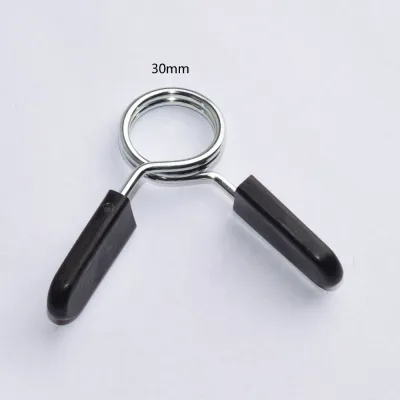
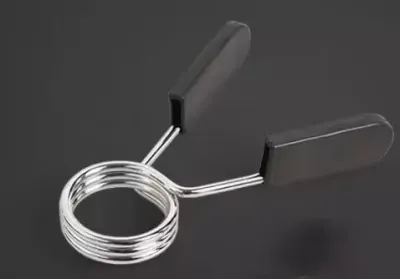
Spring collars consist of a continuous metal coil, typically made of spring steel, with two angled handles. Squeezing these handles together expands the inner diameter of the coil, allowing you to slide the collar onto a smooth barbell or dumbbell sleeve. When you release the handles, the steel contracts, relying entirely on outward tension and the resulting friction to grip the metal sleeve.
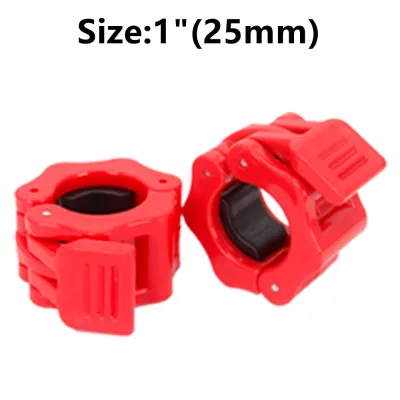
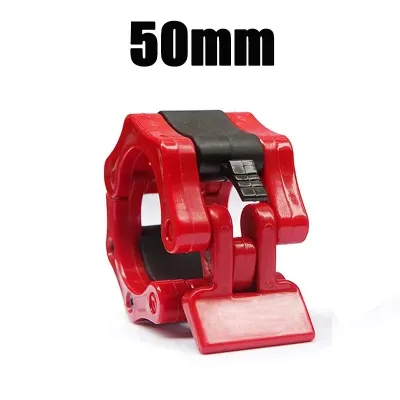
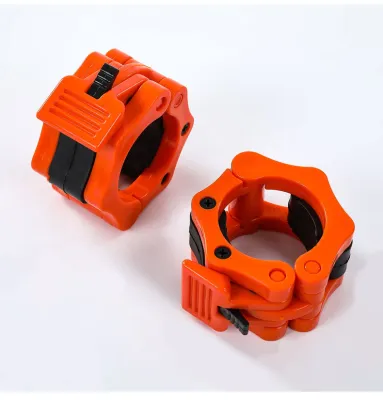
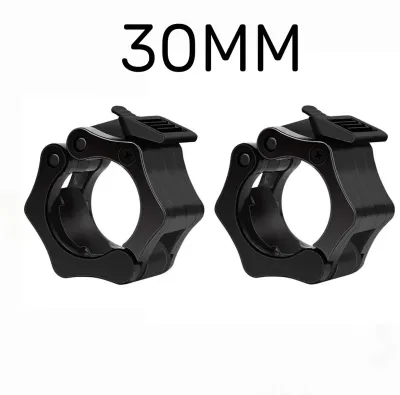
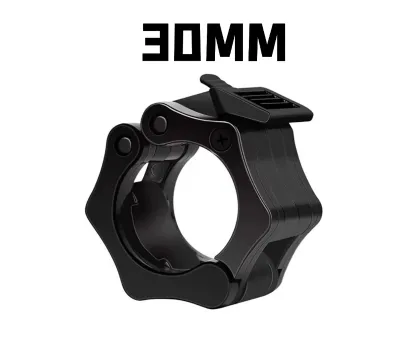
Clamp-style collars, often referred to as lever-lock or quick-release collars, feature a solid hinged frame made of heavy-duty plastic, aluminum, or composite materials. They slide easily onto smooth sleeves when open. Once positioned against the plates, you flip a integrated lever or latch, which compresses an inner rubber lining tightly around the sleeve, locking the collar securely in place.
Security and Weight Retention Comparison
The primary job of any dumbbell clamp is to prevent weight plates from shifting, sliding, or falling off during an exercise. Shifting weights can instantly alter your center of gravity, putting unnecessary strain on your wrists, elbows, and shoulders, or causing you to lose control of the lift entirely.

Spinlock collars offer exceptional mechanical security because they do not rely on friction alone. Because the collar is physically threaded onto the bar, a weight plate cannot slide off unless the collar completely unscrews itself. This makes spinlocks highly reliable for vertical or overhead movements, such as overhead presses or tricep extensions, where the dumbbell is fully inverted. However, they can loosen slightly over multiple repetitions, requiring you to hand-tighten them periodically.
Clamp-style collars provide excellent friction-based security. The lever mechanism applies high, uniform compression around the entire circumference of the sleeve. The internal rubber padding bites into the metal, preventing the collar from sliding even under the impact of dynamic movements like clean and presses or hammer curls. For heavy lifting on smooth sleeves, high-quality clamp-style collars are generally considered the standard for safety.
Spring collars offer the lowest relative weight retention of the three types. Because they rely solely on the natural tension of the coiled steel, they are more susceptible to sliding when subjected to heavy lateral force or sudden impacts. If you tilt a dumbbell significantly during an exercise, a heavy stack of plates can overcome the spring’s friction limit. Always verify the manufacturer’s weight ratings and inspect the springs regularly for signs of stretching or fatigue.
Sleeve condition plays a massive role in the effectiveness of both spring and clamp-style collars. Oil, sweat, rust, or loose gym chalk on the sleeve will drastically reduce friction, causing even high-compression clamps to slip. Smooth, chrome-plated sleeves are naturally slicker than textured or knurled sleeves, meaning you must perform regular maintenance to keep your equipment clean and dry.
Convenience and Changeover Speed
Your training methodology should dictate how much convenience you require from your collars. If your workouts involve rapid weight adjustments, such as drop sets, supersets, or timed circuit training, the time spent changing plates can make or break your session.
Spring and clamp-style collars are built for speed. A clamp-style collar can be locked or unlocked with a single hand in a fraction of a second, making it the most user-friendly option for fast-paced workouts. Spring collars are also quick to apply, though they require a firm, two-handed grip to compress the stiff steel coil fully before sliding it onto the bar.
Spinlock collars are notoriously slow and tedious to operate. Threading a metal nut down a long, finely threaded dumbbell sleeve requires multiple rotations and usually demands both hands. If you need to change weights frequently between sets, the cumulative time spent spinning the collars can disrupt your workout flow, lower your heart rate, and extend your gym session unnecessarily.
Physical effort and hand fatigue are also worth considering. High-tension spring collars can be incredibly stiff, requiring significant grip strength to open. If your hands and forearms are already fatigued from heavy pulling exercises, squeezing a stiff spring collar can become frustrating. In contrast, clamp-style collars utilize mechanical leverage, allowing you to secure them with minimal physical effort.
Equipment Compatibility and Barbell Diameter
Before purchasing any dumbbell clamp, you must ensure absolute compatibility with your existing bars. Mismatched equipment is a major safety hazard and can render your new collars completely useless.
Weight training equipment generally falls into two categories based on sleeve diameter: standard and Olympic. Standard sleeves have a diameter of 1 inch (approximately 25.4 mm) and are commonly found on budget-friendly home gym sets. Olympic sleeves have a diameter of 2 inches (approximately 50 mm) and are the standard for commercial gyms and heavy strength training setups.
Clamp-style and spring collars are strictly size-specific. An Olympic clamp will slide right off a standard 1-inch bar without making contact, while a standard spring collar cannot physically fit over an Olympic sleeve. Always measure your bar’s sleeve diameter with calipers or a ruler before buying to ensure a precise fit.
Spinlock collars are even more restrictive. They require a matching threaded sleeve with the exact thread pitch. You cannot use a spinlock collar on a smooth bar, and attempting to force a mismatched threaded nut onto a threaded bar can strip the threads, permanently ruining both the collar and the handle.
Finally, consider the physical width of the clamp itself. Heavy-duty clamp-style collars can be up to two inches wide. If your dumbbell handles have relatively short sleeves, a wide collar will reduce the amount of space available for weight plates. Measure your sleeve length to ensure you have enough clearance for both your desired plate stack and the width of your chosen clamp.
How to Choose the Right Dumbbell Clamp for Your Setup
To select the perfect collar for your strength training routine, evaluate your current equipment, budget, and training goals against this practical decision framework.
Choose spinlock collars if you already own threaded standard dumbbell handles, work within a strict budget, and perform slow, controlled lifts. They are highly secure for vertical movements and are ideal for lifters who do not mind taking extra time to adjust their weights between sets.
Choose spring collars if you use smooth-sleeved bars, want a lightweight and highly affordable option, and primarily perform moderate, static lifts. They are excellent for quick plate changes on a budget, provided you stay well within the spring’s rated tension limits.
Choose clamp-style collars if you train with heavy weights, perform dynamic or explosive movements, and want the highest level of friction-based security. While they require a slightly higher investment—often ranging from S$15 to S$30 per pair—their ease of use, durability, and reliable grip make them the preferred choice for serious home and commercial setups.
Regardless of the style you choose, always perform a quick safety check before every lift. Inspect your collars for cracks, loose hinges, or weakened springs. If a collar feels loose or slides easily when locked, stop using it immediately and replace it to prevent accidents. Remember, no piece of equipment can replace proper lifting technique, situational awareness, and regular gear maintenance.
Frequently Asked Questions (FAQ)
Can I use Olympic-sized clamps on a standard 1-inch barbell?
No, you cannot safely use Olympic-sized clamps on a standard 1-inch barbell. Olympic clamps have an inner diameter designed to fit 2-inch (50 mm) sleeves. Placing them on a 1-inch (25.4 mm) bar leaves a massive gap, meaning the clamp will provide absolutely zero grip. Attempting to use mismatched clamps creates a severe safety hazard where weight plates can slide off instantly, potentially causing serious injury or property damage. Avoid using makeshift shims or adapters for heavy lifting, as they can slip unpredictably under load.
Do spring collars slip during heavy or dynamic lifts?
Yes, spring collars can slip during heavy or dynamic lifts. Because they rely entirely on the outward tension of the coiled metal, their holding power is limited compared to mechanical spinlocks or high-compression clamp-style collars. Factors such as sweat, oil, loose gym chalk, or a very smooth chrome finish on the barbell sleeve will significantly reduce friction, causing the spring to slide when the bar is tilted or dropped. Regularly inspect your spring collars for metal fatigue or permanent deformation, and replace them if they begin to lose their stiffness.

Community discussion
Share your experience or ask a question. Comments are reviewed before publication.